
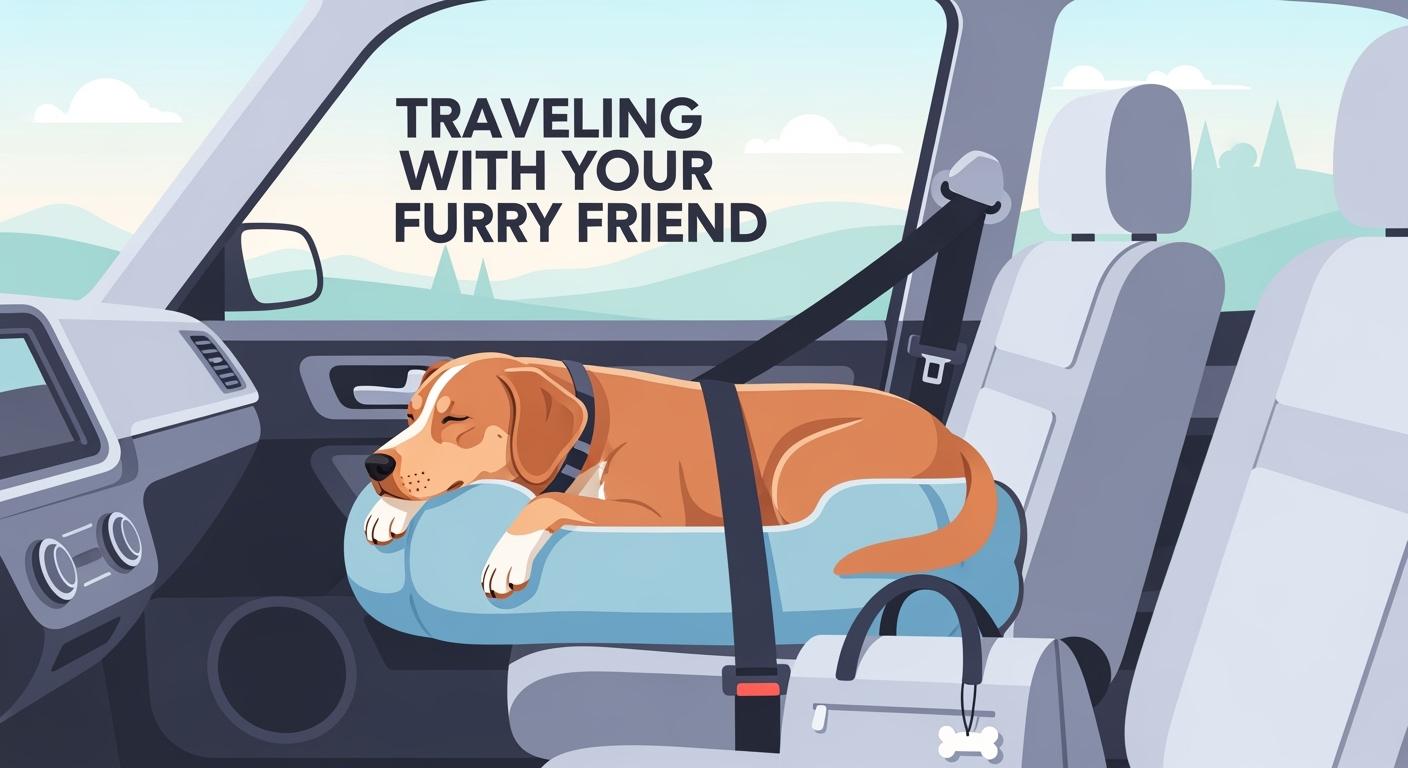
A dog car travel bed can make rides calmer and more comfortable, but it is not the right setup for every dog or every back seat. Some dogs settle better on a padded, stable surface. Others do better with a flatter mat that leaves more room to stretch, keeps seat belt buckles clear, and is easier to clean after everyday trips.
The best choice usually comes down to four practical questions: does your dog lie flat, does the bed stay centered, can you still reach the buckles, and does the setup fit your normal routine. If the answer is no to any of those, a simpler option may work better.
When a Dog Car Travel Bed Helps Most
A dog car travel bed tends to work best for dogs that want a defined place to settle. The raised edges and cushioning can help some dogs feel less exposed during turns and stops, especially if they already like sleeping in a bolstered bed at home. It can also help on longer rides when a hard or slick seat makes it hard for a dog to stay comfortable.
The setup is usually a good fit when your dog gets in, circles once or twice, then lies down without repeated shifting. A stable bed can reduce sliding and help nervous dogs stop bracing through every corner. That matters more than extra thickness or plush fabric.
Tip: Use a crash-tested travel harness or other vehicle restraint that works with your car setup. Avoid attaching a dog by the collar in the car.
When a Flat Mat or Blanket Works Better
A flatter rear-seat mat or blanket often makes more sense if your dog likes to sprawl, changes position often, or shares the seat with passengers. It can also be the better daily setup for short rides, muddy paws, and dogs that do not need much cushioning to relax.
Bulk is the usual problem with a dog car travel bed. A thick base or tall sides can block seat belt buckles, reduce legroom for people, and make the back seat feel cramped. If your dog keeps lying on the edge instead of in the center, the bed may be too small, too soft, or simply the wrong shape for your seat.
Dog Car Travel Bed vs Flat Mat
| Setup | Usually Best For | Main Benefit | Main Tradeoff |
|---|---|---|---|
| Dog car travel bed | Dogs that settle better with padded edges and a defined resting spot | More cushioning and a cozier feel | Can block buckles or take up too much seat space |
| Flat rear-seat mat | Dogs that stretch out, shift positions, or ride with passengers nearby | More usable seat space and easier cleanup | Less structure and sometimes less grip |
| Blanket only | Short rides with calm dogs and low mess | Simple and easy to remove | May bunch up or slide more easily |
Signs the Setup Is Actually Working
The right setup should make the ride easier, not more complicated. Watch what happens during normal driving rather than judging the bed by how it looks when parked.
| Check | Working Well | Not Working | What to Change |
|---|---|---|---|
| Bed position | Stays centered after turns and stops | Slides, twists, or bunches up | Add non-slip support, use anchors, or switch to a flatter base |
| Buckle access | Seat belt buckles stay easy to reach | Buckles disappear under the bed | Reposition the bed or choose a narrower model |
| Dog posture | Dog lies flat and stays settled | Dog perches on the edge or keeps standing up | Try a larger bed or a flat mat |
| Harness routing | Restraint clips in without awkward pulling | Straps rub, twist, or get blocked | Adjust placement or use a different bed shape |
| Cleanup | Hair and dirt come off without much effort | Bed stays damp, dirty, or smelly | Choose a removable cover or easier-care fabric |
Problems That Usually Mean the Bed Is the Wrong Fit
Edge perching is one of the clearest warning signs. If your dog keeps half-standing on the rim, leaning into the door side, or slipping toward the footwell, the bed is not giving enough stable lying space. The same is true when the corners curl up, the base shifts after every stop, or the harness connection becomes awkward.
Passenger room matters too. A setup that works for a solo dog on weekend drives may be frustrating on school runs, vet visits, or errands where someone else needs the back seat. If you find yourself constantly adjusting the bed to reach a buckle or make room for a person, that is a practical failure even if the bed looks comfortable.
Note: If your dog shows repeated motion discomfort, heat stress, breathing strain, pain, or mobility problems during rides, talk to your veterinarian before changing travel gear.
Cleanup and Daily Use Matter More Than Marketing
Look for materials you can realistically maintain. A removable cover usually makes the biggest difference. Water-resistant surfaces can help with muddy paws and light moisture, but they do not replace regular cleaning. Let every layer dry fully before the next ride.
| Feature | Why It Matters in the Car |
|---|---|
| Removable cover | Makes routine washing much easier |
| Water-resistant outer fabric | Helps slow moisture from paws, drool, or minor spills |
| Low-bulk shape | Leaves more room for buckles and passengers |
| Stable base | Reduces sliding on slick seats |
Common Mistakes With a Dog Car Travel Bed
- Choosing the softest bed instead of the one that fits the seat and restraint setup.
- Ignoring buckle access until someone needs to use the back seat.
- Using a bed that slides after every turn or hard stop.
- Keeping a bed that your dog never fully lies down in.
- Picking a model that is hard to wash after muddy or wet trips.
Most of these problems are not solved by adding more padding. They are solved by a better fit, a more stable base, or a simpler layout.
Should You Buy a Dog Car Travel Bed?
A dog car travel bed is worth it when your dog settles better with structure, your back seat can hold it without blocking buckles, and you want a more comfortable setup for regular rides. It is usually not the best choice when your dog prefers open space, your car often carries passengers, or cleanup speed matters more than extra cushioning.
If you are deciding between a bed and a mat, use your dog’s behavior as the final test. The right setup leaves your dog calmer, keeps restraints usable, and does not create a new hassle every time you drive.
FAQ
Can a dog car travel bed help with car anxiety?
It can help some dogs feel more settled if the bed stays stable and gives them a familiar place to lie down.
Is a dog car travel bed safe by itself?
No. A bed can add comfort, but your dog still needs an appropriate in-car restraint.
How do you know a flat mat is better?
If your dog likes to stretch out, the bed blocks buckles, or the back seat feels too crowded, a flat mat is often the more practical choice.
How often should you clean a dog car travel bed?
Clean visible dirt promptly and wash removable covers as needed, especially after wet, messy, or high-shed rides.






