
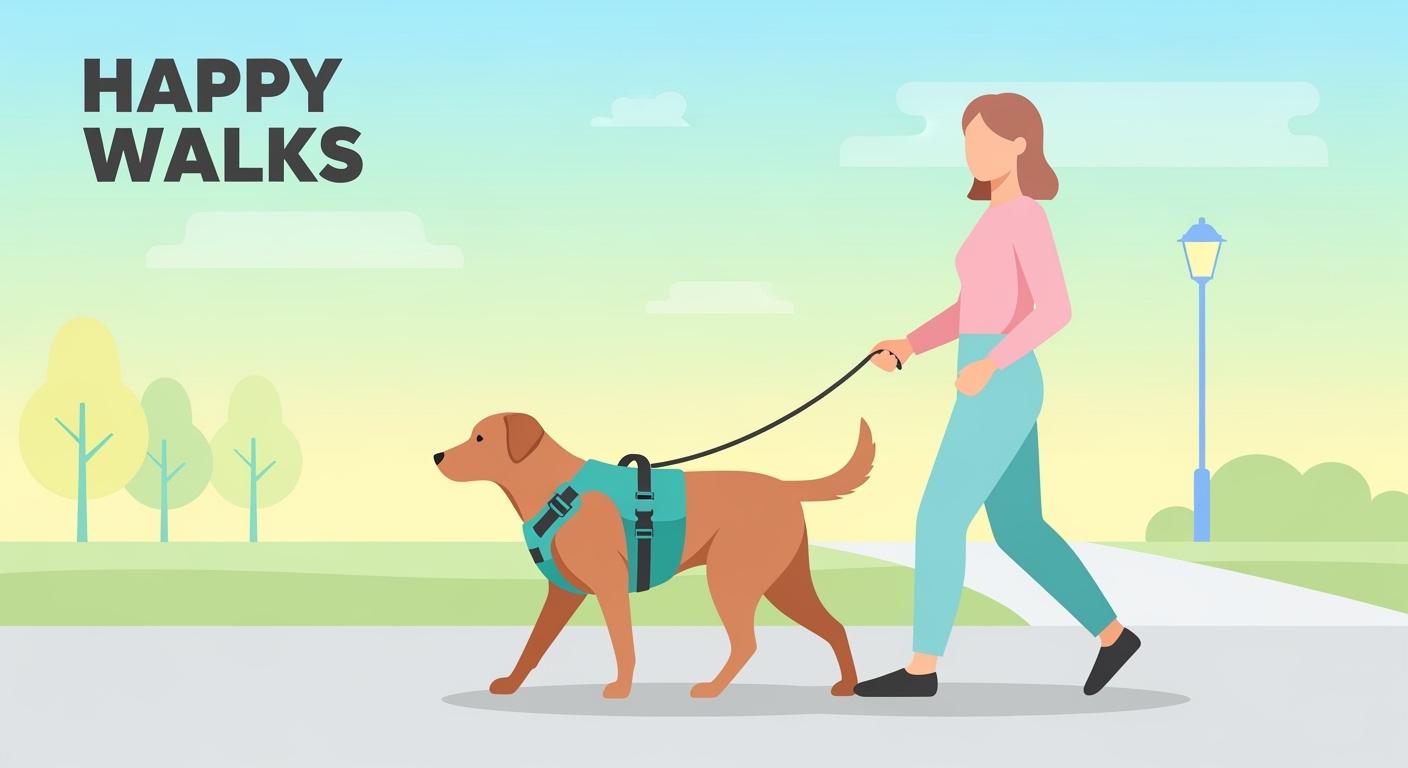
A body harness for dogs can make daily walks easier when a simple strap harness is not doing enough. Extra coverage can spread leash force more evenly, make backward slip-outs harder, and feel better on dogs that react badly to narrow webbing. The same extra material can also cause new problems if it traps heat, drifts out of position, or crosses the shoulders in the wrong place.
The real question is not whether more coverage is better on paper. It is whether the coverage helps your dog move, stay comfortable, and stay secure on actual walks. That is why the earliest warnings usually come from fit changes such as shoulder restriction and rubbing, not from the product description alone.
Note: This article covers body-style harnesses for everyday walking. It does not cover medical bracing, post-surgery support, or vehicle crash protection.
When extra coverage helps
Extra coverage can be useful when a dog pulls hard, twists under leash tension, slips backward out of simpler harnesses, or gets irritated by narrow straps. In those cases, a wider contact area can stabilize the harness and spread force more evenly across the chest and torso.
Strong pullers often benefit from a steadier front section
Dogs that surge into the leash can be easier to manage when the harness spreads the load over a wider chest area instead of concentrating everything into a narrow strap. Some body harnesses also use a front clip, which can redirect the dog back toward the handler instead of letting the pull build straight ahead. If that is your main reason for switching, front-clip leash training steps fit naturally alongside the harness choice because equipment alone rarely solves the pulling pattern by itself.
Escape-prone dogs may need more structure
Dogs that back out of simpler harnesses usually exploit the same weakness: they drop the head, reverse forcefully, and slip through the opening created by a loose or poorly placed strap. A body harness with more wraparound structure or an added strap behind the front legs can make that maneuver much harder.
Sensitive skin can do better with wider contact points
Some dogs react badly to narrow straps because the same pressure gets concentrated into a smaller surface area. Wider panels and softer linings can reduce that pressure, but only if the harness still clears the armpits and does not creep toward the throat under tension.
| Need | Why Extra Coverage Can Help | What To Check |
|---|---|---|
| Pulling control | Spreads force across more of the chest | Make sure the chest panel stays centered under leash tension |
| Escape prevention | Reduces the open space a dog can back through | Check whether the harness shifts backward or sideways on a walk |
| Sensitive skin | Wider contact can reduce pressure hot spots | Look for rubbing in the armpits and under the chest panel |
| Everyday stability | More structure can reduce twisting on active walks | Watch for side drift during the first several minutes |
When more coverage starts causing problems
More material can create bulk, trap heat, and interfere with movement if the harness is too long for the torso or too thick for the weather. This tends to show up quickly on small dogs, short-legged dogs, or dogs walking in warm conditions.
Heat buildup matters more than many owners expect
More fabric against the coat means less airflow. On mild days that may not matter much. On warm, humid, or high-output walks it can change how quickly the dog starts panting, slowing down, or showing fatigue. Air-mesh styles usually breathe better than thicker padded designs, while neoprene-like linings can feel warmer even when they reduce rubbing.
| Material | Breathability | Feel | Best Fit |
|---|---|---|---|
| Air-mesh | High | Light and cooler | Warm weather and shorter-coated dogs |
| Neoprene-lined | Moderate | Soft and cushioned | Dogs that need more padding in milder weather |
| Nylon webbing with panels | Moderate | Firm and durable | Training use and higher-wear routines |
Note: Heavy panting, slowing down early, drooling, or trying to stop the walk can be signs the harness is adding too much heat load for the conditions.
Small dogs often feel bulk first
Shorter torsos leave less room for a long chest or belly panel. A harness that technically matches chest girth can still sit too low, bunch at the belly, or cross the shoulders badly once the dog starts moving. That is one reason preventing chafing on active outings matters so much on compact builds where the armpit and shoulder areas are already close together.
Too much coverage can hide a poor fit
Body harnesses sometimes look secure because there is more material on the dog, but visual coverage is not the same thing as real fit. If the harness drifts to one side, shortens the stride, or rides up toward the throat, more panel area is not helping.
How to check whether the setup is helping or hurting
Run the fit check before the first walk and again after several normal walks. Many problems show up only once the dog has moved enough for the harness to settle into its real position.
| Check | Pass Signal | Fail Signal | Better Direction |
|---|---|---|---|
| Chest area stays centered | The harness stays aligned through the walk | It drifts to one side within minutes | Retighten evenly or try a different shape |
| Shoulders move freely | Stride stays normal and relaxed | Steps shorten or look stiff | Use a shorter front panel or a lighter style |
| Skin stays clear | No rubbing or pink spots after removal | Redness, irritation, or hair wear appears | Adjust fit or change the lining and panel placement |
| Heat stays manageable | Panting matches the normal route and weather | Panting starts earlier than usual or the dog slows quickly | Switch to a cooler material with less coverage |
| Leash tension stays stable | Harness remains aligned when the leash tightens | It rotates or rises toward the throat | Recheck strap tension and clip position |
Common mistakes with body harnesses
Most problems come from treating a body harness like a collar or a simple chest harness. The common mistakes are sizing by one measurement only, skipping movement checks, and assuming more padding automatically means more comfort.
Another common problem is expecting the harness to do all the work. A front-clip body harness can help with pulling, but fit and sizing checks for everyday walks still matter because the wrong setup can create restriction faster than it creates control.
When to switch size or style
If the harness keeps rotating, shortens the stride, causes rubbing, or creates heat stress after a careful refit, the current style may not suit your dog’s proportions or climate. Changing size helps when the dog has grown, lost weight, or falls between adjustment points. Changing style helps when the panel layout itself is wrong for the dog’s chest length, shoulder shape, or daily walk conditions.
If you are comparing alternatives, dog harness styles are easier to evaluate once you know whether your main issue is escape risk, shoulder restriction, heat, or rubbing.
Bottom line
A body harness for dogs helps most when your dog needs more control, more stability, or less concentrated pressure than a simpler harness can offer. It stops helping when the extra material creates heat, bulk, or movement restriction. If the chest area stays centered, the dog moves normally, the skin stays clear, and the harness does not ride up under tension, the extra coverage is probably doing its job.
FAQ
How do you know a body harness has too much coverage?
Watch for shorter steps, rubbing behind the legs, early heavy panting, or a harness that bunches and shifts during the walk.
Can a body harness help with a strong puller?
It can, especially when it spreads pressure well and uses a front clip, but it still works best alongside leash training and a correct fit.
How often should you recheck the fit?
Check before each walk at a basic level, and do a fuller recheck after growth, weight change, grooming changes, or any new signs of rubbing or restriction.






