
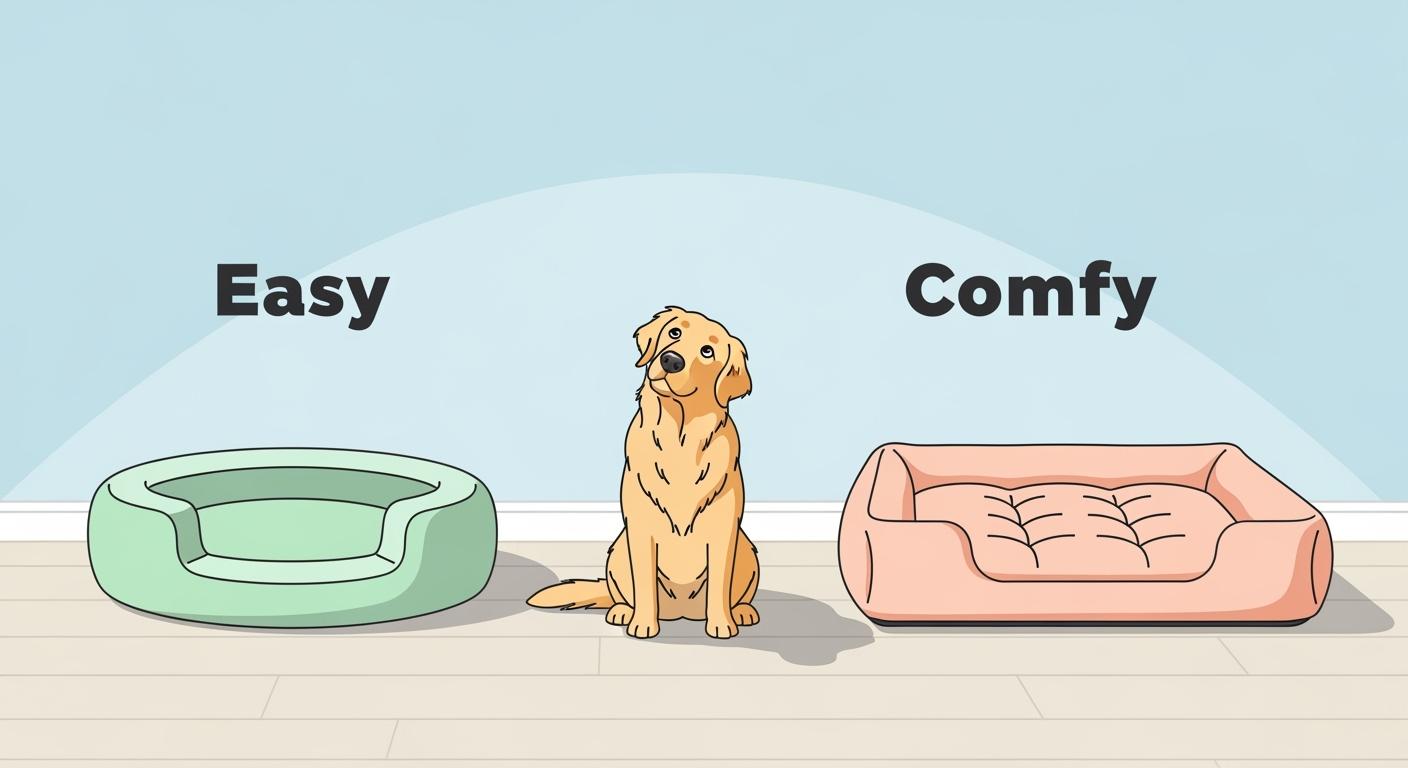
If your dog stands at the edge of the bed before stepping in, sleeps with part of the body hanging outside, sinks into the cushion, or has trouble standing up again, the bed may be failing in two different ways. A higher edge can make entry harder, while a soft or flattened cushion can make support weaker once the dog is inside. This article explains how to read those daily-use signs and decide whether a lower entry or a firmer cushion is the better fix.
Note: A good bed can improve daily comfort, but it does not replace veterinary advice when pain, mobility loss, or skin problems are already obvious.
Key Takeaways
- Choose easier entry when your dog hesitates, steps awkwardly, or avoids climbing onto a higher edge.
- Choose firmer orthopedic-style support when your dog sinks too deeply, struggles to rise, or needs better pressure relief.
- Watch how your dog actually uses the bed. Entry, sleep position, and getting up usually tell you more than thickness alone.
When Easier Entry Matters More Than Extra Thickness
Entry height matters because some dogs decide whether to use the bed before they ever lie down. If the edge feels too high, awkward, or unstable, the dog may pause, step in stiffly, or choose the floor instead.
This usually shows up first in older dogs, dogs with stiffness, puppies with short legs, and dogs that already dislike climbing into enclosed or high-sided spaces. In those cases, a lower profile often helps more than extra padding does.
Who usually benefits from a lower entry
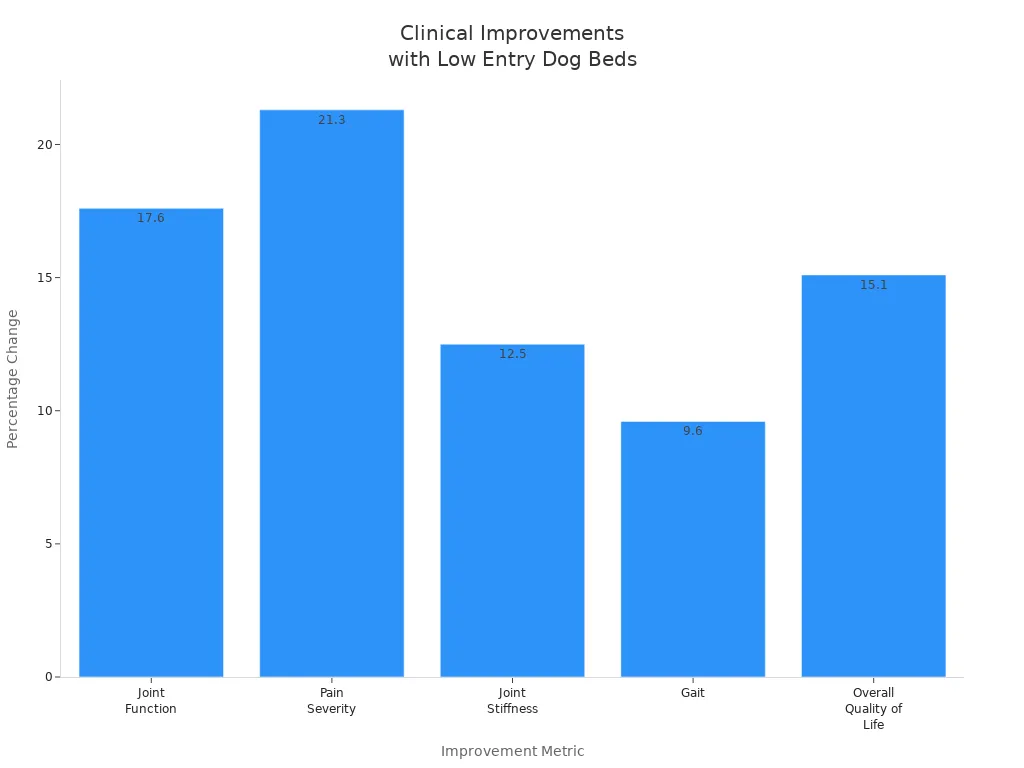
Senior dogs, dogs with arthritis, dogs recovering from strain, and dogs that move cautiously often do better with a lower step-in edge. A low-profile mat or lower-sided bed can make everyday use easier because the dog does not have to lift the front legs as high or drop down awkwardly into the bed.
What awkward entry usually looks like
Some dogs pause, test the edge with one paw, then step back. Others drop in with a stiff front end, sleep only partway on the bed, or stop using it unless they are tired enough to give up on finding a better spot.
| Bed Type | Entry Height | Support Level | Best For | What to Watch |
|---|---|---|---|---|
| Low-profile mat bed | Low | Basic to moderate | Puppies, seniors, cautious dogs | May not give enough support for heavier dogs |
| Thicker cushion bed | Medium | High | Large dogs, aging dogs, dogs needing more pressure relief | Entry can feel harder if the edge is high or soft |
| Bolster bed | Medium | Moderate | Dogs that like boundaries and head support | Raised sides can make entry less easy |
Tip: If your dog hesitates before stepping in, fix the entry first. More foam usually does not solve a step-in problem by itself.
When Firmer Support Helps More Than a Lower Edge
Some dogs get onto the bed without any trouble and still do not rest well. In those cases, the real problem is often support rather than entry. A bed that feels too soft, too flat, or too weak under pressure can make lying down, turning over, and standing up harder than it should be.
Who usually needs more support
Larger dogs, aging dogs, anxious dogs that keep shifting, and dogs with chronic stiffness often do better on firmer cushioning. A supportive foam bed can spread body weight more evenly and reduce the pressure that builds under hips, elbows, and shoulders.
What too little support looks like
The dog may circle several times, lower down carefully, sleep lightly, or struggle to rise. Some dogs lie on the bed for a short while and then move to the floor, especially if the foam sags or the middle collapses too quickly.
A thicker bed is not automatically the better bed. What matters is whether the surface stays supportive enough after daily use, not just whether it looks plush on the first day.
What Bed Height Changes in Daily Use
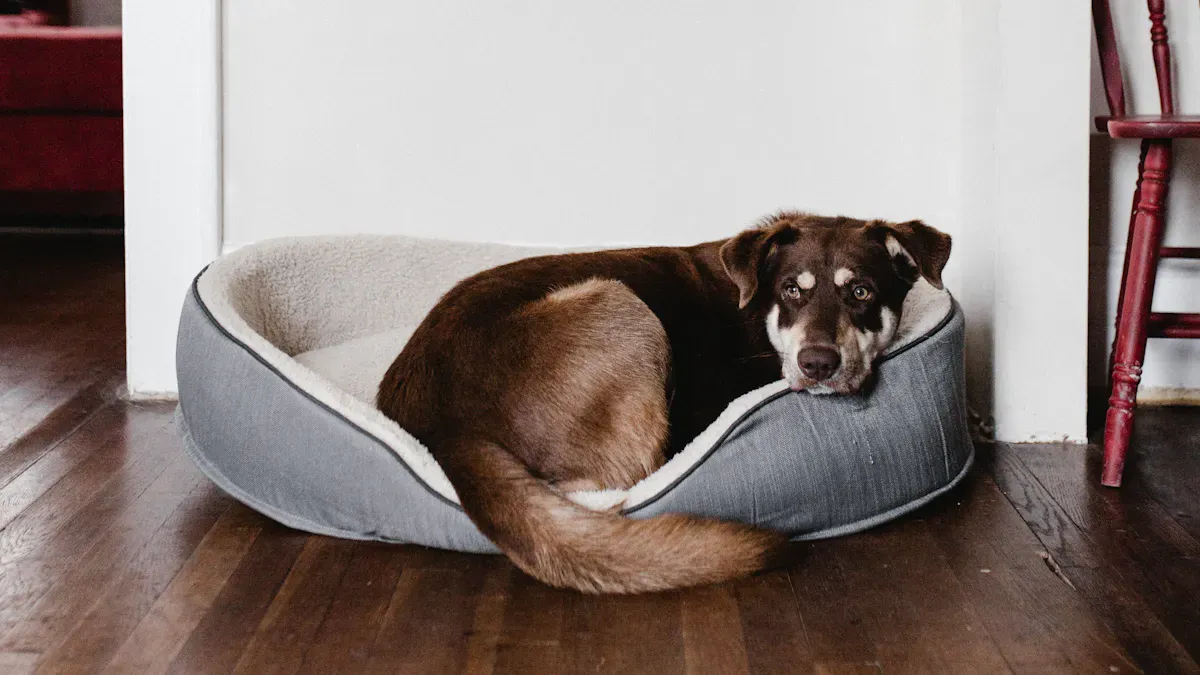
Bed height changes more than just entry. It affects how the dog lowers into the bed, whether the body sinks too far, and how easy it feels to stand back up after rest.
Step in and step out
You want your dog to step in and out without hesitation. If the dog drops in awkwardly, braces the front legs, or refuses to enter unless guided, the edge is probably working against comfort rather than helping it.
Lying down and getting back up
You also want the dog to lower into the bed smoothly and stand up without pushing hard through the front end. Too much softness can make rising harder. Too much height can make entry harder. The right bed usually balances both.
| Check Item | Pass Signal | Fail Signal | Fix |
|---|---|---|---|
| Entry and exit | Dog steps on and off smoothly | Pause, awkward drop, or refusal | Lower the edge or choose a thinner side wall |
| Lying down | Dog lowers easily and relaxes | Struggles, circles too long, or avoids settling | Adjust support level or bed shape |
| Getting up | Dog rises without heavy pushing | Sinks, braces hard, or rises slowly | Use firmer orthopedic-style support |
| Daily use | Dog chooses the bed often | Dog skips it or only uses the edge | Reassess size, support, and entry height |
| Cleaning | Cover washes and dries fully | Bed stays damp or hard to maintain | Use a washable cover or waterproof barrier |
Failure Signs That Matter Most
Dogs usually show bed mismatch through repetition. If the same problems keep showing up, the current bed is probably not the right fit, even if it still looks fine.
Warning signs to watch
- Your dog hesitates before stepping onto the bed.
- Your dog sleeps half-on and half-off the bed.
- Your dog stands up slowly or struggles to rise.
- Your dog skips the bed and chooses the floor or another surface.
- Your dog looks restless and keeps changing position.
| Symptom | Likely Cause | Fast Check | Fix |
|---|---|---|---|
| Dog avoids the bed | Entry too high or support feels wrong | Watch step-in behavior and first few minutes | Lower the entry or switch to firmer support |
| Half-on sleeping | Bed too small or hard to enter fully | Compare body length with usable bed area | Choose a larger or more open layout |
| Slow stand-up | Too much sink or not enough support | Watch the first push to stand | Use a firmer orthopedic-style bed |
| Restless sleep | Weak pressure relief or poor comfort | Check whether the dog keeps changing position | Reassess foam quality and bed shape |
| Quick sagging | Low durability or weak fill | Press the center and compare rebound | Upgrade the support core |
Tip: A bed is not automatically better because it looks thicker. The better bed is the one your dog enters easily, uses fully, and gets up from without effort.
Disclaimer: If your dog shows clear joint pain, major mobility limits, or skin irritation, speak with your veterinarian before relying on a bed change alone.
FAQ
How often should you clean your dog bed?
For most homes, once a week is a practical starting point, with more frequent cleaning when the bed gets dirty, damp, or heavily used.
What signs show your dog may need a different bed?
Hesitation, half-on sleeping, slow stand-up, restless sleep, and skipped use are all signs worth paying attention to.
Can a thicker cushion help a dog with joint pain?
Yes, firmer supportive cushioning often helps, but the right support level matters more than thickness alone.
The best dog bed is usually the one that matches your dog’s daily movement. If entry feels easy but rest still looks uncomfortable, add support. If the dog never wants to get in at all, lower the entry first.






