
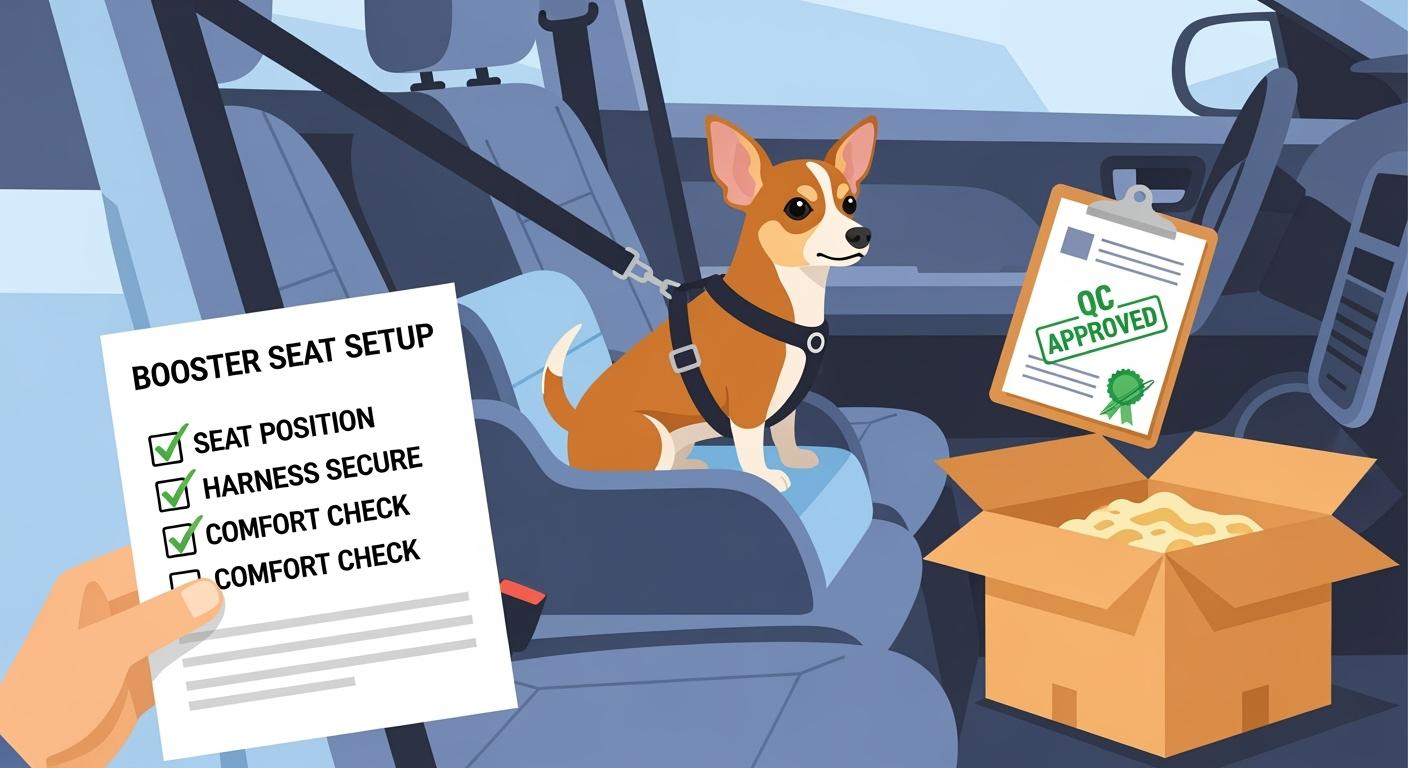
Booster seat returns usually happen because installing a dog car booster seat is hard. Problems can come from belt routing, base stability, or unclear instructions. People do not complain much about comfort. The five most common mistakes are using the wrong belt path, having a loose base, connecting the tether clip to a collar, leaving strap slack, and missing parts or unclear instructions. You want car seat safety and a secure install. Always follow the right installation and safety rules for dog car booster seats. This helps lower returns that can be avoided.
Key Takeaways
Make sure you install it by using the right belt path. The belt should be flat and not twisted for safety.
Check if the booster seat base is stable. If the base is loose, it can wobble and be unsafe when you drive.
Always clip the tether to a harness, not a collar. This stops choking and keeps your dog safe.
Look at the instruction sheet and parts list before you start. Clear steps help you not make mistakes.
Teach staff how to spot installation mistakes. Knowing if it is user error or a product problem can lower returns.
Use a checklist to make sure all parts are there. Check that the packaging is safe before you sell it.
Put the booster seat in the back seat, away from airbags. This keeps your pet safer when you travel.
Check your return rates and why people return items often. This helps you make installation better and keep customers happy.
Dog Car Booster Seat Returns: Install Friction Issues
Retailer Symptoms: Fit, Wobble, Slipping
You may notice that buyers often report three main symptoms when they return a dog car booster seat. The most common complaints include poor fit, wobbling during travel, and slipping out of position. These issues can make customers feel that the car seat is not safe or stable for their pet. Sometimes, buyers compare the booster seat to a child restraint and expect the same level of stability. This expectation can lead to disappointment if the seat does not meet their standards.
Tip: Always ask buyers to describe the problem in detail. This helps you understand if the issue comes from installation or from the car seat design.
You might see returns where the seat shifts on the bench, the belt does not stay flat, or the base does not sit evenly. These symptoms often point to installation friction rather than a true product defect.
Root Causes: Vehicle Geometry, Belt Routing, User Error
You need to look deeper to find the real reasons behind these returns. Most install friction comes from three main root causes:
Vehicle Geometry: Every vehicle has a unique seat shape and belt path. Some cars have deep contours or narrow spaces that make it hard to place the booster seat flat. If the car seat does not match the bench shape, it may rock or slide.
Belt Routing: The seat belt must follow a flat, untwisted path through the booster seat’s guides. If the belt pinches, twists, or takes a sharp angle, the seat will not stay secure. This problem often happens when users do not follow the belt routing rules.
User Error: Many buyers skip steps or misread instructions. They may attach the tether to a collar instead of a harness, or leave slack in the straps. These mistakes can make the car seat feel unstable, even if the product itself is fine.
Note: Perceived fit problems often come from install friction, not from a design flaw. You can reduce returns by guiding buyers through a step-by-step install checklist and by offering clear instructions.
You should train your staff to spot the difference between a true defect and an install mistake. When you address the root causes, you help buyers use the car seat safely and lower the chance of unnecessary returns. Always remind buyers that a dog car booster seat is not a child restraint, but it still needs careful installation for safety.
Dog Car Seats Compatibility: US and EU/UK Guide
Dog Seat Belt Routing: Clearance and Path Rules
Check the seat belt path before picking a booster seat. The seat belt must be at least SeatBeltWebbing_MinWidth wide. Make sure the belt fits through the guides without pinching or twisting. The BeltRouteRule says the belt must stay flat and untwisted in the guides. If the belt does not move smoothly or sits at a weird angle, the seat might not be safe. Test the belt path in your store or when you review the product. Ask your team to check if the belt buckles and unbuckles easily after routing. This step helps stop returns from bad fit or install friction.
Tip: Use a quick checklist to check belt clearance and path. If the belt is too narrow or does not follow the rules, mark the SKU as not right for that car.
Car Seat Positioning: Rear Seat and Airbag Zones
Put dog car seats in the safest spot in the car. The RearSeatPreference says to use the back seat and stay away from airbag zones. Airbags can hurt pets if they go off. Always keep the dog strapped in and watched during trips. Train your staff to help buyers put the booster seat away from airbags. If the back seat is not open, look for anchor points and seat belt paths that follow the clearance rules. Remind buyers that good seat placement keeps pets safer and more comfortable.
Positioning Rule | Guidance |
|---|---|
RearSeatPreference | Use rear seat; avoid airbag zones |
Supervision | Keep dog restrained and supervised |
Anchor/Belt Check | Confirm belt path and anchor compatibility |
SKU Strategy: Universal vs Regional Variants
Have a clear SKU plan for each market. Some booster seats work in both US and EU/UK cars, but others need changes for each place. Universal SKUs must meet the belt width and routing rules for all markets. Regional SKUs may have different guides or labels for local rules. Always check the box and instructions for tracking and safety warnings. The TraceabilityMinimum needs a lot or batch ID, contact info, and safety warnings on the box or inserts. This step helps you follow the GPSR_EffectiveDate for EU/UK rules.
Note: Check your product papers and labels before selling. Make sure each SKU follows the belt routing and safety rules for its market.
You can stop install problems and returns by using these checks and seat rules. Your team will help buyers pick the right booster seat for their car and keep pets safe on trips.
5 Dog Car Booster Seat Install Mistakes Checklist
You want every dog car booster seat to work safely and smoothly. Many installation errors happen because people skip steps or do not check the fit. Below, you will find the most common car seat mistakes and how to fix them. Use this checklist to help your team and your buyers avoid returns and keep pets safe.
Wrong Belt Path or Twisted Dog Seat Belt
You must always route the dog seat belt through the correct guides. If you use the wrong path or twist the belt, the car seat will not stay secure. This mistake often happens when people rush or do not read the instructions. A twisted belt can pinch or jam, making it hard to buckle or unbuckle. You may see the car seat shift or wobble during travel.
How to Fix:
Check that the belt follows a flat, untwisted path through all guides.
Follow the BeltRouteRule: The belt must move smoothly and stay flat.
Test the buckle. It should click and release without force.
Remind buyers that a twisted belt is a top cause of common car seat mistakes.
Tip: Show buyers how a child car seat uses a flat belt. Use the same rule for booster seats.
Loose Base or Car Seat Contour Mismatch
A loose base is one of the most common car seat mistakes. If the car seat does not match the bench shape, it will rock or slide. This problem often comes from not tightening the straps enough or from a mismatch between the booster seat and the car’s contours. You may see the car seat move when you push on it, or the base may not sit flat.
How to Fix:
Place the booster seat on the car seat and check for gaps.
Tighten all straps until the base sits flat and does not rock.
Use the PassFail_BaseStability check: The base should not move after tightening.
If the car seat still moves, try a different seating position or check for contour mismatch.
Note: Remind buyers that a child car seat also needs a flat, stable base. The same rule applies to dog car booster seats.
Tether Clip Error: Harness vs Collar
Many people make the mistake of attaching the tether clip to a collar instead of a harness. This error can create a choke risk if the car stops suddenly. You must always connect the tether to a harness attachment point. This step keeps the dog safe and prevents injury.
How to Fix:
Check that the tether connects to a harness, not a collar.
Use the PassFail_TetherConnection check: The tether should not create a choke path.
Show buyers how a child restraint uses a harness, not a neck collar.
Remind your team that this is a key safety rule for all booster seats.
Alert: Never connect the tether to a collar. Always use a harness for proper installation.
Retail Checklist: Top Install Mistakes to Avoid
Wrong belt path or twisted dog seat belt
Loose base or car seat contour mismatch
Tether clip error: harness vs collar
Strap slack or incorrect tension
Unclear instructions or missing parts
Watch:
StridePaw internal install demo: belt routing + base stabilization + tether connection + customer quick-check script
Need help with procurement or want to see samples?
Request a quote or Ask for samples / get a catalog from StridePaw.
Strap Slack or Incorrect Tension
You need to check the tension of every strap when you install a car seat. Loose straps can let the dog car booster seat move during travel. Tight straps keep the seat stable and help prevent injuries. Many people make mistakes by leaving slack in the straps or not pulling them tight enough. This is one of the most common car seat mistakes you will see in stores and homes.
If you do not adjust the straps, the car seat may shift or tip. This problem can happen with booster seats for dogs or with a child restraint. You must always check the tension after you finish installing the seat. Pull each strap and make sure it feels firm. If you see slack, tighten the strap until the seat does not move.
Tip: Ask your team to use a simple pull test. If the car seat moves more than a small amount, the straps need more tension.
Here is a quick checklist to help you avoid mistakes with strap tension:
Pull each strap after installation.
Look for slack or loose ends.
Tighten straps until the car seat sits flat and does not rock.
Repeat the check if you move the seat to a new position.
Remind buyers that a child car seat also needs tight straps for safety.
A table can help your staff remember the steps:
Step | Action |
|---|---|
Check Strap Tension | Pull each strap firmly |
Look for Slack | Find and remove loose areas |
Test Stability | Push seat; it should not move |
Repeat as Needed | Check after each install |
You can lower returns by teaching buyers and staff to check strap tension every time. This step keeps the dog car booster seat safe and stable.
Unclear Instructions or Missing Parts
You must give buyers clear instructions and all the parts they need for a safe install. Unclear instructions can lead to mistakes and confusion. Missing parts can stop buyers from using the car seat at all. These issues often cause returns and complaints.
Many buyers expect the same level of detail as a child car seat manual. If instructions do not show each step, people may skip important actions. If a part is missing, the car seat cannot work as designed. You need to check every box before you sell or ship booster seats.
Alert: Always match the instruction sheet to the SKU. Make sure every part listed is present in the package.
Here are steps you can use to avoid mistakes with instructions and parts:
Review the instruction sheet for each car seat.
Check the parts list and compare it to the contents.
Ask your team to use the PassFail_PartsCheck before stocking or shipping.
Train staff to help buyers with questions about installation.
Remind buyers that a child car seat also needs complete instructions and all parts.
A simple table can help your team track these checks:
Item | Check Before Sale |
|---|---|
Instruction Sheet | Matches SKU |
Parts List | All items present |
Staff Training | Ready to answer questions |
Buyer Support | Offer install help |
You can reduce returns and keep pets safe by making sure every dog car booster seat comes with clear instructions and all the right parts. This step helps buyers avoid common car seat mistakes and install booster seats correctly.
Receiving QC Gates for Dog Car Booster Seats
Quality control gates help you find problems before booster seats go to stores or customers. You need to check the packaging, labels, how the seat is put together, and product samples. These steps help you lower returns and keep pets safe.
Packaging and Labeling Checks
Start by looking at the packaging. Make sure the labels are clear and all safety info is there. Each box must show the lot or batch ID, contact info for the company, and safety warnings. This follows the TraceabilityMinimum rule. Check that the box has instructions and a parts list. Every dog car booster seat should follow the DualUnitRule for weight ratings. Show both pounds and kilograms, and say “for fit-verified use only.” If warnings are missing or labels are not clear, mark the item for review.
Tip: Use a checklist for packaging and labeling. This helps your team find missing info before you stock or ship the seats.
Assembly Validation: Pass/Fail Criteria
Next, check how the seat is put together. You need to make sure each booster seat passes simple tests. The base should sit flat and not rock after you tighten it. The seat belt must go flat and untwisted through the guides. The tether must connect to a harness, not a collar, and should not make a choke path. All parts must be there, and the instruction sheet must match the SKU.
Use these pass/fail checks:
Base sits flat and stable (PassFail_BaseStability)
Belt routes cleanly and buckles normally (PassFail_BeltRoute)
Tether connects to harness, not collar (PassFail_TetherConnection)
All parts and instructions present (PassFail_PartsCheck)
If any check does not pass, set the item aside for more review.
Check | Pass Criteria |
|---|---|
Base Stability | No rocking after tightening |
Belt Routing | Flat, untwisted, easy buckle |
Tether Connection | Harness only, no choke path |
Parts/Instructions | All present, matches SKU |
Sampling Rules: ISO2859 and AQL
You must use a sampling system to check new shipments. ISO2859_System helps you pick how many items to check. You set Acceptable Quality Levels (AQL) for defects. Use AQL_Critical for very bad defects, AQL_Major for big defects, and AQL_Minor for small defects.
Defect categories:
Critical: Missing restraint path, broken strap, sharp edge, missing warnings, or missing key parts.
Major: Install instability, belt guide not lined up, weak stitching, or hardware that affects safety.
Minor: Cosmetic marks or packaging scuffs that do not affect safety or install stability.
Note: Always keep critical defects separate from major and minor ones. Critical defects mean you must not ship or sell the item.
Sampling and defect checks help you keep only safe and ready booster seats in your store. You protect your customers and lower the risk of returns.
Labeling and Packaging for Dog Car Seats
Dual-Unit Load Rating: lb + kg
You have to show the load rating on every package. The DualUnitRule means you must put the dog’s max weight in pounds and kilograms. This helps people in the U.S. and EU/UK know how much weight is safe. Always write “for fit-verified use only” next to the rating. This tells buyers to check if the seat fits before using it. Do not say things like “crash-proof” or “escape-proof.” These words can confuse buyers and are not allowed by safety rules. Put the load rating where it is easy to see, like on the box or the instruction sheet.
Tip: Make the load rating bold or put it in a bright box. This makes it stand out so buyers can find it fast.
Traceability and Operator Info: EU/UK GPSR
You need to put traceability info with every shipment. The TraceabilityMinimum rule says you must add a lot or batch ID, contact details for the company, and safety warnings. This info should be on the package or on a paper inside. The EU/UK GPSR rule wants you to do this for all products sold after the GPSR_EffectiveDate. This helps buyers and safety people track each seat if there is a problem. Always check that the contact info is up to date and easy to read. If you sell in both the U.S. and EU/UK, use the same traceability style for all places.
Alert: If you forget traceability info, it can cause delays or returns. Always check this before you ship anything.
Shelf-Ready Contents: Instructions and Parts List
You must put everything needed for a safe install in the box. Each box should have clear instructions that match the SKU. The parts list must show every part, like straps, buckles, and tethers. Buyers want to find all the parts in the package. If something is missing, people can get confused and return the seat. Train your team to check every box before putting it on the shelf or sending it out. Use a checklist to make sure nothing is missing.
Here is a sample checklist for shelf-ready packaging:
Item | Included in Box? |
|---|---|
Instruction Sheet | ✅ |
Parts List | ✅ |
All Straps/Buckles | ✅ |
Tether | ✅ |
Safety Warnings | ✅ |
Traceability Info | ✅ |
You make customers happy and lower returns when you follow these packaging rules. Good labeling and all the right parts help buyers use dog car seats safely and feel sure about their choice.
Retail SOP: Dog Car Booster Seat Install and Return Workflow
Staff Script: Belt Path, Base Stability, Tether Check
You need a clear process for installing every car seat in your store or warehouse. Training your team helps you catch mistakes before they reach buyers. Use this script to guide your staff through each install:
Check the Belt Path:
Place the car seat on the vehicle bench. Guide the seat belt through the booster’s belt guides. Make sure the belt follows a flat, untwisted path. The belt should move smoothly and not pinch or twist. This step helps you follow the BeltRouteRule.Test Base Stability:
Push down on the car seat base. Tighten all straps. The base should sit flat and not rock after tightening. If the car seat moves, adjust the position or check for contour mismatch. Use the PassFail_BaseStability check.Tether Connection:
Attach the tether to a harness, not a collar. The tether should not create a choke path. Use the PassFail_TetherConnection check. Remind your team that this step keeps pets safe.Parts and Instructions:
Confirm all parts are present. Match the instruction sheet to the SKU. Use the PassFail_PartsCheck before stocking or shipping.
Tip: Practice these steps with your team. Use a sample car seat and a dog seat belt to show each step. Repeat until everyone feels confident.
Return Triage: Compatibility, Parts, Misuse, Defect
When a car seat comes back as a return, you need to find out why. Use these categories to sort returns and decide the next steps:
Compatibility:
The car seat does not fit the buyer’s vehicle. Check the seat belt path and base shape. If the car seat fails the fit test, mark it as a compatibility issue.Parts:
The car seat is missing parts or instructions. Check the package against the parts list. If anything is missing, log it as a parts issue.Misuse:
The buyer installed the car seat incorrectly. Look for twisted belts, loose bases, or tether errors. Use the install checklist to spot these mistakes.Defect:
The car seat has a broken strap, sharp edge, or other safety problem. Use the defect definitions from your QC gates. Critical defects mean you must not resell the item.
Return Category | Staff Check Example | Next Step |
|---|---|---|
Compatibility | Belt path or base mismatch | Advise on fit, restock |
Parts | Missing tether or instructions | Replace parts, restock |
Misuse | Twisted belt, loose base | Offer install help |
Defect | Broken strap, sharp edge | Remove from stock |
Note: Always record the reason for each return. This helps you spot trends and improve your car seat program.
You lower returns and keep pets safe when you follow these steps. Train your team to use the install script and triage table every time. This process builds trust with buyers and helps your store stand out.
Dog Car Booster Seat Economics: Install-Return Impact
Knowing about the economics of dog car booster seats helps you make smart choices for your business. Returns from bad installation can hurt your profits. You need to check the costs and see how each step can help you save money and make car seats safer.
Table: RetailPrice, LandedCost, ReturnRate, HandlingCost
A simple table can show how install returns change your costs. Each variable affects your profit or loss. RetailPrice is the amount you charge for a car seat. LandedCost is what you pay to get the car seat to your store, including shipping and taxes. ReturnRate tells you how many car seats come back because of install mistakes or other problems. HandlingCost is what you spend to deal with each return, like checking, restocking, or swapping parts.
Variable | Description |
|---|---|
RetailPrice | Price you charge for each car seat |
LandedCost | Total cost to bring each car seat to your store |
ReturnRate | Percentage of car seats returned |
HandlingCost | Cost to process each returned car seat |
If you lower your ReturnRate by making install stability and instructions better, you keep more profit from each car seat. You also spend less on HandlingCost. Use the Card’s tokens to explain why you need better install stability, clear instructions, and strong receiving QC.
Tip: Track these numbers for every SKU. Even small drops in ReturnRate can help you earn more profit.
AQL and Defect Definitions Reference
Quality is important for every car seat you sell. You need clear rules to decide which car seats pass or fail your checks. Use the Card’s AQL and defect definitions. These rules help you sort out critical, major, and minor defects before the car seat gets to your customer.
Critical defects: These are missing restraint paths, broken straps, sharp edges, or missing key warnings. You must not sell car seats with critical defects.
Major defects: These are car seat instability, belt guide not lined up, or weak stitching that makes the seat unsafe.
Minor defects: These are small marks or scuffs that do not change how safe or useful the car seat is.
You should use the Card’s tokens to explain why you need better install stability, clear instructions, and strong receiving QC. This helps you lower your ReturnRate and make car seats safer for every buyer. When you do these things, you help families keep their pets safe, just like they would for a child in a car seat. You also protect your business from extra costs and unhappy customers.
Note: Always check your AQL and defect definitions with your QA team. This keeps your standards clear and your car seat program strong.
If you want more tips about car seat safety, install training, or QC checklists, visit StridePaw’s internal resource pages.
RFQ Template and Supplier Scorecard for Dog Car Seats
When you buy dog car booster seats, you need a clear RFQ template and a supplier scorecard. These tools help your teams check if each car seat is safe and good quality. You can use the checklist below to ask the right questions and set clear rules with your suppliers.
RFQ Checklist: Compatibility, Belt Route, Labeling, QC
You want every car seat to fit many vehicles and follow safety rules. Use this checklist to help with your RFQ process:
Dog Car Booster Seat RFQ Checklist
Compatibility
Make sure the seat belt path fits SeatBeltWebbing_MinWidth.
Ask for pictures or diagrams that show belt routing in a regular car.
Request proof that the car seat works with both US and EU/UK seat belt systems.
Belt Routing
Ask for proof that the belt follows the BeltRouteRule (flat, untwisted, no pinching).
Ask for a video or step-by-step pictures of how to install the belt.
Packaging and Instructions
Make sure the DualUnitRule for load rating (lb + kg) and “for fit-verified use only” statement are there.
Ask for a sample instruction sheet and parts list.
Check that all packaging has TraceabilityMinimum (lot/batch ID, operator contact, safety warnings).
QC Sampling and Defect Handling
Ask for the supplier’s QC process using ISO2859_System and AQL levels (Critical, Major, Minor).
Request a summary of how the supplier deals with defects and items that do not meet standards.
Traceability
Make sure traceability info is on the packaging or insert, as needed by GPSR_EffectiveDate for EU/UK.
Tip: Share this checklist with your supplier before you order. This helps stop confusion and lowers the chance of returns.
Scorecard: Stability, Fit, Documentation, Lead Time
You need a supplier scorecard to rate each car seat shipment. This helps you see which suppliers meet your safety and quality standards. Use the table below to score each shipment:
Criteria | Pass/Fail | Notes (Evidence/Comments) |
|---|---|---|
Install Stability | Base sits flat, no rocking | |
Belt-Route Fit | Belt path is flat, untwisted | |
Documentation Quality | Clear instructions, parts list | |
Packaging Consistency | All labeling and warnings present | |
Traceability Info | Lot/batch ID, operator contact | |
Lead Time | On-time delivery | |
Communication | Responsive and clear |
You can use this scorecard for every shipment. If you see many fails, you may want to check your supplier relationship.
Note: Always compare the install process for a dog car seat to a child restraint. Both need a stable base, clear belt routing, and full instructions. You keep pets and families safe when you use these tools.
If you need more help, visit StridePaw’s internal resource pages for sample RFQs, install videos, and QC guides.
Failure Mode Table: Dog Car Booster Seat Returns
You want to know why people return dog car booster seats. You need to find patterns and fix problems before they reach buyers. The table below shows common problems, what causes them, and how to stop them. You can use this guide to teach your team and make your quality checks better.
Tip: Go over this table with your buying, product, and QA teams. Use it when you check new shipments and train your staff.
Buyer Symptom | Likely Root Cause | Spec or Test to Prevent |
|---|---|---|
Seat wobbles or shifts | Loose base or contour mismatch | PassFail_BaseStability: Base sits flat after tightening |
Belt does not buckle easily | Twisted or pinched belt path | PassFail_BeltRoute: Belt is flat, untwisted, buckles normally |
Tether causes choking risk | Tether attached to collar, not harness | PassFail_TetherConnection: Tether connects to harness only |
Missing parts or instructions | Incomplete packaging or labeling | PassFail_PartsCheck: All parts and instructions present |
Seat does not fit vehicle | Belt path too narrow or seat shape mismatch | SeatBeltWebbing_MinWidth and BeltRouteRule: Check belt clearance and path |
Dog escapes from seat | Incorrect strap tension or harness use | Staff pull test: Straps tight, harness secure |
Confusing install steps | Unclear instructions or poor diagrams | Staff training: Use clear, step-by-step install demo |
Many problems look like the product is broken. Most issues happen because of install mistakes or missing info. You can stop these problems by using the right checks and tests. Always check the base, belt, tether, and packaging before you sell or ship a seat.
Note: Remind your team that a dog car booster seat needs the same careful install as a child restraint. Safety is most important for every family and pet.
If you want more training or install videos, go to StridePaw’s resource pages. You can find checklists, demo videos, and guides to help your team.
Retail Install Return Checklist Table: Dog Car Seats
You want fewer returns and want buyers to use dog car seats safely. A simple checklist helps your team find mistakes and help customers. Use this table to check each return and give the right advice. You can teach staff to follow these steps for every car seat that comes back.
Table: Return Trigger | Install Mistake | Staff Verification | Fix/Script
Return Trigger | Install Mistake | Staff Verification | Fix / Customer Script |
|---|---|---|---|
Seat wobbles or shifts | Loose base or contour mismatch | Push on base; check for rocking after tightening | “Let’s retighten the straps and check the base sits flat. Try a different seat spot.” |
Belt hard to buckle or release | Twisted or pinched belt path | Inspect belt routing; look for twists or sharp angles | “Reroute the belt so it lays flat and untwisted through all guides.” |
Tether causes choking risk | Tether attached to collar | Check tether connection; confirm harness use | “Always connect the tether to a harness, not a collar, for your dog’s safety.” |
Missing parts or instructions | Incomplete packaging | Compare box contents to parts list and instruction sheet | “We’ll provide the missing part or instructions so you can install it correctly.” |
Seat does not fit vehicle | Belt path too narrow or seat shape off | Test belt clearance; check SeatBeltWebbing_MinWidth | “This seat may not fit your car. Let’s check another model or review fit guidelines.” |
Dog escapes from seat | Strap slack or harness not secure | Pull test straps; check harness attachment | “Tighten all straps and use a secure harness, just like for a child in a car seat.” |
Confusing install steps | Unclear instructions | Review instruction clarity with buyer | “Let’s walk through the install steps together or watch the StridePaw demo video.” |
Tip: Use this checklist when you handle returns and train staff. You can find more install guides and demo videos on StridePaw’s resource pages.
You keep buyers and pets safe when you check each return carefully. You also save money and help customers trust your store.
You improve safety and lower returns when you follow the install checklist and QC gates for every dog car booster seat. These steps help you spot issues before booster seats reach buyers. Use the tables and SOPs to guide your team. You keep each car seat stable for every child and pet. If you need help, request a quote or ask for samples from StridePaw.
Reach out to StridePaw if you want support or have questions about installation.
FAQ
How do I check if a dog car booster seat fits my vehicle?
You should measure your seat belt width. Make sure it meets the SeatBeltWebbing_MinWidth. Test the belt path using the BeltRouteRule. The belt must stay flat and untwisted through the guides.
What should I do if parts are missing from the box?
Check the parts list and instruction sheet. If anything is missing, contact your supplier or StridePaw support. Do not install the seat until you have all parts.
Can I use a collar with the tether?
No. Always attach the tether to a harness. This prevents choking and keeps the dog safe during travel. Never use a collar for restraint.
Where is the safest place to install a dog car booster seat?
You should use the rear seat. Avoid airbag zones. Follow the RearSeatPreference for best safety. Keep the dog restrained and supervised at all times.
What do I do if the seat wobbles after installation?
Check the base stability. Tighten all straps. Make sure the base sits flat. If it still wobbles, try a different seat position or review the install steps.
How do I know if the seat belt is routed correctly?
The belt must follow a flat, untwisted path through all guides. It should buckle and release easily. Use the BeltRouteRule for every install.
What labeling information must be on the packaging?
You need the DualUnitRule for load rating, lot or batch ID, operator contact, and safety warnings. Check for TraceabilityMinimum on the box or insert.
Where can I find install videos or more training?
You can visit StridePaw’s internal resource pages for install demo videos, checklists, and training guides. Ask your team to review these before stocking or selling.






