
A big dog harness no pull design only works if it stays stable when a strong dog leans into the leash. A harness for big dogs that pull may look secure during a standing fit check, but the real test starts when leash pressure builds. Watch whether the chest section stays centered, whether the front clip pulls the harness sideways, whether the body panel rides up toward the throat, and whether straps begin to twist or rub after repeated pulling.
If you are comparing dog harness options for a larger breed, focus on fit under load rather than shelf appearance. A harness that looks secure while standing still can still twist, rub, or migrate once the leash tightens. For strong pullers, the better design is the one that keeps pressure low on the chest, holds the front clip in line, and avoids hidden wear points after repeated leash tension.
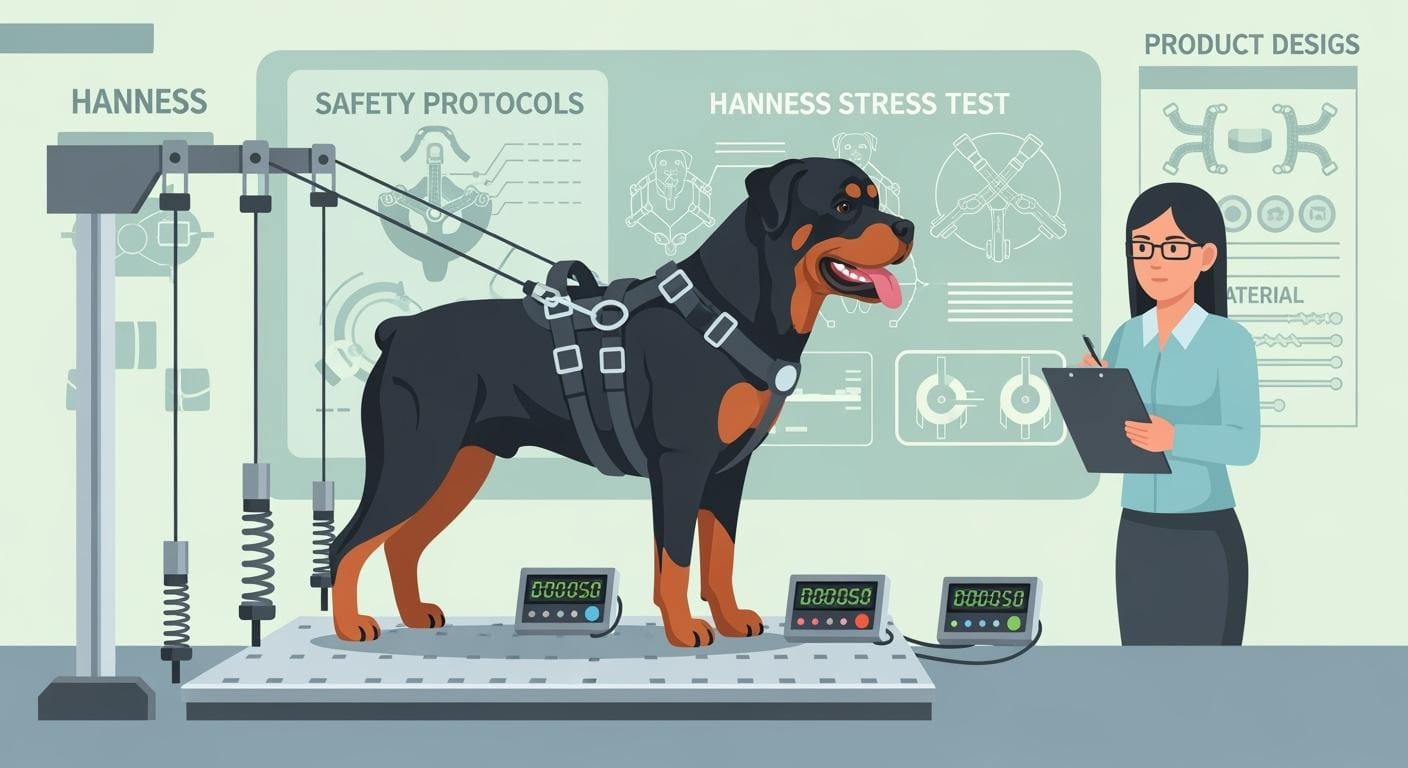
Key takeaways
- Choose a harness that stays low on the chest and does not shift toward the throat when your dog pulls.
- Check shoulder freedom, elbow clearance, and side-to-side balance before you trust the harness on longer walks.
- Watch for soft-failure signs such as twisting, rubbing, slipping adjusters, or front clips that pull the whole harness off line.
- Inspect stitching, webbing edges, rings, and adjusters regularly because large dogs can wear gear faster under daily tension.
How a big dog harness should behave once the leash loads
Large dogs create more forward force, more sideways torque, and more repeated strain than smaller dogs. That changes what “good fit” really means. A harness that seems comfortable during a quick try-on can start slipping out of position when your dog lunges toward movement, leans into a turn, or keeps steady pressure on the leash during a long walk.
Start with a shape that keeps the chest section low enough to stay clear of the throat and broad enough to spread force without digging. The belly strap should sit far enough behind the front legs to avoid constant rubbing, but not so far back that the whole harness rotates when tension increases. If you need a broader comparison of styles, clip layouts, and sizing logic first, this best dog harness guide is the right reference point before you narrow down large-dog fit problems.
For bigger dogs, these checks usually matter more than a long feature list:
- A chest section that stays centered instead of drifting toward one shoulder.
- Enough adjustment range to fine-tune neck and chest fit separately.
- Load-bearing straps that feel wide and stable instead of cutting in under tension.
- Hardware that feels secure without adding hard pressure points on the spine or ribs.
- A handle only if it lies flat and does not create bulk or rubbing during normal walks.
A no-pull design only helps when the harness stays aligned. If the front clip keeps dragging the structure sideways, bunching the chest section, or making one strap carry more force than the other, the setup is not solving the real problem. In practice, a stable harness with a sensible leash setup often performs better than a more aggressive control design that shifts every time your dog surges.
For big dogs that pull, the key question is not whether the harness has a no-pull label, but whether the whole structure stays balanced when the dog surges forward, turns sideways, or keeps steady pressure on the leash.
Fit checks before the first full walk
Before you judge a harness, do a short fit test at home and then repeat the check after several minutes of real movement. Big dogs often hide minor discomfort until they start walking, trotting, sitting, or leaning into the leash.
- Fasten the harness and check each main strap with a two-finger test. You want secure contact, not squeezing.
- Make sure the chest section sits on the breastbone instead of riding high toward the throat.
- Look from above. The harness should stay centered rather than twisting toward one side.
- Walk your dog forward, turn both ways, and ask for a sit. Watch for pinching, gaping, or strap migration.
- Check the area behind both front legs. If the harness touches there while your dog moves, rubbing usually gets worse over time rather than better.
Leash pairing matters here too. A very short leash can make every movement feel abrupt, while an overly long leash can make a strong dog harder to redirect cleanly in crowded spaces. For everyday walking, pairing the harness with a sensible setup from this dog harness and leash set guide makes it easier to tell whether the issue is the harness itself, leash length, or the way both are working together.
| What to check | Good sign | Red flag |
|---|---|---|
| Neck and chest position | Chest section stays low and clear of the throat | Harness rides up toward the neck during pulling |
| Shoulder movement | Dog walks and turns freely | Shortened stride, stiffness, or resistance |
| Side-to-side stability | Harness stays centered when the leash tightens | Harness twists or slides toward one shoulder |
| Elbow clearance | No contact behind the front legs | Rubbing, hair loss, or repeated scratching |
Wear points and soft-failure signs to inspect regularly
A big dog does not need to break a harness for the harness to start failing. In everyday use, the more common problem is soft failure: the gear still looks usable, but fit, stability, and comfort are already getting worse. That is what turns a harness from “fine enough” into something that slowly creates rubbing, twisting, and harder handling.
Pay close attention to these areas:
- Stitching at stress points: Check where straps meet the chest section, back section, and leash ring attachments.
- Webbing edges: Fraying or roughness can mean repeated abrasion and often starts rubbing before owners notice visible damage.
- Adjusters: If they slip during a walk, the fit can change fast and make a previously stable harness unreliable.
- Metal rings and clip points: Look for bending, grooving, or sharp wear that may damage the leash attachment area.
- Padded zones: Compressed or uneven padding can create pressure points even when the outside still looks acceptable.
Comfort problems often appear before visible breakage. If your dog starts scratching at one area, slowing down, leaning away when you bring the harness out, or developing hair loss in one repeated contact zone, treat that as a real fit warning. The harness does not need to snap to stop working well.
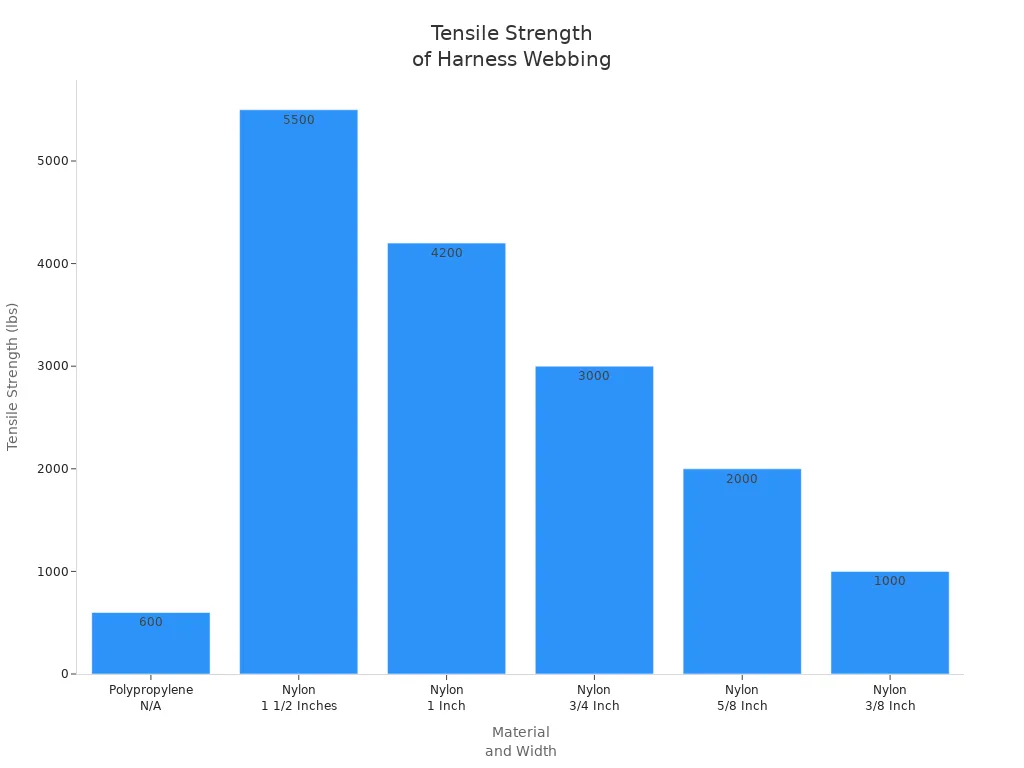
Material strength alone does not guarantee a better walk. Fit, stability, adjuster hold, and hardware condition still decide how the harness behaves once it is used daily on a stronger dog.
Common big-dog harness problems and what they usually mean
If a harness feels disappointing, the issue is often easier to diagnose than it first seems. Use these quick checks before replacing the whole setup.
The harness twists when my dog pulls
When a harness twists as a big dog pulls, the problem is usually uneven load: the chest fit may be too loose, the front attachment may be changing the pull angle too sharply, or the harness shape may not match the dog’s body depth and shoulder width.
The harness rides up toward the throat
Look for a chest section that sits too high or a belly strap that is not anchoring the harness firmly enough. A stable fit should keep force on the chest, not the neck. If the harness climbs every time the leash gets tight, that design is the wrong match for your dog.
The harness rubs behind the legs
Check whether the belly strap sits too close to the elbows or whether the harness shifts backward while walking. Sometimes tightening one area and loosening another solves it. If the strap still tracks into the same rub zone, the size or cut is wrong.
My dog still pulls hard in a no-pull harness
No-pull does not mean no effort. It means the harness should help you redirect without choking, slipping, or fighting your dog’s movement. If the harness stays stable but pulling continues, revisit leash handling, route choice, and distraction level. If the harness spins or bunches up, fix the fit first because the gear is getting in the way.
FAQ
How tight should a big dog harness be?
It should feel secure enough that the harness does not rotate or gap, while still allowing two fingers under the main straps. Your dog should be able to walk, sit, and turn comfortably without pinching or throat pressure.
Is a front-clip harness always best for a strong dog?
Not always. A front clip can help with redirection, but it only works well if the harness stays centered. If it pulls the harness sideways or creates rubbing, a different shape or clip layout may work better.
How often should I inspect a harness for wear?
Give it a quick visual check before each walk and a closer inspection every week if your dog is large, strong, or walks often. Pay extra attention after muddy hikes, rain, or repeated pulling episodes.
When should I stop using a harness immediately?
Stop using it if you see cracked hardware, broken stitching, slipping adjusters that will not hold, sharp worn metal, or rubbing that is causing hair loss or skin irritation. Those are safety and comfort problems, not minor cosmetic issues.






