
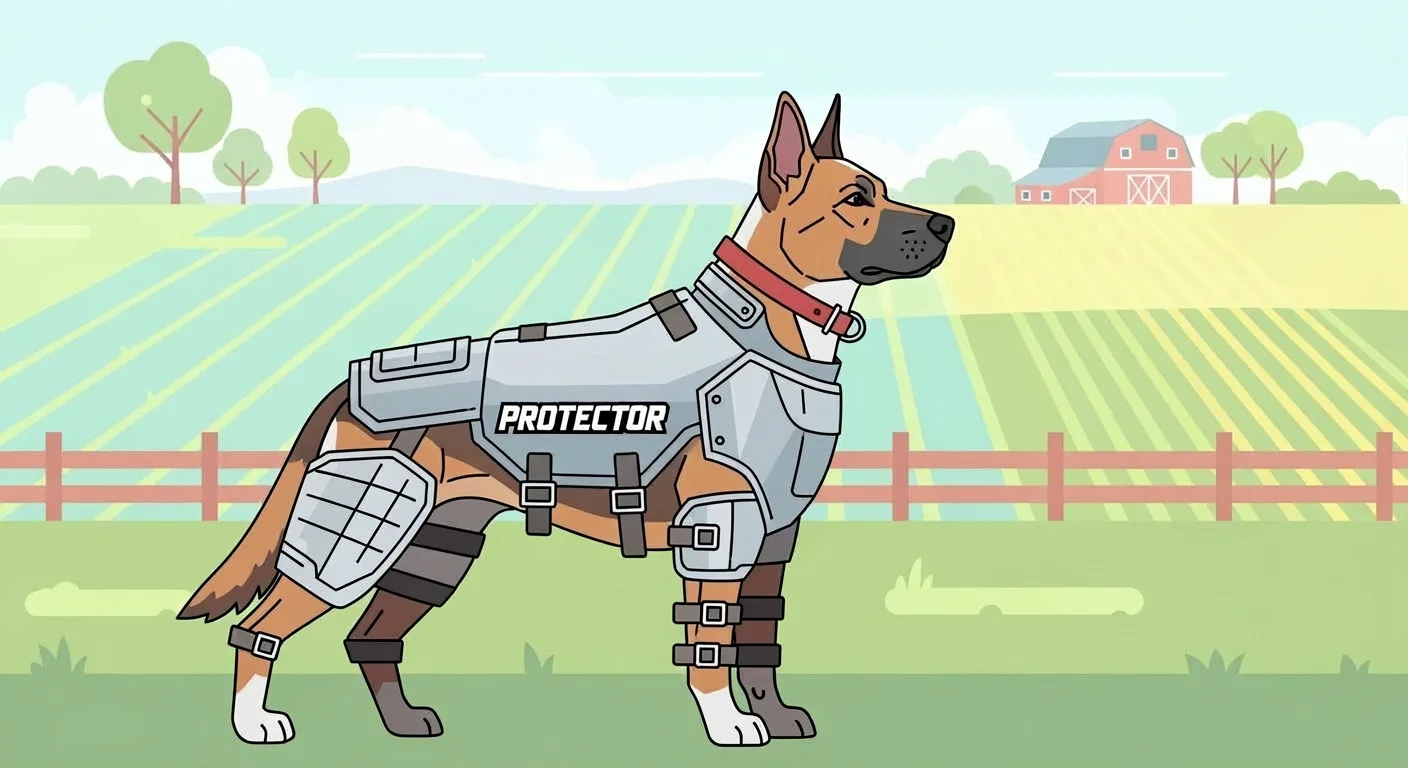
StridePaw develops and supplies outdoor and travel dog gear for pet brands, retailers, and distributors, including businesses that sell protective dog gear in rural and high-risk markets. Through product feedback, return patterns, and field-use questions, we see recurring concerns around wildlife exposure, thorn and terrain damage, fit stability, and real-world wear limits. This guide combines that product-focused view with guidance from veterinarians, wildlife agencies, and protective-textile standards to give pet brands a practical checklist.
For this guide we also consulted open guidance from veterinary professionals, dog trainers who work in rural areas, and wildlife-safety resources, so that the checklists reflect both lab thinking and everyday field practice.
You face real dangers when your pet goes outside. Wildlife, sharp thorns, and bad weather can hurt dogs during travel and outdoor fun. Dog armor, like protective vests, helps keep pets safe from bites and other dangers. More people want advanced gear like coyote vests and weatherproof dog armor. This is because pet owners see these risks more now. Pet travel gear must keep dogs comfortable and safe. You can lower risk for your dog by picking armor that fits well and covers weak spots.
Dog armor does not promise total safety for your pet. Always watch your dog and ask your vet for advice, especially for weak breeds.
Dog armor should help protect pets during trips, farm work, and play outside. Pet brands can help by making new products and setting high standards for dog care.
Key Takeaways
- Dog armor, like coyote vests, helps keep pets safer from wild animals and dangers outside. Pick armor that fits well and covers weak spots.
- Find dog armor made with tough, bite-resistant materials. This can reduce injuries from sharp things and animal bites, even though no fabric is completely bite-proof.
- Choose vests that are weatherproof and strong. These keep your dog safe in different weather. Warm and water-resistant features are important for outdoor trips.
- Make sure the armor is comfy and can be adjusted. A good fit lets your dog move easily and have fun outside without pain.
- Watch your dog when outside. Dog armor helps keep your pet safe but does not replace careful watching and good training.
Dog Armor Protection Scenarios
Wildlife and Predator Risks
Your pet can meet wild animals outside. In the country, some animals can hurt your dog. You need to know which animals are most dangerous. This helps you pick the best protection. Some common wildlife predators are:
Wildlife agencies and dog-safety resources in North America report that coyotes and other predators can injure or kill small dogs in both rural and suburban areas, and they recommend supervising pets, keeping them on a leash, and avoiding known high-risk areas during breeding and pupping seasons.
- Porcupines: These animals can hurt your pet with sharp quills. Quills can stick in the skin and cause infection.
- Fishers: These animals sometimes fight with dogs in places like Ontario.
- Coyotes: Coyotes are seen more often now. They can hurt or kill dogs of any size. Coyotes can also spread diseases like rabies.
- Eagles: Big birds like eagles can grab small dogs. They can hurt bigger dogs with their strong claws.
- Owls: Owls can attack small dogs. They often do this without warning.
You want to keep your dog safe from bites and attacks. A coyote vest for dogs helps protect your pet from these dangers. The vest covers important areas and uses strong materials. It can stop bites and punctures. Many people use a coyote vest for dogs to keep their pets safe. You should also think about anti-bite vests for small pets. These vests help protect against sharp teeth and claws.
Manufacturers of coyote vests share case stories where protective vests helped reduce the severity of attacks from coyotes or aggressive dogs, and news reports describe dogs that now wear spiked, stab-resistant vests after surviving wildlife attacks. These products are designed to make it harder for a predator to bite the neck and back, but no vest can guarantee that a dog will not be injured.
No vest can promise total safety. Always watch your pet outside. Ask your vet for advice, especially if your dog is small or weak.
Environmental Hazards: Thorns, Wires, and Terrain
Your pet can get hurt by things outside in the country. Sharp objects and rough ground can cause bad injuries. The most common dangers are:
- Barbed, razor, and concertina wire: Dogs can get stuck or cut by sharp wire.
- Thorns and sharp leaves: These can cut or scratch your pet’s skin.
- Rough ground: Metal rods, broken glass, and other sharp things can cause deep wounds.
| Aspect | Rural Areas | Urban / Suburban Areas |
|---|---|---|
| Physical hazards | Barbed and electric fences, thorn bushes, irrigation ditches, uneven ground. | Broken glass, metal, construction debris, storm drains, traffic. |
| Wildlife encounters | Coyotes, porcupines, snakes, birds of prey. | Fewer large predators but more encounters with stray or off-leash dogs. |
| Supervision challenges | Larger properties and fields make it harder to watch dogs at all times. | Smaller yards but higher exposure to roads and people. |
A coyote vest for dogs helps protect your pet from cuts and pokes. The vest covers the chest, back, and sides. These are the most at-risk areas. Check the vest’s fit and coverage to keep your dog safe and comfy. Always look at your pet after going outside for any injuries.
Outdoor Activities: Hiking, Farm Work, and Hunting
Outdoor fun gives your pet exercise and happiness. But it also brings more chances for injury. Hiking, farm work, and hunting can be risky for your dog. The most common injuries are:
News reports regularly describe dogs that have suffered serious injuries from coyotes or rough terrain during ordinary backyard time or walks, and some of those owners now use spiked, stab-resistant vests as an added layer of protection when their dogs go outside again. These stories underline that dog armor is most useful when it is part of a wider safety plan that includes supervision, leashes, and avoiding high-risk areas during peak predator activity.
- Deep cuts from rocks, glass, and thorns
- Torn nails from rough ground
- Wetness between paw pads, causing pain
- Cuts and scratches on the face
- Muscle sprains and strains
- Broken or dislocated bones
- Ligament injuries
- Burned or scraped paw pads
- Split or broken nails
- Paw burns from hot ground
- Injuries from cold or hot weather, like frostbite or heatstroke
Many things change your pet’s risk, like how alert they are, health, age, breed, weather, and where they are. You can help protect your dog by using a coyote vest for dogs during these activities. The vest gives extra protection from bites, scratches, and pokes. It also helps lower the risk from rough ground and sharp things.
A coyote vest for dogs does not replace watching your pet or training. You should always keep an eye on your dog outside. Check the vest for damage and make sure it fits right. Ask your vet if your dog has special needs or health problems.
Tip: Pick a coyote vest for dogs that covers well, stops pokes, and feels good. Look for adjustable straps and materials that let air through. This keeps your pet safe and happy.
A coyote vest for dogs helps protect your pet in many outdoor places. It lowers the chance of injury but does not promise total safety. You are the most important part of your dog’s safety by staying alert and making smart choices.
Outdoor Pet Product Requirements
Bite-Resistant and Anti-Penetration Materials
You want your dog to be safe outside. That means choosing fabrics and constructions that can resist biting and puncturing, not just ordinary raincoat cloth. Many high-performance protective textiles for people use fibers such as aramid or ultra-high-molecular-weight polyethylene, sometimes blended with tightly woven nylon or polyester. These fibers are already used in products like cut-resistant gloves and stab-resistant clothing.
- High-tenacity fibers help slow down or deflect teeth and thorns.
- Multi-layer constructions can spread the force of a bite over a larger area.
- Reinforced panels over the neck, chest, and back protect common attack points.
- Repeat testing makes sure the fabric keeps its performance after flexing and getting wet.
When you brief suppliers, ask whether they reference mechanical-risk standards such as EN 388 for puncture and tear resistance in their lab tests, and request reports that show how much force the fabric withstood before a blunt probe penetrated.
Some labs can also run ASTM-style cut and puncture tests, such as ASTM F2992 for cut resistance, which are widely used for evaluating protective gloves and garments for people and can be adapted as a benchmark for dog armor fabrics.
Dog armor with these materials can help reduce injuries from bites and sharp objects, especially when combined with supervision and good training.
Weatherproof and Durable Construction
Weather can change fast outside. You need dog armor that keeps your pet safe from rain and snow. Weatherproof vests use tough fabric to stop bites and thorns. Water-resistant shields keep your dog dry and comfy. Neoprene keeps dogs warm and comes in different thicknesses. Polyester dries fast and is often recycled. Soft shell fabric stretches and blocks wind and water.
- Tough fabric helps resist sharp things.
- Water-resistant shield keeps your dog dry.
- Neoprene keeps your dog warm.
- Polyester is light and dries quickly.
- Soft shell fabric stretches and blocks wind.
For water protection, outdoor-gear brands often rely on hydrostatic head tests such as ISO 811 or AATCC 127. These methods measure how much water pressure a fabric can withstand before it leaks. You can ask suppliers for hydrostatic head ratings so you can compare fabrics on a consistent scale instead of only feeling samples by hand.
| Feature | Benefit |
|---|---|
| Water-resistant shield | Keeps your pet dry and comfortable in wet weather. |
| Durability you can trust | Is designed to endure rough play and harsh conditions better than regular fabrics. |
Insulated vests keep heat in and block cold air. This helps protect dogs in very cold weather. You want dog armor that lasts and keeps your pet safe.
Practical Lab and Field Tests for Dog Armor
You do not need a full military test range to check whether dog armor designs work. Pet brands can add a few simple, repeatable tests to their development process:
- Puncture test on fabric panels: Ask a lab to perform a blunt-probe puncture test based on standards such as EN 388, and compare how much force different fabrics withstand before they are pierced.
- Brush and thorn exposure: Mount sample armor panels on a test rig and pull them through trimmed thorn branches or brush in a controlled setting to see how quickly the surface abrades or tears.
- Waterproof checks: Use waterproof-fabric tests such as ISO 811 or AATCC 127 to see how long fabrics resist water under pressure and whether seams or quilt lines leak first.
- Comfort and movement check: Have dogs wear prototype vests during normal walks or on a treadmill under veterinary supervision. Watch for rubbing, restricted gait, or overheating, and adjust patterns or ventilation zones based on what you see.
Recording these test results in a simple table for each model helps you compare designs objectively and gives you concrete data to share with retailers and regulators.
Comfort, Fit, and Adjustability
Dogs need to feel good and move easily. Dog armor should fit well and be easy to adjust. Badly fitting vests can rub and hurt your dog. Tight armor makes it hard to breathe and move. Some products use soft fabric for comfort and bright colors for safety. Other vests use special systems to spread weight for easy carrying.
- Good fit stops pain and injuries.
- Adjustable straps help you get the right fit.
- Soft fabric makes long walks more comfy.
- Special systems spread weight evenly.
Always check the fit before you use the vest. Good airflow helps keep your dog cool. Your dog should move easily and stay safe outside.
Tip: Pick dog armor with straps you can adjust, soft padding, and places for air to flow. This helps keep your dog safe and comfy.
Visibility and Safety Features
You want your dog to be easy to see outside. Bright colors and safety features help stop accidents. Reflective vests make dogs stand out in the dark. This is important for safety when you walk or play. Good containment systems help protect dogs from wild animals.
- Reflective strips make dogs easy to see.
- Bright colors help you spot your dog.
- Safety tags and lights add extra protection.
- Containment systems help keep dogs safe from wild animals.
Look for vests with many safety features. These help protect your dog during outdoor fun. Always watch your dog and ask your vet for advice if needed.
Note: Dog armor gives extra protection but does not promise total safety. Watching your dog and training are still very important.
Sourcing Dog Armor for Pet Brands
Supplier Selection and Quality Assurance
You need to pick suppliers who care about pet safety. Good suppliers know what pets need when they travel. They offer products that help keep pets safe outside. Make a checklist to check each supplier. Ask for samples so you can test how good the products are. Request papers that show their quality checks. Stay up to date with safety rules for pet travel gear. Look at online reviews and ask for references. Make a scoring system to rate suppliers.
Use a simple product-review log or category tracker to watch sales trends, return reasons, complaints, and any recall-related issues.
| Criteria | Action Steps |
|---|---|
| Assess Product Quality and Safety | Ask for samples to test quality. Request quality-control papers. Keep up with new rules. |
| Evaluate Supplier Reputation | Read online reviews and check references. Make a scoring system for suppliers. |
| Monitor Supplier Performance | Track sales patterns, return reasons, and any recall-related issues in a simple review log. |
Top suppliers use strong materials and test their products a lot. They use textile nanotechnology to make armor better and last longer. They work with experts to make new products for pet travel. Every product gets tested to make sure it is always good.
Customization and Assortment Options
You help pet owners by giving many sizes and styles. This makes sure all dogs can get armor that fits and feels good. Offer different colors and styles to match what people like. More choices make customers happy and come back again. Some pet owners say to pick a bigger size if a dog is between sizes. You can give advice on sizing to help keep dogs safe when they travel.
- Give many sizes so dogs can be safe and comfy.
- Offer lots of styles and colors for pet owners’ tastes.
- Give advice on sizing for dogs between sizes.
- Make customers happy by giving more choices.
Compliance and Testing Standards
You need to follow safety rules that apply to pet travel and outdoor gear in your target markets. Work with accredited labs to test puncture resistance, tear strength, seam strength, coverage, and durability. Many brands take inspiration from textile and PPE standards used for people, for example EN 388 for mechanical risks or military specifications for webbing and stitching, even though there is no dedicated dog-armor law today.
Document your chosen performance levels and keep test reports as part of your technical file. At the same time, warn pet owners about overheating or restricted movement and encourage them to discuss any special health risks with their veterinarian. Collect structured feedback from customers in outdoor and rural areas so you can keep refining your designs.
Tip: Always test dog armor for fit, coverage, and safety before selling it. Listen to what customers say to make your pet travel gear better.
Matching Dog Armor to Outdoor Use Cases
Choosing the Right Protection for Each Scenario
You want your pet to stay safe on every trip. Different outdoor trips have different dangers. You need to pick the right dog armor for each trip. Think about important things before you buy a vest for your pet. The table below shows what you should look at for each kind of trip:
| Factor | Description |
|---|---|
| Material Durability | Strong fabrics like waterproof and windproof ones help your pet outside. |
| Cooling Methods | Vests with cooling parts, like water-soaked or gel, stop your pet from getting too hot. |
| Buoyancy Features | Flotation vests with good buckles and bright colors help keep your pet safe in water. |
| Weatherproofing | Special materials keep water out and keep your pet warm in cold or wet weather. |
| Comfort Design | Soft and bendy fabrics let your pet move easily outside. |
Always check if the vest fits your pet well. Make sure it covers the chest, back, and sides. This helps stop cuts and bites. For water trips, pick a vest that floats and keeps your pet from escaping. For hot days, choose a vest that cools your pet down. Your pet’s gear should match the trip and what your pet needs.
Adapting to Market Feedback and Innovation
You can make pet travel gear better by listening to pet owners. Brands ask for feedback to learn about real dangers. They use social media to see what pet owners want. This helps brands make safer dog armor for outdoor trips. Some brands use new ideas from pro training gear to make vests safer.
- Brands ask for feedback to learn about real dangers.
- They use social media to talk to pet owners and see new trends.
- New vests come from listening to what pet owners need.
- Brands try new things, like better escape stops and more comfort, after hearing feedback.
You should always look for new ways to keep pets safe on trips. Ask customers about their outdoor trips and what they need. Use their ideas to make your pet gear better. This helps you follow new trends and keep every pet safe.
Tip: Always try new dog armor in real trips. Listen to pet owners and change your products to fit their outdoor adventures.
Dog armor keeps your pet safer outside and in the country. You can help your dog by picking vests that protect and feel good. Using strong materials and weatherproof designs makes pets safer. Pet brands should:
- Listen to what customers want and make safer products.
- Use special designs and packaging to show safety features.
- Test each vest to make sure it is safe and comfy.
- Use feedback to make new products even safer.
You help pets by caring about safety and new ideas every day.
About This Guide and Sources
This article is written for pet brands, retailers, and distributors that serve outdoor and rural markets. StridePaw develops and supplies outdoor and travel dog gear for these businesses, so we see recurring questions around product performance, fit stability, return reasons, and customer feedback for protective vests and other outdoor dog gear. We have combined those product-focused insights with public information from wildlife agencies, veterinary organizations, protective-textile standards, and manufacturer and news reports on coyote-protection vests.
This guide is for general product planning and is not a substitute for legal, veterinary, or engineering advice.
No piece of dog armor can remove all risk from wildlife, terrain, or other dogs. Owners still need to supervise their pets, use leashes, avoid high-risk areas when possible, and talk with their veterinarian about any special health or mobility concerns before using protective gear.
FAQ
What does “dog armor” mean for outdoor and rural use?
Dog armor is a vest that protects dogs outside. It helps keep dogs safe from bites and scratches. The vest also helps with dangers like sharp plants. Dog armor does not take the place of watching your dog. Training is still needed.
How does a dog protective vest help reduce risk?
A dog protective vest uses strong materials that stop bites. It covers important parts like the chest and back. The vest helps lower the chance of getting hurt by wild animals or sharp things.
Can dog armor guarantee my pet’s safety?
Dog armor helps keep your dog safer but is not perfect. You still need to watch your dog and train them. Always ask your vet for advice, especially for weak breeds.
What should you check before buying a dog protective vest?
Check if the vest is made from strong materials. Make sure it covers the right areas and fits well. Look for weatherproof parts and bright colors for safety. See if the vest was tested and meets safety rules.






