
A car seat for dogs should do more than raise your dog up for a better view. It needs to stay anchored during turns and braking, keep your dog contained without awkward pressure, and hold up under repeated daily use. Many problems start small: a base that sags, a tether that is too long, straps that loosen after a few trips, or side walls that look supportive until your dog leans against them. The better choice usually comes from checking how the seat behaves in the car you actually drive, not just from reading a short feature list.
That is also why it helps to compare different dog car seat options by anchoring method, body support, and cleanup needs instead of choosing by size label alone.
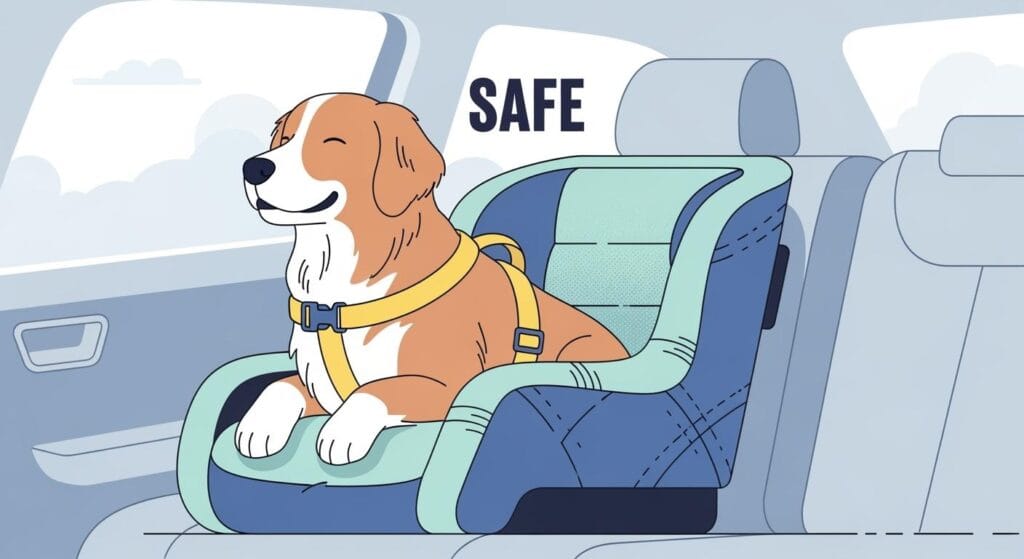
Start with fit, ride position, and how the seat anchors
The first question is not whether the seat looks padded enough. It is whether your dog can sit or lie down naturally while the seat stays level and firmly connected to the vehicle. A seat that shifts on corners or tips under body weight will feel unstable even if the inside looks soft. A seat that is too small can crowd the shoulders and chest, while one that is too large may let the dog bounce or brace constantly.
What good fit should look like
- Your dog can settle without the spine curving sharply or the chest collapsing inward.
- The side walls support the body without pressing into the throat or shoulders.
- The base stays flat under weight instead of sagging into the middle.
- The seat fits the back seat area without wobbling or leaning.
Anchoring should feel boringly secure
- Attach every strap and belt path exactly where the seat is designed to connect.
- Tighten until the seat does not slide or rock easily when pushed by hand.
- Check whether the seat stays level after your dog gets in and shifts position.
- Retest after the first short drive because loose straps often reveal themselves quickly.
| Check point | What good looks like | Warning sign |
|---|---|---|
| Seat position | Stable on the rear seat with no obvious tilt | Seat leans, rocks, or slides under light pressure |
| Dog posture | Calm sit or rest without constant rebalancing | Dog keeps bracing, slumping, or shifting sideways |
| Anchor straps | Flat, tight, and untwisted | Slack, twisting, or drift after a short drive |
| Base support | Seat bottom stays level under body weight | Base sags or collapses into soft corners |
Quick rule: if the seat feels unstable while the car is parked, it is not ready to be trusted once braking, turns, and road vibration are added.
Check tether setup, back-seat placement, and movement range
A dog car seat works best when it limits roaming without creating neck pressure or tangles. The most common mistake is treating the internal tether like a loose convenience strap instead of a restraint that needs the right length and the right connection point.
Use the tether the right way
- Clip the tether to a properly fitted harness, not to a collar.
- Keep the tether short enough to prevent jumping out or climbing over the side.
- Leave enough slack for sitting and lying down naturally.
- Recheck the clip and ring after repeated use because wear often starts there.
Why the back seat is usually the better place
A car seat for dogs is usually safer and easier to manage in the rear seating area, where the setup can stay away from front-seat distractions and airbag zones. This becomes even more useful inside a broader travel routine, where loading, settling, cleanup, and short breaks all affect how calmly your dog rides.
Movement range should be limited, not zero
Your dog should be able to reposition slightly and stay comfortable, but not climb out, twist into the tether, or bounce from one side to the other. Too much slack creates escape risk and tangling. Too little slack creates frustration and awkward body pressure. The best setup looks unremarkable because nothing is pulling, sagging, or getting in the dog’s way.
Look closely at durability before daily use exposes the weak spots
Durability problems rarely start as total failure. They usually begin as strap slippage, rough seam edges, hardware wear, or fabric that stops holding shape. A dog car seat that seems sturdy when new can become unreliable if the base softens, the side walls flatten, or the anchoring points start taking uneven force.
What to inspect before buying and during use
- Stress-point stitching where straps, handles, or tether points connect.
- Hardware that closes cleanly and does not bend under repeated use.
- Support panels or frame sections that keep the seat from sagging.
- Inner and outer fabrics that handle claws, dirt, and daily loading without fraying too quickly.
Easy cleaning matters because dirt hides wear
Dog hair, grit, and dampness do more than make the seat look messy. They can hide surface damage, make hardware feel rough, and turn a stable seat into one that smells bad and gets avoided. Removable pads and wipe-clean surfaces usually make it easier to see when the seat is still working well and when it is starting to break down.
When the seat style itself may be the mismatch
If your dog is too large to stay comfortably supported, overheats easily in a padded enclosure, or cannot settle in a boosted position, the problem may not be one loose strap or one weak seam. In that case, it helps to compare the setup against booster seat sizing and fit checks before assuming every dog car seat works the same way.
Use a simple pre-drive check and know when to stop using it
You do not need a long ritual before every trip, but you do need a consistent one. Most avoidable problems show up before the wheels even start moving if you check the same points each time.
A better pre-drive routine
- Push the seat from the front and sides to confirm it stays anchored.
- Check all straps, buckles, and the tether clip for wear or looseness.
- Place your dog inside and confirm the body stays supported and level.
- Make sure the tether length prevents climbing or jumping out.
- Look at your dog’s breathing, posture, and willingness to settle before driving off.
Stop and reassess if you notice these signs
- The seat slides or rocks during ordinary turns or braking.
- Your dog keeps bracing, pawing at the tether, or trying to climb out.
- Side walls collapse or the base sags under body weight.
- Straps loosen repeatedly after short trips.
- You see rubbing, stress signals, overheating, or obvious discomfort.
The best car seat for dogs is usually the one that stays easy to repeat. If every ride starts with retightening, rebalancing, and constant corrections, the setup is telling you it is not working well enough.
FAQ
How do I know if a dog car seat fits properly?
Your dog should be able to sit or rest naturally without slumping, the side walls should support the body without crowding it, and the seat should stay level when your dog moves.
Should the tether clip to a collar or a harness?
It should clip to a properly fitted harness, not to a collar. That helps avoid neck pressure during braking, shifting, or sudden stops.
Why does my dog’s car seat keep shifting?
Common causes include loose anchor straps, a poor seat-to-vehicle fit, a weak base, or a dog whose weight and movement are too much for that seat style to manage well.
What durability problems should I watch for first?
Check for strap slippage, loose stitching, rough or bending hardware, sagging support panels, and fabrics that are fraying where force and daily rubbing are highest.
When should I stop using the seat and switch setups?
Reassess if the seat keeps shifting, your dog cannot settle, the base collapses, the tether setup feels unsafe, or the seat no longer supports your dog’s size and ride behavior comfortably.






