
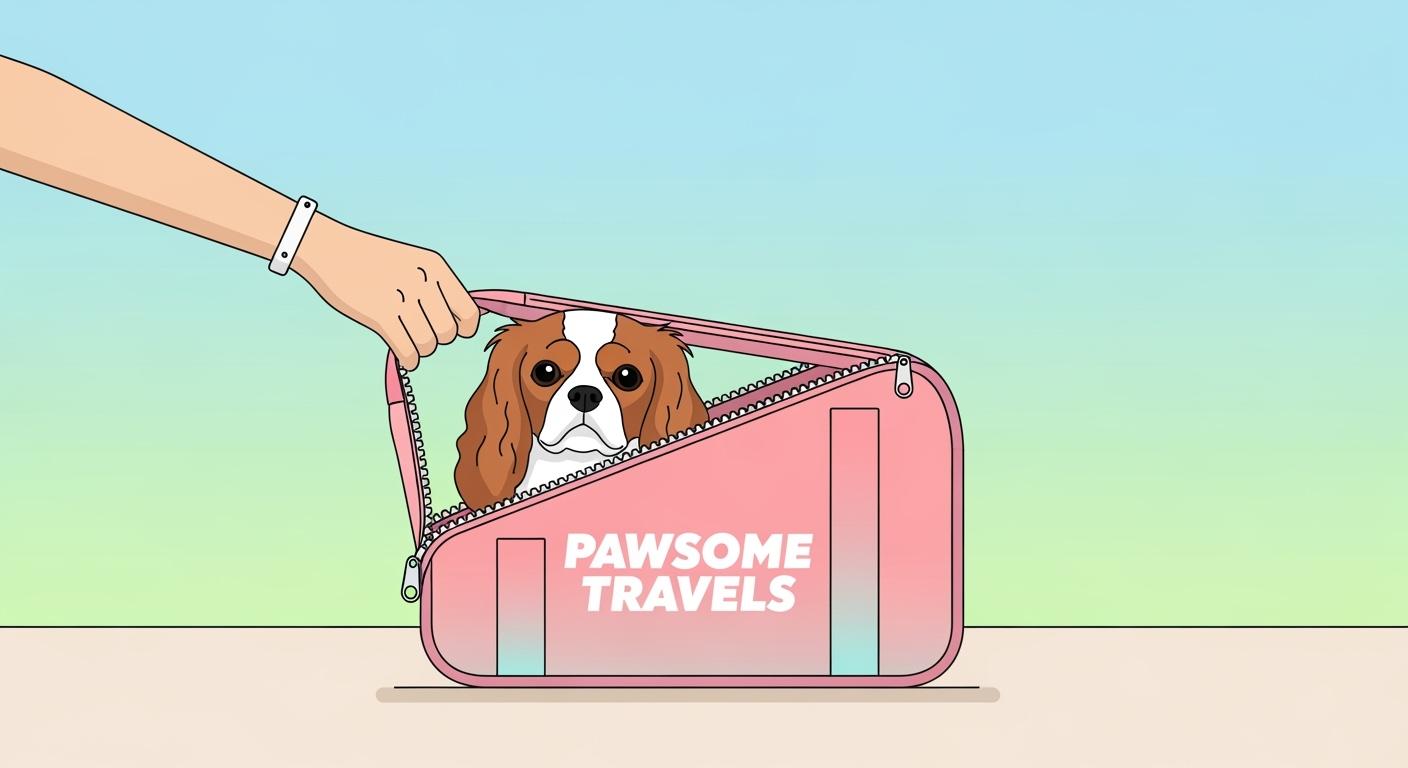
A dog tote carrier with zipper top closes the one gap most dogs learn to test first — the opening above them. A loose or open top gives a small dog something to push against. A zipper that runs the full top arc turns that weak point into a continuous barrier. The difference between a carrier that stays closed and one that doesn’t comes down to three things: how the zipper travels, whether the top edges hold their shape under pressure, and how wide the entry feels to a dog that’s already uncertain. Each is a design choice, not a material spec.
Why Loose Top Openings Become Escape Paths in Tote Carriers
How Small Dogs Exploit Weak Top Openings
A small dog doesn’t need a big gap. A nose wedged into a soft top seam is enough. Once the dog feels the panel give, the behavior reinforces itself — pushing harder next time. The physics is straightforward: a loose fabric panel distributes upward force across its entire surface, but a zipper gap concentrates it at one point. The dog learns where that point is. Some dogs work the same spot persistently; others test the full perimeter until something yields. A top that stays taut under upward pressure eliminates the feedback that drives this behavior.
Tip: Before every trip, run your thumb along the full zipper line with the carrier empty. If you can feel the teeth separating under light thumb pressure at any point, that spot will fail faster under a dog’s repeated pushing.
Escape Risk and Handling During Everyday Use
When you lift a tote carrier by its handles, the fabric panels shift. A top that sat flush on the counter can gap open as the carrier tilts in your hand. Sudden movements — setting the carrier down on a curb, navigating a door frame, bending to pick up keys — change the top panel’s orientation each time. If the zipper doesn’t hold its fully closed position through these transitions, the dog gets an opening to test. The failure doesn’t need to be dramatic. A half-inch gap near the zipper end is all a determined small dog needs to start working. The worst moments for closure integrity aren’t during steady carrying but during the transitions: lifting, lowering, pausing, setting down.
| Real-use problem | Likely carrier design cause | Better design direction |
|---|---|---|
| Dog pushes through top opening | Loose zipper or soft unsupported top panel | Full-arc zipper with reinforced top edges |
| Dog hesitates or backs out during loading | Narrow or stiff zipper opening | Wide, smooth-glide zipper opening |
| Dog resists entry entirely | Collapsing or unstable top edges | Structured top with semi-rigid edge support |
Short-Trip Conditions That Magnify Top-Opening Failures
You don’t need a long journey for the problem to surface. A walk to the car, a stop at the vet, carrying the dog through a parking lot — these are the moments where handling shifts put the most stress on the closure. Mesh panels that collapse inward under the carrier’s own weight reduce visibility, which raises anxiety in an already uncertain dog. That anxiety translates to more movement inside the carrier, which puts more force on the top closure. A tote carrier that leans away from your body during a walk — rather than staying vertical — creates uneven tension across the zipper line, concentrating load at one end. How a carrier balances during one-handed carrying directly affects whether the zipper stays evenly engaged or separates at the high-tension end.
Zipper Closure Mechanics — What Holds, What Gives Way, and Why It Matters
Zipper Stiffness Is Not About Convenience
When a dog pushes upward against a closed zipper top, the force doesn’t hit the slider — it hits the interlocked teeth behind it. Each tooth transfers part of the load to the next, distributing pressure along the chain. A smooth, well-aligned zipper makes this load path continuous. A stiff or misaligned zipper creates high-friction points where force concentrates instead of spreading. At those points, individual teeth can separate under far less total pressure than the zipper’s rated strength would suggest. The stick and the weakness share the same root cause: uneven tooth engagement. That’s why zipper smoothness isn’t about convenience. It’s a direct indicator of closure integrity under load.
Why Zipper-End Gaps Happen and How Edge Reinforcement Prevents Them
The zipper’s endpoints are where most failures start. At each end of the zipper track, the fabric transitions from reinforced tape into an unsupported panel edge. Under tension, that transition point flexes more than the zippered section. Over repeated use, the fabric at the endpoints can stretch or distort, creating a small gap even when the zipper is fully closed. Reinforced stitching at zipper ends addresses this by locking the tape into the panel with less give. In production, the difference is measurable: a double-stitched zipper-end seam with bar-tack reinforcement resists endpoint distortion far longer than a single-stitch finish, because the second stitch line acts as a load stop — force that would otherwise travel into the unsupported panel gets redirected back into the zipper tape.
Several construction details separate a carrier that holds its shape from one that gradually loses it:
- Reinforced stitching at zipper endpoints and handle attachment points — these are where tension concentrates during carrying
- Mesh on at least two sides for cross-ventilation; three sides improves airflow further without sacrificing much structure if edges are independently reinforced
- A removable, washable liner that dries without trapping odor — zipper-top carriers see more interior condensation than open-top designs
- A semi-rigid bottom panel that holds its shape under the dog’s weight — a sagging bottom pulls the side panels inward, which changes the angle at which the top zipper sits
Weak Edge Support and Visibility Trade-offs
Mesh panels do two things at once: they let air through and they let the dog see out. Both matter during loading. A dog that can see you through the carrier side panel is less likely to panic when the top closes. A dog that can see its surroundings once inside settles faster. But mesh on every side means less rigid fabric to hold the carrier’s shape. The trade-off is real: more visibility means less structural stiffness unless the edges are reinforced independently. A carrier that puts mesh on two or three sides but reinforces those edges with denser material or piping gets the airflow benefit without giving up the structural advantage. Checking edge stability before daily use takes seconds and catches the early signs of panel fatigue — a corner that folds inward under light pressure instead of springing back is losing its structure.
Entry Shape, Edge Stability, and the Conditions That Shift the Decision
Why a Wide, Stable Opening Changes Loading Behavior
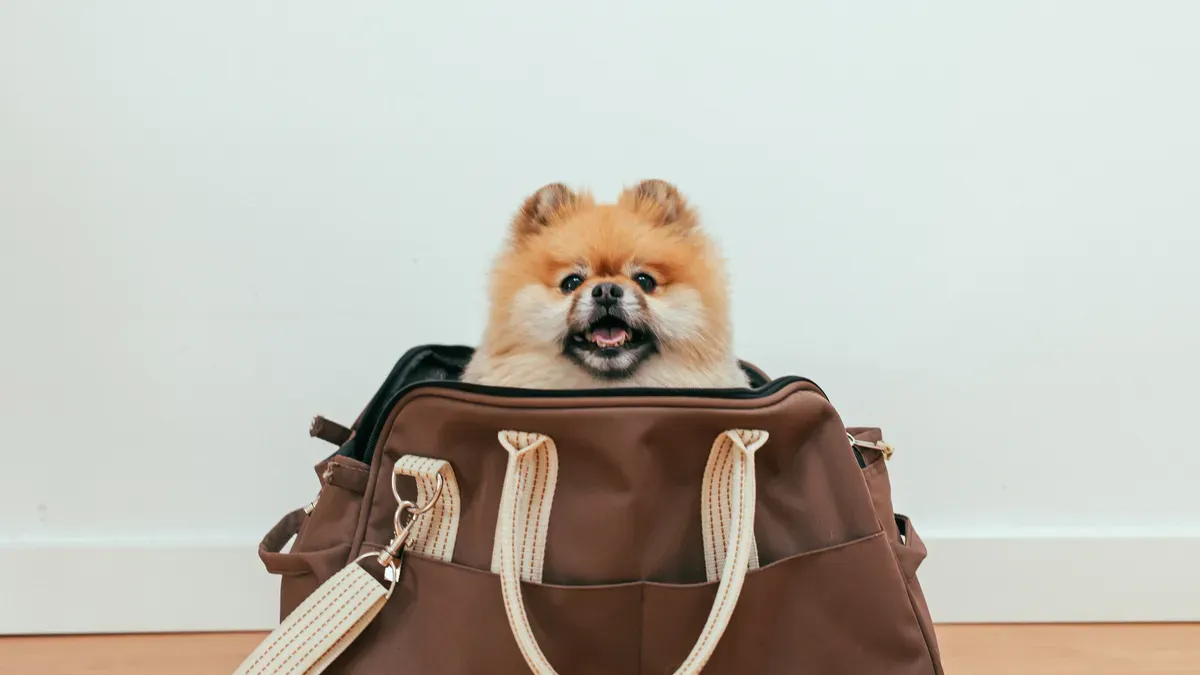
A dog that walks willingly into a carrier loads differently than one you have to guide, nudge, or place. The entry shape is what determines which of those happens. A wide opening that stays open on its own — without you holding it — removes the step where one hand holds the carrier open while the other maneuvers the dog. The dog sees an unobstructed path. The top doesn’t sag into that path mid-entry. Zippers that run the full length of the top, rather than stopping short, create the widest possible access. Combine that with edges that don’t collapse when the carrier is unzipped, and loading becomes a single smooth motion instead of a negotiation.
The shape of the opening also affects what happens after the dog is inside. A zipper that arcs smoothly — following a gentle curve rather than a sharp corner — closes with even tension across all teeth. Sharp-cornered zipper paths create stress risers at the turn points. Under load, those corners are where teeth disengage first. The relationship between opening shape and one-handed access is one of those design details that only shows up during real use — when you’re holding the carrier with one hand and closing the zipper with the other.
Tip: Practice opening and closing the zipper top one-handed at home before you need to do it with a dog inside. A zipper that binds during one-handed operation under real conditions will bind worse when the carrier is weighted.
When Stable Edges and Mesh Work Together — and When They Don’t
Stable top edges keep the carrier’s shape during loading and carrying. When those edges collapse, two things happen at once: the opening narrows mid-entry, and the dog’s visual field closes off. Both increase resistance. But stability alone isn’t enough. A carrier with rigid edges and no mesh panels becomes a dark box — safe, maybe, but more anxiety-inducing for a dog that wants to see what’s happening. A carrier with mesh on every panel but no edge reinforcement sags progressively through a trip.
The most functional combination puts structured edges where load concentrates — the top perimeter, the zipper track, the handle attachment points — and mesh where visibility and airflow matter most — the sides. This isn’t about more features. It’s about putting the right material in the right place. A tote carrier built this way handles short urban trips differently than one where the structure is evenly distributed — the distributed approach works fine on a flat surface but sags predictably when carried by one handle.
| Real-use problem | Likely carrier design cause | Better design direction |
|---|---|---|
| Dog resists entry | Narrow or collapsing top opening | Wide, stable entry with structured edges |
| Dog pushes against top during carry | Loose zipper or soft unsupported panel | Full-arc zipper, reinforced top edges |
| Dog shows anxiety inside carrier | Collapsing panels, blocked visibility | Structured top, mesh on multiple sides |
Verifying Fit Without Special Tools
After loading the dog and closing the zipper, set the carrier down flat and look at the top panel from the side. If the zipper line bows upward — curving away from the dog’s back — the top panel is under tension from the inside. That tension is what the zipper is resisting every second the dog is inside. Now lift the carrier by one handle and check again. If the bow increases on the lifted side, the load isn’t distributing evenly across the closure. Over time, this uneven loading stretches the zipper tape on the high-tension end. Check both sides after a 10-minute carry: carrier fit checks that catch uneven loading are the same across sling and tote styles — if the wear pattern on the zipper tape is visibly different from one end to the other, the carrier’s structure isn’t supporting the closure evenly.
When a Zipper-Top Tote Is Not the Right Carrier
A zipper-top tote works best for small dogs under roughly 15 to 18 pounds — dogs light enough that the carrier’s structure isn’t load-bearing in the way a backpack frame is. Above that weight, the top panel and zipper take on more structural load than they’re designed for. The closure may hold initially, but the fabric and edge support degrade faster under the added stress.
Dogs that panic when enclosed — not just nervous, but thrash or chew at fabric — may injure themselves or damage the carrier before they settle. For these dogs, an open-top carrier or a hard-sided crate with a latched door is a safer starting point. Gradual desensitization at home, with the zipper fully open and the carrier on the floor, helps some dogs. But the carrier itself can’t solve severe confinement anxiety.
A tote carrier also changes how you move. One arm carries the weight. The other arm is free. If your routine involves stairs, transit turnstiles, or navigating crowded spaces where both hands are sometimes needed, a single-shoulder tote design may work better on flat routes than on routes that demand frequent two-handed stability.
Disclaimer: The fit and closure checks described here assume a carrier properly sized for the dog — enough interior space to stand, turn around, and lie down without the top panel pressing against the dog’s back when zipped closed. If the top panel rests directly on the dog, the carrier is undersized and the closure is under constant upward pressure that no zipper design can reliably withstand long-term. For dogs with barrel chests or unusually tall shoulder builds relative to their weight, check that the interior height clears the dog’s standing shoulder height by at least an inch before relying on the zipper closure alone.
FAQ
How do I get my dog used to a zipper-top tote carrier?
Place the carrier on the floor with the zipper fully open. Let the dog approach on its own. Drop treats near the opening, then inside. Close the zipper for 5 seconds, open it, and reward immediately. Extend the closed duration gradually across multiple short sessions over several days — not in one long session. The goal is to make the sound of the zipper closing a predictor of treats, not confinement.
Can a dog push through a closed zipper top?
A fully closed zipper with properly interlocked teeth distributes pushing force across the full closure chain. Under normal use, a small dog cannot generate enough concentrated force at a single point to separate engaged zipper teeth. But if the zipper is not fully closed — leaving even a partial gap — the dog can wedge into that gap and widen it. Always verify the slider is at the fully closed end stop before lifting the carrier. A zipper that looks closed but still has a quarter-inch of slider travel remaining is not closed.
What size dog fits in a tote-style zipper-top carrier?
The dog needs enough interior space to stand without the top panel touching its back, turn around freely, and lie down. Most tote-style carriers designed for this closure type accommodate dogs up to roughly 15 to 18 pounds, but the limiting factor is body length and shoulder height more than weight. Measure your dog’s standing height from floor to shoulder top and its length from chest to rump base, then check both against the carrier’s interior dimensions — not its exterior measurements, which include padding and panel thickness.
How often should I check the zipper and top edges for wear?
Check before each trip: run the zipper full open and full closed, feeling for resistance changes that weren’t there before. Press down on each top corner with your thumb — if a corner folds inward more than it did when the carrier was new, the edge support is degrading. Inspect the zipper-end stitching under direct light; pulled threads or fabric puckering at the endpoints is the earliest sign that reinforcement is failing. Catching these changes early means the difference between replacing a worn carrier and dealing with an escape.






