

Wet grass. Damp tent floors. Mud tracked in after every walk. A dog bed in van life faces conditions no indoor bed was built for. The difference between a bed that works and one that does not comes down to three design choices: whether the bottom blocks ground moisture, whether the padding holds its structure after daily folding, and whether the cover comes off for cleaning when there is no washing machine for miles.
Most beds fail on at least two of those. The ones that hold up share a specific set of design decisions. Here is where the differences show up first.
Why Ordinary Beds Fail on Wet Ground and in Tight Spaces
Moisture Moves Up, Not Down
Set a standard plush dog bed on wet grass and the failure starts within minutes. The bottom fabric, usually a soft polyester fleece or cotton blend, acts as a wick. Ground moisture moves upward through capillary action — the same force that pulls water up a paper towel. Each fiber strand creates a narrow channel; the narrower the channel, the higher water climbs against gravity. A bed with an untreated fabric bottom gives moisture thousands of these channels.
The padding inside then holds that water. Open-cell polyfill, common in indoor beds, traps moisture in its air pockets. The bed stays cold. Your dog avoids it. Within a few days of this cycle, mildew odor sets in. This is not a cleaning problem. It is a material-selection problem — one that changes how the bed performs on wet campsites where the ground never fully dries between mornings.
Padding That Dies Under Repetition
Van life means you fold the bed every time you move. Fold it in half. Shove it behind the seat. Unfold it at the next stop. Indoor beds use loose-fill polyester or low-density foam. Neither survives this routine. The fill shifts. The center compresses. After two weeks, your dog is sleeping on a thin layer of fabric with the van floor right underneath.
The problem is structural, not about thickness. Loose-fill padding has no internal matrix to resist repetitive compression. Each folding cycle shifts fibers a little more toward the edges. The center goes flat. The edges bulge. You end up carrying a bed-shaped object that no longer functions as a bed. This is where camping shelter and rest gear designed for ground contact pulls ahead of indoor pet bedding — the materials are chosen for compression recovery, not just initial softness.
Cleaning Without a Washing Machine
On the road, you cannot throw a dog bed in the laundry every time it gets muddy. Most beds are not designed with that constraint in mind. Covers that do not zip off mean you are spot-cleaning fabric that holds dirt in its weave. Odors build up. The bed becomes something you tolerate rather than something that works.
A design that acknowledges road life puts the cleaning interface at the surface level: a cover that unzips in seconds, fabric that releases hair with a shake rather than gripping it, and a core that does not absorb whatever gets past the cover.
Design Differences That Change How the Bed Performs
A Bottom Layer That Blocks, Not Absorbs
The single most consequential design decision for a van life dog bed is what goes on the bottom. A water-resistant base layer — typically a coated oxford fabric or TPU-laminated polyester — changes the moisture equation entirely. Instead of capillary channels, the ground-facing surface presents a continuous non-porous membrane. Water beads on the surface. It cannot climb into the padding.
This is not about waterproofing the whole bed. It is about creating a one-way barrier: moisture stays on the ground side, body heat stays on the dog side. An elevated frame takes this further by introducing an air gap. Air circulating underneath the bed carries away humidity before it can condense. An elevated outdoor bed with a raised platform adds that gap, which matters most in humid environments where ground moisture is persistent rather than occasional.
You can verify whether the bottom layer works in under thirty minutes. Place the bed on wet grass. After half an hour, flip it over and press a dry paper towel against the underside. Moisture on the towel means the barrier failed. A dry towel means the membrane did its job. That is the difference between a coating and a real moisture block — and it is testable without any special equipment.
Outer Fabric Built for Repeated Abuse
The top and sides of the bed face a different set of demands: claws, dirt, sand, and constant friction against van flooring. The fabric choice determines whether the surface holds up or frays within a season.
| Fabric Type | How It Handles Stress | Where It Falls Short |
|---|---|---|
| Ripstop Nylon | Grid-thread pattern stops small tears from spreading; lightweight enough to fold compactly | Slick surface lets the bed slide on smooth van floors unless paired with a non-slip base |
| Ballistic Nylon | High-denier weave resists claw punctures and abrasion from repeated dragging | Stiffer hand feel; less compressible for tight storage spaces |
| Canvas Duck Cloth | Dense cotton-poly weave disperses point pressure from claws and digging across more threads | Heavier when wet; slower to air-dry compared to synthetics |
None of these fabrics is universally better. Ripstop works for dogs under 40 pounds in frequently packed setups. Ballistic nylon makes sense for larger breeds with stronger claws. Canvas duck cloth suits dogs that dig or nest before settling — the weave spreads the mechanical stress so no single thread takes the full force.
Walk your dog for ten minutes after a light rain, then check the bed surface. Mud and grit should sit on top of the fabric, not work into the weave. If you can brush it off with a dry hand, the fabric is doing its job. If you are picking particles out of the threads, the weave is too open for the environment. This kind of real-world check matters more than any lab spec when you consider whether warmth or cleanliness is the bigger priority for your setup.
Padding That Recovers Its Shape
The padding inside the bed takes the hardest beating. Every folding cycle compresses it. Every night of a sixty-pound dog lying on it applies sustained load. If the padding does not recover, the bed becomes a mat.
Closed-cell foam is the standout for van life. Its structure — millions of individual gas-filled cells, each sealed from its neighbors — means compression in one area does not propagate. The cells push back independently. Compare that to open-cell polyfill, where air moves freely between fibers, displacement is permanent, and the loft does not return.
| Padding Type | Shape Recovery | Van Life Limitation |
|---|---|---|
| Closed-cell foam | High — individual sealed cells rebound independently after load is removed | Firmer initial feel; dogs accustomed to plush surfaces may need an adjustment period |
| Self-inflating pad | Moderate to high — depends on valve and weld integrity | Valve failure is not field-repairable without a patch kit; one leak and the pad is done |
| Open-cell polyfill | Low — air moves freely between fibers, so compression displaces fill permanently | Rapidly loses loft under daily folding; common failure within two weeks of van use |
After a week of daily folding and packing, measure the bed’s thickness at the center and at each corner. A difference under half an inch means the padding is holding. More than an inch of center thinning means the internal structure is breaking down — and it will not recover with more time left unfolded. The right outdoor dog bed sizing and support features start with a padding core rated for recovery, not just initial softness.
Cover Removal That Actually Works on the Road
A removable cover sounds like a checklist feature. The difference is in the zipper placement and fabric choice. A zipper that runs three sides of the cover lets you strip it in under ten seconds without wrestling. A single-side zipper means you are tugging foam through a narrow opening in a cramped van — frustrating enough that most people stop bothering after the first week.
The cover fabric matters too. Tight weaves shed hair with a shake. Looser weaves hold it. If you can see your hand through the fabric when you hold it up to light, hair and grit are finding their way through to the padding underneath.
Foldable Structure That Fits the Space You Actually Have
Van floors measure a few square feet. A bed that does not fold to half its footprint or less takes up space you cannot spare. Beyond foldability, the bed needs to hold its folded shape without straps that break or a roll that unspools itself while driving. Designs that fold flat and stay flat — through a simple buckle strap or a stiffened edge that resists unrolling — remove the daily annoyance of re-packing the same bed three times.
When This Design Works — and When It Reaches Its Limits
A water-resistant bottom, closed-cell foam padding, and a ripstop cover solve the most common van life failure points. But no design is universal. In consistently dry climates where ground moisture is not a factor, the water-resistant bottom adds weight and cost without returning a functional benefit. For dogs under fifteen pounds that do not compress padding significantly, the recovery advantage of closed-cell foam over polyfill is smaller — the load is not enough to trigger the failure mode.
The foldable structure tradeoff is real too. A bed that folds flat generally uses thinner padding than a non-folding equivalent. For senior dogs with joint issues, that thinner profile may not provide enough pressure redistribution on hard van floors. In those cases, a thicker non-folding pad paired with a dedicated storage spot in the van may serve the dog better than a foldable design that prioritizes packability over cushioning depth.
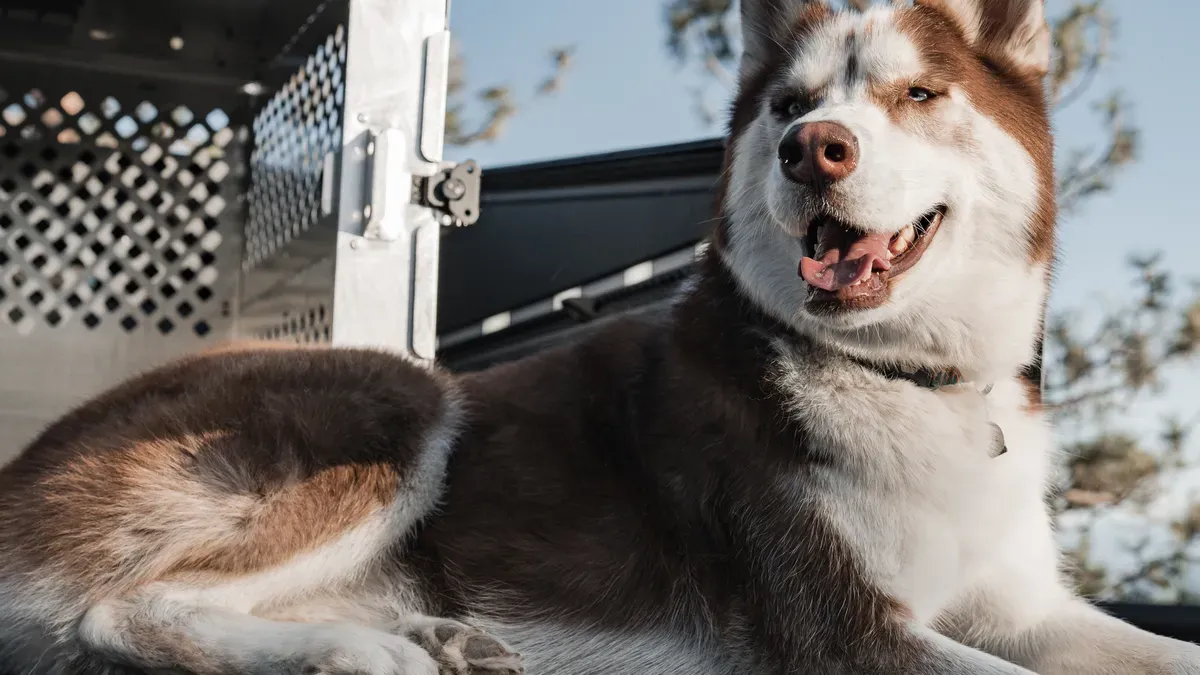
Disclaimer: The moisture checks described here assume a smooth-coated or short-haired dog where wetness against the skin is immediately visible. Double-coated breeds like huskies or malamutes may have a dry outer coat while the undercoat traps moisture against the skin for hours. For these breeds, hand-check the undercoat directly after the dog has been lying on the bed for an extended period — visual inspection of the top coat alone will miss trapped humidity that can lead to skin irritation over multiple days.
Bed design that works for van life is not about finding a product that claims to be outdoor-ready. It is about matching specific features to the actual conditions you encounter — wet ground or dry, heavy dog or light, daily repacking or stationary setup. A waterproof bed that stays dry on wet ground addresses one condition well. The same bed may be overbuilt for a different use case. The design differences matter most when the conditions demand them.
FAQ
How do I know if the water-resistant bottom is actually working?
Place the bed on damp grass for thirty minutes. Flip it and press a dry paper towel to the underside. Moisture transfer means the barrier failed. No moisture means the membrane is intact. This test works on any surface — van floor, tent floor, campsite grass.
What size bed fits a van without eating up floor space?
Measure your dog from nose to base of tail and add six to twelve inches. The bed should leave at least a foot of clear floor space around it when placed in its usual spot. Foldability matters more than exact dimensions — a bed that compresses to 25% or less of its open size buys you flexibility that a fixed-dimension bed does not.
| Dog Size | Open Bed Length | Folded Footprint |
|---|---|---|
| Small (under 20 lb) | 24–30 in | Roughly 12 × 15 in rolled |
| Medium (20–50 lb) | 30–40 in | Roughly 15 × 20 in rolled |
| Large (50+ lb) | 40–50 in | Roughly 18 × 25 in rolled |
Does an elevated bed make a real difference versus a ground pad?
In humid conditions, yes. The air gap underneath an elevated bed prevents condensation from forming between the pad and the ground. On dry ground, the advantage shrinks — a flat pad with a water-resistant bottom performs nearly as well. The elevated design earns its keep in rainy climates, near water sources, and in mornings with heavy dew.
How long should a van life dog bed last before the padding gives out?
With closed-cell foam and daily folding, expect the padding to hold its thickness within half an inch of original for roughly a year of continuous use. Open-cell polyfill under the same conditions typically shows measurable center thinning within two to four weeks. The failure is progressive, not sudden — the bed gets slightly thinner each week until the dog starts avoiding it.






