
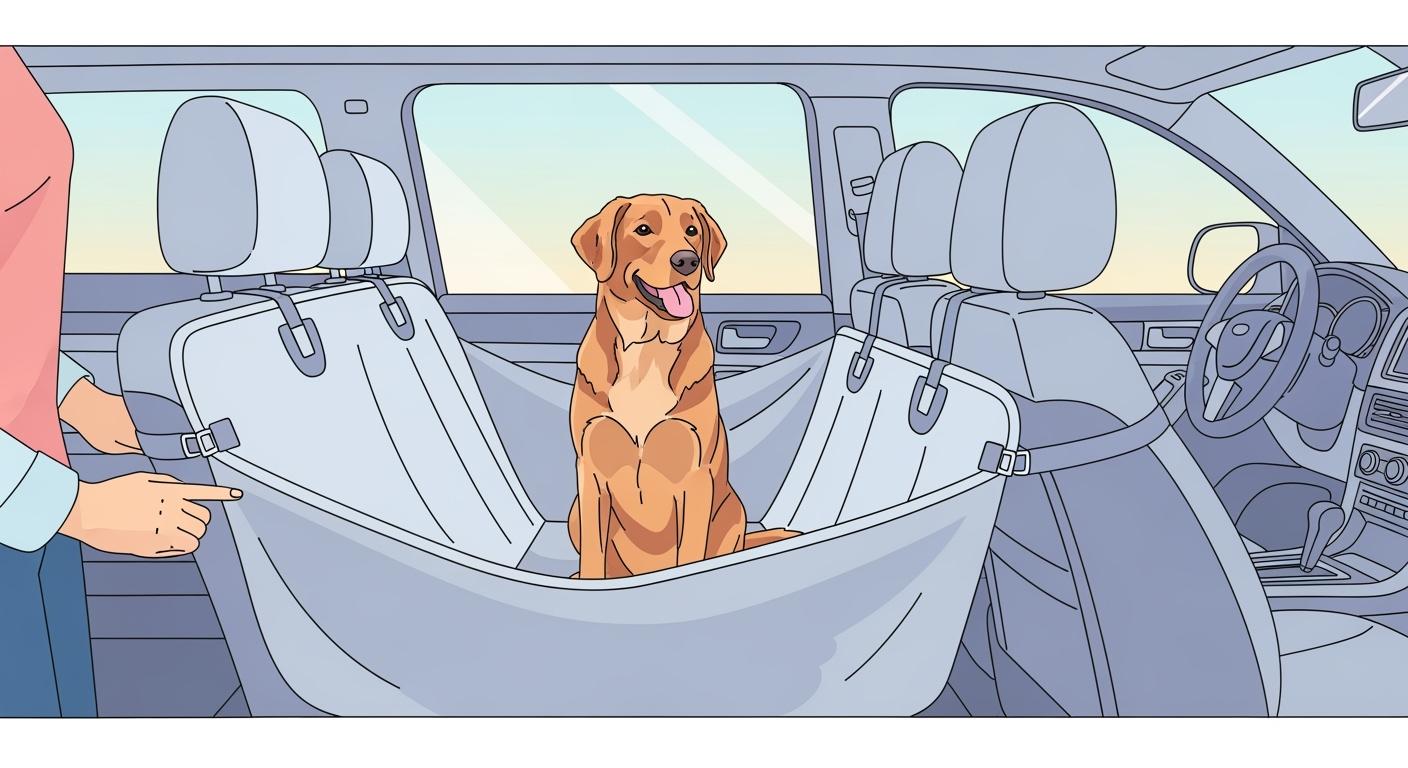
A dog hammock dog car back seat cover usually works best when your dog paces, turns often, or tries to step into the rear footwell. The front panel can add useful coverage, but only if the straps stay tight, the angle works with your seat shape, and the fabric does not sag after real movement. If your dog rides calmly or you need easier buckle access, a bench-style layout may be simpler to live with.
The practical choice often comes down to how your rear seat is used every day. Bench versus hammock setups feel different once your dog starts shifting weight, and rear-seat cover styles and mats vary a lot in buckle access, side coverage, and cleanup effort.
When a hammock front panel helps more than a flat bench cover
A hammock cover makes the most sense when you want to block the gap between the front and rear seats, limit muddy paws on the seatback, and give an active dog a more contained riding zone. That extra panel can help reduce forward scrambling during braking and can keep more hair, water, and dirt off the carpet.
A flatter bench cover is often easier when:
- you share the rear seat with passengers or gear,
- your dog is older and benefits from easier entry,
- you need frequent access to buckles or split-fold sections, or
- your dog settles quickly and does not push into the footwell.
If entry height and side access matter more than full hammock coverage, easy-entry rear seat layouts for older dogs can be easier to manage day after day.
| Cover style | Usually works best for | Main advantage | Main tradeoff |
|---|---|---|---|
| Basic hammock | Active dogs, messy rides, fuller containment | Blocks the footwell and adds seatback coverage | Can sag if the front panel is weak or poorly tensioned |
| Firmer-front hammock | Dogs that lean, jump, or shift forward often | Holds shape better under movement | May still limit buckle access in some cars |
| Flat bench cover | Calm dogs, shared seating, simpler daily use | Easier loading and buckle access | Does not block the footwell |
What makes the front panel sag or collapse
Most front-panel failures come from fit, not from one single defect. The usual weak points are headrest angle, strap pull, seat distance, and how your dog moves once loaded.
Headrest position and strap tension
If the front headrests sit too low, too far forward, or too far apart, the panel can hang at a sharp angle instead of staying upright. Loose straps let the front wall drop. Over-tightening can also create problems by pulling the fabric out of shape or stressing the hardware.
Seat shape and gap width
Some rear seats are flat enough for a hammock to stay stable. Others have deep contours, wide gaps, or awkward buckle locations that make the panel drift. That is why flat-fit checks for back-seat covers matter before you assume a universal-fit cover will stay flat in your vehicle.
Dog movement under load
A cover that looks fine on an empty seat may behave differently once your dog jumps in, turns around, or braces during corners. Heavier dogs and dogs that dig at the panel put more stress on the front wall, especially on long rides.
Tip: Press the front panel by hand after installation and again after your dog settles. If it drops easily before you even start driving, it is unlikely to feel better on the road.
A quick pass-fail check before you drive
| Check item | Pass signal | Fail signal | What to adjust |
|---|---|---|---|
| Rear section placement | Cover sits centered with even coverage | Fabric pulls to one side | Re-center the rear panel |
| Front panel angle | Panel blocks the footwell without drooping | Front wall leans forward or hangs low | Reposition headrests or retension straps |
| Buckle access | Openings stay easy to reach | Buckles hide under folds | Realign slots and smooth the seat surface |
| Grip under weight | Cover stays flat when your dog turns | Surface bunches or slides | Reset anchors and check backing grip |
| After a short drive | Shape stays close to the original setup | Panel sags lower after braking or turns | Retighten or move to a firmer design |
This check is also a good time to confirm that your travel setup is complete. A seat cover protects surfaces and helps containment, but it is not the same as restraint. For longer drives, many owners also review everyday travel gear for car trips and pair the cover with well-fitted walking harnesses when their routine calls for tether-based travel.
Failure signs that matter more than minor wrinkles
Not every crease means the cover is failing. The signs that matter are the ones that change coverage, traction, or cleanup.
- The front wall drops into the footwell after normal movement.
- The cover shifts far enough to expose the seat or carpet.
- Seat belt openings drift out of place and become hard to use.
- The waterproof layer stops beading moisture and wetness reaches the seat.
- The fabric starts cracking, peeling, or separating at stress points.
- The surface gets slick enough that your dog braces constantly or loses footing.
If your main annoyance is poor buckle access, bunching around anchors, or fabric pulling forward, it helps to compare those symptoms with how other rear-seat protectors handle the buckle zone. The day-to-day tradeoff is explained well in buckle clearance versus mess protection.
When to replace, upgrade, or switch styles
You probably need an upgrade when the front panel no longer holds shape after readjustment, the waterproof layer stops protecting the seat, or the cover never sits flat enough for your dog to settle comfortably. At that point, moving to a firmer-front hammock or switching to a flatter bench design may solve more than constant retightening.
A bench cover is often the better answer when your dog needs easier loading, you regularly use the rear buckles, or your car seat shape keeps fighting the hammock geometry. A hammock is often worth keeping when containment and fuller coverage matter more than fast access.
FAQ
How do you keep the front panel from sagging?
Center the cover, tighten the headrest straps evenly, and test the panel by hand after loading your dog.
Is a hammock always better than a bench cover?
No, a hammock is usually better for containment, while a bench cover is often easier for calm dogs, passengers, and buckle access.
What should you do if the waterproof layer stops working?
If moisture starts soaking through instead of staying on the surface, it is usually time to replace the cover.
How often should you recheck the fit?
A quick check before each trip and another after washing or longer drives usually catches most fit problems early.






