
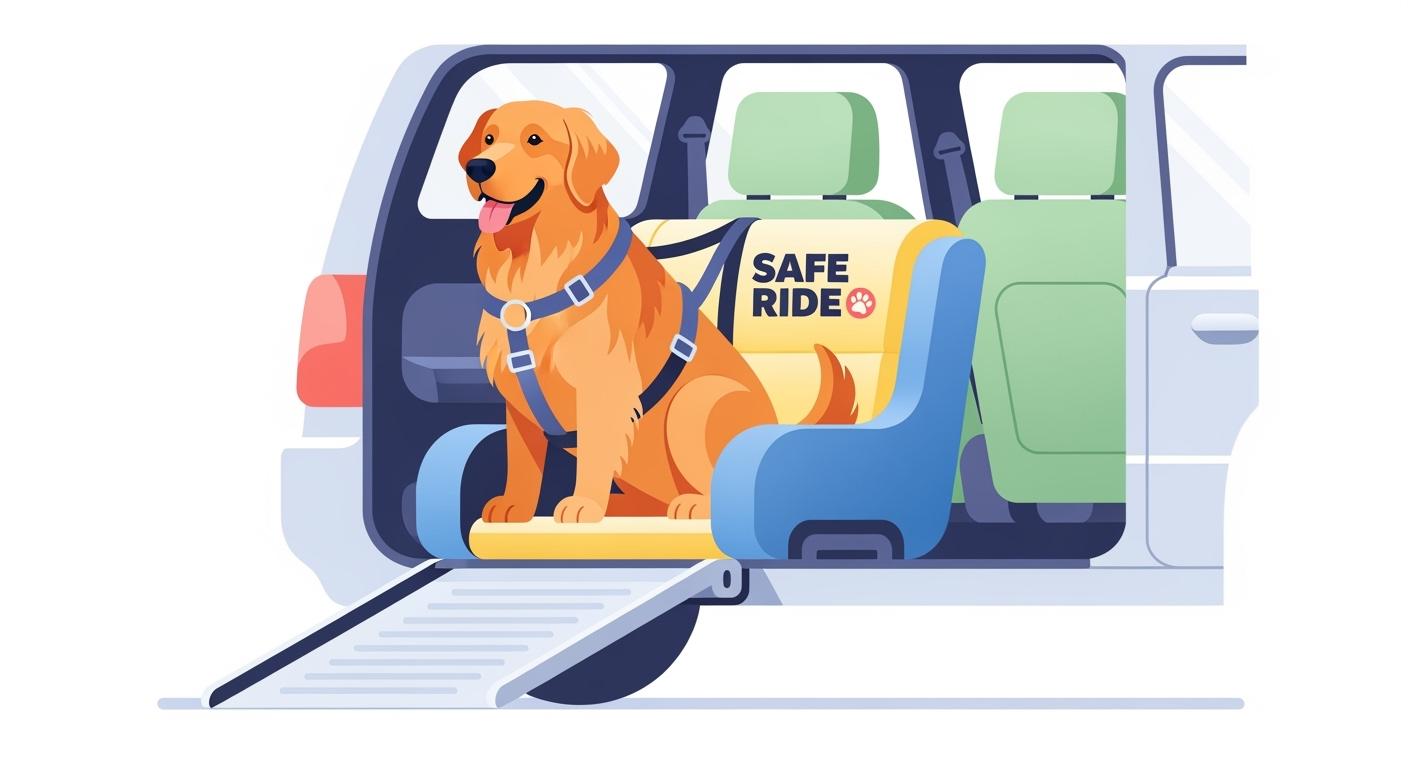
A car seat for large dog travel should do three things well: keep your dog steady, give enough room to turn and settle, and allow calm entry and exit. If the setup looks soft but your dog braces on turns, scrambles on the way in, or hangs over the side, it is probably the wrong match. For many large dogs, lower and wider support works better than tall bucket-style walls.
When a dedicated seat helps and when it does not
Best cases for a dedicated seat
A dedicated seat makes the most sense when your dog slides on bare upholstery, struggles to settle, or needs more side support on short and medium trips. The goal is not to confine your dog tightly. The goal is to reduce sliding, cut down on driver distraction, and give the restraint a stable place to work. In practice, a steady rear-seat restraint setup matters more than extra padding or taller walls.
- Your dog stays sitting or lying in one spot instead of drifting across the bench.
- Your dog can lean into the sides lightly without being forced upright.
- Your dog enters, turns, and settles without bumping into high walls.
When a cover or rear-seat bed is the better choice
If your dog sprawls, changes position often, or dislikes climbing into a deep basket, a flatter setup is usually more practical. Many owners comparing rear-seat cover setups for daily drives find that large dogs use the full bench more naturally when the floor area is open and the tether is kept short enough to prevent lunging.
If you still want some structure without a tall step-in, a lower-profile 3-in-1 travel seat with bed-style walls can be easier to use than a deep booster. This kind of layout usually works better for dogs that want a place to rest their chest but do not want to perch high above the seat.
| Setup | Usually works best for | Main strength | Main tradeoff |
|---|---|---|---|
| Dedicated dog car seat | Dogs that need more side support and less sliding | Keeps the dog in a defined spot | Can feel cramped if the walls are too high or the base is too narrow |
| Rear-seat cover or bed | Large dogs that want to stretch out | More turning room and easier entry | Less side support on sharp turns |
| Harness-only rear seat | Calm dogs that already settle well | Simple setup with minimal bulk | Little cushioning and more visible shifting on curves |
Tip: Choose the setup your dog uses calmly, not the one that looks the most padded in photos.
Fit checks that matter before the first trip
Entry height and step-in angle
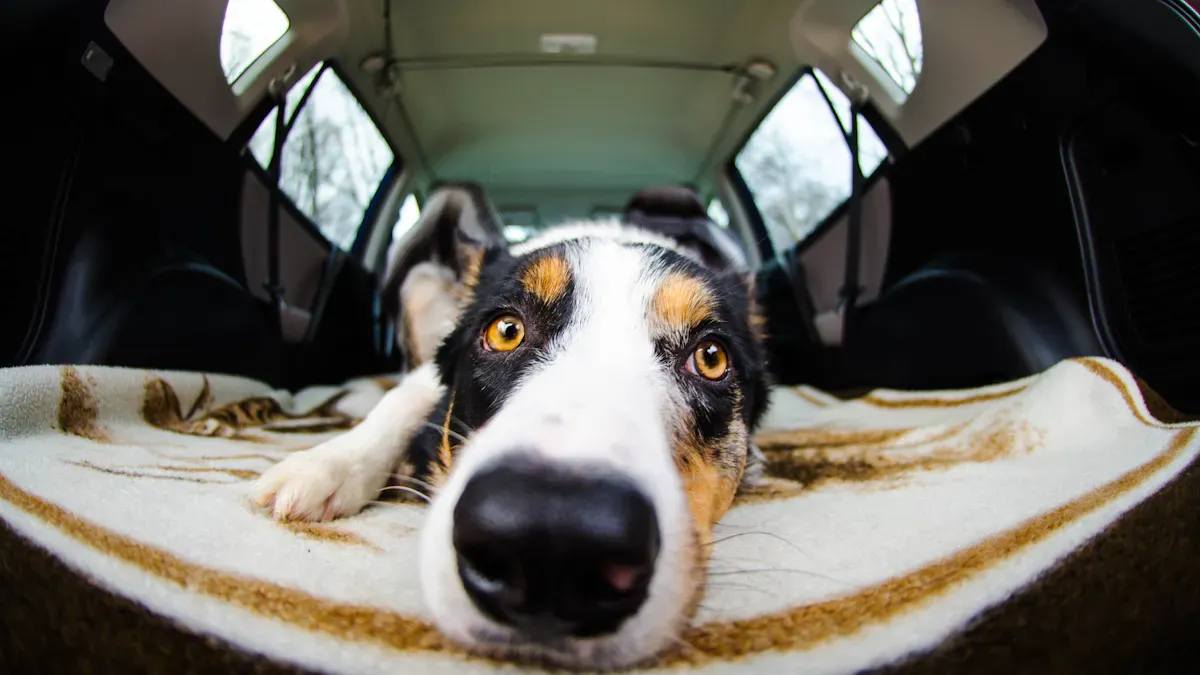
Watch the first two seconds of entry. That is often where a bad setup shows itself. A large dog should be able to step in without paw slip, chest impact, or a last-second jump. If your dog hesitates at the edge, the wall may be too tall or the base may be unstable. Senior dogs and dogs with weak hind legs usually need a flatter landing area and predictable footing.
Wall height, body support, and tether length
The sides should support your dog during turns without blocking a natural resting posture. If your dog cannot curl slightly, lower the shoulders, or lie with weight spread across the bed, the walls are doing too much. The same measurements used for dog car booster seat sizing and materials also help here: look at usable floor width, inside wall height, and whether the front edge crowds the chest.
Before blaming the seat itself, verify seat-belt harness fit checks so the restraint is short enough to limit lunging but loose enough to let your dog lie down. The rear seat is usually the better location because front airbags can injure a dog, and rear placement often gives a steadier install.
| Check item | Pass signal | Fail signal | What to change |
|---|---|---|---|
| Step-in entry | Dog steps in smoothly | Dog scrambles, slips, or jumps hard | Lower the edge or switch to a flatter base |
| Turning room | Dog turns once and settles | Dog keeps backing out or folding awkwardly | Choose a wider platform or lower walls |
| Resting posture | Dog can lie with shoulders relaxed | Dog perches upright or leans on one side | Add broader support or change to a bed-style layout |
| Tether control | Dog can sit and lie down without excess slack | Dog spills over the edge or reaches too far forward | Shorten slack and recheck anchor position |
Failure signs that mean the setup is wrong
- Awkward step-in or repeated hesitation at the edge
- Front legs hanging over the wall after settling
- Constant repositioning during normal turns
- Seat wobble when you push it side to side by hand
- Fast exit attempts, jumping, or slipping when the door opens
Quick troubleshooting
| Symptom | Likely cause | Fast check | Fix |
|---|---|---|---|
| Seat shifts on turns | Loose belt path or unstable base | Push the empty seat side to side | Reinstall and tighten the anchor points |
| Dog hangs over one side | Inside space is too short or narrow | Check where shoulders and hips land after lying down | Move to a wider bed-style setup |
| Dog braces the whole trip | Base is slick or too upright | Watch for stiff legs on gentle curves | Add grip or switch to flatter support |
| Exit is rushed or clumsy | Wall height blocks footing | Watch whether the dog can place both front paws cleanly | Lower the edge or use a ramp for entry and exit |
Note: If your dog pants hard, drools, or cannot settle after a few minutes, stop the trip and ask your vet whether motion sickness, pain, or heat may be part of the problem.
The best choice is the one your dog can use with steady footing, relaxed posture, and controlled exits. If a dedicated seat creates more climbing, bracing, or crowding than it solves, a rear-seat bed or cover is usually the better answer for a large dog.
FAQ
How do you know if a large dog needs a dedicated car seat?
A dedicated seat usually helps when your dog slides across the bench, cannot settle, or needs gentle side support to stay comfortable on turns.
What is the safest place to install it?
The rear seat is usually the better choice because it keeps your dog away from front airbags and often gives you a more stable restraint setup.
When is a rear-seat bed better than a seat with tall sides?
A rear-seat bed is often better when your dog wants to stretch out, dislikes climbing over walls, or looks cramped after lying down.
How often should you recheck the fit?
Recheck after the first few short rides and again whenever your dog gains weight, ages, changes posture, or starts moving differently in the car.






