
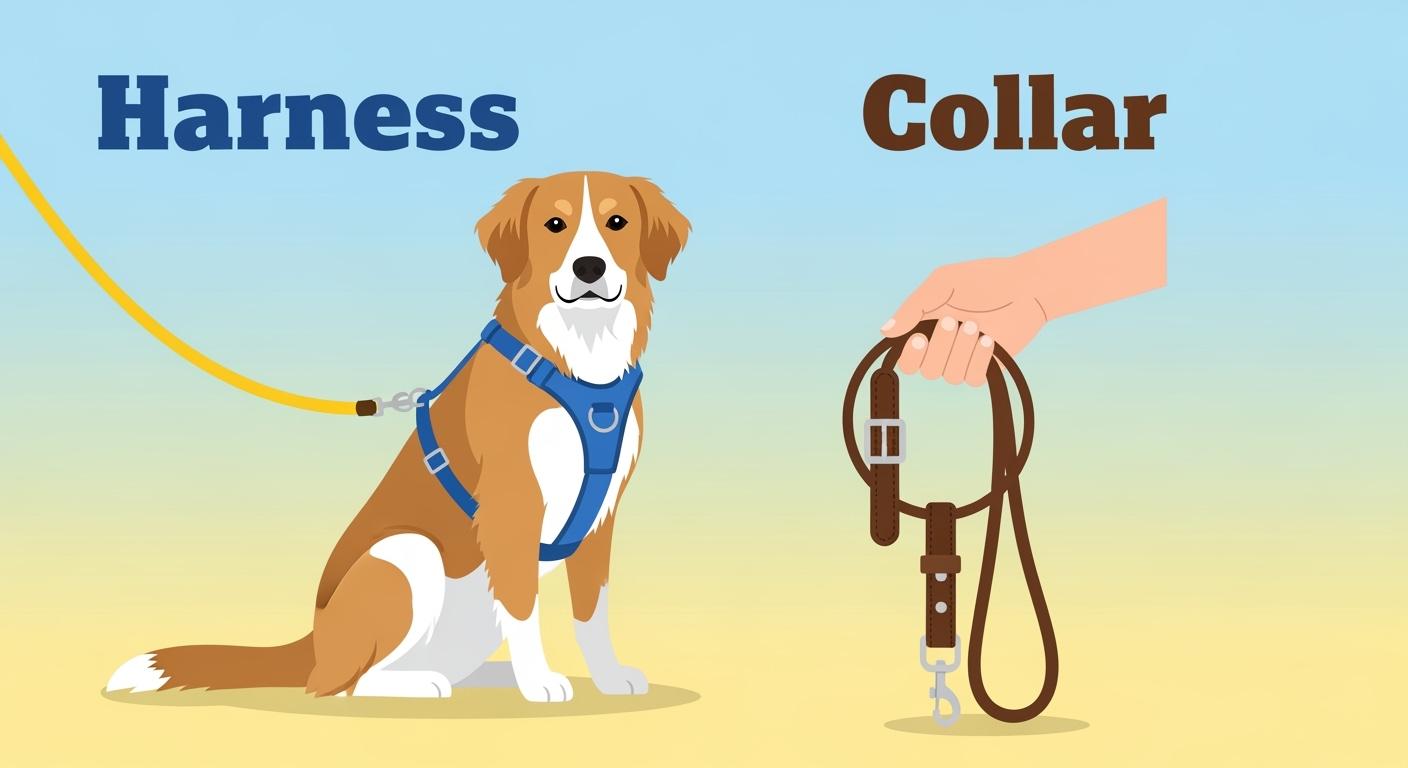
The phrase dog belt and leash can point to two very different setups. Sometimes it means a hands-free leash that clips to a belt around your waist. Other times it means a regular leash used with a collar or harness. The right choice depends less on the product name and more on how you actually move with your dog. A runner with a steady dog usually wants comfort and rhythm. A walker dealing with pulling, traffic, or stop-and-go sidewalks usually needs faster hand control.
If you are shopping quickly, start with one question: do you want the leash attached to your body or in your hand? That answer usually narrows the decision faster than feature lists do.
Why the term causes confusion
Online listings often group belts, leashes, collars, and harnesses together, so dog belt and leash becomes a catch-all phrase. That creates confusion because a waist-belt running system solves a different problem than a classic leash set. One is built around steady forward movement. The other is built around quick steering, short corrections, and more direct handling.
Hands-free waist belt and leash
A hands-free setup uses a belt worn around your waist and a leash that clips to that belt. Many versions add a bungee section to soften small speed changes. Some also include pockets for keys, waste bags, or treats. This style works best when your dog can stay near your side without crossing in front of you or surging sideways.
For runners, leash choices for running with pace changes and control matter more than storage pockets or matching colors. A reflective bungee dog leash can smooth out minor pace changes, but it still needs a dog that stays with you instead of zigzagging across your path.
| Feature | Why it matters in real use |
|---|---|
| Waist attachment | Frees your hands and lets your arms swing naturally while jogging or brisk walking |
| Bungee section | Can soften light changes in pace, but does not fix hard pulling or lunging |
| Quick-release hardware | Helps when you need to detach fast in a crowded or unpredictable spot |
| Adjustable belt | Reduces bounce and keeps the pull point more stable around your hips |
| Storage pocket | Adds convenience, but should not be the main reason you choose the setup |
Note: Hands-free systems usually make the most sense for dogs that already move in a fairly straight, predictable line.
Standard leash with a collar or harness
A standard leash setup keeps the leash in your hand. That sounds basic, but it gives you the fastest change in direction and the clearest sense of what your dog is doing. For daily walking, fixed-length versus retractable leash setups usually becomes the first control decision, especially near curbs, traffic, or other dogs.
If your dog walks calmly and does not put heavy pressure on the neck, a collar-and-leash setup can be enough for short outings. If your dog pulls, coughs, slips backward, or seems uncomfortable at the throat, a harness is usually the better place to start. When control still feels loose after changing hardware, harness and leash fit with the right leash length often matters more than buying a stiffer handle.
If your dog pulls often, dog harness size and material choices for daily walks usually tell you more than a padded product name.
When a hands-free setup works best
A hands-free dog belt and leash is usually the better match when your movement stays steady for long stretches. That can mean jogging, power walking, or covering open trails where you are not constantly stopping, shortening up, and changing sides. The main benefit is comfort. Your stride feels more natural, your shoulders stay looser, and you are less likely to keep switching hands every few minutes.
- Your dog already understands how to stay near one side.
- You mostly move in open spaces rather than dense sidewalks.
- You want both hands free for balance, hydration, or carrying small items.
- Your dog does not lunge hard at squirrels, bikes, or passing dogs.
A hands-free setup becomes much less useful when the dog pulls in bursts. The force transfers through your hips and core instead of your hand, which can feel stable with a calm dog and awkward with a reactive one. If you keep getting turned sideways or pulled off line, the setup is telling you it is not the right tool for that context.
When a standard leash setup is the better choice
A hand-held leash is usually simpler and safer when the walk is full of interruptions. Busy sidewalks, apartment hallways, parking lots, curbs, school zones, and dog-heavy parks all create moments where you may need to shorten the line instantly. That is much easier when the leash is already in your hand.
- You need quick steering in tight spaces.
- Your dog pulls, startles easily, or changes direction without warning.
- You are still working on loose-leash habits.
- You want the option to switch between collar and harness based on the walk.
If the collar setup keeps slipping, collar and leash fit checks for safer walks can help you spot whether the problem is size, width, or the buckle style. A standard leash also makes it easier to notice early warning signs, such as rising tension before a lunge, a harness starting to rotate, or a dog slowing down because something is rubbing.
Signs your current setup is wrong
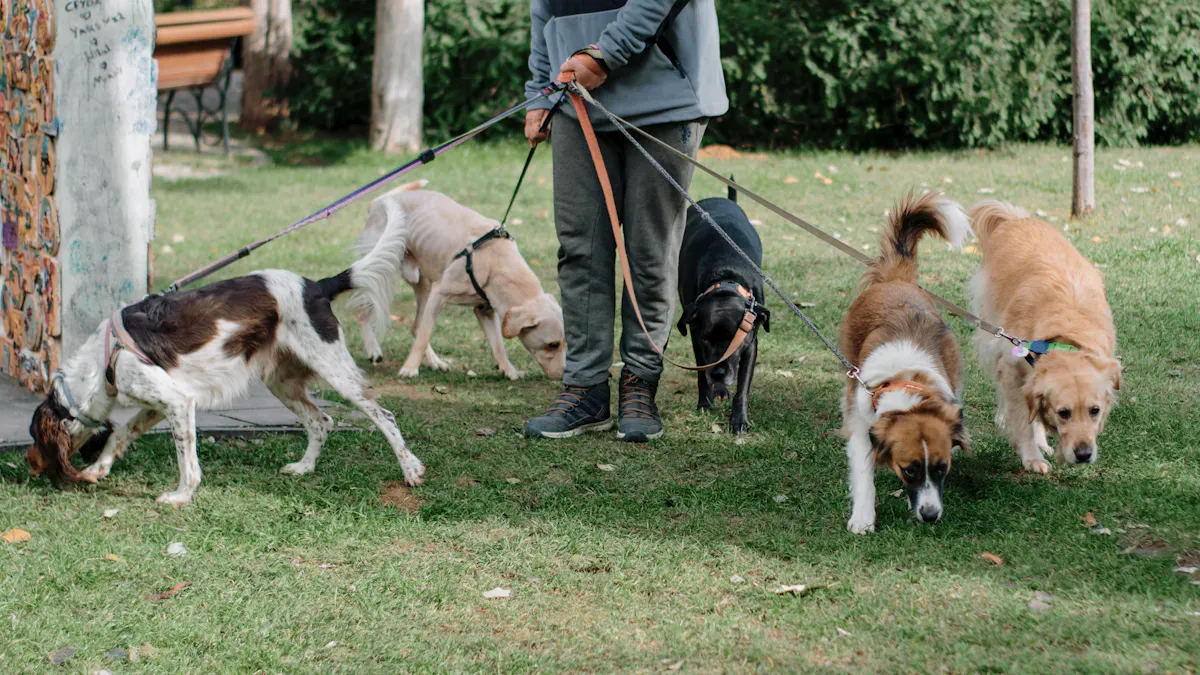
The wrong dog belt and leash setup usually shows itself quickly. You should not need several weeks to realize the walk feels awkward. Most mismatches show up as control problems, fit problems, or movement problems.
| What you notice | What it often means | Better next step |
|---|---|---|
| You feel pulled off balance | The waist setup is too much for your dog’s pulling style | Switch to a hand-held leash or shorten the line |
| Your dog coughs or braces at the neck | Collar pressure may be too concentrated for this dog | Check harness fit and chest support |
| The harness shifts to one side | The harness may be too loose or the shape does not match your dog | Refit it before judging the leash alone |
| The leash feels too long in traffic | You have too much slack for the environment | Move to a shorter fixed length |
| Your dog stops, scratches, or looks tense | Comfort, noise, weight, or pressure distribution may be off | Test a simpler setup and watch for the same behavior |
One common mistake is buying a running-style belt because it sounds more advanced. In practice, advanced only helps when the dog and the walking context actually match it. Another mistake is assuming a harness automatically fixes pulling. A poorly fitted harness can still rub, twist, or encourage the dog to lean harder into the leash.
Disclaimer: If your dog shows repeated coughing, limping, panic, or pain during walks or runs, stop using the setup and talk with your veterinarian.
Quick comparison before you buy
Use the table below when you need a fast answer. It keeps the decision focused on routine, control, and comfort instead of marketing labels.
| Setup | Usually best for | Main advantage | Main tradeoff |
|---|---|---|---|
| Waist belt and leash | Running, brisk walking, steady forward movement | Hands-free comfort and better arm swing | Less forgiving if your dog lunges or cuts across you |
| Collar and leash | Calm dogs, short daily walks, quick exits | Simple and direct handling | Not ideal for dogs that put heavy pressure on the neck |
| Harness and leash | Dogs that pull, dogs needing chest support, many everyday walks | Spreads pressure away from the throat | Only works well when the fit stays stable in motion |
For most buyers, the best dog belt and leash decision is the one that matches the hardest part of the walk, not the easiest part. If the hardest part is a smooth three-mile run, the waist setup may win. If the hardest part is getting past traffic, corners, and distractions without losing control, a standard leash setup is usually the smarter choice.
FAQ
Is a dog belt and leash always a running product?
No. The term is often used for both hands-free running systems and regular leash sets, so the product details matter more than the label.
Which setup gives the most control?
A standard hand-held leash usually gives the fastest control because you can shorten, redirect, or stop movement immediately.
Should I choose a collar or a harness for a standard leash?
If your dog pulls, slips out, or seems uncomfortable at the neck, a well-fitted harness is often the better starting point.
What should I check before buying?
Check how the leash attaches, whether the package includes all the parts you need, and whether your real walking routine looks more like steady running or stop-and-go handling.






