
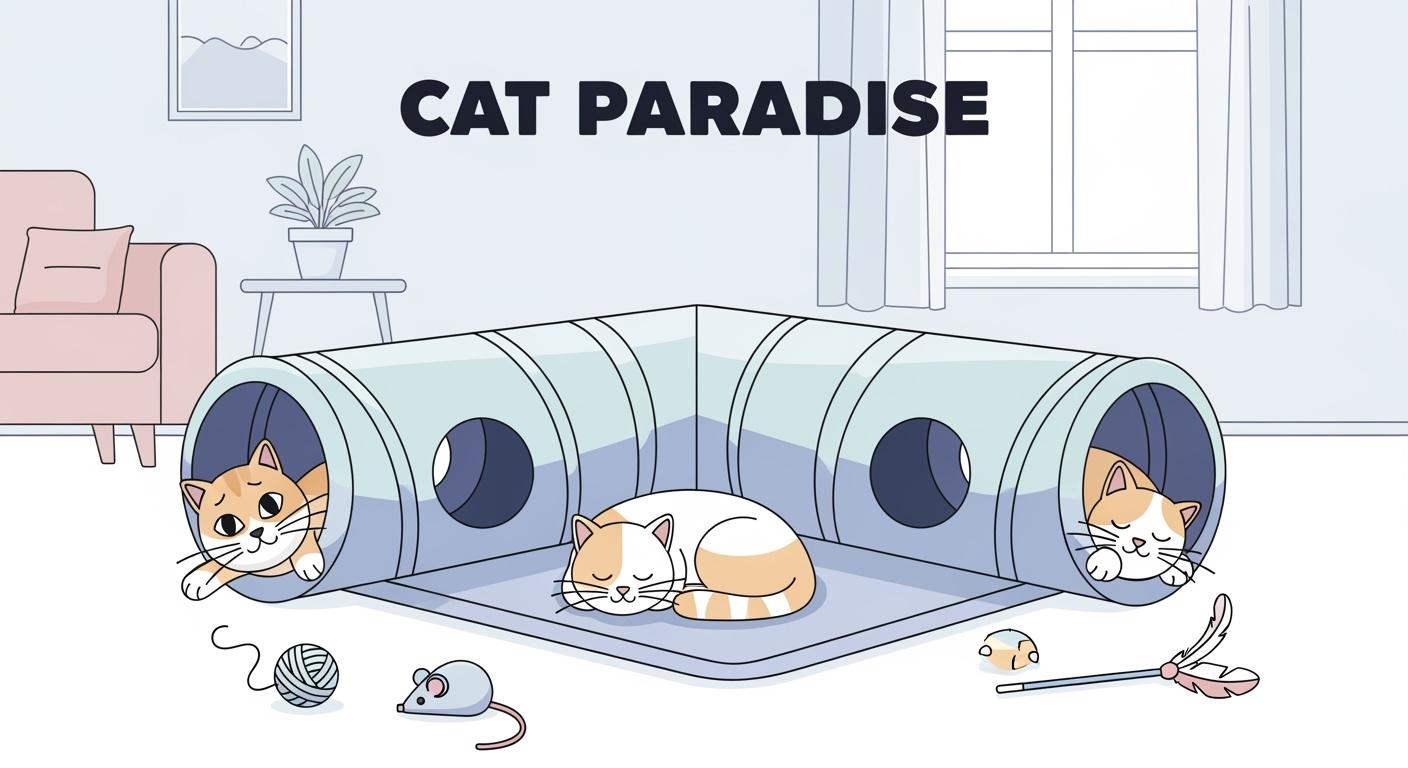
A cat tunnel bed with center mat only earns its space if your cat uses both levels. The tunnel should feel open enough for quick passes, hiding, and turning around, while the top mat should feel stable enough for real lounging instead of a brief test step. If one layer gets ignored, the design is usually too flimsy, too exposed, or just mismatched to your cat’s habits.
A well-made cat tunnel bed can solve two different needs in one footprint: enclosed play below and a slightly elevated rest spot above. That layout usually works best for cats that like to move between observation, hiding, and short naps without leaving the same area.
What makes the two-level design usable
The tunnel has to hold its shape after repeated entry, and the center mat has to stay flat after your cat jumps up or pushes off. If the tunnel twists, pinches inward, or shifts loudly on the floor, many cats will treat it as a novelty toy instead of part of their routine. If the top sags, the nap zone never feels settled.
Material choice matters too. Soft surfaces help with comfort, but too much loose plush can trap hair, bunch up, and make the top mat feel uneven. Support and breathable fabrics matter in many pet products, and the same logic behind fit checks and breathable materials applies here when a resting surface starts to collapse, overheat, or lose structure.
| Setup | What it usually does well | Where it falls short |
|---|---|---|
| Center-mat tunnel bed | Combines hiding, play, and lounging in one spot | Fails fast if the top mat sags or the tunnel collapses |
| Plain cat tunnel | Good for chasing, hiding, and quick bursts of play | No built-in nap surface |
| Simple floor mat | Easy rest area with little setup | Does not add enrichment or privacy |
Signs your cat tunnel bed with center mat is doing both jobs
- Your cat moves through the tunnel without backing out or pausing at the entrance.
- Your cat returns to the top mat after play instead of only touching it once.
- The top surface still looks flat after your cat steps on and off.
- The tunnel openings stay round enough that your cat does not have to force its way through.
- Hair and lint come off without the bed losing shape after routine cleaning.
Tip: Watch the second and third use, not just the first one. Curiosity can hide weak design for a day or two.
Why some cats use only the tunnel
Preference usually explains more than price does. Cats that like enclosed spaces often commit to the tunnel first because it offers cover, warmer air, and less exposure. If your cat already leans toward hiding spots, the tradeoff between cat house tunnel size and shape and open sight lines becomes more important than extra padding on top.
Other cats want a stable perch with a clear view. Those cats may ignore the tunnel entirely if the top mat feels secure enough and the room is quiet. Some also prefer a more protected rest style than a flat platform provides. In that case, the difference between a covered nest vs open donut bed can tell you why the top mat never becomes a favorite.
Placement changes the result more than many owners expect. A bed near foot traffic, door swings, loud vents, or active children often turns the tunnel into a hideout while the top mat stays unused. In calmer corners, the same cat may start using both layers within a few days.
The failure signs that matter most
Saggy top pad
If the center mat dips sharply under your cat’s weight, the upper level stops feeling like a bed and starts feeling like a hammock your cat did not ask for. Press the mat lightly with your hand. If it does not recover its shape or you can feel uneven support underneath, expect short visits instead of real naps.
Noisy shape shift
A little crinkle can spark play, but constant shifting noise is different. If the tunnel slides, crunches loudly, or folds inward when your cat turns, the bed may feel unpredictable. Many cats tolerate noise during play but avoid it during rest.
Awkward entry
Openings need to stay clear. If furniture crowds one side or the top layer droops into the tunnel path, your cat may sniff, crouch, and back out. That is usually a design or placement problem, not stubbornness.
Wasted top space
When the top mat becomes a place your cat steps on only to jump away, the layout is not functioning as a true two-in-one setup. Placement, entry height, surface feel, and support usually matter more than extra fluff, which is why what helps a cat bed get used often comes down to stability and location.
Troubleshooting when one layer gets ignored
| What you notice | Likely reason | Quick check | What to change |
|---|---|---|---|
| Cat never naps on top | Top mat feels exposed or unstable | Press the mat and watch for sagging | Move the bed to a quieter corner and add a familiar blanket |
| Cat avoids tunnel entry | Opening is blocked, tight, or misshapen | Look at the tunnel from floor level | Rotate the bed and clear nearby furniture |
| Cat uses tunnel but not mat | Cat prefers enclosed rest | Compare use with other covered sleeping spots | Keep the bed for play and offer a separate enclosed bed nearby |
| Cat ignores both areas | Texture, scent, or location feels wrong | Check for strong detergent smell or a slippery floor | Wash gently, air dry fully, and reposition |
| Bed looks messy after a few days | Loose fibers and hair buildup | Run your hand across the mat surface | Vacuum or lint-roll weekly before buildup gets heavy |
Note: A tunnel bed can help some cats feel secure, but sudden avoidance, stress, or major behavior change may point to something beyond the bed itself.
Cleaning and placement matter more than extra features
Many owners focus on softness first, but upkeep decides whether the bed stays usable. Loose fur, dust, and tracked litter can turn the top mat rough and uninviting, especially if the fabric clings to debris. A regular cleaning rhythm matters more than decorative features, and the same basic habit behind when bedding needs a wash sooner applies here: clean before odor, grit, and hair change how the surface feels.
Placement should support both movement and rest. Put the tunnel where your cat can enter without a sharp turn and where the top mat still gives some visual control of the room. Good spots often sit against a wall or near furniture that creates partial cover without blocking entry.
FAQ
How do you know whether the center mat is actually comfortable?
If your cat stays long enough to loaf, stretch, or nap there more than once, the mat is probably doing its job.
Should the tunnel make noise?
A little sound can be fine for play, but loud shifting or collapsing usually makes the bed less appealing for regular use.
Can this replace a separate cat bed?
Sometimes, but many cats still prefer a second sleeping spot if they like deeper cover or a softer enclosed shape.
What is the best way to encourage use?
Start with a quiet location, add a familiar scent, and change only one factor at a time so you can tell what helped.
Is a cat tunnel bed with center mat worth it?
Yes, if your cat likes both enclosed play and visible rest spots and the bed keeps its shape after daily use.






