
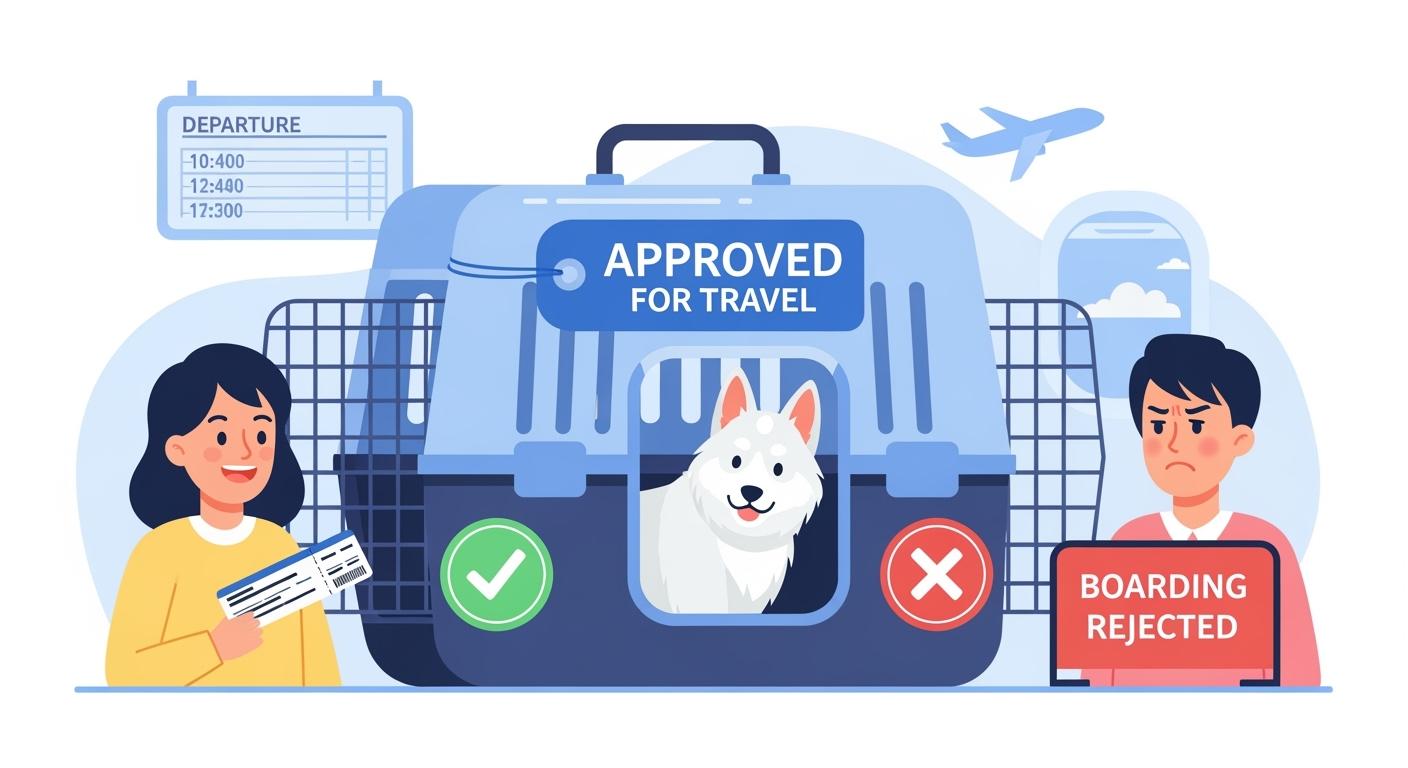
A large airline approved pet carrier sounds like the ideal middle ground: more room for your pet, but still small enough for the cabin. Sometimes that works. Sometimes it fails the moment you reach the gate. The real question is not whether the tag says “airline approved.” It is whether the carrier fits under the seat on your flight, leaves enough usable space once compressed, and keeps your pet comfortable enough for the trip.
- Buy for under-seat fit first, then interior comfort.
- Soft-sided carriers usually work better in cabin because they can flex slightly without losing all their shape.
- A carrier that feels roomy at home can still become too tight once it is packed, zipped, and pushed under a seat.
What “airline approved” really means
“Airline approved” is marketing language, not a universal travel standard. Airlines set their own in-cabin rules, and some of them vary by aircraft. A carrier that works on one route can be too large on another, even within the same airline. That is why a large airline approved pet carrier only makes sense when you treat the airline label as a starting point instead of a guarantee.
For most U.S. flights, many travelers use about 18 x 11 x 11 inches as a starting point for a soft-sided carrier. That number is common, but it is not universal, and it should never replace checking your exact airline and aircraft.
| Airline | Current in-cabin carrier rule | What it means for a larger carrier |
|---|---|---|
| Delta Air Lines | Carrier must fit under the seat; Delta recommends a soft-sided kennel up to 18 x 11 x 11 inches for most aircraft. | A bag larger than that may work on some planes, but it is not a safe default. |
| American Airlines | Soft-sided carriers are listed at 18 x 11 x 11 inches; hard-sided limits vary by aircraft and can be smaller on regional flights. | If you want the biggest cabin-friendly option, soft-sided is usually the safer choice. |
| Southwest Airlines | The carrier must be small enough to fit under the seat in front of you for the full flight. | Outside dimensions matter more than the sales label. |
| Alaska Airlines | Pets can travel in cabin when they fit in an under-seat carrier. | A roomy bag only works if it still behaves like an under-seat carrier in real use. |
Tip: Measure the outside of the carrier after the base pad is installed and the sides are fully zipped. That is closer to what airline staff will see.
When a larger carrier still works
A larger carrier can still be practical when the extra size is controlled. Soft walls, a stable base, and well-placed mesh panels matter more than raw dimensions alone. You want enough room for your pet to stand, turn, and settle, but not so much bulk that the roof caves in or the sides fold over the vents when the bag is stowed.
That is why best pet carriers for flying usually prioritize controlled flex instead of maximum size. The same logic applies here: a slightly larger soft-sided model can work when it keeps its floor flat, holds its opening shape, and slides under the seat without force.
If you are shopping for a compact option, an in-cabin pet carrier with clear outside dimensions is usually a safer bet than a generic oversized tote with vague sizing.
| Carrier type | Best use | Main advantage | Main risk |
|---|---|---|---|
| Soft-sided cabin carrier | Most in-cabin flights | Can flex around seat edges and is easier to carry | Too much collapse can reduce usable space and block vents |
| Structured carrier | Pets that need a firmer shape | Keeps walls and base more predictable | Rigid corners may fail under-seat fit even when the listed size looks close |
| Larger home-use carrier | Car rides, vet visits, short indoor use | More room and easier lounging | Usually too bulky for cabin travel |
If you are deciding between a backpack and a cabin bag, the differences in a canine backpack carrier versus a dog carrier backpack are easier to spot before you buy. Backpack styles can feel better in long airport walks, but they still need the same under-seat discipline once you board.
What makes a carrier too big in real travel
The trouble usually starts after check-in. A carrier can look fine on the floor at home and still fail when you lift it one-handed, place it under the seat, or carry it through a crowded terminal. Large bags become a problem when the extra volume turns into wasted bulk instead of usable pet space.
- The roofline buckles when the bag is pushed under a seat.
- The side panels collapse enough to press against the pet’s face or shoulders.
- The vent panels sit too low and get blocked by the seat frame.
- The base sags once your pet settles in one corner.
- The zipper path distorts under pressure and leaves small gaps.
People who want both hands free often look at a dog carrier backpack airline approved setup, but seat fit still matters more than the label. A backpack that carries well in the terminal can still be a poor cabin choice if it becomes top-heavy, tips forward, or loses vent clearance when laid down.
A pet carrier sling solves a different problem. It can be comfortable for short errands with a calm small pet, but it is usually not the best answer for a full flight day when you need enclosed under-seat travel.
Cabin-ready fit checks that matter
Before travel day, test the carrier the way the trip will actually feel. Put the liner inside, pack any small essentials you plan to carry, place your pet inside, zip everything closed, then slide the carrier under a sturdy chair or desk with a similar clearance. That quick test reveals more than the product label ever will.
| Check item | Pass signal | Fail signal | Fix |
|---|---|---|---|
| Outside size | Slides under a low chair without force | Catches on the frame or sticks out | Choose a smaller carrier or a softer profile |
| Usable interior space | Pet can settle naturally after the bag is zipped | Roof or side panels press inward too much | Switch to a firmer but still cabin-sized design |
| Vent clearance | Mesh stays open when the bag is stowed | Panels fold shut or sit against a hard surface | Pick stronger mesh panels or a better vent layout |
| Base support | Floor stays level under the pet’s weight | Carrier dips or twists while carried | Use a firmer base insert or another model |
| Closures | Zippers stay aligned and closed under light pressure | Teeth spread or corners gap open | Replace the carrier |
If you are packing for a longer travel day, a separate dog travel essentials kit helps keep wipes, paperwork, treats, and a leash out of the carrier so the inside space stays usable for the pet.
Note: If your pet has breathing issues, panic during confinement, or cannot rest comfortably in a closed carrier at home, talk with your veterinarian before flying.
Common mistakes before the airport
The biggest mistake is buying by label alone. The second is assuming the largest carrier your pet can enter is automatically the kindest option. In cabin travel, comfort depends on how the carrier behaves after stowing, not how spacious it looks in a product photo.
- Measuring only the pet and not the carrier’s outside dimensions.
- Ignoring how much the carrier changes shape once the base pad is installed.
- Choosing a hard-sided shell because it looks sturdier, even though your route has tight under-seat clearance.
- Forgetting that regional aircraft often have less room than larger planes.
- Skipping a practice carry through stairs, doors, and tight turns.
- Leaving documents, bowls, and thick blankets inside the carrier and reducing the pet’s usable room.
FAQ
Can a large airline approved pet carrier still work in cabin?
Yes, but only when the outside dimensions still fit your airline’s under-seat space and the bag keeps enough usable room once stowed.
Is soft-sided better than hard-sided for flights?
Usually yes, because soft-sided carriers can flex slightly and are more forgiving in tight under-seat spaces.
What happens if the carrier is too big at the airport?
You may be told the pet cannot travel in cabin, so it is better to catch the problem at home than at check-in or the gate.
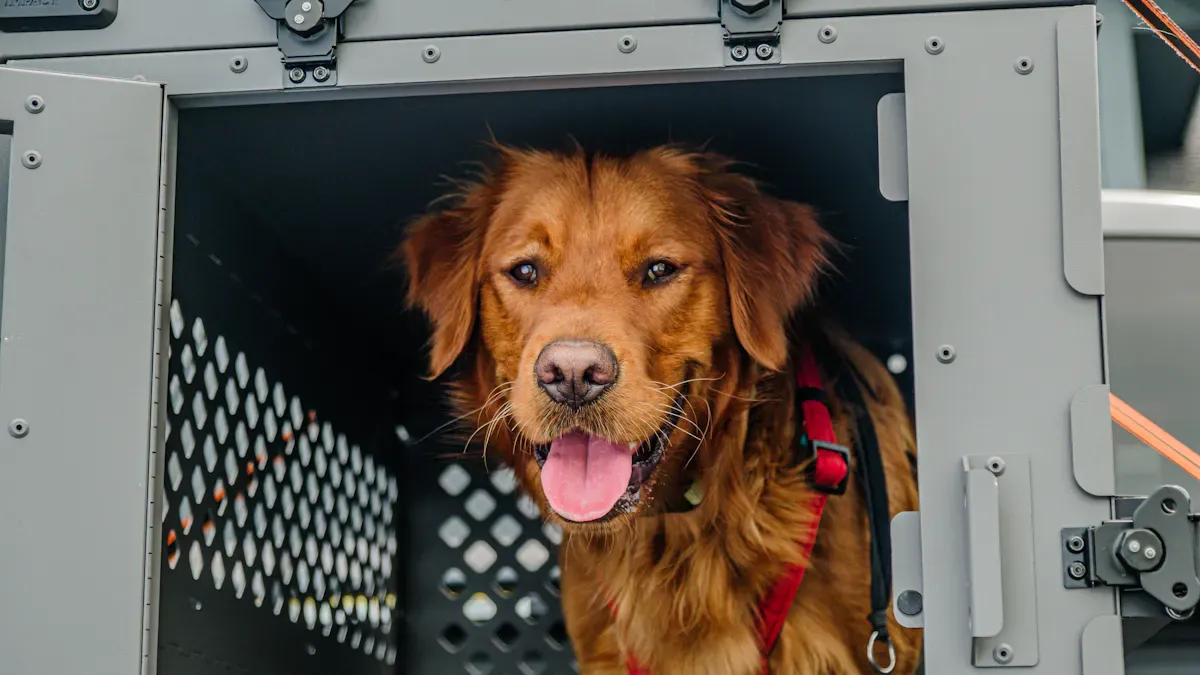
A large airline approved pet carrier is only a good choice when “large” still stays within real cabin limits. For most travelers, the best option is the largest soft-sided carrier that fits the airline’s current rules, keeps vents open, and lets the pet rest without the bag collapsing around them. When you test fit before travel day, you reduce surprises and make the flight easier for both of you.






