
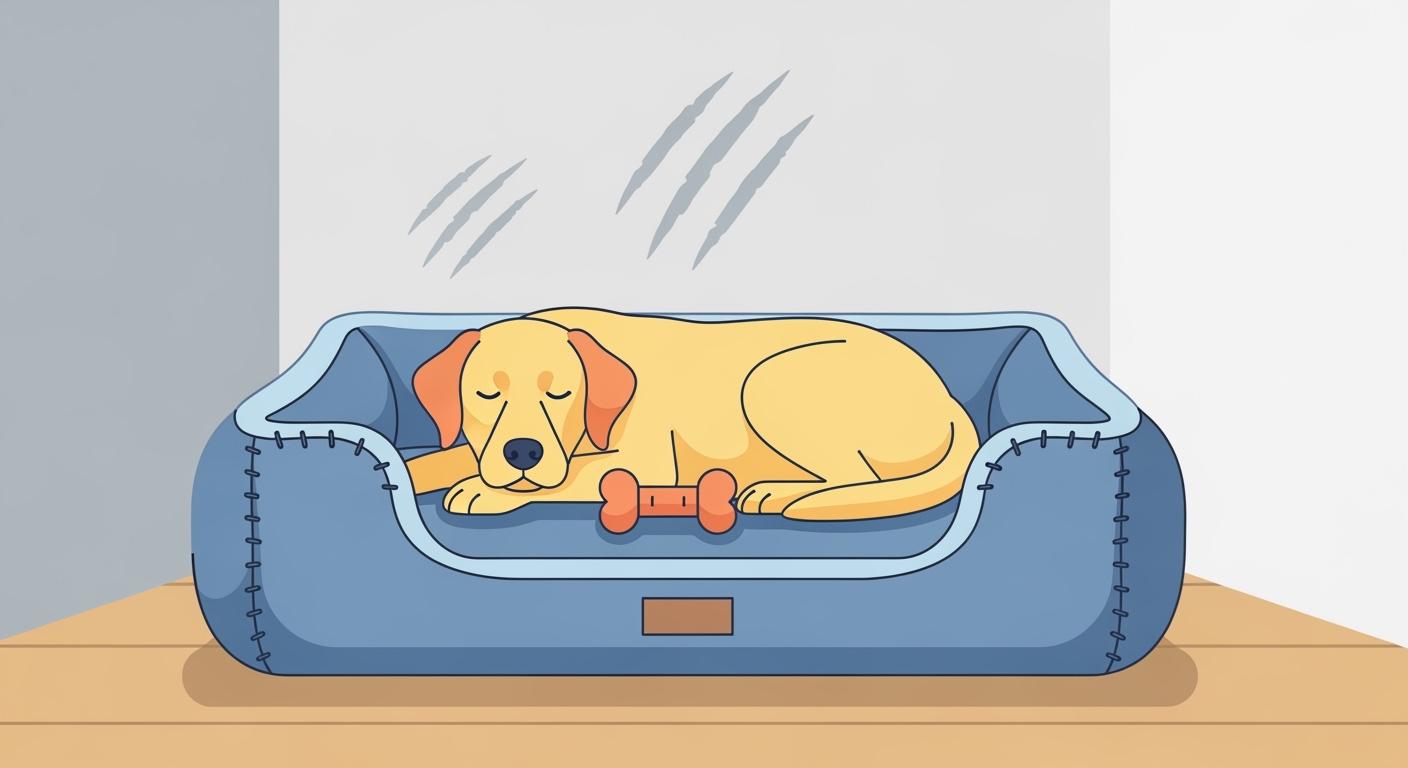
A tuff dog bed makes sense when your dog shreds soft beds, claws at seams, or chews corners faster than you can replace them. The right choice is not simply the hardest bed available. It needs durable fabric, protected edges, enough support for real sleep, and a shape your dog will actually use.
For most dogs, the first question is why the bed keeps failing. Some dogs chew out of habit or boredom. Others dig before lying down, overheat on plush beds, or avoid firm surfaces that feel uncomfortable. Once you know what is causing the damage, it gets much easier to choose a bed that lasts longer without turning rest into a compromise.
When a tuff dog bed is the better choice
A tougher bed is usually worth it when your dog targets corners, scratches hard before settling, or pulls stuffing out of standard beds within weeks. Beds built for rough use often reduce exposed weak points by hiding zippers, limiting trim, and using tighter woven outer fabric.
A softer bed can still be the better answer when chewing starts because the current bed feels too firm, too thin, too noisy, or too small. Some dogs will keep damaging a bed that does not feel right, even if the cover itself is strong. If your dog stops settling on the bed, durability alone is not solving the real problem.
What usually helps a bed hold up
Look for dense woven covers, reinforced seams, and minimal edge exposure. Fabrics marketed as ballistic nylon or ripstop-style canvas often resist scratching and light to moderate chewing better than plush covers, but no fabric is truly chew proof for every dog. Construction matters just as much as material. Hidden closures, fewer decorative details, and tighter seams usually leave fewer places for a determined chewer to start.
Raised beds can also work well in warm rooms or for dogs that shed heavily because they stay cooler and are easy to wipe down. Low-profile mats are often a better fit inside crates, where thick bolsters and loose corners can become chew targets.
Comfort still decides whether your dog keeps using it
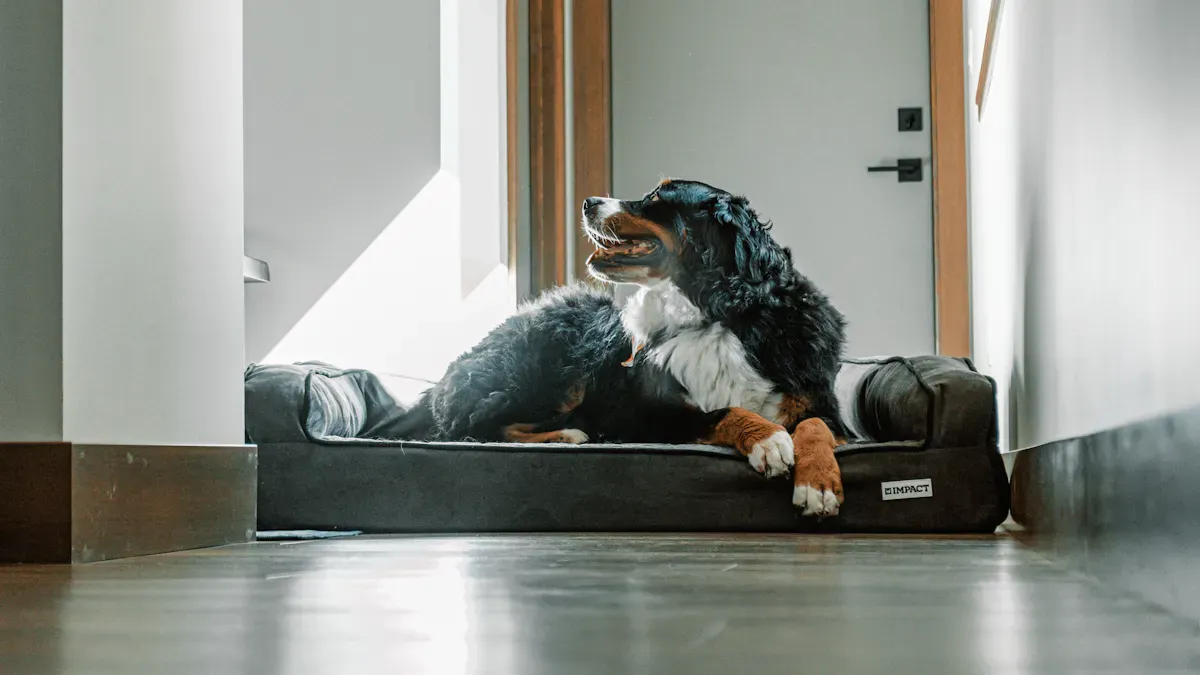
A tuff dog bed should still feel good enough for daily sleep. Older dogs, large breeds, and dogs that wake up stiff often do better with thicker fill or orthopedic foam under a durable cover. If the bed is too thin or too firm, your dog may choose the floor, couch, or crate tray instead.
Cleaning features matter too. Removable covers, washable surfaces, and moisture-resistant liners help with odor and make the bed easier to keep inviting. A non-slip bottom is useful for dogs that circle, dig, or jump onto the bed with force.
Note: If your dog seems stiff after rest, licks pressure points, or shows anxiety-related chewing, ask your veterinarian whether the issue is discomfort, stress, or both.
Which bed style fits your dog and your setup
| Bed type | Best fit | What it does well | Tradeoff to watch |
|---|---|---|---|
| Tough pillow bed | Home use and longer naps | Usually gives the most cushioning and feels familiar to dogs that like to sprawl | Exposed corners and thicker edges can attract chewing |
| Tough crate mat | Crates, travel, and low-profile spaces | Fewer raised edges, easier fit inside crates, simpler to remove for cleaning | May offer less padding than a full pillow bed |
| Elevated tough bed | Warm rooms, outdoor use, heavy shedders | Good airflow, easy cleanup, less contact with damp floors | Some dogs want a softer surface or extra padding |
A tough pillow bed usually works best for dogs that nap around the house and need more cushion. A tough crate mat is a better choice when damage happens inside the crate and you want fewer exposed edges. An elevated bed is often easiest to clean, but it may not give enough softness for dogs with sore joints or dogs that prefer to sink into the surface.
How to tell whether the bed is actually working
The first week says more than the label. Check the corners, seams, sleeping surface, and your dog’s behavior. A bed can survive scratching and still fail if your dog never relaxes on it.
| Check item | Pass signal | Fail signal | What to do next |
|---|---|---|---|
| Corners and edges | No tears or loose threads | Fraying, holes, or exposed fill | Trim loose threads and rotate the bed; replace it if damage keeps spreading |
| Surface comfort | Dog settles quickly and sleeps soundly | Dog avoids the bed or keeps getting up | Add a blanket, move the bed away from drafts, or try a softer surface |
| Seams and closures | Seams stay tight and closures stay covered | Open stitching or exposed zipper area | Repair early if possible before the spot becomes a chew target |
| Odor and stains | Bed stays reasonably fresh after cleaning | Persistent odor or stains that remain after washing | Wash the cover thoroughly and replace the insert if odor is trapped inside |
| Bed shape | Surface stays even and supportive | Flattening, lumps, or sagging | Replace worn fill or move to a denser orthopedic option |
| Dog behavior | Dog chooses the bed for regular rest | Chewing, digging, or constant avoidance | Look at comfort, stress, and location before blaming the fabric alone |
Common problems and fast fixes
Most failures come from one of two issues. Either the bed exposes weak points that your dog can attack, or the bed is durable enough but not comfortable enough to earn daily use. A quick fix sometimes solves the problem before you need a full replacement.
| Symptom | Likely cause | Fast check | Fix |
|---|---|---|---|
| Dog avoids bed | Surface feels too firm, cold, or noisy | Press on the bed and watch how your dog reacts when settling | Add a soft layer, change the location, or switch to more cushioning |
| Chewing continues | Boredom, stress, crate frustration, or habit | Notice whether chewing happens at certain times of day or only when alone | Add appropriate chew items, increase activity, and reduce exposed edges |
| Bed smells bad | Moisture or dirt trapped in the cover or fill | Check whether the insert is holding odor after the cover is washed | Wash all removable parts and replace inserts that no longer clean up well |
| Bed flattens quickly | Low-density fill or heavy daily use | Push down on the center and see whether it springs back | Upgrade to denser fill or orthopedic foam |
| Damage starts at one spot | Exposed seam, corner, or closure | Inspect the exact area your dog targets first | Choose a simpler design with fewer edges and protected closures |
If chewing continues no matter what bed you use, the bed may not be the only issue. Some dogs need more exercise, more structured chew outlets, or a quieter place to sleep. A durable cover can reduce damage, but it will not always fix the reason the chewing started.
Replace the bed when seams keep reopening, fill stays flat, odor no longer washes out, or your dog consistently avoids the surface. Upgrade when your dog’s needs change and the current bed no longer supports comfortable rest.
- Repeated corner damage usually means the design still gives your dog an easy place to start chewing.
- Flattening in the center often means the bed no longer supports hips, shoulders, and elbows well enough.
- Restless sleep, pacing before lying down, or morning stiffness can point to a comfort problem rather than a durability problem.
- A bed that survives but never gets used is still the wrong bed.
The best tuff dog bed balances wear resistance with real comfort in your dog’s normal routine. For one dog, that may be a simple crate mat with fewer exposed edges. For another, it may be a tougher orthopedic bed that protects the cover without sacrificing support.
FAQ
How do you clean a tough crate mat?
Remove the cover if the design allows it, wash it according to the care label, and let every layer dry fully before putting it back in the crate.
What does orthopedic support mean in a dog bed?
It usually means denser foam or layered cushioning that spreads pressure more evenly and can feel easier on joints.
Which tuff dog bed style works best for chewers?
Dogs that destroy edges often do best with a low-profile mat or simple bed with protected seams, while hot sleepers may prefer an elevated style.






