
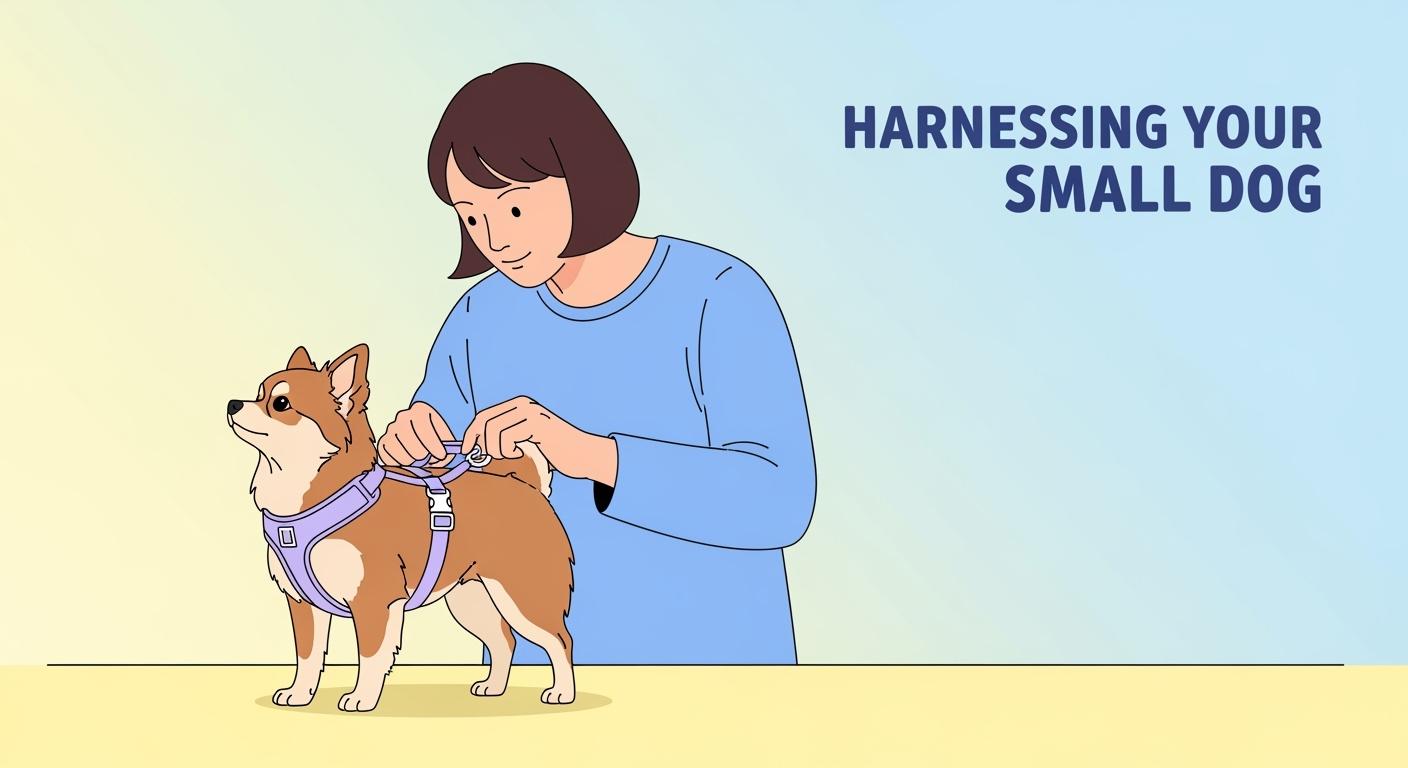
Putting a harness on a small dog should feel calm and predictable, not rushed. The safest routine is to choose the right size, lay the harness flat, center it on the chest, and make sure no strap twists, rubs, or presses on the throat before you clip on the leash.
Key Takeaways
- Measure the neck and chest before buying a harness, then use the brand’s size chart instead of guessing by weight alone.
- Untwist every strap and center the chest piece before tightening anything.
- Check fit before each walk, especially around the throat, armpits, and the strap behind the front legs.
- If the harness shifts, leaves marks, or your dog tries to back out, stop and refit it before going outside.
Choose the Right Harness and Size First
A good fit starts before the harness goes on. Measure the base of your dog’s neck and the widest part of the chest, then compare those numbers with the manufacturer’s chart. A harness that is too loose can rotate or slip off. One that is too tight can cause rubbing, limit movement, or make a nervous dog resist it.
| Harness Type | How It Works | Often Best For |
|---|---|---|
| Back-clip | D-ring sits on the back and keeps leash pressure away from the neck. | Small dogs that already walk fairly well and dogs with neck sensitivity. |
| Front-clip | Leash attaches at the chest and can help redirect pulling. | Dogs that lunge or need more leash training. |
| Dual-clip | Front and back attachment points give you more setup options. | Dogs moving from training walks to everyday walks. |
| Step-in | Dog places front paws into openings and the harness fastens over the back. | Small dogs that dislike gear going over the head. |
For many small breeds, comfort matters as much as control. Light, low-bulk designs can feel easier for dogs that are sensitive to heavy webbing, while more adjustable overhead styles may give you a more secure fit for active dogs.
Note: If your dog coughs, gags, limps, or develops red spots while wearing a harness, stop and reassess the fit. If the problem continues, ask your veterinarian which style is appropriate.
How to Properly Put on a Dog Harness
The basic routine stays the same across most harness styles. Loosen the straps first, untwist the webbing, identify where the neck, chest, and belly sections go, and make sure the chest panel sits in the middle before you tighten anything.
Start With a Calm Setup
If your dog is nervous, slow the process down. Let your dog sniff the harness, reward calm behavior, and handle one step at a time instead of rushing straight to buckling. Small dogs often notice awkward pressure quickly, so a calm start usually makes the fit check easier.
- Lay the harness flat and loosen the straps.
- Check that the chest piece, belly strap, buckles, and leash ring are easy to identify.
- Untwist every strap so the webbing lies flat.
- Position your dog standing still on a non-slip surface.
- Place the harness on your dog based on the style, then center it before tightening.
How to Put on an Overhead Harness
- Slide the neck opening gently over your dog’s head.
- Bring the chest piece down so it sits centered between the front legs.
- Wrap the belly strap behind the front legs and fasten the buckle.
- Adjust both sides evenly so the harness stays centered.
- Check that the front strap is not riding up into the throat.
- Let your dog take a few steps and watch for shifting or rubbing.
How to Put on a Step-In Harness
- Lay the harness on the floor with the left and right paw openings clear.
- Guide each front paw into the correct opening.
- Lift the side straps up along the body and fasten them over the back.
- Center the front section on the chest instead of letting it pull to one side.
- Adjust the straps so the harness feels secure but does not bunch or pinch.
- Walk your dog a few steps indoors and recheck the fit.
How to Put on a Low-Bulk Easy-On Harness
- Open the closure fully and lay the harness flat.
- Place the body panel where the design intends, usually across the chest or back.
- Fasten the buckle or hook-and-loop closure without twisting the fabric.
- Make sure the harness does not rotate or slide back along the ribcage.
- Check that the pressure sits across the chest and body, not on the throat.
What Should Sit Right Before You Start Walking
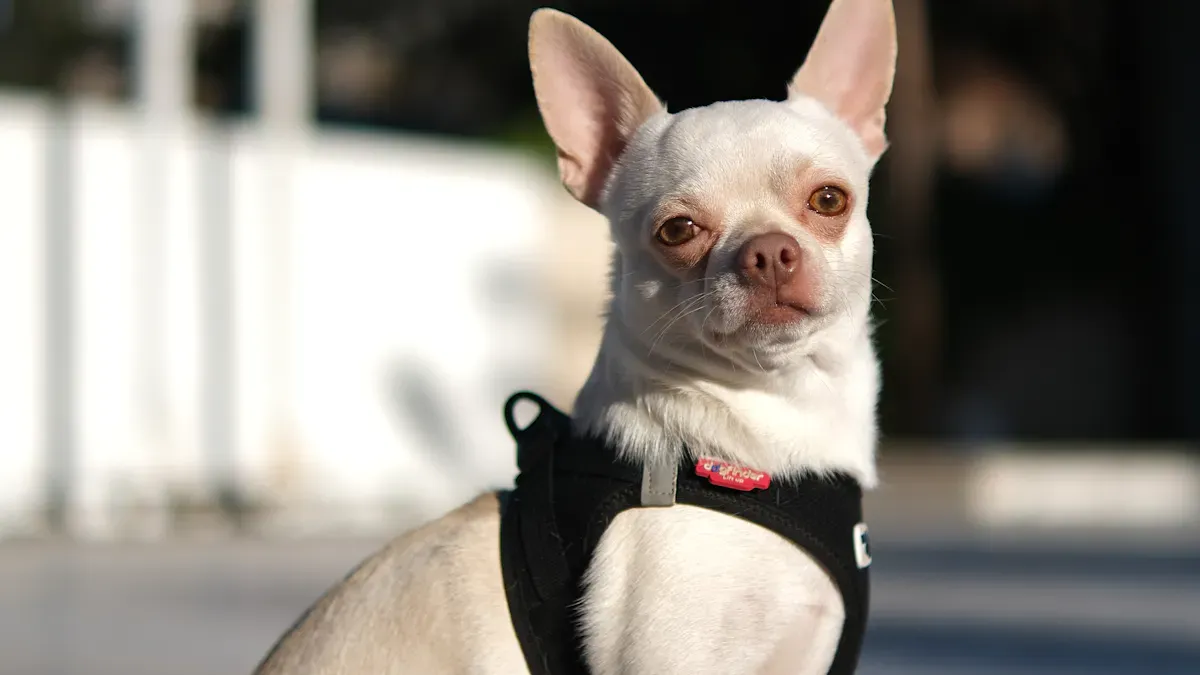
A properly fitted harness should stay stable without pinching. Before you leave the house, look at the chest, throat, shoulders, belly strap, and armpit area instead of relying on a quick buckle check.
| Area to Check | What Good Fit Looks Like | Common Problem | What to Fix |
|---|---|---|---|
| Chest panel | Centered and even on both sides | Pulls off to one side | Recenter the harness before tightening |
| Throat area | Clear of pressure while standing and walking | Strap rides high into the neck | Lower and reposition the front section |
| Shoulders | Front legs move freely | Webbing crosses into shoulder movement | Adjust the fit or try a different shape |
| Behind front legs | Belly strap sits behind the legs without rubbing | Strap sits too far forward | Slide it back and retighten evenly |
| Overall snugness | Secure and stable during a few test steps | Harness twists, gaps, or slides | Readjust or size down if the chart supports it |
Watch your dog move for a few seconds indoors. If the harness rotates, bunches under the leg, or creeps up toward the neck, it is not ready for a walk yet.
Common Mistakes When Putting on a Dog Harness
- Tightening the straps before checking alignment.
- Leaving a twist in the chest or belly strap.
- Letting the front section sit too high on the throat.
- Placing the belly strap too close to the front legs.
- Using the right size on paper but ignoring how the harness sits on your dog’s body shape.
- Keeping a harness on for long indoor stretches when your dog is resting.
Small breeds can be especially sensitive to poor strap placement. A bad fit may not look dramatic at first, but it can still lead to rubbing, escape risk, or a dog that starts resisting the harness every time it comes out.
| Problem You Notice | Likely Cause | Quick Check | Fix |
|---|---|---|---|
| Harness slips sideways | Chest piece is off-center or straps are uneven | Look at both sides of the chest | Recenter it and adjust both sides evenly |
| Dog coughs or gags | Front strap is pressing too high | Check where the harness sits at the throat | Lower the front section and reassess fit |
| Rubbing under the arms | Belly strap is too far forward or the harness is shifting | Inspect the armpit area after a short walk | Move the strap back or try a different style |
| Dog backs out of the harness | Harness is too loose or the shape does not match the body | Watch for gaps when the dog turns or reverses | Refit it before another walk and check the size chart again |
| Dog freezes or refuses to walk | Pressure, bulk, or a poor association with the harness | Look for bunching, twisting, or stiff movement | Reset the fit and reintroduce the harness slowly |
When to Refit or Replace the Harness
Check the fit more often during puppy growth, weight changes, coat changes, or after heavy use. Even a harness that fit well last month can start rubbing if your dog’s body changes or the straps stretch.
- Refit the harness if you notice red marks, hair loss, warm skin, or repeated scratching after walks.
- Reassess the style if the harness keeps riding up, twisting, or limiting your dog’s stride.
- Replace the harness if buckles crack, stitching frays, padding turns rough, or the webbing starts to thin.
- Stop using it immediately if your dog shows signs of pain or breathing difficulty while wearing it.
A harness is working well when your dog can move naturally, the chest stays centered, and the gear stays quiet on the body instead of shifting around with every step.
FAQ
How often should you check a small dog’s harness fit?
Check it before every walk, and check more closely any time your dog is growing, gaining or losing weight, or wearing a different coat length.
Can a small dog wear a harness all day?
It is usually better to remove the harness during rest time indoors so moisture, rubbing, and pressure do not build up over hours.
What if your dog resists the harness every time?
Go back to a slower introduction with treats, shorter practice sessions, and a careful fit check, because resistance often means the dog expects discomfort or stress.






