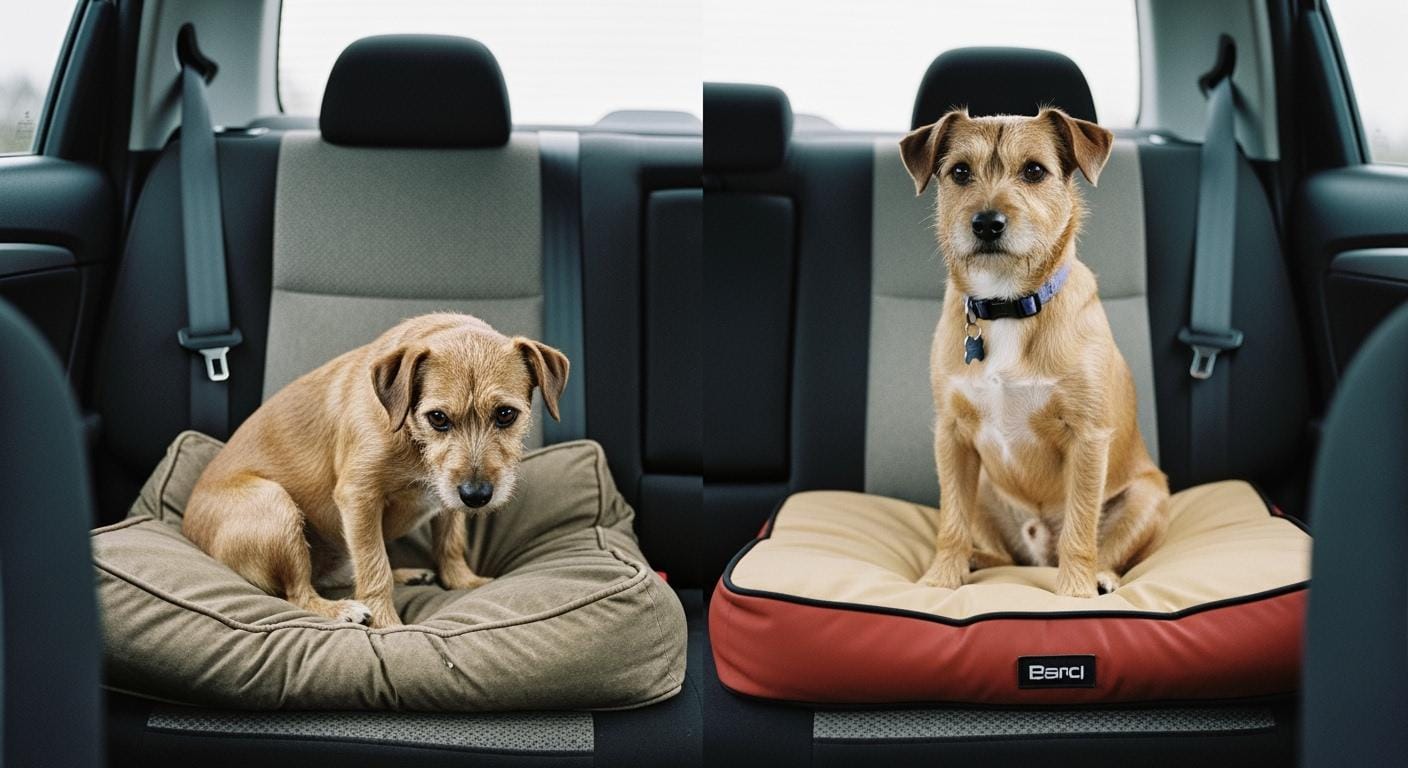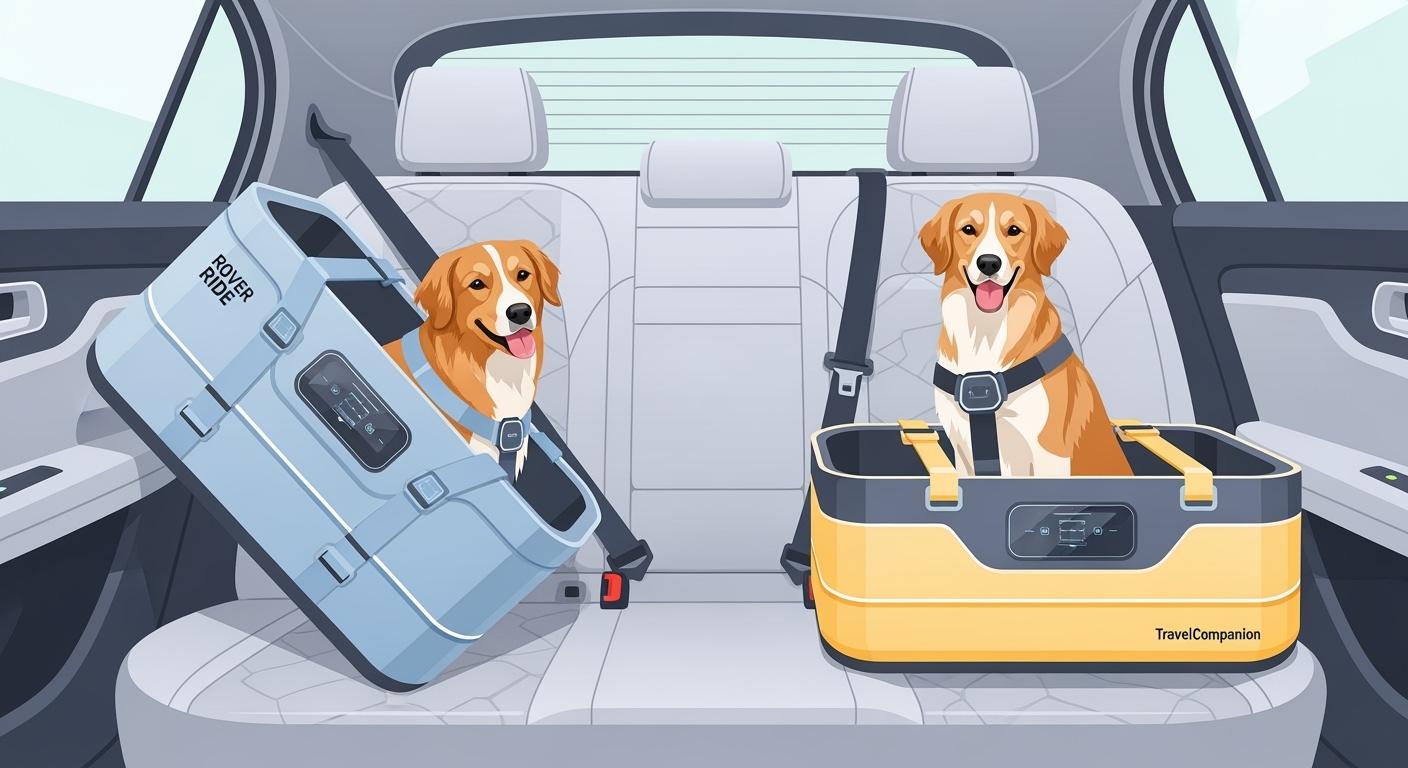
If your dog shifts, braces on turns, or refuses to settle in the car, the problem is often the setup rather than the ride itself. A dog carrier for car back seat use works best when it sits flat, stays steady through turns and stops, and leaves the seatbelt buckle easy to reach. For many dogs, a stable base matters more than extra padding.
Key Takeaways
- Choose the setup around your dog’s size, mobility, and behavior in the car, not just the softest carrier you can find.
- Check the base, side support, and buckle access before every trip, especially on contoured rear seats.
- If your dog keeps repositioning, pants, drools, or braces on corners, treat that as a setup problem and adjust it before a longer drive.
When a flatter setup works best
Choose for size, behavior, and trip length
A small dog may do well in a compact carrier with a flat base and enough side support to keep the body from rolling. A larger dog usually needs a wider footprint or a car bed that spreads weight more evenly across the seat. Older dogs and dogs with reduced mobility often seem more comfortable when they can step into a low, level space instead of climbing into a narrow carrier that tips as they enter.
Behavior matters just as much as size. Calm dogs on short rides may settle in a simple soft-sided option if the bottom stays level. Dogs that pace, brace, or spin before lying down usually do better in a more structured carrier that holds its shape. On longer drives, airflow, support, and a stable floor become more important because small annoyances tend to build over time.
Tip: Put the carrier on the rear seat before your dog gets in and press down on each corner. If it rocks when empty, it will usually feel worse once your dog shifts weight inside.
Soft carrier, structured carrier, or flatter car bed
The best dog carrier for car back seat travel depends on how much support your dog needs and how level your rear seat really is. The options below solve different problems.
| Type | Base Stability | Side Support | Buckle Access | Usually Best For | Common Weak Point |
|---|---|---|---|---|---|
| Soft carrier | Varies | Medium | Usually good | Small, calm dogs on short trips | Can sag, lean, or fold inward on softer seats |
| Structured carrier | Good | Strong | Usually good | Dogs that need more support or longer rides | Bulkier fit on narrow rear seats |
| Flatter car bed | Good | Low to medium | Easy | Larger, older, or less mobile dogs | Less containment if the sides are too low |
A padded or enclosed carrier is not automatically the better choice. If the bottom bends into the seat contour or the walls fold when your dog shifts, the extra softness may make the ride feel less secure rather than more comfortable.
What changes on a real rear seat
Seat contour can make a good carrier feel unstable
Most rear seats are not truly flat. Deep cushions, raised bolsters, and split seats can all change how a carrier sits once weight is added. That is why a dog carrier for car back seat travel can look fine in your home and still wobble in the car. Test the setup where it will actually be used. If one corner lifts, the base dips toward the footwell, or the carrier shifts when your dog steps in, you need a flatter or firmer foundation.
Compact vehicles can be the hardest fit because the seat base is shorter and more curved. In those cases, a structured bottom panel or hard insert can help keep the floor level. If your seat cover bunches under the carrier, smooth it out before loading your dog so the base is resting on a predictable surface.
| Cover Type | Effect on Stability | What to Watch For |
|---|---|---|
| Hammock-style cover | May sag toward the footwell | Can change the loading angle and interfere with buckle access |
| Bench-style cover | Usually more predictable | Often keeps the seat surface flatter and buckles easier to reach |
| Hard-bottom cover | Can add support across gaps | Useful when the seat contour makes the carrier lean or dip |
Buckle access and loading angle matter more than they seem
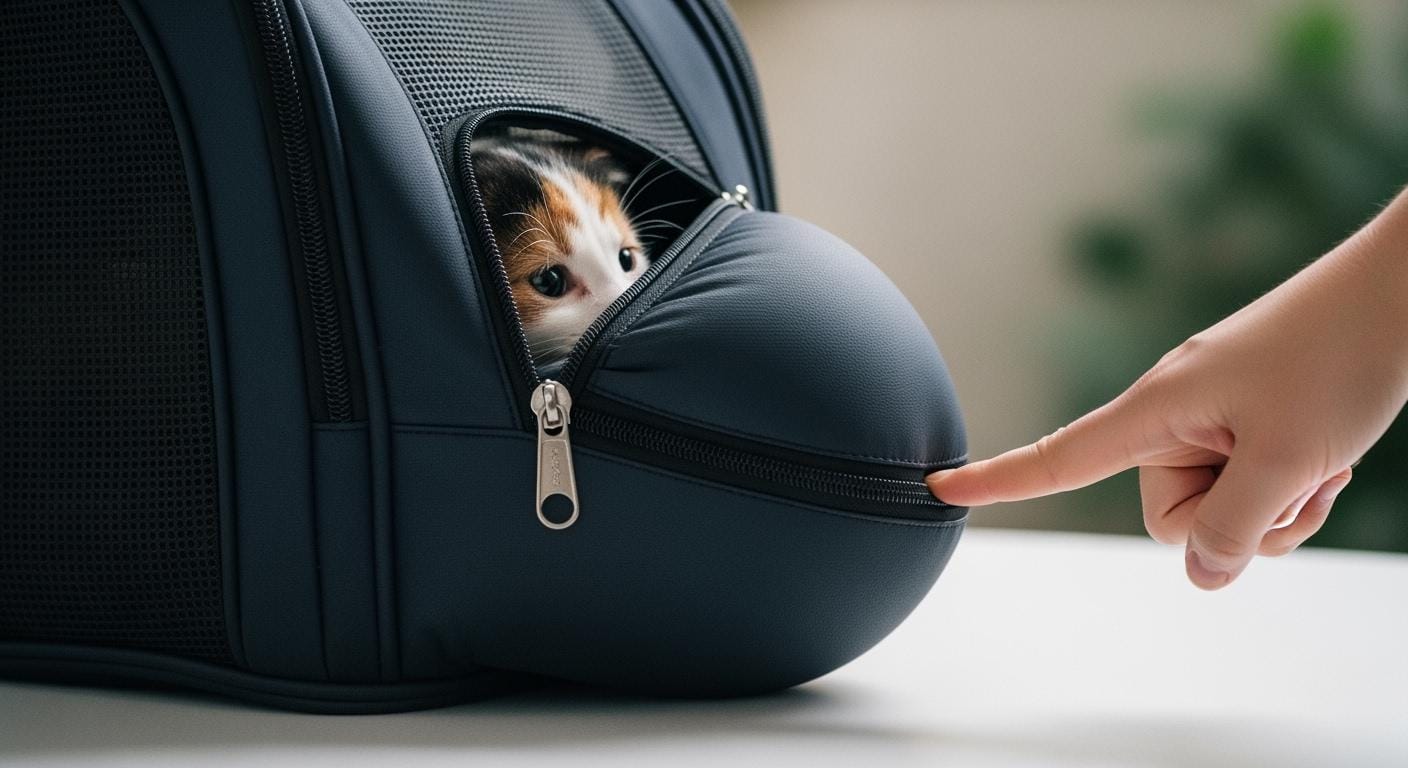
You should still be able to reach the seatbelt buckle after the carrier is in place. If the buckle disappears under fabric, under the carrier wall, or behind a seat cover fold, securing the setup becomes harder and removal is slower when you need it. Check buckle access before the dog gets in, not after.
Watch the loading angle too. If the carrier tips toward one side as your dog steps in, that usually means the base is not supported evenly. A harness attachment, if you use one, generally puts less strain on the neck than clipping restraint hardware to a collar during sudden movement. Rear seat placement is also usually preferred over the front seat because airbags can create additional risk for pets.
Quick pass or fail checks before you drive
| Check Item | Pass Signal | Fail Signal | Fix |
|---|---|---|---|
| Carrier base sits flat | No rocking or leaning | Tips, teeters, or drops at one corner | Reposition it or add firmer support under the base |
| Buckle stays reachable | You can clip and unclip it easily | Buckle is hidden or blocked | Move the carrier or change the cover layout |
| Side walls keep shape | Walls stay upright with the dog inside | Walls collapse inward | Use a more structured carrier |
| Carrier stays planted on turns | Little to no sliding | Shifts or rotates on corners | Add grip under the base and tighten anchors |
| Dog settles after loading | Lies down or sits without bracing | Keeps circling, leaning, or resisting | Check stability, fit, and entry angle |
Note: If your dog has trouble moving, seems painful when getting in, or continues to show nausea or distress even after you improve the setup, ask your vet before the next longer trip.
Failure signs to catch early
Tilting, wall collapse, and blocked buckle reach
The clearest warning sign is movement you can see before the car even starts. A carrier that tilts after loading, leans into one bolster, or sinks into a soft cover is already telling you the base is not stable enough. Side-wall collapse usually means the structure is too weak for your dog’s weight or for the shape of your rear seat. Blocked buckle reach often happens when fabric overlaps the buckle opening or the carrier footprint is simply too wide for that seating position.
These issues matter because dogs react to instability fast. Some will brace with their front legs, some will keep turning around, and some will refuse to lie down at all. When that happens, the answer is usually a flatter setup, stronger sides, better anchor positioning, or a carrier that fits the seat width more cleanly.
Behavior that usually means the setup feels wrong
Your dog does not need to cry or panic for the setup to be a poor fit. More subtle signs often show up first.
- Repeated repositioning after the car starts moving
- Panting, lip licking, drooling, or whining that begins soon after loading
- Bracing on turns or sliding into one side wall
- Refusing to enter a carrier that was previously accepted
- Trying to climb out as soon as the car changes direction
Some of these behaviors can also show up with motion sickness or general travel anxiety, so treat them as signs to reassess the setup rather than proof of one exact cause. A calmer response on a short test drive after you level the carrier is a useful clue that stability was part of the problem.
Quick troubleshooting for common fit problems
| Symptom | Likely Cause | Fast Check | Fix |
|---|---|---|---|
| Carrier tilts or shifts | Uneven seat surface or loose anchoring | Press on each corner and watch for movement | Use a flatter base, add grip, and tighten the install |
| Side walls fold inward | Carrier structure is too soft | Push lightly on the sides with the dog out | Switch to a more supportive carrier design |
| Buckle is hard to reach | Carrier footprint or cover fabric blocks it | Try clipping and unclipping before loading | Reposition the carrier or clear the buckle opening |
| Dog stays restless | Instability, poor fit, or uncomfortable angle | Take a short drive and watch body position | Re-level the base and confirm enough room to lie down naturally |
FAQ
How do you keep a dog carrier from sliding on the back seat?
Start with a level base, then use the carrier’s anchors or seatbelt routing as designed and add a non-slip layer only if it does not interfere with a secure fit.
Can you use a dog carrier for car back seat travel with any seat cover?
Not always. Bench-style and hard-bottom covers are often easier to stabilize, while hammock-style covers can create sag and change the loading angle.
What if my dog seems comfortable at first but gets restless after a few minutes?
That usually means the carrier feels different once the car is moving, so recheck cornering stability, wall support, and whether your dog has enough room to settle without bracing.