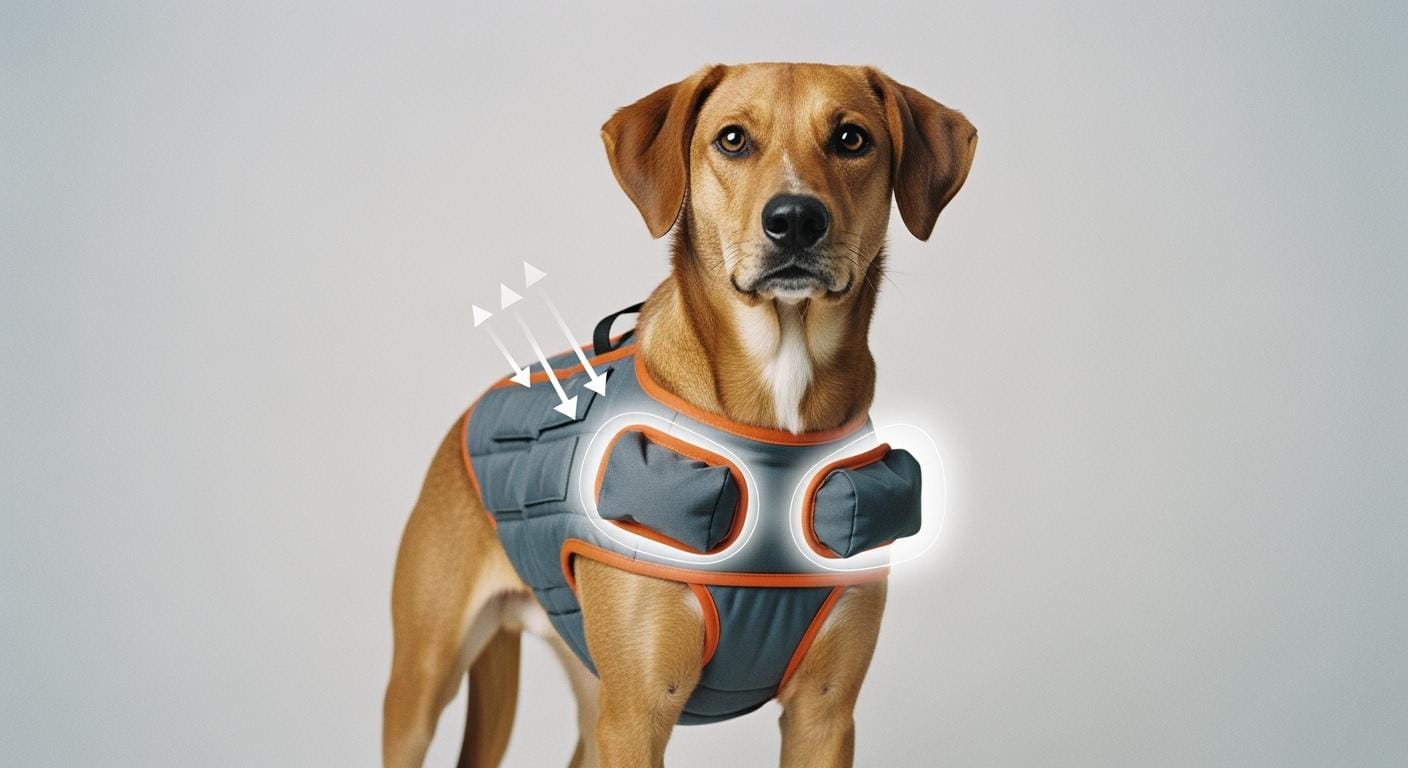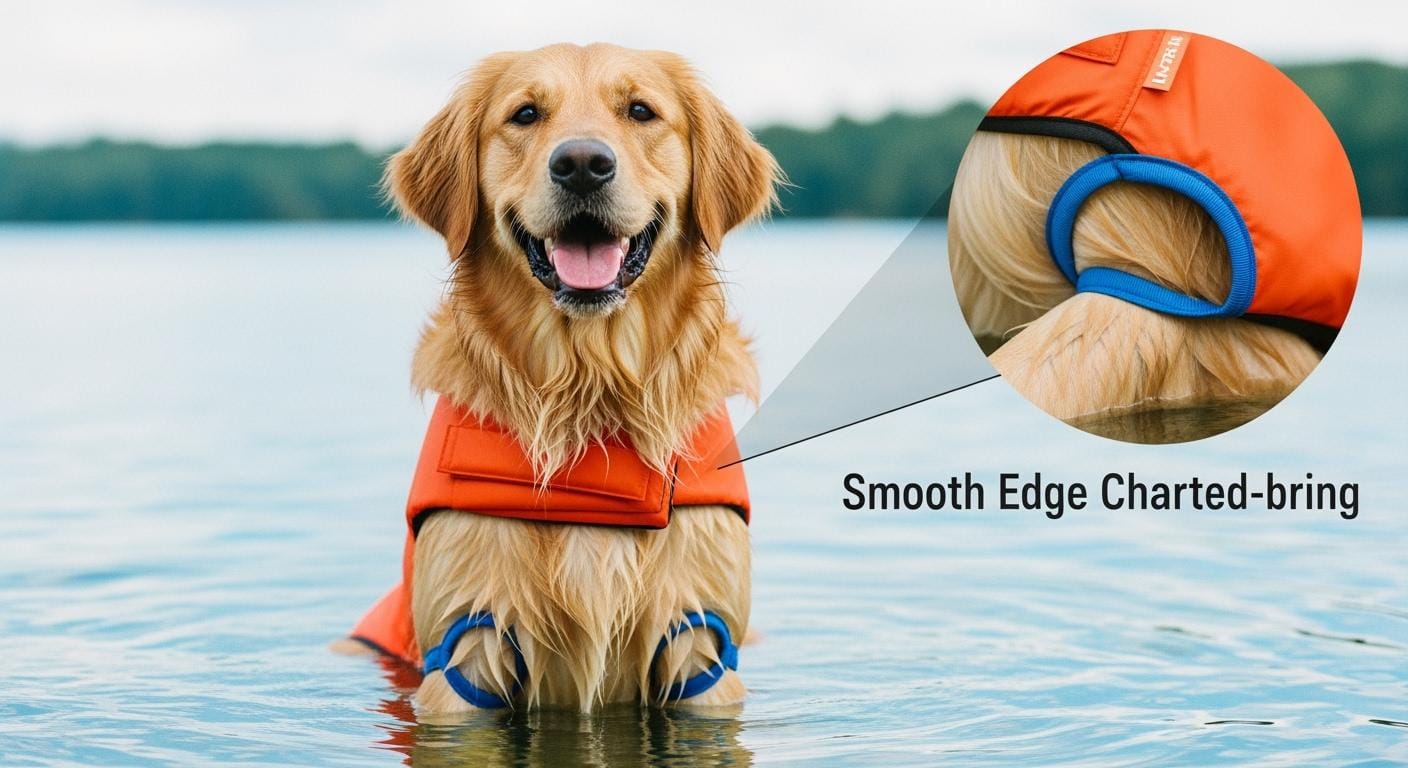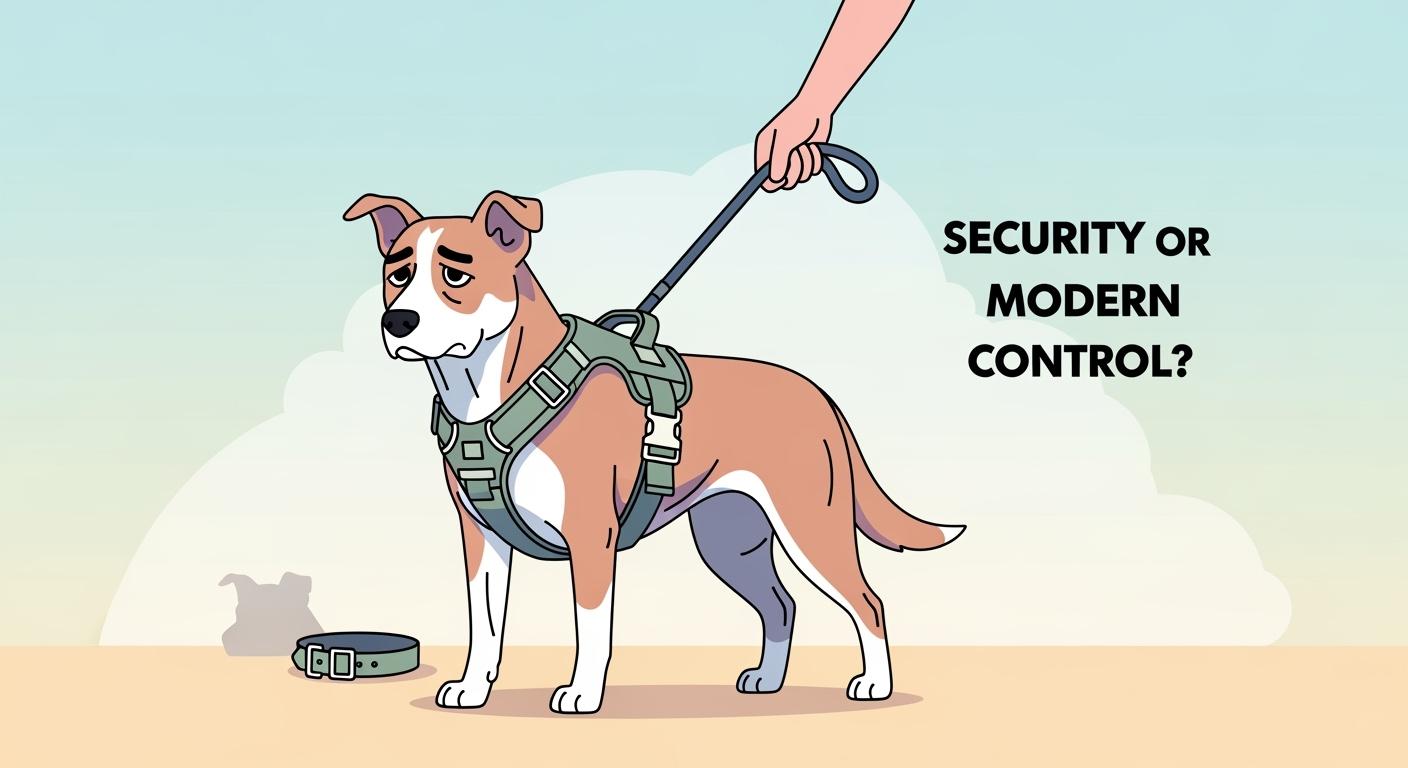
A military style dog harness can improve close control on demanding walks. It only helps when the bulk, handle, and fit still match your dog.
What matters on a real walk is not the rugged look. It is whether the harness stays centered, keeps the throat clear, and still lets the dog move normally once the line goes tight. A heavier harness can feel steadier at first and still become the wrong choice if it traps heat, drifts sideways, or makes the dog move stiffly after a few minutes.
Note: This is a guide to harness choice and fit, not a diagnosis of pulling, coughing, gait change, or behavior problems.
Key takeaways:
- A military style dog harness usually works best when you truly need a top handle, broader coverage, or steadier control over a strong dog.
- For most calm pets, lower bulk often gives better comfort, easier cooling, and cleaner shoulder movement.
- Fit decides everything, because a rugged harness that shifts, heats up, or crowds the throat is usually worse than a simpler design.
When a military style harness actually helps
Extra structure matters because control only feels better when the harness stays centered, the top handle is easy to reach, and the dog can still move naturally. If those things do not happen together, the added material often becomes dead weight.
When the handle and extra coverage are worth it
A higher coverage layout often helps dogs that lunge, work outdoors, or need short assisted lifts over obstacles. It can also help owners who need a more secure grip than a back clip alone gives on crowded walks.
| Harness Type | Best Use Case | Why it helps | What to Watch |
|---|---|---|---|
| Everyday harness | Calm neighborhood walks | Light feel, easier cooling | Less close control |
| Military style dog harness | Strong dogs, training, rough terrain | Handle access, wider coverage, steadier body control | More heat, more bulk, more fit sensitivity |
| Lower bulk control harness | Pulling dogs in daily use | Good guidance with less body panel | Fewer carry and gear options |
If your dog mainly pulls forward and does not need lifting support, the same handling logic behind front clip harness training steps often solves more than a heavier vest style layout. For most pet owners, the better match is the setup that gives readable control without making the dog hotter or stiffer.
When the same bulk starts working against you
More thoracic coverage matters because the same body panel that feels stable at first can also hold heat and change stride after 10 minutes. Calm dogs often show this quickly by slowing down, pausing more, or scratching at the edge seams.
| Potential Advantage | Main Limitation |
|---|---|
| Quick top handle access | Can sit unused on easy walks |
| Broader contact area | Can increase warmth and drying time |
| Heavier materials | Can feel stiff on smaller framed dogs |
| Gear attachment points | Often unnecessary for daily walks |
| More secure look | Can hide poor fit until the walk starts |
The same control versus bulk tradeoff also shows up in a dog tactical vest harness setup. A better match usually beats a tougher look.
What build details matter more than rugged styling
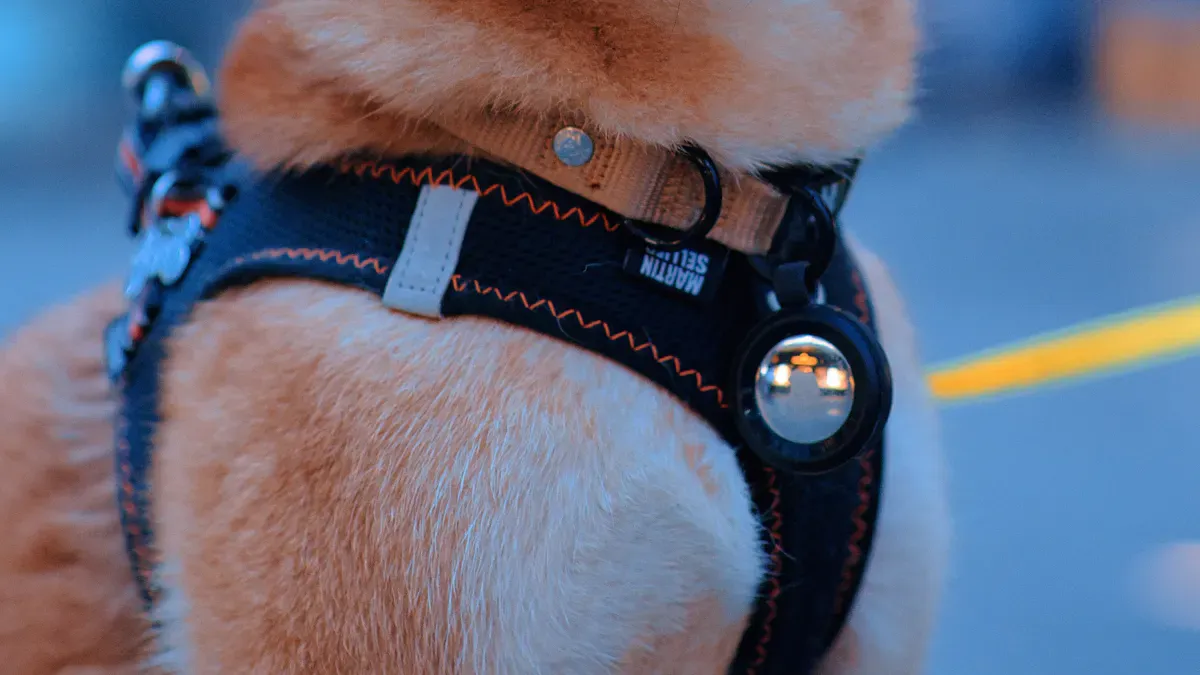
Construction details matter because control fails at the contact points first, not in the product photo. Smooth edge finish, even strap tension, and usable handle placement usually matter more than extra webbing.
| Check Area | Why it matters | What good use feels like | What to Watch |
|---|---|---|---|
| Top handle | Supports brief close control | Easy grab without lifting the whole harness | Pulls body panel upward |
| Front opening | Protects throat space | Sits low at the base of the neck | Rides into the airway area |
| Shoulder path | Preserves shoulder extension | Normal stride and turning | Short steps or stiff reach |
| Chest panel width | Affects stability and heat | Centered without crowding the legs | Too wide for the dog frame |
| Lining and seams | Reduce friction load | Smooth against coat and skin | Rubbing behind the front legs |
The same fit problems often show up in some heavy duty dog harness builds too, especially when throat clearance is tight, the chest panel is too wide, or the shoulder path gets crowded under load. Many of the issues owners describe as “too much harness” usually come from fit geometry, not from the rugged style alone.
Tip: If the handle is rarely used and the dog moves better in a lighter setup, the lighter setup is usually the smarter choice.
How to test it on real walks
A walk test matters because many fit problems appear only after the coat settles, the dog turns, and body heat builds. Use this 3 step check before deciding that a military style dog harness is the right long-term setup.
- Indoor test. Let the dog wear the harness for a short calm session indoors, then watch for freezing, scratching, throat crowding, or strap drift.
- Loaded test. Add the leash, make turns, stop, and briefly use the top handle if the design includes one. Watch whether the harness lifts, twists, or blocks shoulder reach.
- Real session test. Use the harness on normal walks for 3 days in a row, then compare heat, stride, and behavior at the start, middle, and end of each outing.
| Check Item | Pass Signal | Fail Signal | Improvement Plan |
|---|---|---|---|
| Center line | Stays centered through turns | Slides to one side | Retighten evenly or size down |
| Neck position | Sits below the throat | Rides upward when tension starts | Reposition or change front shape |
| Stride quality | Normal step length | Short steps or stiff walk | Choose less restrictive coverage |
| Heat load | Coat stays fairly dry | Damp fur and restless panting | Use lighter daily gear |
| Handle function | Useful in brief moments | Mostly decorative or intrusive | Skip the handle style next time |
Record for 3 walks before you decide: harness position, stride quality, heat under the panel, handle use, and recovery after the walk.
| Log Field | What to record |
|---|---|
| Walk context | Quiet street, busy path, trail, training session |
| Control moments | Pulling, lunging, quick redirection, no issue |
| Harness position | Centered, drifted, rode up, stayed low |
| Movement quality | Normal stride, short stride, hesitation, turning stiffness |
| Heat and skin response | Dry coat, damp coat, rubbing, no visible issue |
Many of the same fit questions also show up in a dog training harness setup, especially when the real issue is not “military style or not” but whether the front layout stays readable under load.
Disclaimer: If your dog coughs, gags, shows obvious pain, or keeps shortening stride, stop the test and speak with your veterinarian before trying another session.
Signs it is too much harness for your dog
The most common mistakes usually happen when owners buy for appearance first and function second. A military style dog harness should solve a real handling problem, not create a new comfort problem.
- Choosing more coverage than the dog actually needs
- Using the back handle as a constant lifting point
- Ignoring heat buildup on longer walks
- Keeping the harness on for hours after the walk ends
- Assuming stronger materials automatically mean better fit
Tip: The most common mistake is using a bulky vest style harness on a calm dog who would usually move better in a lighter control setup.
| Problem | Likely Cause | Fast Check | What to do next |
|---|---|---|---|
| Scratching or rubbing | Rough seam or poor panel shape | Check contact points after the walk | Adjust or change to smoother coverage |
| Harness shifts in turns | Loose fit or body panel too wide | Watch the center line during turns | Retension or choose a narrower build |
| Heavy panting under light effort | Too much thoracic coverage | Feel for damp fur under the panel | Use a lower bulk harness for daily walks |
| Dog resists walking | Bulk, stiffness, or poor throat clearance | Compare movement in a lighter setup | Switch layouts and retest |
| Poor leash manners continue | Gear is managing, not teaching | Look at timing and handler consistency | Pair the setup with reward-based training |
If the real goal is cleaner pulling control rather than equipment carry, the decision often ends up looking closer to a pulling dog harness problem than a duty-style vest problem. By that point, the broader dog harness range only helps after you already know how much coverage your dog actually tolerates well.
FAQ
Is a military style dog harness better for every strong dog?
No. It usually helps only when the dog actually benefits from the handle, extra coverage, or closer body control.
Can this style improve leash training by itself?
It can improve management, but lasting leash change usually depends on fit, handling consistency, and reward timing.
When should I switch to a simpler setup?
You should usually switch when the harness adds heat, shifts off center, crowds the throat, or makes stride quality worse.
Disclaimer: This FAQ is about harness choice and fit checks, and it does not replace veterinary or behavior advice when pulling is linked to pain, fear, or repeated distress.
Choose the more structured option only when it solves a real control problem that you can see on repeat walks. For most owners, the right answer is not the toughest harness. It is the harness that stays centered, keeps the throat clear, and lets the dog move well.
- Extra structure is usually useful only when you truly need brief close control.
- Heat, drift, and short stride are stronger decision signals than rugged styling.
- A better fit and a humane training plan usually outperform heavier gear alone.
Note: A military style dog harness can be a helpful management tool, but it is usually not the best daily answer unless control, comfort, and movement all stay in balance.