
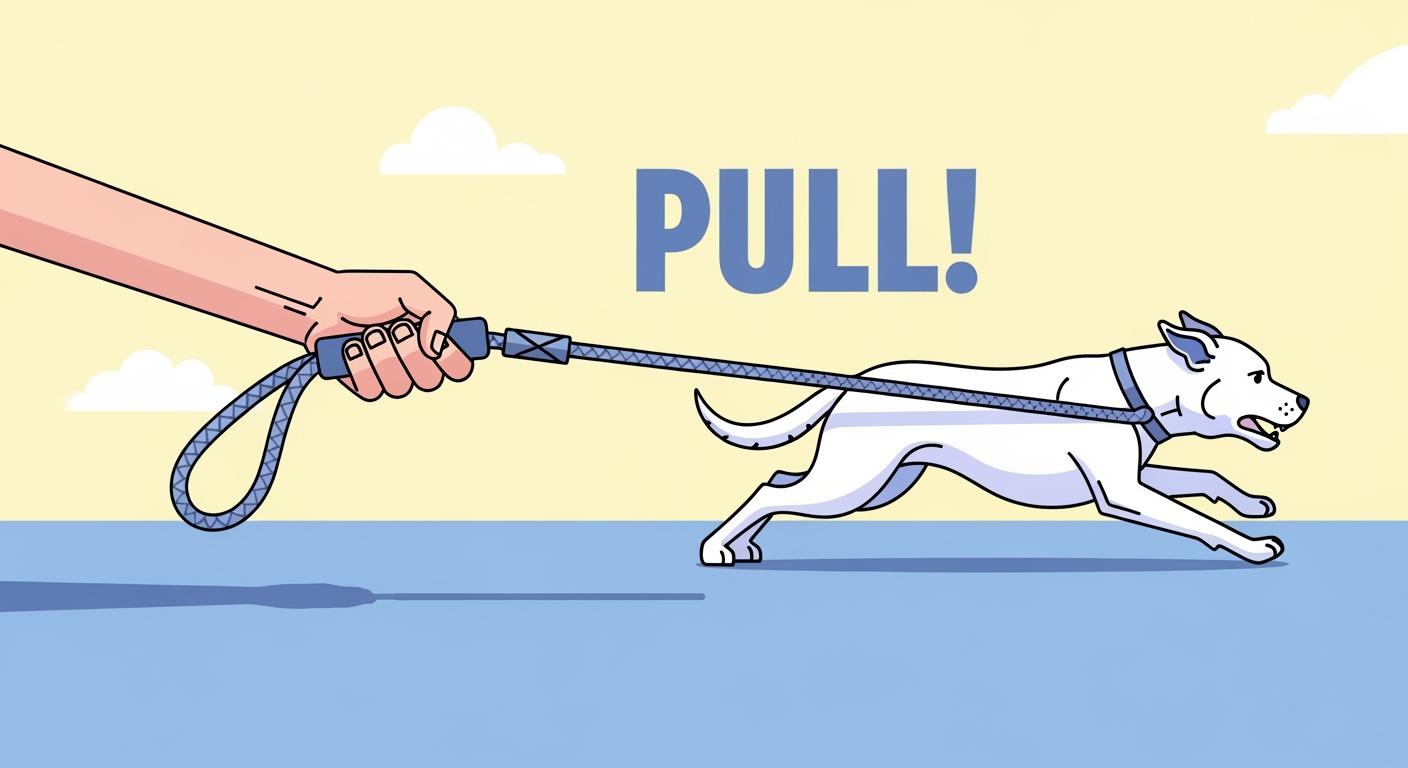
The best dog leash for dogs that pull can help you manage force, grip, and distance, but it cannot teach loose-leash walking by itself. If your dog keeps hitting the end of the leash, lunging toward triggers, or dragging you forward, the leash is only one part of the answer. You need a setup that gives safe control, plus a walking plan that rewards slack, reduces rehearsed pulling, and changes the environment before your dog is already over threshold.
Key Takeaways
- A leash alone will not stop pulling. It can help you manage the walk while training changes the behavior.
- Choose a leash that fits your dog’s needs. Look for grip, clip strength, controllable length, and a leash style that matches the dog’s pulling pattern.
- Avoid setups that add more distance, delay, or poor control. Retractable, very thin, or overly long leashes often make strong pulling harder to manage.
What the Best Dog Leash for Dogs That Pull Can and Cannot Do
Why leash choice alone is not enough
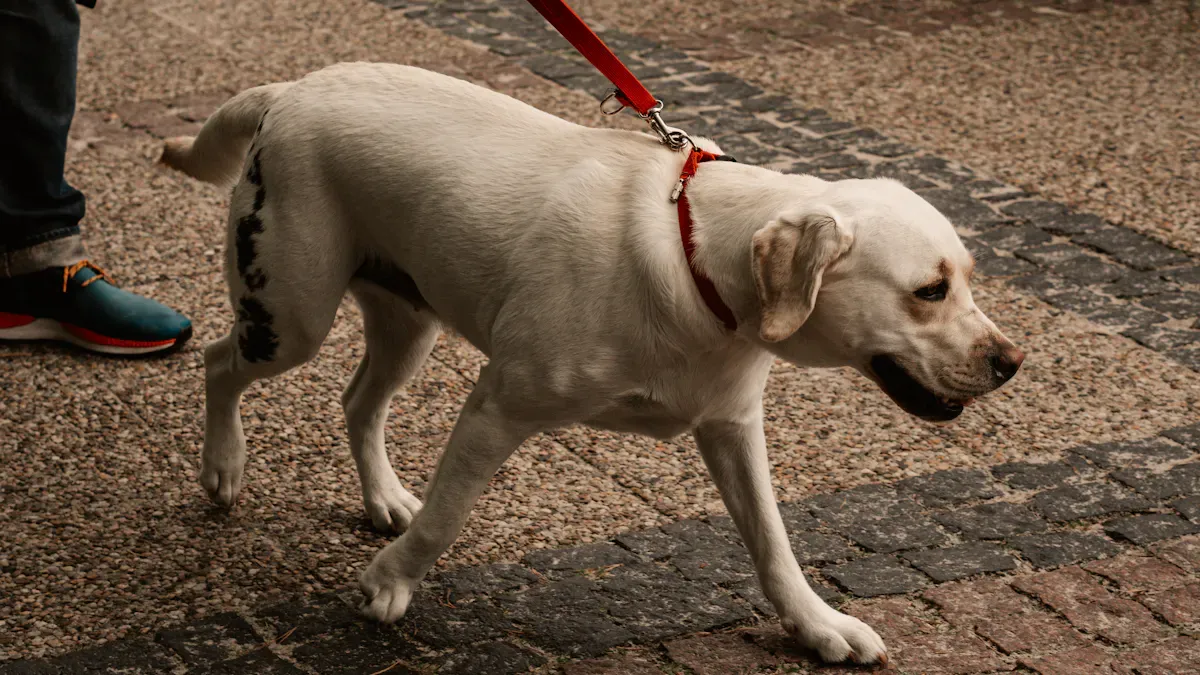
You may hope that the best dog leash for dogs that pull will solve the whole walking problem. It will not. A leash is a management tool. It can help you hold, redirect, shorten distance, or absorb some force, but it does not teach your dog what to do instead of pulling.
Dogs pull for different reasons. Some are excited. Some are trying to reach smells, people, or other dogs. Some are worried and trying to create distance. Some have simply learned that a tight leash still gets them where they want to go. The right leash helps you manage those moments more safely, but the long-term fix comes from timing, distance, reward placement, and consistent rules.
Note: If you feel pain, strain, or fear during walks, talk to a qualified trainer or your veterinarian. This blog does not give medical advice.
How the right leash helps
The best dog leash for dogs that pull can make walks safer and more comfortable. A better leash gives you a clearer grip, a stronger clip, and a more predictable distance between you and your dog. Some leash designs reduce hand strain. Others help you shorten control in busy places. A bungee section may reduce the sharp feel of a sudden pull, but it can also make timing less precise if the dog already surges hard.
Choose the leash based on the failure you actually see. If your hands hurt, grip and handle comfort matter. If your dog lunges in crowded areas, shorter control matters. If the leash clip feels weak, hardware matters. If your dog keeps pulling for the whole walk, training matters more than buying a stronger leash.
Best Leashes for Dogs That Pull: Comparison Table
Use this table to match leash type to the real problem you are trying to solve:
| Leash Type | Use Case | Main Benefit | Main Watchout | Who Should Skip It |
|---|---|---|---|---|
| Standard Leash | Everyday walks and basic loose-leash work | Simple, predictable, easy to handle | May not reduce hand strain with strong pullers | Handlers needing extra grip or short-range control |
| Padded-Handle Leash | Longer walks or frequent tension | Better hand comfort and grip | Padding does not fix pulling behavior | Dogs that need closer traffic control more than comfort |
| Bungee Leash | Dogs with occasional sudden pulls | Softens some shock from quick tension spikes | Can feel delayed and less precise for hard pullers | Dogs that need immediate redirection or close control |
| Short Traffic Lead | Busy sidewalks, crossings, narrow spaces | Close control and fast response | Too restrictive for relaxed distance walking | Dogs that only need calm, open-area walking |
A leash can improve handling, but it should not hide the real issue. If the leash stays tight most of the walk, your dog is practicing pulling. That is a training problem, not only a gear problem.
Leash types to avoid when pulling is the main issue
Some leash choices make pulling harder to control. Retractable leashes can reward forward movement by giving more distance, and they can be difficult to shorten quickly when the dog is already pulling. Very thin leashes can hurt the hands and may feel less secure with strong dogs. Overly long leashes give the dog more speed before the leash tightens.
- Retractable leashes are a weak match for dogs that lunge, chase, or pull near traffic.
- Very thin leashes can create poor grip and hand discomfort.
- Overly long leashes give a strong puller too much room to build momentum.
- Hands-free leashes are usually not the starting point for dogs that still pull hard or react suddenly.
The best dog leash for dogs that pull will not cure pulling, but it can make the walk safer while you train. Pair the leash with a fitted harness or collar setup that does not create neck pressure, escape risk, or poor movement.
Gear, Handling, or Training? Diagnosing Pulling Problems
When gear is the issue
Your dog may still pull because the leash setup is making control harder. A leash that is too long can let the dog build speed. A weak clip can make you hesitate. A handle that hurts your hand can make you release pressure at the wrong time. A poorly fitted harness or collar can shift, ride up, or create pressure where your dog does not tolerate it well.
Gear is the issue when the dog improves quickly after the setup becomes clearer: shorter leash control, better grip, safer clip, better harness fit, or less tangling. Training is the issue when the dog still drives forward even with a safe, well-fitted setup.
Tip: Always look at your leash before each walk. Check for weak spots, damaged stitching, broken clips, or fraying.
Pass/Fail Checklist: Is Your Leash Setup Working?
| Check Item | Pass Signal | Fail Signal | Fix |
|---|---|---|---|
| Leash length | Dog stays within a controllable range | Dog builds speed before tension hits | Use a more manageable leash length or add short-range control in busy areas |
| Grip comfort | You can hold the leash without hand pain or slipping | Sore hands, poor grip, or panic release | Use a padded handle or better grip surface |
| Clip security | Clip stays closed and rotates cleanly | Clip sticks, pops open, or feels weak | Replace the leash before the next walk |
| Harness or collar fit | Dog cannot slip out and pressure stays away from the throat | Back-out risk, ride-up, coughing, or gagging | Refit the harness or change the attachment setup |
Troubleshooting Table: Common Pulling Symptoms
| Symptom | Likely Cause | Fast Check | Fix |
|---|---|---|---|
| Constant pulling | Dog has learned that tension still moves the walk forward | Notice whether the leash is tight most of the route | Start loose-leash practice in easier areas |
| Lunging at distractions | Excitement, frustration, or trigger sensitivity | Watch whether the dog can recover after the trigger passes | Add distance, shorten the session, and reward recovery |
| Spinning or barking | Over-arousal, fear, or poor trigger distance | Look for stiff body, scanning, or inability to take food | Move to a quieter zone and get professional help if it repeats |
| Handler strain | Dog force is too high for the current setup | Notice pain, slipping grip, or fear of falling | Use closer control and get training support before harder walks |
When to focus on training
Training should become the priority when the leash setup is safe but the same behavior keeps repeating. If your dog pulls from the first step, ignores you outdoors, lunges at every trigger, or cannot relax after distractions pass, a new leash will only manage the symptoms.
Start in a quiet area. Reward slack before the dog reaches the end of the leash. Stop forward movement when pulling begins. Change direction only as a reset, not as a random correction. Keep sessions short enough that your dog can still think and recover.
Note: If you feel pain, strain, fear, or loss of control during walks, talk to a trainer or vet. This blog does not give medical advice.
Key Failure Signs and Fixes for a Dog That Pulls
Signs your leash is not enough
You may notice several warning signs during walks. If your leash stays tight most of the time, your dog is not learning to walk calmly. If you cannot shorten distance near triggers, your leash may be giving too much freedom. If your hands hurt, your clip feels weak, or your dog keeps lunging through the setup, the leash is no longer helping enough.
Here is what can happen when the leash setup does not match the dog’s pulling pattern:
| Consequence | What It Usually Means |
|---|---|
| Loss of control | The leash gives too much distance, poor grip, or slow response for that dog. |
| Hand or shoulder strain | The handler is absorbing force instead of managing it early. |
| Dog coughing or gagging | Pressure may be going through the neck instead of a safer body setup. |
| Repeated lunges | The environment is too hard, the trigger distance is too close, or the training plan is not yet strong enough. |
| Leash tangling | The leash is too long or the dog is changing direction faster than you can manage. |
Note: If you feel pain, fear, or cannot control your dog, speak with a professional trainer or veterinarian.
Common mistakes and real consequences
Many owners expect the leash to do all the work. That is the main mistake. Other mistakes also make pulling worse:
- Using a leash that is too long for busy or high-trigger areas.
- Letting pulling continue to move the walk forward.
- Keeping the leash tight all the time, which can make tension feel normal.
- Using harsh corrections instead of teaching a clear loose-leash behavior.
- Ignoring body language such as freezing, scanning, barking, or frantic pulling.
- Changing gear again and again without changing the walking plan.
A strong leash used poorly is still a poor setup. The goal is to make the leash a safety line while your dog learns that slack and attention make the walk continue.
Action steps: what to do when gear fails
If your current setup is not working, reset the walk before you try harder gear.
- Move to an easier area where your dog can notice you.
- Shorten the leash enough for control, but do not keep constant hard tension.
- When your dog pulls, stop forward movement before the dog drags you several steps.
- Reward slack, check-ins, and walking near you before the leash tightens again.
- Turn away from triggers early instead of waiting for a full lunge.
- Use a short traffic lead only in areas where close control is needed.
- Ask for professional help if lunging, fear, aggression, or handler strain continues.
Quick training tips for pullers
You can make leash training more workable by keeping the session small and clear:
- Practice in quiet places before busy sidewalks.
- Reward the dog while the leash is still loose, not after a long pulling stretch.
- Use a front-clip or better-fitted harness only if it improves control without rubbing, twisting, or creating throat pressure.
- Use stop-and-go walking consistently so pulling does not keep working.
- Use shorter walks if your dog loses focus quickly.
The best leash for a dog that pulls is the leash that gives you safe control while training changes the pattern. Stay patient, but do not ignore repeated loss of control. That is a sign to lower the difficulty and get support.
You can make walks safer with the right leash, but real progress comes from training, fit checks, and better handling. Start with a leash that gives you a secure grip and predictable control. Then build loose-leash walking in easier spaces before expecting your dog to succeed around bigger distractions.
- Check leash condition before each walk.
- Use manageable distance instead of giving a puller more room to surge.
- Reward loose-leash movement early and often.
- Switch to closer control in crowded or high-risk areas.
- Seek professional help if pulling becomes unsafe or reactive.
Note: If you feel pain or cannot control your dog, consult a trainer or veterinarian.
FAQ
What should you do if your dog pulls while using a hands-free leash?
Stop walking, regain control with the handhold if available, and switch back to handheld walking if the pulling repeats. A hands-free leash is usually best for dogs that already walk calmly.
Is a hands-free leash safe for strong pullers?
Usually not as a starting setup. Strong pullers can drag the handler through the waist or hips, especially during sudden lunges or sideways cuts.
Can you train your dog to stop pulling with a hands-free leash?
You can use one only after your dog has basic leash manners. Start training with a standard handheld leash so your timing, distance control, and reward placement are easier to manage.
Note: If you feel pain, fear, or cannot control your dog, talk to a trainer or veterinarian. This is not medical advice.






