
A small dog harness with leash can be convenient when both pieces work well together, but a matching set is not automatically the safest choice. Small dogs are sensitive to clip weight, leash length, neck pressure, rubbing, and back-out risk. The best setup is the one that keeps the harness stable, keeps the leash easy to control, and does not drag the front of the harness out of position during real walks.
Key Takeaways
- Pick a harness and leash that match for a better fit and safety. A good pair should feel light, stable, and easy to manage on a small dog.
- Do not judge by matching color alone. Check whether the leash clip is too heavy, whether the harness shifts, and whether the leash length gives your dog too much room to build speed.
- Choose separate pieces when your dog has a hard-to-fit body shape, pulls suddenly, backs out, or needs a lighter clip than the bundled leash provides.
Matching Small Dog Harness with Leash Sets
Benefits of a matching set
You want your small dog harness with leash to work as one clean walking setup. A matching set can make daily walks simpler because the harness and leash are usually designed to pair together. The clip size, fabric weight, and overall feel may be more consistent than two random pieces bought separately.
That convenience matters for small dogs. A leash clip that is too large can pull a light harness forward. A leash that is too long can give a small dog enough room to dart, wrap around legs, or hit the end of the leash suddenly. A harness that is too loose can shift, rub, or open an escape gap when the dog backs up.
A matching set is a good starting point when your dog fits the harness size well, walks calmly, and does not need a special leash length or extra-light hardware.
| Benefit | What It Means in Real Use |
|---|---|
| Easier setup | One purchase gives you a ready pair for basic daily walks. |
| Better visual match | The set looks consistent, but appearance should not override fit checks. |
| Usually lighter pairing | Some sets use lighter leash clips that suit small dogs better than heavy generic leashes. |
| Simpler daily routine | Useful when your dog has a standard body shape and the leash length works for your walking route. |
Comparison table: set vs separate harness vs separate leash
You need to think about whether a matching small dog harness with leash set is good for your daily life. Here is a table to help you pick:
| Use Case | Main Benefit | Main Watchout | Who Should Skip It |
|---|---|---|---|
| Matching Set | Simple, coordinated, easy to start with | Wrong harness size or clip weight affects the whole setup | Dogs with unusual body shape, escape risk, or special leash needs |
| Separate Harness | Better fit control for chest, neck, and shoulder shape | May not pair well with a heavy or awkward leash clip | Owners who only need a basic, easy everyday set |
| Separate Leash | Better choice of length, grip, and clip weight | Can mismatch the harness ring, size, or walking style | Owners who prefer one ready-made setup with fewer decisions |
Matching sets use the same quality for all parts. This means they last longer and are less likely to break. If you buy separate pieces, you need to check each one for fit and safety. If you want a harness for small dogs that fits your dog’s shape, you might need to buy separate items. If you want things to be easy and look nice, a matching set is best.
Who should choose a matching set
Choose a matching set when the harness fits cleanly, the leash clip does not pull the harness down, and your dog walks without frequent lunging or backing out. It is most useful for simple neighborhood walks, short outings, and dogs with body proportions that match the size chart well.
Skip the set if one piece is right and the other is not. A harness that fits well should not be paired with a leash that feels too heavy. A good leash should not be used with a harness that rides up, rubs, or opens gaps near the neck or front legs.
Common mistakes with matching sets
Matching sets fail when owners assume that “made together” means “right for this dog.” Watch for these mistakes:
- Choosing by style before checking chest and neck fit.
- Using a leash clip that is too heavy for a very small harness.
- Leaving too much leash length in busy spaces.
- Ignoring rubbing behind the front legs.
- Keeping the harness on after walks when the dog is resting or unsupervised.
- Not rechecking fit after growth, weight change, grooming, or coat changes.
| Bad Fit Signal | What It Usually Means |
|---|---|
| Harness twists or drops forward | The leash clip may be too heavy or the harness is not balanced. |
| Dog coughs when leash tightens | The front may be riding too high or pressure may be too close to the throat. |
| Dog backs out | The harness may be too loose, too open at the neck, or wrong for the dog’s body shape. |
Note: A matching set is not automatically better. You still need to check fit, leash weight, comfort, and control before every walk.
Separate Harness and Leash for Small Dogs
Why choose separate pieces
You may want to pick a separate harness and leash for your small dog. This choice gives you more control over the fit and comfort for your dog. Many owners choose separate pieces because they want the best fit for their dog’s unique body shape. You can select a harness that fits your dog’s chest and neck perfectly. You can also pick a leash that matches your walking style and your dog’s needs.
Separate pieces are especially useful when your dog has a narrow chest, deep chest, long body, thick coat, sensitive skin, or a habit of backing out. They also help when you need a shorter leash for control, a lighter clip for a tiny dog, or a softer handle for your own grip.
The tradeoff is that you must check compatibility yourself. The leash clip should fit the harness ring cleanly, rotate without catching, and not drag the harness off center. The leash length should match where you walk. A calm open route may allow more relaxed distance. A busy sidewalk, doorway, elevator, or parking lot needs closer control.
Pass/fail checklist table for harness and leash fit
You need to check the fit of your dog’s harness and leash before every walk. A good fit keeps your small dog safe and comfortable. Use this table to see if your harness and leash pass the test:
| Check Item | Pass Signal | Fail Signal | Fix |
|---|---|---|---|
| Neck-base fit | Harness sits below the throat without a large gap | Harness presses on throat or opens a back-out gap | Adjust straps or choose a better harness shape |
| Chest fit | Harness sits close without squeezing | Harness gaps, pinches, or slides sideways | Adjust chest straps or try a different size |
| Shoulder/elbow clearance | Dog moves freely with no rubbing | Short stride, red skin, or rubbing behind front legs | Change strap position or harness cut |
| Leash clip weight | Clip hangs cleanly without dragging the harness | Clip pulls the front down or makes the harness sag | Use a lighter leash or smaller clip |
| Leash length | Dog has enough room without building speed | Dog darts, tangles, or hits the end suddenly | Use a shorter leash in busy areas |
| Heat and weight balance | Dog stays comfortable and moves normally | Dog slows, scratches, pants, or avoids walking | Use lighter materials or less coverage |
Troubleshooting table: common pairing problems
Sometimes, you may have trouble with your dog’s harness and leash pairing. Here are some common problems and how to fix them:
| Problem | What You Notice | What To Try Next |
|---|---|---|
| Dog pulls hard on leash | Harness shifts or dog coughs when tension appears | Check harness position, use shorter control, and train loose-leash walking |
| Leash clip too heavy or bulky | Dog slows down, harness sags | Choose a lighter leash with a smaller clip |
| Harness rubs or chafes | Redness, hair loss, dog stops walking | Adjust fit, try softer edges, or change harness style |
| Dog escapes from harness | Dog slips out, backs up, or harness opens a gap | Recheck size and consider an escape-resistant layout |
| Leash tangles or twists | Leash wraps around legs or harness | Use a cleaner leash path, shorter leash, or swivel clip |
| Dog resists walking | Dog freezes, pulls back, scratches, or acts anxious | Check comfort first, then restart in a calm area |
If your dog keeps pulling, backing out, or freezing, do not keep changing random parts. First identify whether the problem is harness fit, leash weight, leash length, or the walking environment.
Mistakes with separate harness and leash
Separate pieces can work very well, but only when they are checked as a pair. Common mistakes include using a strong leash with a tiny harness ring, using a long leash in crowded spaces, or choosing a harness that fits the chest but rubs behind the elbows.
- Picking a harness that does not match your dog’s body shape can cause rubbing, shifting, or escape risk.
- Using a leash that is too heavy can pull the harness out of position.
- Using a leash that is too long can make small dogs harder to control near doors, cars, or sidewalks.
- Forgetting to recheck fit can lead to discomfort after growth, grooming, or weight change.
- Using harsh correction tools can increase stress and make walking problems worse.
Note: Always check your dog’s harness and leash before every walk. Make sure the fit is right, the leash clip is not too heavy, and your dog can move comfortably.
Signs of Harness and Leash Pairing Failure
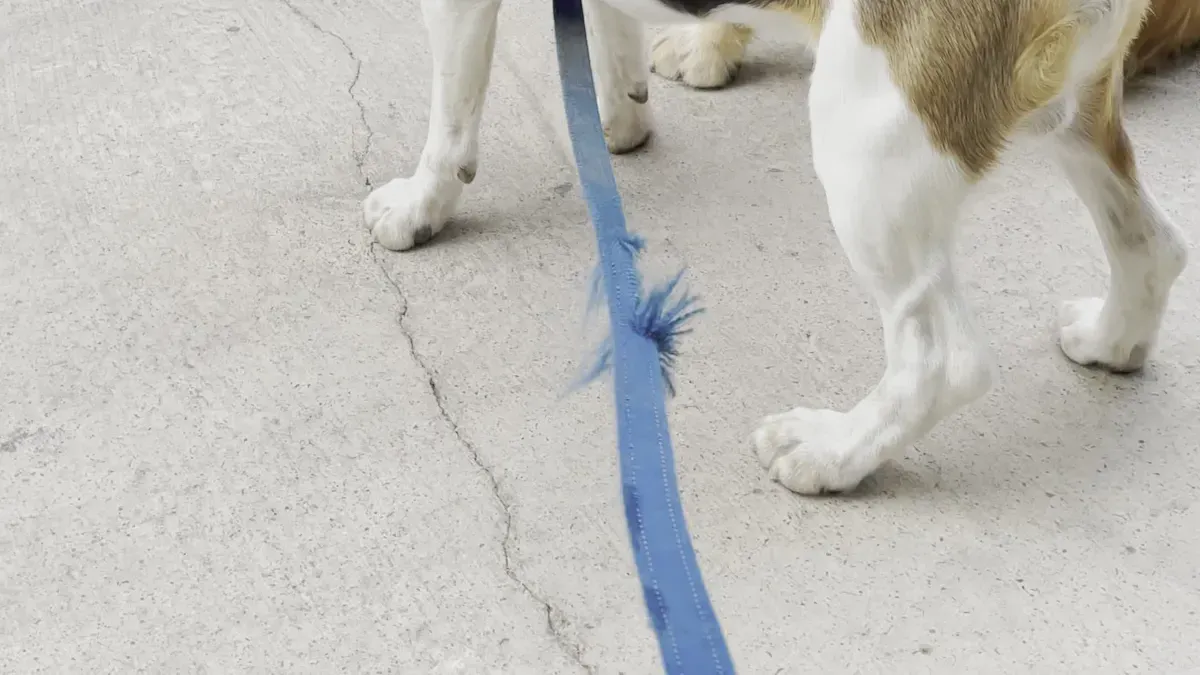
Spotting harness issues: pull, rubbing, slipping
You need to watch your dog closely when using a harness. If your dog pulls, rubs, or slips out, the harness may not fit well. Check for these signs every time you walk your dog. A harness that does not fit can cause discomfort or increase escape risk.
| Indicator | What It Means |
|---|---|
| Gaps and pulling | The harness may be too loose, unstable, or poorly matched to the leash angle. |
| Chafing and irritation | The strap path, edge material, or fit may be wrong for your dog’s movement. |
| Deep marks after removal | The harness may be too tight or pressure may be concentrated in one area. |
| Harness sagging at the front | The leash clip may be too heavy or the front panel may lack stability. |
| Dog backs out | The harness may not be secure enough for that body shape or exit behavior. |
Awkward leash feel and unused parts
When you walk your dog, the leash should feel steady in your hand and calm on the harness. If the leash feels heavy, bouncy, or slow to control, the pairing may be wrong. Extra rings, large clips, or unused adjustment loops can also catch, twist, or make the harness feel busier than it needs to be.
Small dogs usually need light, readable gear. A setup that looks strong but makes the dog move awkwardly is not a better setup.
Features to look for in harness for small dogs
Choose a harness that fits your dog’s body shape. Look for soft edges, stable chest support, and adjustment points that let you remove gaps without over-tightening. The harness should spread pressure across the body instead of letting the leash pull high into the neck.
The leash should match the harness. Look for a clip that fits the ring cleanly, a length that suits your walking environment, and a handle you can hold securely. If the leash keeps changing the harness position, the two pieces do not match well enough.
Note: If your dog shows signs of rubbing, airway pressure, fear, escape risk, or trouble moving, talk to your veterinarian or a qualified trainer. This advice does not replace medical care.
You need to focus on comfort, fit, and control when choosing a small dog harness with leash. A matching set is useful when both pieces fit your dog and your walk routine. Separate pieces are better when your dog needs a more precise harness fit, a lighter leash clip, or a different leash length.
- Choose the harness by body fit first.
- Choose the leash by clip weight, grip, and walking environment.
- Check for rubbing, sagging, twisting, and escape gaps after your dog starts moving.
- Change the pairing if one piece keeps making the other work worse.
Tip: A good harness and leash pair should feel quiet in use. If the leash pulls the harness out of place, the set is not really matched.
FAQ
How do you check if your small dog harness fits correctly?
Check that the harness sits below the throat, stays centered, and does not rub behind the front legs. Your dog should move normally, and no large gap should open when the dog backs up or turns.
What makes a harness safer for small dogs?
A safer harness spreads pressure across the chest and body instead of concentrating it on the neck. It should have secure hardware, stable adjustment, soft contact areas, and enough structure to reduce slipping.
Can you use a no pull harness with any leash?
Not always. The leash clip should fit the harness ring, feel light enough for your dog’s size, and allow clean movement. A heavy or awkward leash can make even a good no-pull harness shift.






