
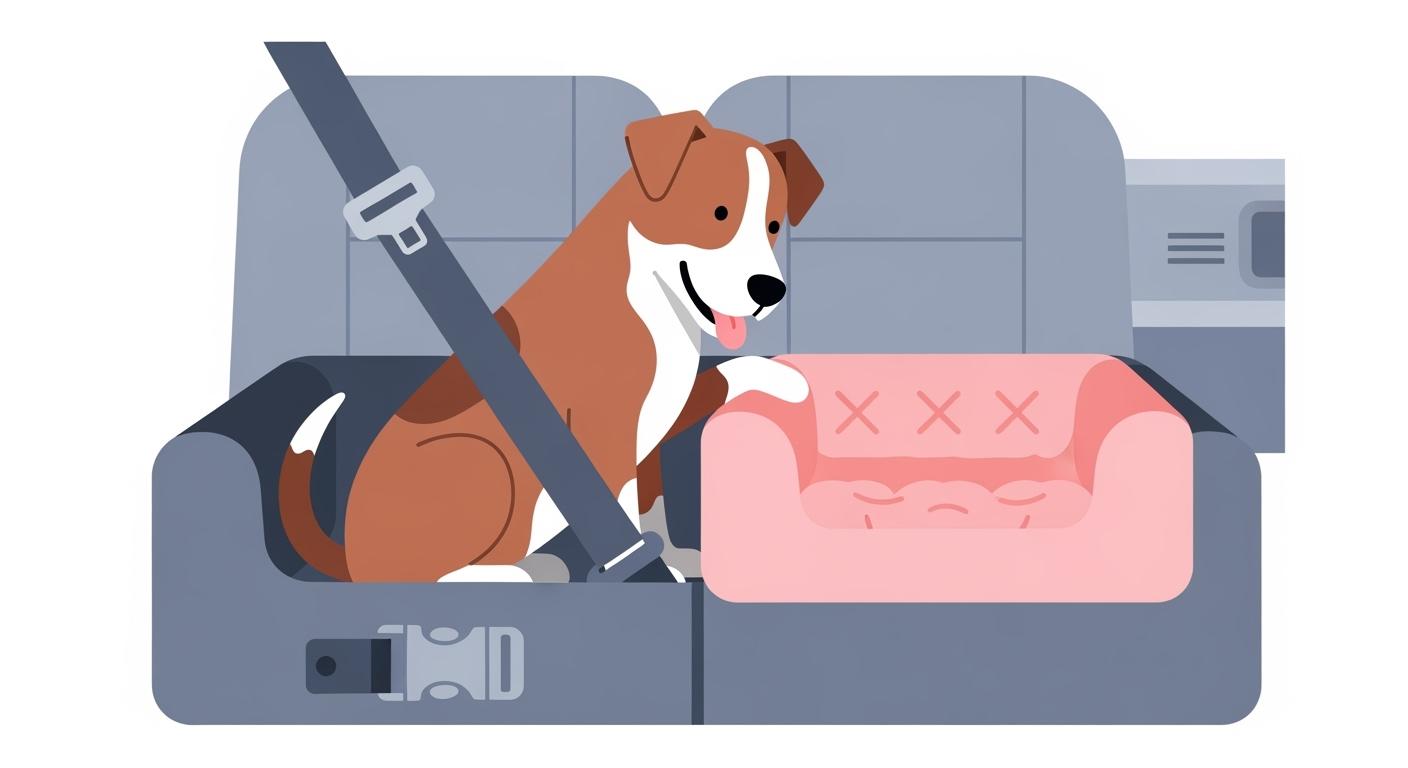
A car seat dog bed only works well when comfort does not get in the way of restraint use. That is the real tradeoff. Thick padding, deep walls, and a cozy shape can help some dogs settle faster, especially on longer or more familiar rides. But if that same design makes the harness path harder to reach, hides the buckle area, or leaves you fighting through soft walls every time you clip in, the safer-looking bed becomes harder to use properly. In the car, easier buckle access is not a minor convenience. It is often the reason the dog actually gets restrained correctly on every trip.
Tip: A car seat dog bed should not make you choose between securing the dog and letting the dog settle. The better setup does both without awkward workarounds.
Key Takeaways
- Pick a car seat dog bed that has a buckle you can reach easily. The restraint path should stay simple enough that you use it correctly every trip.
- More cushion helps only when it supports the dog without blocking tether access, collapsing under weight, or turning the seat into a soft obstacle.
- Always check rear-seat fit, harness connection, tether length, and how your dog behaves once the car starts moving. A parked setup can look fine and still perform badly on the road.
When to Use a Car Seat Dog Bed
Dog Car Seats vs Rear-Seat Pads
You want your dog to stay secure and comfortable during every car ride, but car seat dog beds and rear-seat pads solve different problems. A car seat dog bed is usually better when you need one defined space, supportive sides, and a controlled harness connection for a small or medium dog. A rear-seat pad works better when the goal is wider seat coverage, easier storage, or a flatter setup for a larger dog that does not need a nest-like shape.
The difference is not just comfort. It is control. A good car seat dog bed gives you a more predictable restraint zone. A rear-seat pad gives more space, but usually less structure.
| Product Type | Use Case | Main Benefit | Main Watchout | Who Should Skip It |
|---|---|---|---|---|
| Car Seat Dog Bed | Small or medium dogs, regular travel, dogs that settle in defined spaces | More side support and a clearer restraint zone | Soft walls or too much padding can block access or reduce stability | Large dogs or dogs that hate being boxed in |
| Rear-Seat Pad | Larger dogs, flatter resting setups, shorter everyday rides | More usable surface area and easier storage | Less containment and less defined body support | Dogs that keep shifting without side support |
| Enclosed Carrier | Nervous pets, more controlled travel setups, vet visits | More contained environment | Can feel warm, tight, or harder to load if the fit is wrong | Dogs that panic in enclosed spaces or need easier entry |
Use Cases and Who Should Skip
You should choose a car seat dog bed if your dog uses soft side support well, tends to settle in one spot, and benefits from a more protected resting area in the rear seat. That is often a better match for small dogs, older dogs that like a softer base, or dogs that get uneasy on a slippery seat surface.
You should skip this style if your dog is too large for the usable sleeping area, if the bed leaves too little room for a natural sitting or lying posture, or if the side walls make restraint setup so awkward that you start cutting corners. A car seat dog bed should make the safe setup easier to repeat, not easier to avoid.
Always follow basic vehicle-travel safety logic: keep the dog in the rear seat, use a body harness rather than a collar for restraint, and do not leave the dog alone in a parked car.
Buckle Access vs Cushion: What Matters Most
Choosing between easier buckle reach and more cushion in a car seat dog bed can feel tricky. The better answer depends on whether the extra softness helps your dog settle without interfering with the restraint path. If you have to dig through thick bolsters, lift your dog to find the clip point, or thread a tether around bulky walls every time, then the design is asking too much from a daily-use setup.
Easier Buckle Reach: Pros and Cons
Easy buckle reach matters because it affects what happens in real life. A clear, reachable harness path means you can clip in quickly, verify the tether is not twisted, and keep the restraint short enough that your dog can sit or lie down without reaching the edge. This usually matters more on rushed mornings, short repeat trips, and any day when you are handling the dog alone.
Pros of prioritizing buckle access:
- You can secure your dog quickly and consistently.
- You can see the tether path instead of guessing under soft padding.
- You are less likely to leave extra slack or use the setup incorrectly.
Cons of prioritizing buckle access:
- Some very open designs may feel less nest-like for dogs that need side support.
- Minimal padding may not help dogs that need a softer place to settle.
Tip: If you travel often, easier buckle access usually improves safety more than extra softness that you end up working around.
More Cushion and Cozy Sides: Pros and Cons
Extra cushion and cozy sides can help some dogs relax, especially dogs that curl up, lean into side support, or feel calmer in a softer, more enclosed space. That benefit is real, but only when the bed still keeps the harness path usable and the base supportive under the dog’s weight.
Pros of more cushion and cozy sides:
- Your dog gets a softer resting surface for longer rides.
- Supportive side walls can help some dogs feel less exposed.
- A more bed-like shape can help a calmer dog stay in one position.
Cons of more cushion and cozy sides:
- Thick padding can hide or block the harness connection point.
- High or soft walls can make restraint checks slower and sloppier.
- Too much softness can let the dog sink, twist, or brace harder in turns.
Note: Cushion helps only if the dog can still ride in a stable posture. A softer bed is not automatically a steadier one.
Best Dog Car Seat Features for Safety
When you look for the best dog car seat, focus on features that support both safety and comfort. The most useful features are not the ones with the most dramatic names. They are the ones that help you install the seat correctly, keep the dog restrained in the rear seat, and preserve a stable resting posture through ordinary driving.
| Safety Feature | Why It Matters |
|---|---|
| Reachable harness path | Makes it easier to clip in correctly every trip and verify the tether is not twisted |
| Stable base and secure routing | Reduces rocking, shifting, and seat movement during normal braking and turns |
| Supportive but usable side walls | Helps the dog settle without blocking access or collapsing inward |
| Washable, durable materials | Lets you keep the surface clean without the bed becoming harder to use over time |
| Independent testing or certification language you can verify | Gives you a better basis than vague marketing claims alone when comparing restraint products |
Pass/Fail Checklist Table
You can use this step-by-step checklist to test your setup at home before driving:
| Check item | Pass signal | Fail signal | Fix |
|---|---|---|---|
| Rear-seat placement | Base sits flat and stays centered on the seat | Seat rocks, leans, or hangs off the cushion | Move to a flatter rear-seat position and reinstall the routing |
| Harness connection | Tether clips to a chest-supported body harness with a clear path | Tether clips to a collar or disappears into a twisted, hidden path | Reconnect to the harness and flatten the restraint path |
| Tether length | Dog can sit or lie down but cannot climb over the edge | Dog reaches the outer edge or gets too much forward movement | Shorten the tether and remove extra slack |
| Body posture | Dog settles after a short adjustment and does not keep bracing | Dog keeps shifting, standing, or leaning for balance | Recheck seat size, side-wall depth, and restraint length |
| Buckle access | You can clip and unclip the restraint without lifting padding or digging through walls | You avoid the restraint because access is awkward every time | Choose a layout with a clearer harness path |
Step-by-step evaluation:
- Place the car seat dog bed in the rear seat and push down to check for rocking.
- Attach the tether to your dog’s body harness and make sure the path is visible and untwisted.
- Adjust the restraint so your dog can rest without climbing to the edge.
- Watch what happens during the first few rides, not just while parked.
- If cushion, side walls, or bed shape keep blocking your access, treat that as a design problem, not just a routine inconvenience.
Note: If your dog shows repeated motion discomfort, heat stress, or breathing strain during travel, stop the trip and talk with your veterinarian.
Safety Issues and Troubleshooting Dog Car Seats
Common Failure Signs
You want your car seat dog bed to provide real comfort and control, but failure signs usually show up as repeatable patterns. Watch for these:
- The bed slides or rocks during normal turns or braking.
- Your dog keeps bracing, pawing at the restraint, or trying to climb out.
- The side walls collapse or the base sags once your dog’s full weight is inside.
- Straps loosen after short drives or the tether keeps twisting back into the bed.
- Your dog pants, drools, or grows more restless instead of settling.
If you notice the same pattern every trip, do not keep treating it as normal adjustment. It usually means the setup is wrong for the dog, the car, or the way the restraint path is built.
Troubleshooting Table
Use this table to fix common dog car seat issues quickly:
| Symptom | Likely cause | Fast check | Fix |
|---|---|---|---|
| Seat slides or rocks | Poor routing or a base that does not match the vehicle seat shape | Push the bed side to side before driving | Reinstall and retighten before using it again |
| Dog tries to climb out | Tether too long, poor fit, or the dog is not settling in the setup | Check how close the dog can get to the outer edge | Shorten the restraint and reassess whether the bed shape is right |
| Side walls collapse | Walls are too soft or the seat is overloaded for the dog’s size | Press the walls and watch how they hold under full weight | Move to a sturdier shape or a more supportive setup |
| Straps loosen after travel | Worn connectors, poor tension, or too much movement through the path | Tug lightly after installation and again after a short trip | Replace worn hardware or change the routing |
| Dog pants or shows stress | Heat buildup, motion discomfort, or the dog is working too hard to stay balanced | Watch whether the dog calms after the first few minutes or keeps escalating | Stop the trip, cool down if needed, and reassess the setup before the next drive |
| Base sags under weight | Too much softness without enough support underneath | Check whether the dog sinks into one spot and starts bracing around it | Switch to a more supportive bed instead of adding random padding |
Mistakes and Real Consequences
Many pet owners make the same car-seat mistakes because the bed looks comfortable enough at a glance. The common pattern is choosing softness first, then discovering later that the restraint is awkward to use or the dog cannot actually ride in a stable posture.
These are the mistakes that usually matter most:
- Choosing a bed that fits the dog’s body but not the car seat shape.
- Letting thick bolsters hide the tether path or buckle area.
- Using too much slack because a shorter connection feels harder to reach.
- Assuming a softer base will fix stress when the real issue is instability.
- Skipping short test drives and only discovering the problem on a longer trip.
Note: If your dog shows signs of motion discomfort or breathing problems, stop travel and contact your veterinarian. This advice does not replace medical care.
You should choose buckle access first whenever extra cushion starts getting in the way of restraint use. A car seat dog bed can still be soft, supportive, and calming, but it should never make the harness path harder to reach or the seat harder to install. The better setup is the one that lets your dog settle while keeping the rear-seat restraint simple enough to use correctly every single trip.
FAQ
How do you secure your pet in a car seat dog bed?
Place your dog in the rear seat, clip the tether to a body harness, and check that your dog can sit or lie down without reaching the edge or door side.
What should you do if your dog feels anxious in the car?
Start with shorter rides, watch for whether the dog settles or keeps getting more tense, and adjust the setup if the current bed shape is adding stress instead of reducing it.
Can you leave your pet alone in the car?
No. Heat and stress can build quickly, even on days that do not seem extreme. A car seat dog bed does not change that basic risk.
Note: This FAQ does not replace medical advice. If your pet shows motion discomfort or breathing strain, contact your veterinarian.






