
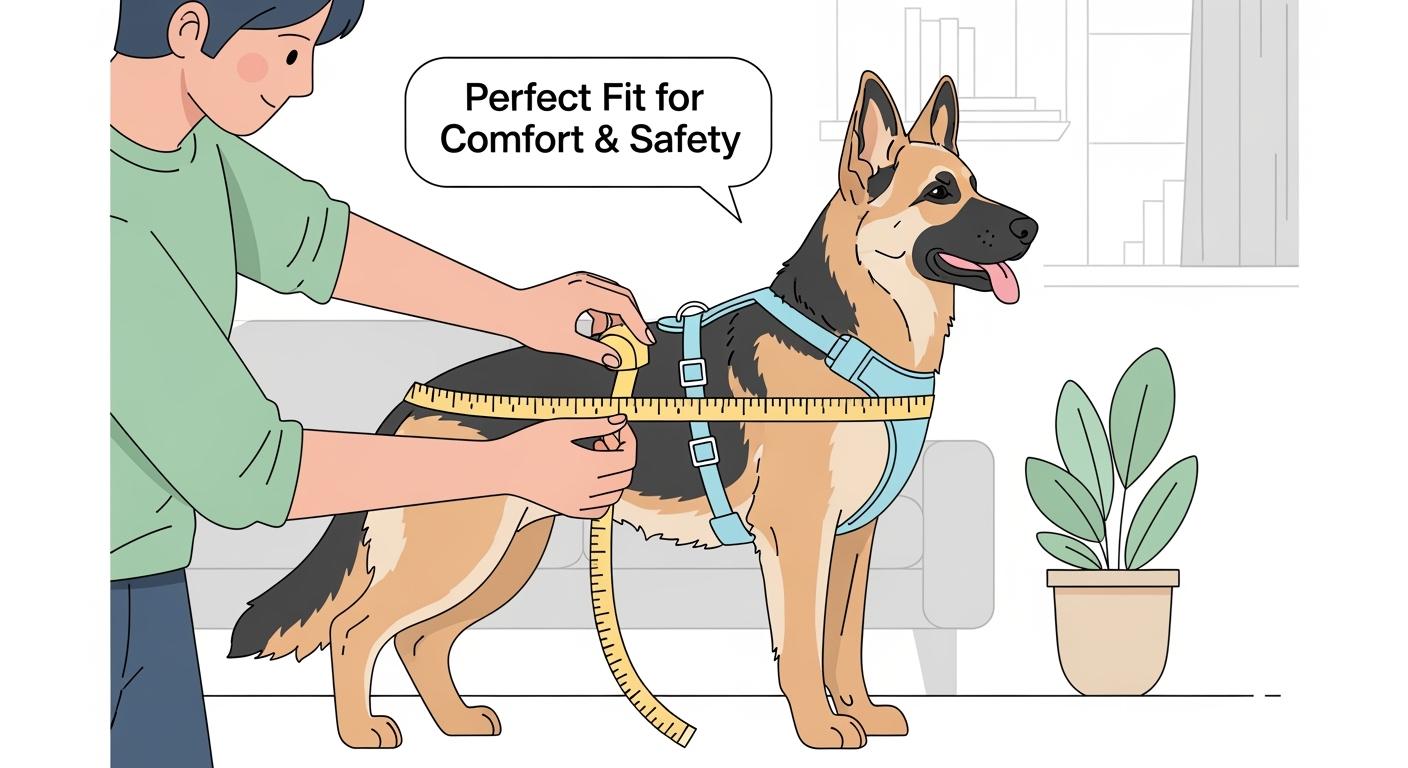
Choosing the best dog harness for a German Shepherd is not only about size labels or basic measurements. This breed has a deep chest, strong shoulders, thick coat, and powerful forward pull. A harness that looks acceptable when the dog stands still can slip, rotate, rub behind the front legs, or block shoulder movement once the dog starts walking.
The better way to judge a German Shepherd harness is to look at how the product behaves during real use. Does the chest panel stay centered? Do the side straps clear the armpit area? Does the back panel stay stable when the dog turns or pulls? Does the material hold shape without trapping too much heat under the coat?
That is why the best dog harness for German Shepherd should be judged by fit stability, pressure control, shoulder clearance, and material behavior, not by a large-size tag alone.
Why German Shepherd harnesses often fail in real use
German Shepherds make harness fit harder because their body shape creates several pressure and movement conflicts at the same time. The chest is deep, the shoulder area is active, the coat can hide loose straps, and pulling force can shift the harness forward or sideways.
| Real-use problem | Why it happens | Product detail that matters |
|---|---|---|
| Harness slides to one side | The chest panel is too narrow or the side straps do not balance the deep chest. | Wider chest contact, better side adjustment, stable back panel |
| Armpit rubbing | Straps sit too close behind the front legs during movement. | Longer clearance from the leg pocket, softer edge binding, correct strap angle |
| Shoulder restriction | The front panel or upper strap crosses the natural shoulder path. | Open shoulder design, lower chest load path, flexible front construction |
| Back-out risk | The harness fits the standing body but loosens when the dog backs up or twists. | Multi-point adjustment, secure rib fit, anti-rotation geometry |
| Heat buildup | Heavy padding and thick coverage sit under a dense double coat. | Breathable lining, moderate padding, quick-dry fabric |
A harness can fail even when the chest girth measurement is technically correct. If the strap layout does not match the breed shape, the product may still move, pinch, or force the dog to shorten stride.
Deep chest fit needs more than a larger size
A German Shepherd often needs room through the chest without loose space around the neck and ribs. This is where many standard harness shapes fail. A larger size may add girth room, but it can also make the neck opening too loose, push the chest panel too low, or move the strap edge closer to the armpit.
A better deep-chest fit usually depends on three design details: adjustment range, panel shape, and strap position. The harness should allow the chest and ribs to be adjusted separately so the product stays centered without squeezing the shoulders.
| Fit area | Weak design | Better design direction |
|---|---|---|
| Neck base | Loose opening that rides up toward the throat | Adjustable neck-base fit that sits away from the windpipe |
| Chest panel | Narrow panel that twists under pull | Stable chest panel with enough width to spread pressure |
| Rib strap | Single short adjustment range | Longer adjustment range for thick coat and chest depth |
| Armpit clearance | Strap edge sits too close behind the front legs | Cut shape that leaves space for forward leg motion |
| Back panel | Soft panel that folds or rolls under tension | Shape-retaining back panel that keeps the leash point stable |
The size chart still matters, but it should not be the only decision point. For this breed, the harness must fit the deep chest while staying secure around the ribs and clear of the shoulder path.
Shoulder freedom decides whether the harness feels usable
German Shepherds have a long, active stride. If the harness crosses the shoulder too high or pulls the front panel into the upper leg area, the dog may shorten the stride, resist the harness, or shift weight unevenly. This can happen even when the harness is not visibly tight.
A good product shape leaves the shoulder path open. The chest piece should guide pressure across the chest, not over the moving shoulder joint. The rib strap should hold the harness in place without dragging the front section backward into the armpit.
| Movement check | Good sign | Failure sign |
|---|---|---|
| Walking forward | Front legs move naturally with even stride length. | The dog shortens stride or swings the leg outward. |
| Turning | The harness stays centered on the chest and back. | The chest panel shifts or the back panel rotates. |
| Pulling | Pressure spreads across the chest without throat pressure. | The harness rides up, twists, or tightens behind the legs. |
| Sitting or lowering head | Straps stay flat without bunching. | Edges dig into the neck, shoulder, or armpit area. |
This is also where a real movement check matters more than a static try-on. A harness that passes while the dog is standing can still fail when the dog turns, pulls, backs up, or changes pace.
Control hardware should match strong pulling force
German Shepherds can put heavy tension into a harness quickly. The leash attachment point, buckle position, stitching, and webbing width all affect whether the harness stays stable under load.
Back-clip designs are often comfortable for relaxed walking, but they may not give enough directional control for strong pullers. Front-clip designs can help redirect force, but only if the chest panel remains centered. Dual-clip designs can work well when the structure stays balanced and the front attachment does not twist the harness sideways.
| Hardware area | Possible failure | Better product detail |
|---|---|---|
| D-ring | Pull force twists the back or chest panel. | Reinforced D-ring placement with stable load path |
| Buckles | Plastic buckles loosen or sit on pressure points. | Secure buckle placement away from high-friction zones |
| Webbing | Narrow straps dig into the coat and skin. | Wide, smooth webbing with reinforced stitching |
| Handle | Handle pulls the harness forward or lifts unevenly. | Handle aligned with the back panel and rib support |
| Adjustment sliders | Sliders creep loose during repeated tension. | Firm sliders that hold setting under movement |
The goal is not to make the harness heavier. The goal is to keep the load path clean so pulling force does not create twisting, riding up, or pressure on the wrong part of the body.
Material and padding should not create heat or rubbing
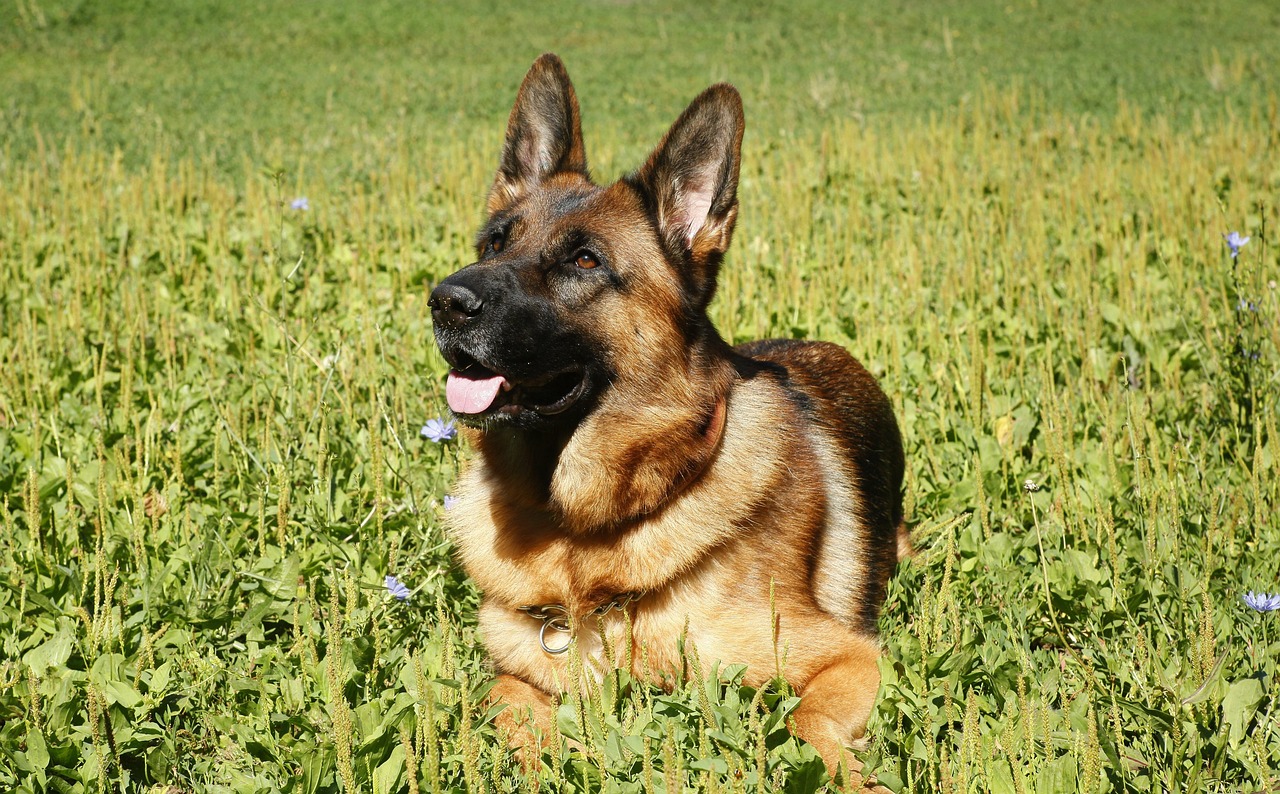
A German Shepherd’s thick coat can hide early fit problems. Loose straps may not be obvious at first, and heat can build under padded panels during longer walks. That is why material choice needs to balance durability, airflow, softness, and shape retention.
Soft padding can reduce edge pressure, but too much padding can also add bulk and heat. Thin mesh can improve airflow, but if the structure is too weak, the harness may stretch or fold under pulling force. Strong nylon can last well, but the edge finish and lining determine whether it rubs after repeated use.
| Material detail | What it helps | What can still go wrong |
|---|---|---|
| Breathable mesh lining | Reduces heat buildup under the coat | May collapse if the outer structure is too soft |
| Moderate foam padding | Softens chest and rib contact zones | Too much bulk can trap heat or change fit |
| Durable nylon webbing | Handles repeated walking tension | Rough edges can rub if not finished well |
| Shape-retaining back panel | Keeps leash attachment more stable | Too stiff can reduce body comfort |
| Quick-dry fabric | Useful after rain, washing, or outdoor use | Still needs smooth seams and breathable design |
The best material setup for this breed is usually not the thickest or the lightest option. It is the one that keeps the harness stable, smooth at the contact edges, and breathable enough for dense fur.
What a better German Shepherd harness should solve
A strong German Shepherd harness should solve the problems that show up during movement, not just look secure in product photos. The product needs to stay centered, leave the shoulders free, reduce rubbing behind the front legs, and keep hardware stable when the dog pulls.
- For deep chest fit: use enough chest coverage and separate adjustment zones so the harness does not float loose or squeeze tight.
- For armpit rubbing: keep strap edges away from the moving front-leg area and use smoother edge binding.
- For strong pulling: reinforce the leash attachment and keep the load path balanced through the chest and back.
- For shoulder freedom: avoid panels or straps that cross the shoulder path too high.
- For thick coats: use breathable lining, moderate padding, and adjustment room that still holds securely.
- For back-out risk: test the harness during turns, backing up, and leash tension, not only during standing fit.
These details make the product easier to trust because they match the real reasons German Shepherd harnesses fail: slipping, twisting, rubbing, shoulder restriction, and poor stability under pulling force.
FAQ
What is the biggest fit problem for German Shepherd harnesses?
The biggest problem is usually the deep chest combined with strong shoulder movement. A harness may fit the girth number but still slide, rub, or block movement if the panel shape and strap angle are wrong.
Is a larger harness always better for a German Shepherd?
No. A larger size can add chest room, but it can also make the neck opening loose or move straps into the wrong position. The better choice is a harness with enough adjustment range and a shape that matches a deep chest.
Should a German Shepherd use a front-clip or back-clip harness?
It depends on pulling force and walking style. A front clip can help with directional control, but it must stay centered. A back clip can be comfortable for calmer walking. A dual-clip design can work when the structure stays balanced.
Why does a harness rub behind the front legs?
Rubbing often happens when the rib strap sits too close to the armpit area or the harness shifts forward during movement. Strap angle, chest panel length, edge softness, and adjustment range all affect rubbing.
How should buyers check the harness fit before trusting the design?
The harness should be checked during standing, walking, turning, pulling, and backing up. A good design stays centered, leaves the shoulders free, and does not create red marks, hair loss, or short stride.






