
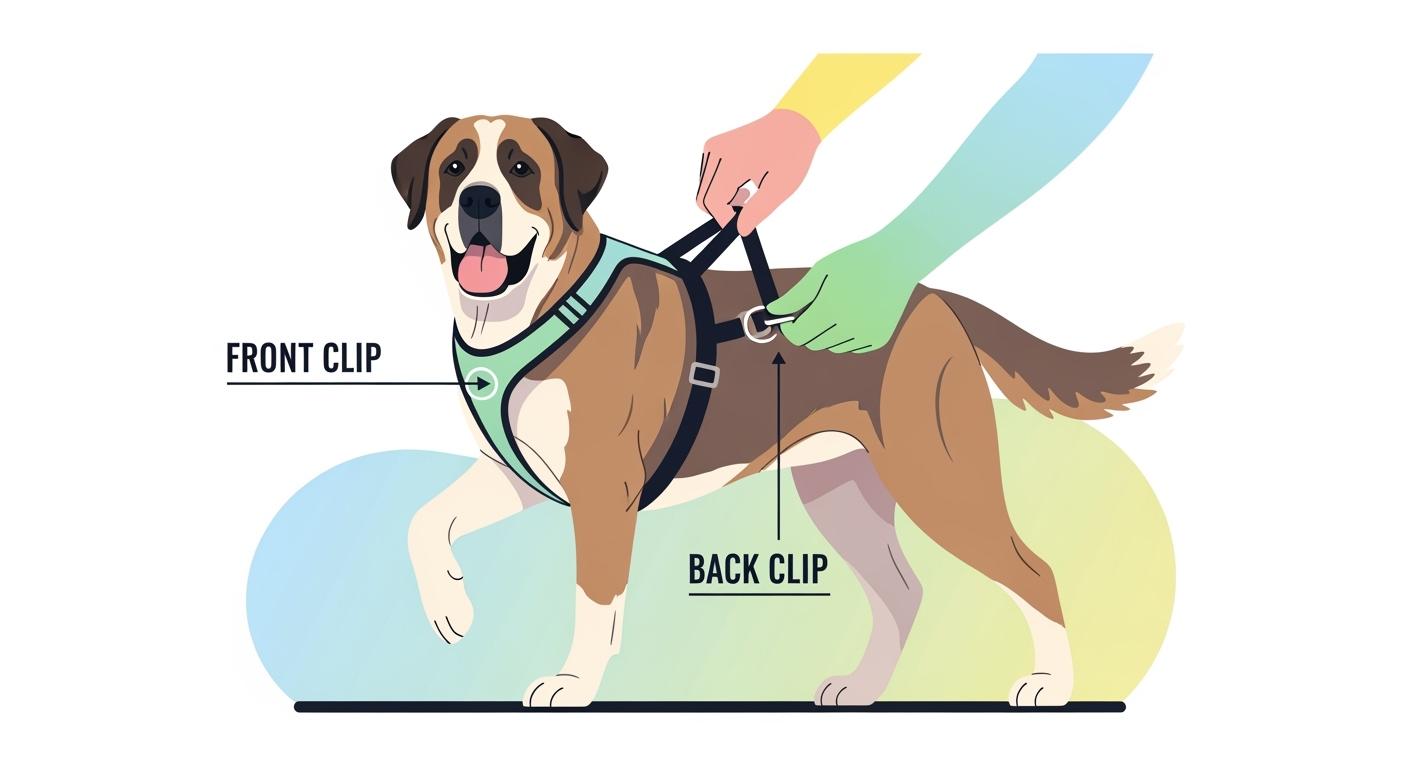
A no pull dog harness large enough for strong walks needs more than a front clip. When a large dog pulls forward or turns suddenly, leash pressure can drag the chest panel sideways, tighten the shoulder area, or make the harness rotate. A better fit keeps the front clip centered, gives the shoulders room to move, and stays stable when the dog leans into the leash.
- A loose fit can rotate, rub, or let a strong dog slip out.
- A bulky fit can crowd the shoulders and make everyday walking feel awkward.
Key Takeaways
- Measure at the neck base and widest chest instead of guessing from a size label.
- Check shoulder room, chest position, and back-out resistance after the harness is actually on the dog.
- Use clip layout, materials, and adjustment range to match your dog’s walking style, not just the product name.
Fit Checks for No Pull Dog Harness Large
Dog Harness Sizing Guide: Neck, Chest, and Adjustment
Large dogs often fall between standard size labels, so the measuring step matters more than the name on the package. Measure at the neck base near the shoulders, then around the widest part of the chest just behind the front legs. Once the harness is on, you want a snug hold without pinching or open gaps.
Use this simple fitting order:
- Use a soft tape and measure while your dog stands naturally.
- Record both the neck-base and chest numbers before checking the size chart.
- Choose a harness with enough adjustment to fine-tune both points.
- Tighten each strap a little at a time so the harness stays centered.
- Recheck the fit after your dog walks, turns, and backs up.
Tip: Large dogs can change shape with coat, weight, and muscle condition. Recheck fit regularly instead of assuming the first adjustment will keep working.
Most sizing problems happen when owners measure only the chest, leave too much slack near the shoulders, or use the last adjustment hole with no room left to fine-tune the fit.
Comfort Fit Dog Harness: Shoulder Freedom and Rub Risk
A comfort-focused fit should stay low enough on the chest to avoid the throat while still leaving room for full stride length. Watch your dog walk forward, turn tightly, and lower the head. The harness should not drag into the armpits, crowd the shoulder points, or force a shorter step.
Use this quick comparison to judge the layout you are considering:
| Harness layout | What to watch | Common rub point |
|---|---|---|
| Y-front design | Should sit clear of the throat and shoulder point | Chest edge or armpit if the front is too short |
| Chest-strap design | Should stay level and not hang low across the front | Behind the elbows if the belly strap sits too far back |
| Full-coverage design | Should spread pressure without feeling bulky | Side panels if heat or moisture builds up |
| Light webbing design | Should stay stable without twisting on turns | Hardware points if the buckles are oversized |
Note: A harness can look fine when your dog is standing still and still fail once the dog starts moving. Always judge fit during motion, not just at rest.
Back-Out Resistance and Movement Checks
You want your harness to stop your dog from slipping out. Large dogs can create a lot of backward force in one quick move, so this check matters even when the harness feels secure at first. The goal is a centered fit that stays put when the dog leans forward, pivots, or backs up fast.
Use this movement test after fitting:
- Let your dog wear the harness for a few minutes indoors.
- Walk a short distance and watch whether the chest panel stays level.
- Turn your dog gently in both directions and check for twisting.
- Apply light backward pressure to see whether the shoulders start to slip free.
- Check for red spots or rubbed fur after the test walk.
This table gives you a quick pass/fail screen:
| Check Item | Pass Signal | Fail Signal | Solution |
|---|---|---|---|
| Neck-base fit | Firm hold with small clearance under the strap | Gaping or throat pressure | Adjust the neck setting or change size |
| Chest girth fit | Harness stays flat and centered | Pinching, drifting, or hanging low | Refit the chest strap or choose a different shape |
| Adjustment range | Enough room to fine-tune in both directions | Already maxed out or nearly loose at minimum | Move to a size with a better adjustment window |
| Shoulder freedom | Dog keeps a normal stride and easy turns | Short steps or obvious crowding | Try a different front layout |
| Back-out resistance | Harness stays secure under light backward pressure | Shoulders start to pull free | Tighten, refit, or switch to a more secure design |
| Rub risk | No marks after a short walk | Redness, fur loss, or hot spots | Recheck strap placement and material bulk |
Safety Reminder: A no-pull harness is walking gear. Do not leave it on a large dog unsupervised.
If something still feels off on the first few walks, use this quick troubleshooting table instead of assuming the dog will “get used to it.”
| Symptom | Possible Cause | Quick Check | Solution |
|---|---|---|---|
| Dog keeps leaning hard into the leash | Wrong clip choice or loose chest fit | Check clip point and chest position | Refit first, then reassess training setup |
| Harness rotates off center | Uneven strap tension | Look at both sides while walking | Re-even the adjustments |
| Dog backs out | Too much slack at neck or chest | Apply light backward pressure | Tighten or move to a more secure style |
| Chafing after walks | Bad strap placement or rough edges | Inspect skin and fur after use | Change fit, reduce bulk, or switch material |
| Restricted movement | Front layout crowds the shoulders | Watch stride length on a short walk | Try a different harness layout |
Watch stride length, turning, and recovery after a short walk. If the harness changes how your dog moves, the fit or layout is not right for everyday use.
Regular fit checks matter more with larger dogs because small problems feel bigger once leash pressure increases. Keep measuring, keep adjusting, and do not ignore changes in gait or posture.
No Pull Features and Control Points Explained
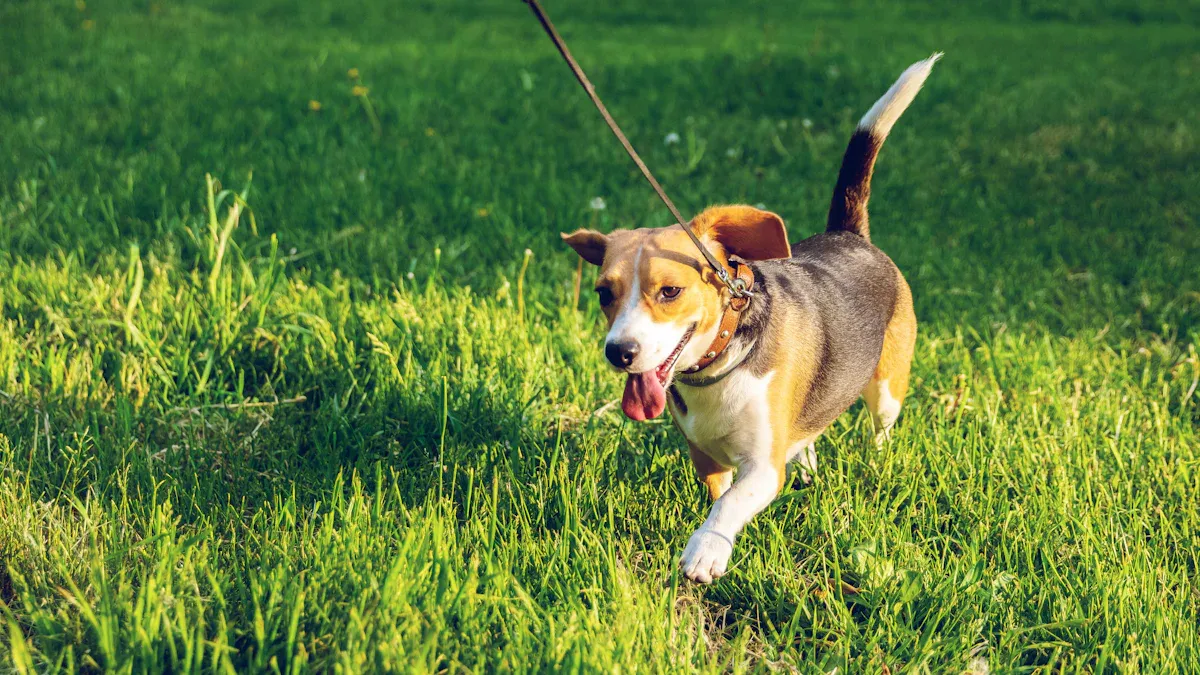
Front Clip vs Back Clip: Best No Pull Dog Harness Options
Clip placement changes how the harness feels in real use. Front clips give you more redirection when a dog lunges or powers ahead. Back clips feel simpler and often work better for calm, settled walks. Dual-clip layouts sit in the middle and give you more flexibility if your dog’s behavior changes from walk to walk.
| Feature/Design | Front Clip | Dual Clip | Lightweight Webbing | Full-Coverage Design | Mesh | Thick Padding | No Pull Harness | Regular Harness |
|---|---|---|---|---|---|---|---|---|
| Best use | Training and redirection | Mixed walks and training | Low-bulk everyday wear | Dogs needing more body coverage | Warm-weather walks | Cooler weather or shorter sessions | Dogs that lean into the leash | Calm daily walkers |
| Main strength | Helps turn the dog back toward you | Lets you switch handling style | Keeps heat and bulk down | Feels more planted on bigger frames | Improves airflow | Softens contact points | More steering help | Simple and familiar |
| Main watch-out | Can tangle if the leash stays loose | More hardware to adjust | Less cushion on sensitive dogs | Can feel warmer or bulkier | Needs smooth seam placement | Can trap heat or water | Still needs training, not just hardware | Offers less help with pulling |
| Large-dog focus | Chest height and steering feel | Balance between front and back use | Hardware size and stability | Panel length and belly strap position | Hot spots and dry-out time | Pressure spread versus heat | Back-out resistance | Shoulder room |
In practice, front clips are most useful when you want quicker redirection, while back clips feel less intrusive for dogs that already walk reasonably well. Dual-clip styles can make sense when you want one harness to cover both jobs.
| Harness Type | Advantages | Disadvantages |
|---|---|---|
| Front-Clip | Better steering for dogs that surge ahead | Needs careful fit and leash handling to avoid tangling |
| Back-Clip | Simple to use and often easier for relaxed walks | Gives less help when a large dog pulls hard |
| Dual-Clip | Flexible for different training stages and walk types | More hardware, more adjustment, and sometimes more bulk |
Note: Choose the clip layout that matches the walk you are actually doing, not the one that sounds most technical on the label.
Redirection and Handling for Strong Dogs
Strong dogs do not just pull in a straight line. They lean, pivot, lunge, and back up. That means your control comes from the full setup: clip point, fit, leash handling, and training consistency. A front or dual-clip harness can help you redirect sooner, but it will not replace practice.
Keep the handling simple:
- Reward loose-leash moments quickly instead of waiting for a perfect walk.
- Shorten the session when your dog starts loading the leash harder and harder.
- Use clear turns, stops, and resets so the dog learns what the harness cues mean.
- Recheck the fit if your dog suddenly starts leaning harder or moving differently.
For many large dogs, better handling comes from a combination of fit, timing, and repetition rather than from a single “stronger” harness style.
Common Mistakes with No Pull Dog Harness
Most large-dog harness problems start with common buyer errors rather than obvious product defects.
- Choosing by the size label without measuring the dog.
- Ignoring shoulder room and only checking chest tightness.
- Expecting the front clip to solve pulling by itself.
- Using thick padding in hot weather without checking heat buildup.
- Leaving a walking harness on too long because it “seems comfortable.”
Tip: Check the harness after walking, turning, and backing up. The fit you want is the fit that still works after movement, not just before it.
Use this table to connect common complaints with what they usually mean in practice:
| Complaint Type | What it usually means |
|---|---|
| Chafing | Strap placement, seam finish, or hardware size is wrong for the dog’s frame |
| Loss of control | Clip layout or leash handling does not match the dog’s pulling pattern |
| Too much bulk | The harness adds coverage but reduces comfort or heat management |
| Back-out scares | Neck and chest settings are not working together under backward pressure |
You avoid most of these problems by measuring carefully, checking movement early, and adjusting the harness before small issues turn into daily frustration.
Materials and Build for Comfort Fit Dog Harness
Mesh and Padding: Comfort and Heat Management
Large dogs generate more force and more body heat, so material choices matter. Mesh helps airflow. Padding softens contact points. The right mix depends on how long the walk is, how warm the weather feels, and whether your dog is sensitive to rubbing.
- Air mesh can help a harness feel less heavy in warm weather.
- Padded contact zones can reduce pressure where the harness meets the body.
- Too much bulk can hold heat and moisture if the fit is already snug.
Webbing, Stitching, and Hardware for Large Dogs
For larger dogs, build quality matters just as much as softness. Check the webbing for stiffness, the stitching for weak points, and the hardware for size and ease of use. Oversized buckles can feel heavy; undersized hardware can feel out of proportion to a strong dog.
Use this generic build table instead of relying on brand names alone:
| Build type | Typical material mix | What it helps with |
|---|---|---|
| Light everyday setup | Mesh with lighter webbing | Lower bulk and easier heat management |
| Padded everyday setup | Webbing with foam or spacer lining | Softer contact on longer walks |
| Multi-point adjustable setup | Webbing with several sliding buckles | Better fitting range on large frames |
| Full-coverage setup | Wider panels with supportive lining | More body contact and a steadier feel |
Cleaning and Care: Label-Directed Advice
Keep the harness clean enough to stay comfortable, but do not overcomplicate the routine. Brush off dirt, hand wash with mild soap when needed, and let the harness dry fully before the next walk. Recheck straps, stitching, and buckles after cleaning because wet gear can hide loosened seams or damaged edges.
Tip: If a harness starts feeling stiffer, smellier, or rougher against the dog after repeated use, it is time to inspect the material and not just wash it again.
Before you commit to a harness for everyday use, run through this short final check:
- The harness does not crowd the shoulders or ride into the throat.
- The chest and neck still sit correctly after walking and turning.
- The clip point matches the dog’s pull style and your handling needs.
- The materials feel appropriate for the weather, walk length, and your dog’s coat.
A no pull dog harness large works best when the fit stays secure, the movement stays natural, and the setup still feels practical after repeated walks.
FAQ
How do you check if a no pull dog harness large fits your dog?
Measure the neck base and widest chest, fit the harness snugly, then watch your dog walk, turn, and back up. A harness that only looks right at rest still needs a movement check.
Can a no pull dog harness large prevent escape?
It can reduce escape risk when the neck and chest stay secure under backward pressure, but you still need to test that fit and supervise the dog on walks.
What materials help a no pull dog harness large stay comfortable?
Mesh can improve airflow, padding can soften contact points, and well-sized webbing and hardware can keep the harness stable without adding unnecessary bulk.






