
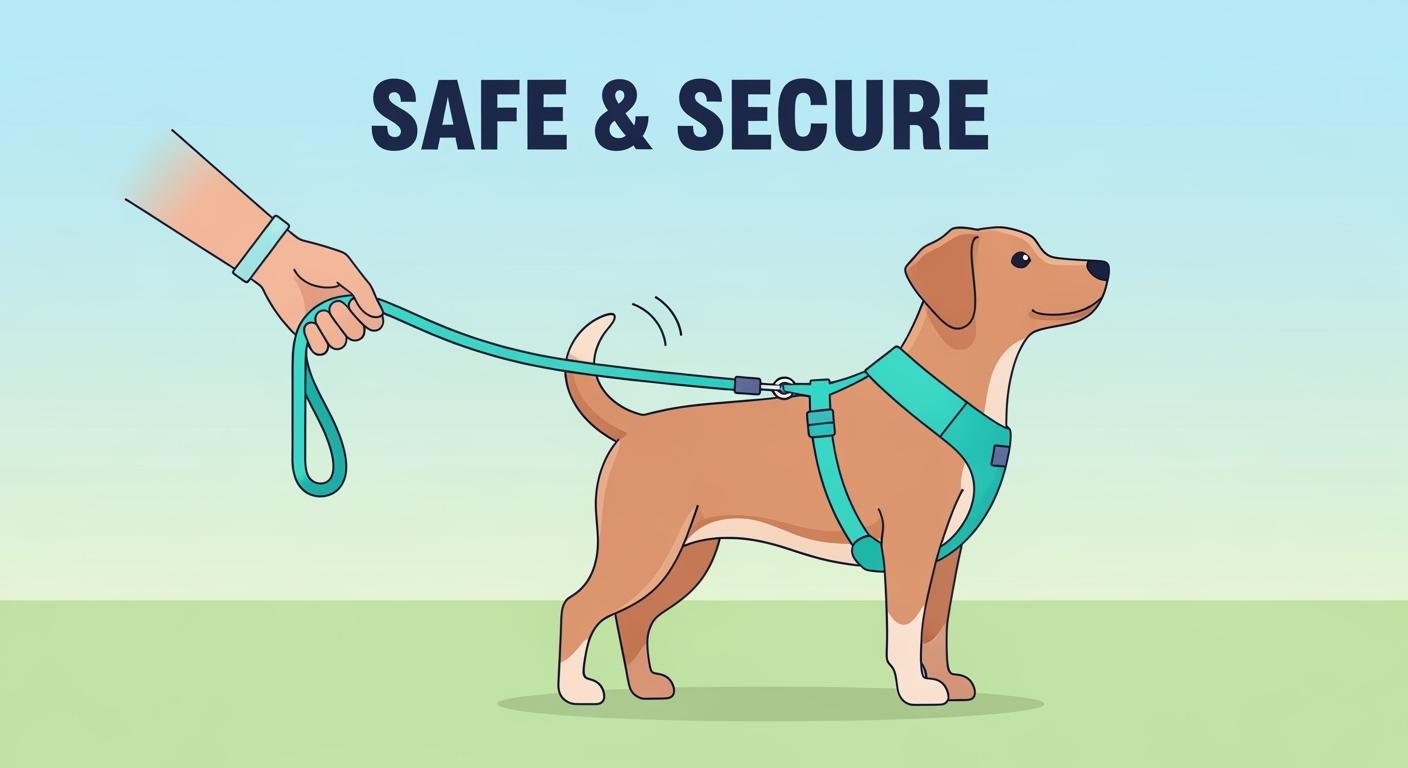
A small dog harness and leash set should feel light on the body but still stay secure once your dog starts moving. What matters most is not the color or the extra trim. It is how the harness sits at the neck base and chest, how easily the leash clip stays connected, and whether the full set feels easy to use on everyday walks.
- A secure fit should sit close at the neck base and chest without pinching or leaving escape gaps.
- Lightweight webbing, small hardware, and a balanced leash clip help small dogs move more naturally.
Common buyer mistakes usually come down to three things: choosing by appearance instead of measurements, using hardware that feels heavy for a small frame, or missing early signs of rubbing and slipping.
Tip: Use the same quick fit check before every walk. Small sizing changes matter more on lightweight dogs than many owners expect.
Key Takeaways
- Choose a harness that sits snugly at the neck base and chest so it stays secure without pressing on the throat.
- Keep the set light. Soft mesh, smooth webbing, and size-appropriate hardware usually feel better on small dogs.
- Check the fit before each walk. Watch for rubbing, shifting, or backing out instead of relying on the label alone.
Small Dog Harness Fit: Key Checks for Comfort and Security
Neck-Base and Chest Fit
You need accurate measurements before you buy a small dog harness and leash set. Start with the neck base and the widest part of the chest. Those two points usually matter more than weight labels, especially for dogs with narrow shoulders, deeper chests, or thicker coats.
- Measure at the neck base where it meets the shoulders. Do not measure at the narrowest part of the neck.
- Wrap the tape measure around the chest, just behind the front legs, at the broadest point.
- Record both measurements. Press gently if your dog has a thick coat or unique body shape.
- Make sure your dog stands naturally during measurement for the most accurate sizing.
A well-fitted harness should sit close at the neck base and the widest part of the chest. On most small dogs, one finger under each strap is a practical check. That gives you security without turning the harness into a tight wrap around the throat or ribs.
Tip: Check the fit after your dog takes a few steps and turns around. A harness that looks fine at rest can shift once the leash comes under light tension.
Shoulder and Elbow Freedom
Your dog should be able to walk, turn, and back up without the harness crowding the shoulders or rubbing behind the elbows. Small dogs often show poor fit quickly: shorter steps, sideways shifting, scratching at the straps, or pausing when they try to move forward.
| Check focus | What to watch | Why it matters |
|---|---|---|
| Shoulder room | Front legs move freely without the chest piece crowding the shoulder line | Better freedom of movement usually means the harness will feel lighter in real use |
| Elbow clearance | No rubbing, bunching, or pressure behind the front legs | This helps prevent chafing and early discomfort on short daily walks |
Choose a harness that lets your dog walk, turn, and back up without rubbing behind the elbows or crowding the shoulders. A lighter webbing layout often feels easier on small frames than a bulky wrap style. The goal is not the softest-looking design. It is a shape that stays secure while still letting your dog move naturally.
Signs of Poor Fit or Escape Risk
You also need to watch for signs that the harness is too loose, too bulky, or simply the wrong shape for your dog. Small dogs can back out more easily when the chest section drops, the neck opening sits too wide, or the harness rotates once the leash tightens.
Look for these signals:
- Your dog starts to slip backward or rotate out of the harness during walks.
- The harness twists to one side when your dog turns or backs up.
- Your dog scratches, bites at the straps, or pauses instead of moving normally.
- The leash connection feels heavier than the harness body and pulls the set off center.
- You notice red marks, flattened hair, or rubbing behind the elbows.
Body language tells you a lot. A relaxed dog usually moves forward normally, settles into the walk, and does not keep checking or resisting the harness.
Step-by-Step Guide: Measuring, Fitting, and Testing
- Measure your dog’s neck base and widest chest while they stand naturally.
- Choose the harness size from those measurements instead of guessing by weight alone.
- Adjust the harness so it sits close at the neck base and chest without gaps or pressure.
- Attach the leash and test a few steps forward, a turn, and a gentle backward movement.
- Watch for shoulder crowding, twisting, rubbing, or signs that the set feels heavy.
- Repeat the quick check after grooming, coat changes, or noticeable weight shifts.
Pass/Fail Checklist Table for Harness Fit and Comfort
| Check Item | Pass Signal | Fail Signal | Solution |
|---|---|---|---|
| Neck-base fit | Sits close at the neck base with a light finger gap | Rides high, gapes, or presses into the throat | Adjust straps or try a different size |
| Chest fit | Harness stays centered and stable on the widest chest area | Slides low, shifts, or pinches | Refit the chest section or change size |
| Shoulder/elbow freedom | Dog moves freely with no rubbing | Shorter stride, rubbing, or hesitation | Choose a lighter or better-shaped design |
| Escape risk | Dog cannot back out when the leash comes taut | Dog slips backward or shoulders start to come free | Tighten the fit or switch to a more secure shape |
| Comfort | Dog shows relaxed movement and body language | Scratching, biting, or visible pressure marks | Check fit, shape, and hardware weight |
Comparison Table: Harness Fit Types
| Feature | Lightweight Webbing | Wide Wrap Design | Front Clip | Back Clip | Dual Clip | Hardware Weight |
|---|---|---|---|---|---|---|
| Mobility | High | Medium | Medium | High | High | Best when light |
| Comfort feel | Light on small frames | Can feel bulkier | Varies by chest shape | Simple for relaxed walks | Flexible for mixed use | Should match dog size |
| Escape security | Depends on fit | Can feel secure but may add bulk | Depends on placement | Depends on fit | Often easier to fine-tune | Lighter clips usually feel better |
| Sizing flexibility | High | Medium | Medium | High | High | Choose size-appropriate parts |
| Best use | Everyday light feel | Dogs needing more body coverage | Training or redirection | Calmer walks | Switching between needs | Comfort and balance |
Common Mistakes: Buyer Errors and How to Avoid Them
Many buyer mistakes happen after the first quick glance. Some people choose by appearance and ignore measurements. Others pick bulky shapes or oversized clips that look sturdy but feel heavy on a very small frame. The most useful set is usually the one that feels balanced, stays centered, and does not interfere with normal movement.
- Choosing by looks instead of measured fit
- Ignoring chest and neck-base measurements
- Using a shape that crowds the shoulders
- Picking hardware that feels too heavy for the dog’s size
- Assuming one small-dog design will fit every body type
- Skipping a quick movement test before the first full walk
Note: The best check is still a short real walk. If the harness shifts, rubs, or feels heavy once your dog moves, the set needs adjustment or a different shape.
Leash Details in a Small Dog Harness and Leash Set
Light Hardware and Clip Security
Pick hardware that feels light in the hand and proportionate to a small dog’s body. The clip should close cleanly, stay attached under normal leash tension, and not drag the front of the harness off center. If the snap feels oversized or the leash end swings heavily when your dog turns, the set may feel secure to you but awkward to the dog.
| Feature | Description |
|---|---|
| Secure hardware | Small, sturdy clips that close cleanly and stay connected during everyday walks |
| Balanced weight | Leash-end hardware should feel light enough that it does not pull the harness out of position |
Handle Comfort and Control
A comfortable handle helps you keep steady control without overgripping the leash. For most small dogs, the goal is not a thick, heavy leash handle. It is a handle that feels secure, easy to hold, and quick to adjust if your dog changes direction or hesitates near traffic, stairs, or other dogs.
- Padded handles can feel better on longer walks
- A second handle can help in tighter spaces if it does not add too much bulk
- Swivel clips reduce tangling when small dogs turn quickly
- Reflective stitching can help in low light, but fit and control still matter more
- An adjustable length only helps if the leash stays easy to manage
Fixed vs. Retractable Leash Choices
For most small dog harness and leash sets, a fixed leash is the simpler and more predictable choice. It keeps the dog close, gives you steadier timing, and avoids the extra weight and moving parts of a retractable handle. Retractable leashes may offer more range, but they usually make quick control and loose-leash practice harder.
| Safety Aspect | Fixed Leash | Retractable Leash |
|---|---|---|
| Control | Steady and immediate | Changes as the line extends |
| Use near roads | Keeps the dog closer | Needs more reaction time |
| Mechanical reliability | Simple, fewer moving parts | More parts that can jam or wear out |
| Injury risk | Lower with normal use | Higher if the line tangles or snaps back |
| Tangling risk | Low | Higher |
| Training use | Usually easier for everyday leash skills | Can make distance less predictable |
Troubleshooting Table: Leash and Hardware Issues
| Symptom | Possible Cause | Quick Check | Solution |
|---|---|---|---|
| Leash frays or weakens | Material wearing down | Inspect edges and stitched joins | Replace the leash before a longer walk |
| Clip opens unexpectedly | Poor snap tension or wear | Test the clip several times by hand | Use a more reliable, size-appropriate clip |
| Leash feels too heavy | Oversized hardware | Compare how the set hangs on the dog | Choose lighter hardware |
| Harness shifts off center | Leash end or clip weight pulls the set | Watch the harness during turns | Refit or use a lighter leash connection |
| Leash tangles easily | No swivel or poor leash handling | Turn with your dog and watch the line | Use a swivel clip or shorter working length |
Tip: The lightest-looking leash is not always the best one. Pick the leash and harness as a set so the hardware, grip, and overall weight feel balanced together.
Materials, Cleaning, and Use Cases for Dog Harness Comfort
Breathable and Lightweight Materials
You want a harness that feels light enough for a small frame but still holds its shape on daily walks. The right materials help your dog move more comfortably. Breathable mesh, soft padded nylon, and smooth webbing usually feel easier on the skin than bulky, stiff wraps. For very small dogs, lighter materials also help the full set feel less overwhelming.
- Mesh and padded nylon can feel soft, breathable, and light
- Smooth webbing often gives a secure feel without too much bulk
- Soft cotton-blend or lined interiors may feel gentler on sensitive skin
- Metal parts should feel light, smooth, and proportionate to the dog’s size
Easy Cleaning and Drying
A clean harness usually feels better on the dog and lasts longer. Always check the care label first. For most muddy or dusty walks, a quick brush-off and hand wash with mild soap is enough. Let the harness dry fully before the next use so the padding, webbing, and stitching do not stay damp.
- Shake off loose dirt and brush away trapped debris.
- Hand wash with lukewarm water and a mild detergent.
- Use a laundry bag and gentle cycle only if the care label allows it.
- Wipe leather-like trims or coated sections with a damp cloth.
- Hang the harness to air dry in a ventilated space.
Regular cleaning helps keep the harness comfortable and easier to inspect. It also makes it easier to notice worn stitching, rough edges, or hardware that no longer closes cleanly.
Best Use Cases: Puppies, Seniors, Pullers
Pick the set that matches your dog’s age, walking style, and how much support they need. Puppies usually need room for adjustment as they grow. Senior dogs often benefit from easier on-off handling and softer contact points. Small dogs that pull or back up quickly need a shape that stays secure without becoming heavy or bulky.
| Dog Type | Recommended Features |
|---|---|
| Puppies | Adjustable straps, light materials, and room to recheck fit as they grow |
| Senior Dogs | Easy on-off design, soft contact points, and a stable secure fit |
| Dogs that Pull | A balanced shape, secure chest fit, and hardware that does not feel heavy |
A harness and leash set that matches your dog’s size and activity level is easier to live with. The goal is a set that feels light on the dog, simple in the hand, and secure once the walk begins.
You want a small dog harness and leash set that feels light without giving up security. A quick check before each walk usually tells you more than the size label on the tag.
- Pick soft, lightweight materials that do not add unnecessary bulk
- Choose leash hardware that matches the harness and your dog’s size
- Check the fit before every walk
- Watch for rubbing, slipping, or backing out
- Make sure the harness still allows easy shoulder movement
A good set protects comfort by staying balanced, secure, and easy to manage. When the harness fit and leash weight work together, small dogs usually settle into walks more naturally.
FAQ
What should you do if your dog freezes or refuses to walk in a new harness?
Try a few short indoor sessions first. Use treats and praise, then check for pinching, rubbing, or a shape that feels too bulky. If the reaction does not improve, try a different harness style.
Can you leave a harness on your dog all day?
You should remove the harness after walks. Wearing it all day can increase rubbing, tangling, and skin irritation, especially on very small dogs.
How do you check if your harness is too tight or too loose?
Slide one finger under each strap on most small dogs. If you cannot fit a finger, it is too tight. If you can fit much more than that and the harness shifts, it is too loose.
Disclaimer: This FAQ does not replace veterinary advice. Consult your veterinarian if your dog shows ongoing discomfort or skin problems.






