
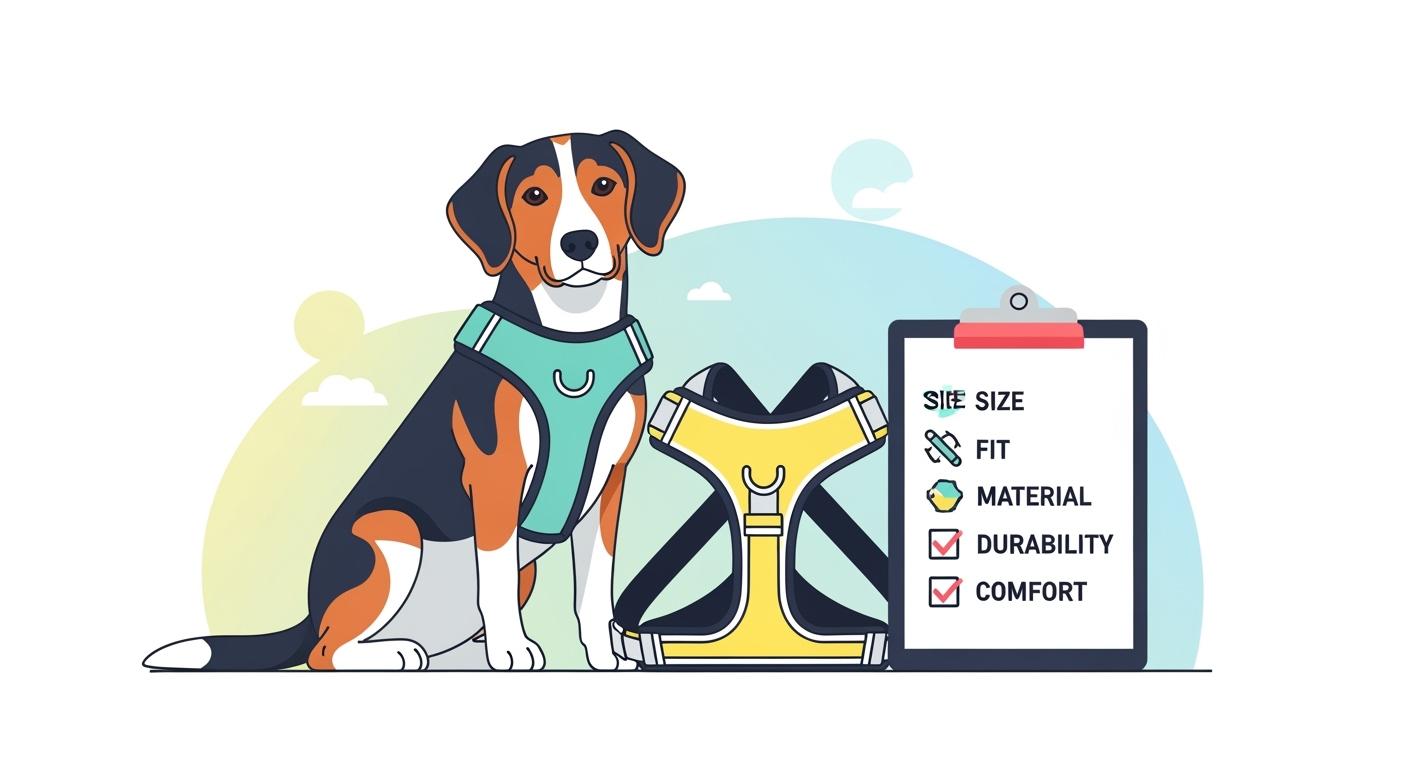
You need more than a size label when you choose a harness medium size dog. Start with the neck base and widest chest, then check the fit while your dog walks, turns, and backs up. A medium tag can suit one body shape and fail on another, so this checklist focuses on measurement, adjustment range, and movement comfort before you buy.
Key Takeaways
- Always measure your dog’s neck base and chest girth before buying a harness. That gives you a better starting point than a size label alone.
- Check the adjustment range after fitting. Straps should feel secure without sitting at their tightest or loosest limit.
- Choose a harness style that matches your dog’s body shape and movement needs. A good fit should stay centered and allow easy shoulder movement.
Measure and Fit a Harness Medium Size Dog
A medium label is only a starting point. Dogs in this range can still differ in chest depth, shoulder width, coat thickness, and body length. Before you buy, check three things: neck base, widest chest girth, and how much adjustment room remains after fitting.
Tip: Keep a soft tape, your dog’s regular collar, and the new harness nearby during the fitting check. Familiar gear can help some dogs stay calmer while you measure.
Determine Your Dog’s Size: Neck Base
Measure the neck base where the neck meets the shoulders, not the narrow collar line higher up. Wrap a soft tape around this lower point while your dog stands naturally. Keep the tape snug against the body without pinching. Record the number in either inches or centimeters, then use the same unit when you compare size charts.
- Let your dog stand on a flat surface.
- Place the tape around the neck base, where the shoulders begin.
- Press gently through thick fur so the tape reaches the body.
- Keep the tape level all the way around.
- Write the number down before moving to the chest measurement.
This point matters because a dog harness rests lower than a collar. A high neck number can mislead you. That mistake often leads to a harness that shifts, rubs, or rides too close to the throat.
This step feels basic, but it prevents many common sizing mistakes. A harness sits lower than a collar, so a high neck measurement can make the front section ride up, twist, or sit too close to the throat.
Measure the Widest Chest Girth
The chest girth usually decides more than the neck in a medium harness. Measure the widest part of the ribcage, usually just behind the front legs. Keep the tape flat and level, and use the same unit throughout the chart comparison.
Follow this quick order:
- Wrap a soft tape around the widest part of the ribcage, just behind the front legs.
- Check that the tape stays flat and level.
- Record the number without adding guesswork.
- Compare that number to the chart.
- Fasten the sample harness, then adjust until the straps feel secure but not tight.
This measurement often tells you more than the word “medium.” One dog may have a deeper chest, while another has a broader front or thicker coat. That is why harness sizing works best when you check the body in front of you instead of trusting the label alone.
Think of this as a practical buying check. If the numbers sit close to a chart boundary, plan to test the harness carefully after it goes on instead of assuming the label will work by itself.
Adjustment Range After Fitting
A chart match still needs a real-world check. After you put the harness on, look at the remaining adjustment room. You want enough range for small coat or body changes, but not so much extra strap that the harness bunches, gaps, or shifts off-center.
Look for these signs:
- The adjustable straps tighten enough to feel secure.
- The adjustable straps still leave useful room on both sides.
- The front and chest sections sit flat.
- The harness does not bunch, gap, or pull off-center.
Multiple adjustment points can help you fine-tune the fit, especially for dogs whose neck and chest fall into different parts of the chart. More adjustment does not automatically mean better fit, though. The harness still needs to sit flat and stay balanced once your dog starts moving.
This check helps you catch poor sizing before the first real walk. If the harness already sits at its limit indoors, it usually will not become easier to manage outside.
Keep this mindset: a harness is supervised walking gear, not all-day wear. That simple rule helps you separate fitting, walking, and rest time more clearly.
Pass/Fail Table for Sizing Checks
Use this table before purchase and again after first fitting.
| Check item | Pass signal | Fail signal | Solution |
|---|---|---|---|
| Neck base measurement | Tape sits at the neck base where the shoulders begin. Chart range matches that number. | You measured the narrow upper neck or guessed from a collar. | Re-measure at the neck base while the dog stands still. |
| Widest chest girth | Tape wraps the widest ribcage area just behind the front legs. Chart range matches that number. | Tape sits too high, too low, or over fluff only. | Recheck the widest chest point and press through fur. |
| Adjustment range after fitting | Straps sit secure but not tight. Extra range remains after fitting. | Straps sit near the limit, bunch up, or leave large gaps. | Try a different shape or a different labeled option. |
| Front placement check | Front area sits low enough to avoid the throat. | Front piece rides high toward the throat. | Review neck-base sizing and harness shape before buying. |
| Balance check | Harness sits centered on the body. | Harness pulls to one side before the walk starts. | Re-adjust evenly. If the issue stays, reassess chest girth and design. |
Before you move on, do a quick final review:
- Neck base number recorded
- Chest girth number recorded
- Chart checked without relying on “medium” alone
- Sample fitting reviewed
- Strap range confirmed
That short review keeps the buying decision practical and reduces fitting surprises after the harness arrives.
Dog Harness Fit: Movement and Safety
Shoulder Freedom and Low Rub Risk
You want your dog to move with ease during every walk. A comfortable fit means the harness does not block the shoulders or rub behind the elbows. Watch your dog walk, turn, and sit. The harness should stay flat instead of riding up, twisting, or crowding the front legs.
- If the harness presses across the shoulders, your dog may shorten the stride.
- If the belly strap sits too close to the elbows, you may see rubbing after a short walk.
- If the harness stays centered and quiet during movement, the fit is usually closer to correct.
Check the webbing and outer layer as well. A dense weave and clean edge finish usually feel steadier against the coat. Thin, soft, or fraying edges are more likely to fold, rub, or shift during use.
Back-Out Resistance and Twisting
Dogs sometimes pull back or twist when startled. You want a harness that stays secure during those moments. Test the fit by guiding your dog backward gently on the leash. The harness should not slip over the head or rotate sharply to one side.
Look at the leash attachment area while you pull by hand. It should stay flat instead of puckering or twisting. Dogs with deep chests or narrower waists often need extra care here because a chart match can still behave poorly once tension goes onto the leash.
Critical Safety Features for Dogs
You should always check a few safety basics before you buy. Look for smooth edge finishes, sturdy webbing, and buckle placement that stays away from the mouth path. Leash points should stay stable under pressure instead of folding or shifting.
Treat the harness as supervised walking gear. Remove it during unsupervised time. Clean it as the care label suggests, let it dry fully, and recheck the straps and hardware before the next walk.
Troubleshooting Table for Fit Issues
Use this table to solve common fit problems. Check each symptom, find the cause, and follow the solution for a better fit.
| Symptom Description | Potential Cause | Quick Check | Solution |
|---|---|---|---|
| Harness rubs behind elbows | Rough seams or poor edge finish | Run your hand along the edge | Choose a harness with smooth binding and dense webbing |
| Harness shifts or twists during walk | Incorrect chest or neck size | Watch harness during movement | Re-measure and adjust straps evenly |
| Dog backs out of harness | Loose fit or wrong shape | Gently pull leash backward | Tighten straps or try a different harness shape |
| Buckle sits near mouth | Hardware placement too close | Check buckle location when harness is on | Adjust fit or select a harness with better hardware placement |
| Harness rides up toward throat | Front section too high | Watch harness as dog sits or lowers head | Recheck neck base measurement and harness style |
| Panel puckers at leash point | Weak attachment area | Pull leash by hand and observe | Choose a harness with stable, reinforced leash point |
| Harness leaves marks or fur loss | Straps too tight or rough material | Check for red spots or missing fur | Loosen straps and select softer materials |
| Dog chews harness during walk | Exposed hardware or loose fit | Watch for chewing behavior | Adjust fit and supervise use; replace if needed |
A well-fitted harness supports comfort, control, and confidence on regular walks. Review fit after grooming, coat changes, or body changes so the same harness does not quietly become the wrong one.
Choosing the Right Dog Harness Style
Harness Shape Match for Dogs
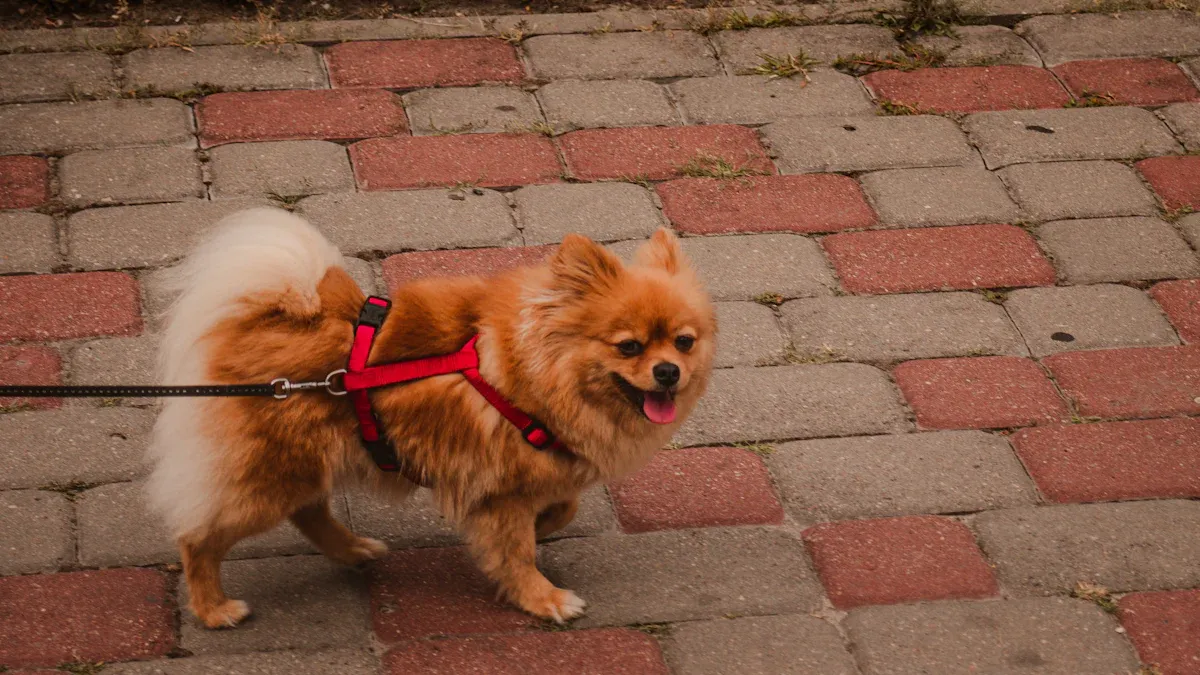
You need to match the harness shape to your dog’s body. Some dogs have deeper chests, while others have broader shoulders or shorter bodies. A step-in harness can work for dogs that dislike overhead entry. Overhead harnesses suit dogs that stay calmer during dressing. Focus on fit first, then compare comfort details like padding, strap width, and ease of cleaning.
Clip Point Options and Use
Dog harnesses come with different leash attachment points. A front-clip harness can help if your dog pulls. A back-clip harness often suits calmer walks. Dual-clip harnesses give you more flexibility during training or transitions. Whatever style you choose, the attachment point should stay secure and should not twist the harness off-center.
Common Mistakes After Measuring
Many buyers still make mistakes after measuring. Some rely on the size label and ignore coat thickness. Others choose a style that restricts shoulder movement or leaves too much extra strap after fitting. A tighter fit is not always a safer fit. You still need to check movement, balance, and comfort once the harness goes on.
Tip: If two styles seem similar on the chart, choose the one that is easier for your dog to wear calmly and easier for you to adjust evenly.
Comparison Table: Styles and Features
| Harness Type | Strap Design | Wearing Method | Adjustment Flexibility | Comfort | Control | Ease of Cleaning | Budget Considerations |
|---|---|---|---|---|---|---|---|
| Front-clip | Lightweight | Step-in | High | Good | High | Easy | Moderate |
| Back-clip | Wide | Overhead | Medium | High | Medium | Easy | Low |
| Dual-clip | Wide + Light | Step-in/Over | High | High | High | Moderate | High |
You want a harness that fits your dog’s shape, stays easy to adjust, and supports the kind of walks you actually do. Prioritize secure fit, easy cleaning, and control that matches your dog’s movement style.
You need more than a label when choosing a harness medium size dog. Measure first, fit second, and always confirm the result in motion. A good checklist helps you catch sizing mistakes before they turn into rubbing, shifting, or escape risk.
FAQ
Can a medium harness fit all medium dogs?
No. Medium is only a starting point. Dogs in the same size group can differ in build, coat, and chest depth. Measure first, then test the fit while your dog moves.
What quick check helps after you put the harness on?
Watch your dog walk, turn, and back up. Check strap balance, shoulder freedom, and any rub points that show up after a short trial.
Should dogs wear a harness all day?
No. Use harnesses as supervised walking gear. Remove them during unsupervised time, and recheck the fit if you notice skin marks or shifting.






