
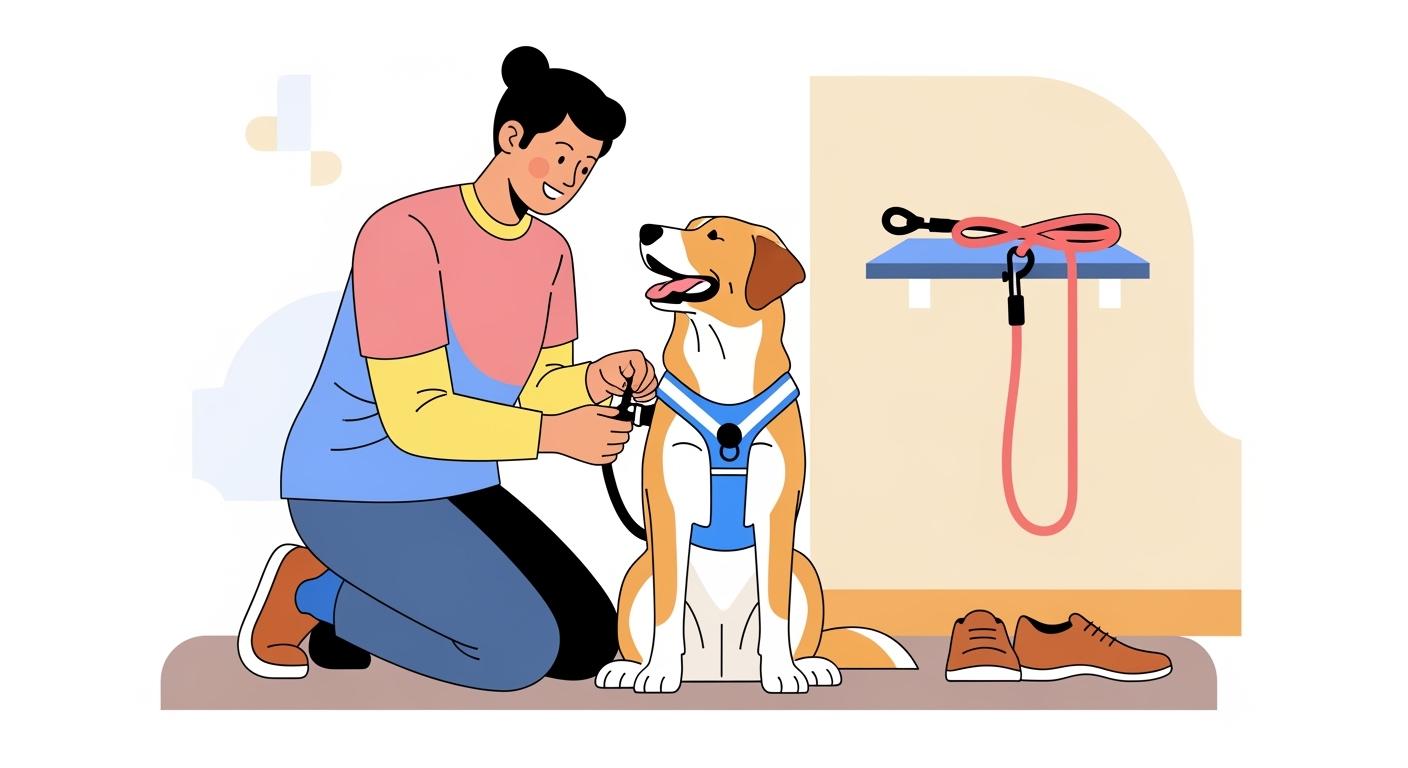
A harness only helps when it sits low on the chest, stays centered, and clears the shoulders. Many problems start with simple setup mistakes, such as clipping the wrong ring, leaving the straps uneven, or trusting the size label without checking the fit. Learning how to use a dog harness step by step helps reduce rubbing, slipping, and back-out risk on everyday walks.
Key Takeaways
- Always measure your dog’s neck and chest before choosing a harness. A proper fit ensures comfort and safety during walks.
- Use the two-finger rule to check strap tightness. This helps prevent chafing and ensures your dog can move freely.
- Regularly inspect the harness for fit and comfort. Look for signs of rubbing or irritation to keep your dog healthy and happy.
How to Put On and Fit a Dog Harness
Place Neck and Chest Sections Correctly
You want your dog to feel comfortable and safe every time you put on a dog harness. Start by placing the neck section so it sits low on the chest, not pressing against the throat. The chest panel should rest flat and centered between the front legs. Many owners make mistakes by picking a harness based only on size labels. Always measure the chest and neck to match your dog’s real shape. If the harness shifts during walks, check if the chest panel stays centered. You can fix this by re-evening both sides and retesting the fit.
Tip: Check under your dog’s fur for gaps or bunching. Adjust the harness for a true fit, not just how it looks on the outside.
Adjust Straps and Check for Twisting
Next, adjust the harness straps so they sit flat and do not twist. Twisted straps can rub the skin and make the harness shift when your dog moves. Make sure the belly strap sits behind the front legs with clear elbow room. As a quick fit check, slide one or two fingers under each strap without forcing them. If you cannot do that, the harness is too tight. If there is obvious extra space, it is too loose. After you buckle the harness, check that all clips are secure and that the harness stays balanced.
- Adjust the harness evenly on both sides.
- Check for twisting or bunching after your dog moves.
- Make sure the harness does not rotate or slide to one side.
Fit Check: Too Loose, Too Tight, or Misaligned
You need to fit a dog harness so your dog can move freely. Watch your dog walk and turn. The harness should stay centered and not restrict shoulder movement. If your dog’s stride looks short or stiff, the harness may crowd the shoulders. Test back-out resistance by gently asking your dog to back up. If the shoulders or head begin to slip free, tighten the straps or choose a more secure design. Inspect contact points after each walk for redness or swelling. If you see any, stop using the harness and adjust or switch shapes.
Note: Always check for visible gaps, loose straps, or easy escape risk before every walk.
Pass/Fail Fit Checklist Table
Here is a simple checklist to help you judge if your harness fits well. Use this table before every walk to avoid common mistakes.
| Check Item | Pass Signal | Fail Signal | Fix |
|---|---|---|---|
| Neck opening | Sits on chest, clears throat | Rides high or presses when dog moves | Adjust lower or try a different shape |
| Belly strap | Behind front legs, clear elbow room | Touches or rubs near elbow | Refit or change size |
| Centered fit | Stays balanced during turns and short walks | Rotates, twists, or slides to one side | Re-even straps or change style |
| Back-out risk | No gap when dog backs up | Shoulders or head slip free | Tighten or choose secure shape |
| Two-finger rule | One/two fingers fit under each strap | Too tight or too loose | Adjust for proper fit |
| Shoulder freedom | Dog moves freely, no crowding | Restricts movement or rubs | Adjust or switch harness |
| Skin check | No redness or swelling after walk | Redness, swelling, or sores | Stop use, adjust, or switch shape |
| Escape risk | No visible gaps, secure clips | Gaps, loose straps, easy escape | Tighten or choose secure shape |
Reminder: Use this checklist every time you fit a dog harness. Quick checks help catch discomfort and escape risk before the walk starts.
Harness Styles and Clip Setups for Daily Use
Front, Back, and Dual Clip Options
There are three common clip setups: front, back, and dual. A front-clip setup can help you redirect a dog that surges ahead. A back-clip setup often feels simpler for calm walkers. Dual-clip harnesses give you flexibility while your dog is still learning leash manners. The clip position can improve handling, but it does not replace fit checks or training.
Tip: Try each clip setup on short walks. See which one gives you the best control and comfort.
Harness Shapes and Shoulder Movement
The shape of the harness matters because strap placement can change how freely your dog reaches through the shoulders. H-style and Y-style layouts often leave better shoulder clearance than bulkier chest panels, but the real test is how your own dog moves in the harness. If straps cross too close to the shoulder joint, the stride may look shorter or stiffer. Watch your dog walk, turn, and sniff after fitting instead of choosing by shape name alone.
When to Use a Harness vs. Collar
Use a harness for daily walks when your dog pulls, startles easily, or needs more body support and control. A collar may be enough for brief outings with a calm dog that does not lunge or strain. Harnesses generally spread pressure over a larger area than a collar, but the benefit still depends on correct fit and how your dog walks in it.
Comparison Table: Harness Styles and Clips
| Harness Type | Clip Point(s) | Shoulder Freedom | Adjustability | Best Use Case |
|---|---|---|---|---|
| H-style | Back | Good | Moderate | Calm daily walks |
| Y-style | Front/Back | Excellent | High | Active dogs, training |
| Dual-clip | Front/Back | Excellent | High | Leash manners learning |
| Bulkier body | Back | Limited | Low | Short walks, large dogs |
| Collar | N/A | Full | Low | Quick outings |
Tip: Pick a harness that matches your dog’s body shape and walking style. Always check the fit after your dog starts moving, not only while standing still.
Comfort, Materials, and Care After Walks
Padding, Airflow, and Bulk
You want your dog to stay comfortable on every walk. Padding can help, but too much bulk traps heat and limits movement. Look for harnesses with enough cushion to prevent rubbing, but not so thick that your dog overheats. Sport mesh and lightweight webbing allow air to flow and keep your dog cool. Always watch your dog move in the harness.
A harness can look comfortable while still changing shoulder motion or front-limb rhythm. That is why movement checks matter. Watch your dog walk, turn, and sniff with the harness on instead of relying only on static fit.
A harness is only doing its job after it passes a real walk. If it stays low at the neck, moves cleanly through the shoulders, remains centered, and leaves no repeat rub points, you are much closer to the right fit.
Webbing, Mesh, and Cleaning Tips
Choose materials that match your dog’s needs:
- Neoprene: Weather-resistant and padded for comfort.
- Sport mesh: Promotes airflow to keep dogs cool.
- Lightweight webbing: Breathable and easy to dry.
For cleaning, always follow the care label. Most harnesses clean best by hand with warm water and mild soap. Use a soft cloth or sponge. Avoid harsh chemicals, bleach, or dryers. Let the harness air dry away from direct heat.
Avoid Chafing and Slipping Mistakes
Chafing and slipping often come from poor fit or the wrong harness shape. A loose harness lets your dog back out. A tight harness causes rubbing and restricts movement. Always measure your dog’s girth and neck, and check that you can slide two fingers under the straps. Inspect your dog’s skin after walks for redness or hair loss. If you see irritation, stop using the harness and adjust or switch styles.
Troubleshooting Table: Comfort and Care
| Symptom | Likely cause | Fast check | Fix |
|---|---|---|---|
| Harness shifts off center | Chest fit too loose or bulky panel | Harness rotates during walk | Tighten straps, check size, try new style |
| Rubbing behind front legs | Belly strap too far forward | Redness at armpits | Reposition harness, inspect seams |
| Dog feels restricted | Neck or chest panel crowds shoulders | Short stride, stiff gait | Loosen straps, try Y-style harness |
| Dog can back out | Neck opening too loose | Dog escapes when backing up | Refit front, repeat back-out check |
| Harness traps heat | Thick padding, poor airflow | Dog pants or slows on walks | Switch to mesh or lighter webbing |
Reminder: Quick fit checks and regular cleaning help keep a harness comfortable and easier to trust on daily walks.
You now know how to use a dog harness by checking the fit before the walk and rechecking comfort after it.
- A lower neck opening, even strap tension, and elbow clearance can reduce many common fitting problems.
- Small checks after the walk can catch rubbing, shifting, and early wear before they turn into bigger issues.
Do not judge a harness by padding or looks alone. Watch how your dog actually moves, inspect the contact points, and keep adjusting until the harness stays centered without crowding the shoulders.
FAQ
How do you know if your dog’s harness fits correctly?
You should check that you can slide one or two fingers under each strap. Watch your dog walk. The harness should not shift or cause rubbing.
What is the best way to clean a dog harness?
Always follow the care label. Use mild soap and warm water. Let the harness air dry fully before the next use. Avoid harsh chemicals or direct heat.
How to measure your dog for a harness?
Use a soft tape to measure around your dog’s chest and neck. Measure at the widest part. Check the harness size chart before buying.
Note: This FAQ does not replace veterinary advice. If your dog shows pain, coughing, skin irritation, or sudden changes in gait, stop using the harness and ask your veterinarian for guidance.






