
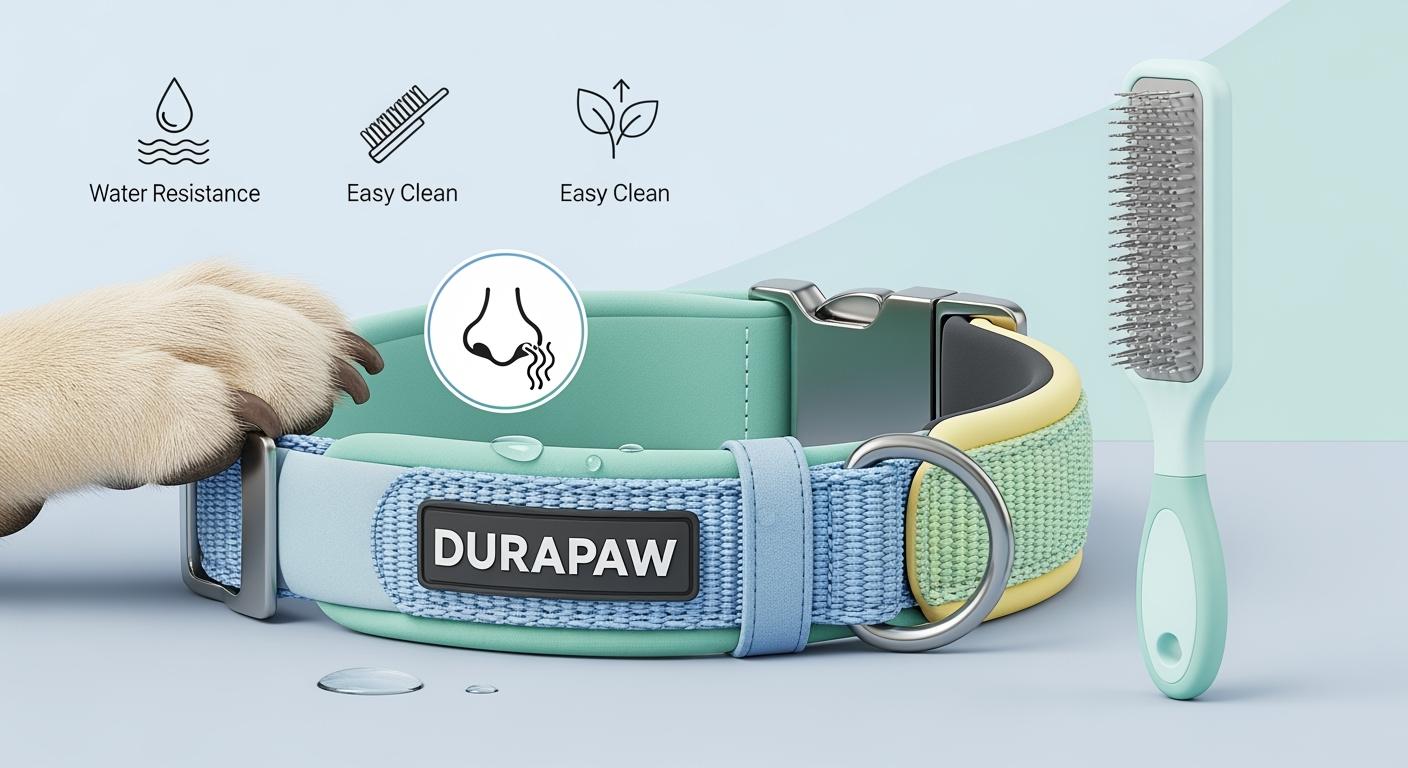
A waterproof dog collar sounds like the easy answer for wet walks, muddy parks, and dogs that get dirty fast. But “waterproof” is only useful if the collar also stays comfortable, dries reasonably quickly, and does not trap odor around the places that matter most. The best choice usually comes down to material behavior in real use, not just to a label on the product page.
That is why it helps to compare waterproof options as part of your broader everyday collar and leash setup instead of assuming every coated or wipe-clean collar behaves the same way after repeated use.
What “waterproof” should really mean in daily collar use
A waterproof collar should shed water more easily than an absorbent fabric collar and be simpler to rinse after muddy or wet use. That does not mean it never smells, never needs cleaning, or never traps grime. Moisture often hides around buckle areas, adjustment holes, layered edges, and hardware contact points. Those are the places where odor and wear build up even when the main strap dries quickly.
What a better waterproof collar should do
- Dry faster than an absorbent woven collar.
- Release dirt more easily during a quick rinse or wipe-down.
- Stay smoother after repeated wet use instead of turning rough or stiff.
- Make everyday cleaning simple enough that you will actually keep doing it.
What it should not make you assume
- That odor can never build up.
- That hardware and edges no longer need checking.
- That a waterproof collar is automatically the most comfortable option.
- That wet-weather use no longer affects fit, skin, or surface wear.
Quick rule: waterproof should mean easier water handling and easier cleaning, not zero maintenance.
How common waterproof collar materials compare
Different material families solve the water-and-cleaning problem in different ways. The most useful comparison is not which one sounds toughest. It is which one matches your dog’s routine, your cleaning habits, and the kind of weather or mess the collar sees most often.
| Material type | Usually works well for | What to watch for |
|---|---|---|
| Coated webbing | Frequent wet use, simple wipe-down cleaning, less odor buildup | Edge comfort and hardware quality still matter |
| TPU, rubber, or similar coated styles | Rain, mud, and everyday rinse-off cleaning | Surface wear, cracking, or rough spots over time |
| Sealed nylon or treated woven builds | Lighter everyday use with occasional wet exposure | Seams and woven areas can still hold moisture and smell |
| Leather or leather-like styles | Owners prioritizing feel or appearance more than repeated wet use | Usually needs more careful drying and maintenance |
Coated webbing and similar smooth-surface builds
These are often the easiest to wipe down after muddy walks because dirt tends to stay on the surface instead of soaking in. They usually dry quickly and are often the most practical choice for dogs that swim, get rained on often, or come home messy. The main thing to check is whether the edges, holes, and hardware still feel smooth enough for daily wear.
Sealed woven styles
These can feel lighter and more flexible, but they still need more attention if water starts working into seams, stitch points, or woven layers. They may be more forgiving in feel, but they are often less trouble-free once repeated moisture and odor buildup enter the picture.
Leather and leather-like options
These can look appealing and feel softer in some cases, but they are usually less practical for dogs that get wet often. Water and repeated cleaning can change the surface feel and shorten how fresh the collar stays in everyday use.
Odor, comfort, and fit problems that waterproof materials still do not solve alone
A collar can resist water well and still be wrong for your dog. If the fit is too loose, the collar rotates and keeps trapping grime in the same places. If it is too tight, moisture and friction stay pressed against the neck longer. If the hardware is rough or the edges are stiff, waterproof performance will not make the collar comfortable.
Where odor usually starts
- Buckle areas where water and dirt collect.
- Adjustment holes and layered sections.
- Edges that stay damp longer than the main strap.
- Collars put back on before they are fully dry.
Use these simple fit and comfort checks
- Check that two fingers fit comfortably under the collar.
- Look for rubbing, redness, or flattened coat after wet or muddy outings.
- Make sure the collar still sits in the same place once dry.
- Recheck after grooming, coat shedding, or repeated rainy-weather use.
When collar use starts creating pulling, coughing, or more neck pressure than it should, the issue is no longer only about material choice. In those cases, it usually helps to step back and look at the wider walking routine rather than trying to solve every problem with one collar surface.
What material trouble looks like in real use
- Smell returns quickly even after cleaning.
- The collar stays damp around the hardware or edges.
- The surface becomes rougher after repeated wash-and-dry cycles.
- Your dog scratches more or seems less comfortable wearing it.
Cleaning habits, replacement signs, and how to make the collar last longer
The most practical waterproof collar is usually the one you can clean quickly and dry fully without extra effort. Good cleaning habits matter more than deep scrubbing. A simple rinse, full dry, and regular hardware check often does more than harsh washing that ends up roughening the collar or wearing down the finish faster.
Simple cleaning habits that help
- Rinse off mud and grit before they dry into the surface.
- Wipe the collar after swimming or heavy rain.
- Dry fully before storing or reusing.
- Check edges, holes, and hardware while cleaning instead of only when the collar already smells bad.
When cleaning is no longer enough
- Odor keeps returning quickly.
- The finish cracks, peels, or turns rough.
- The collar becomes uncomfortable against the neck.
- Hardware starts showing wear that affects daily use.
If you need a broader reference point for how collar material choice fits into everyday gear decisions, it helps to compare your current setup against StridePaw’s broader fit-and-material guides before replacing the collar too quickly or buying another one with the same weak points.
FAQ
What waterproof dog collar material is easiest to clean?
Coated webbing and similar smooth waterproof materials are often the easiest to wipe down because dirt and water tend to stay more on the surface instead of soaking into the strap.
Why does a waterproof collar still smell sometimes?
Odor usually builds around hardware, holes, edges, and any place where grime or moisture stays trapped. Waterproof does not mean odor-proof.
Is coated webbing better than nylon for wet dogs?
For many wet or muddy dogs, coated webbing is often more practical because it sheds water more easily and usually needs less effort to rinse clean than woven nylon.
How often should I clean a waterproof collar?
Clean it after muddy use, swimming, rain, or any time grime builds up. The goal is to stop odor and rough wear before they settle in, not to wait until the collar already smells bad.
When should I replace a waterproof dog collar?
Replace it when odor keeps returning, the finish cracks or roughens, the hardware becomes unreliable, or the collar no longer feels comfortable in daily use.






