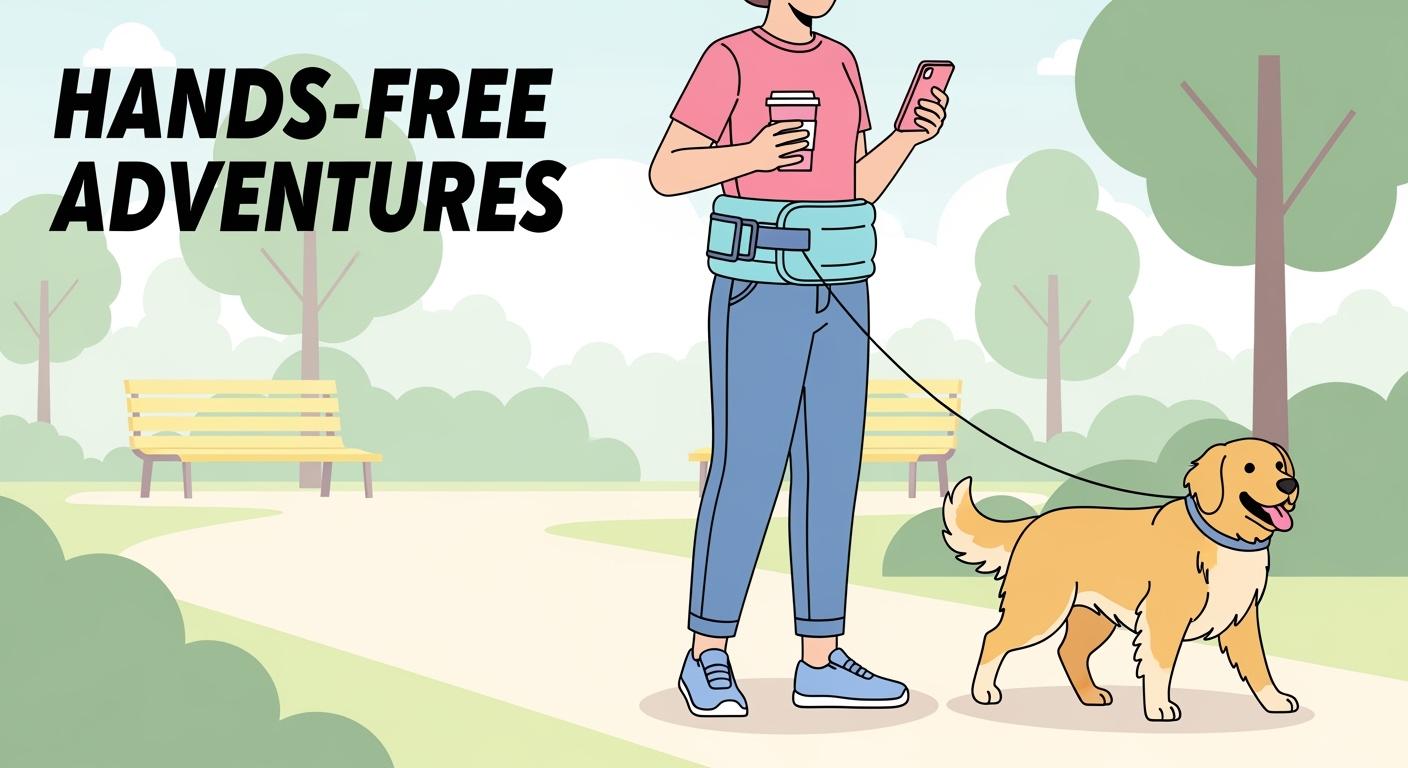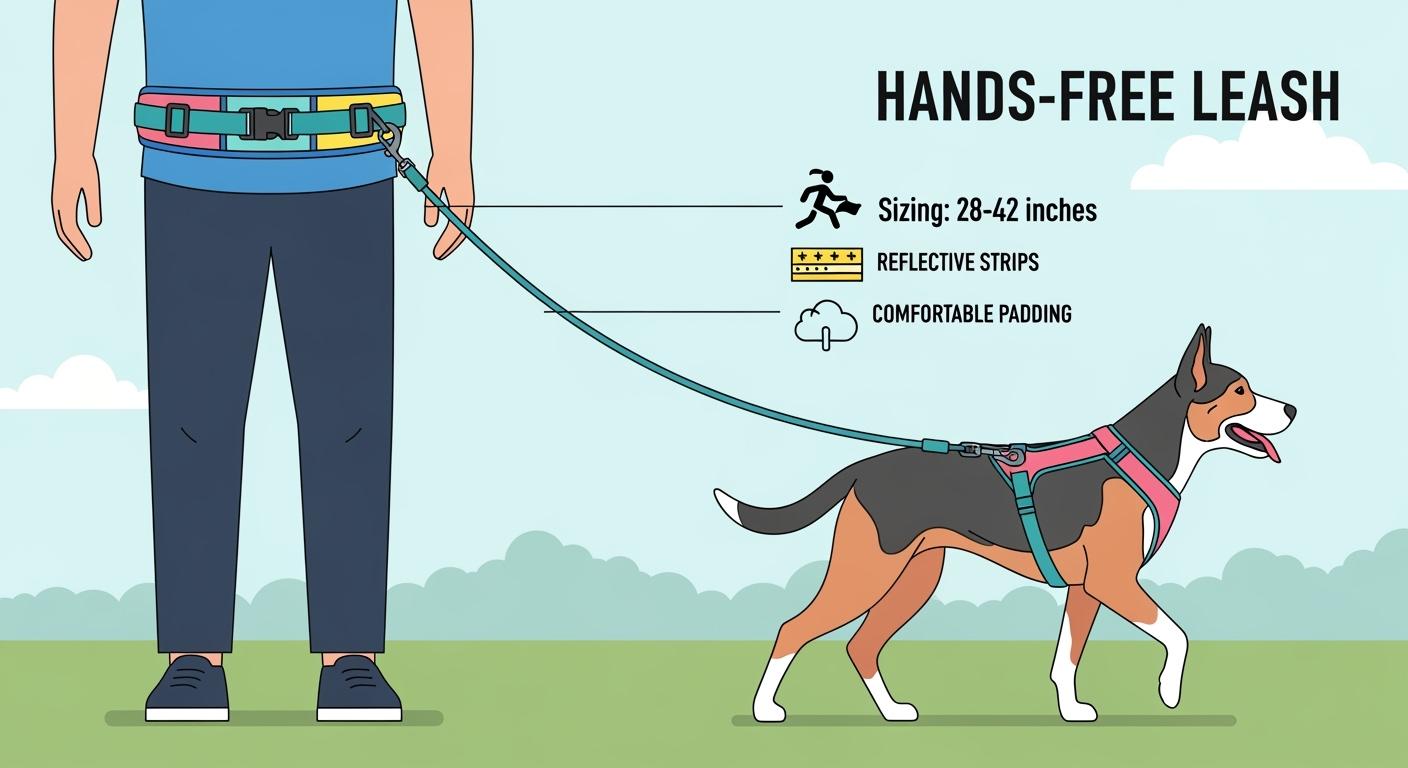
Choosing a waistband dog leash is not only about going hands-free. The setup has to stay stable on your waist, keep the leash path clear, and still let you react quickly if your dog speeds up, changes sides, or stops suddenly. A good setup should feel predictable on an ordinary walk, not only in a product photo.
Key takeaways
- Start with belt stability. If the waistband slides, twists, or rides up indoors, it will usually feel worse outside.
- Choose a leash length between 4 and 6 feet for daily walks. That range is usually easier to manage on sidewalks, around corners, and when passing people.
- Pick features that help with real use: secure clip closure, a belt that stays flat, a quick-grab handle, and materials that are easy to wipe or wash.
How to Size a Waistband Dog Leash
Check waist fit before you think about extras
Measure the part of your waist or high hip area where you actually plan to wear the belt. Then fasten the leash belt and walk around indoors for a minute or two. You are looking for a stable fit, not the tightest possible fit. The belt should sit flat, feel secure, and let you breathe and turn normally.
- Fasten the waistband where you plan to wear it on a real walk.
- Tighten it until it feels stable, but not restrictive.
- Walk forward, turn, stop, and step sideways.
- Notice whether the belt slides, flips, or bunches at one side.
- Re-adjust before going outside if the belt shifts during this short test.
Pass signal: the belt stays flat and you stop thinking about it after a few steps. Fail signal: it keeps rotating, climbing upward, or pulling at one point on your waist.
Match leash length to your route and your dog
Selecting the right leash length depends on your dog’s size, your walking environment, and your control needs. For many everyday neighborhood walks, a shorter everyday range is easier to manage than a long roaming setup. The right choice depends less on labels like “running” or “training” and more on how much slack you can control without tangling around your legs.
| Walking situation | Usually works better with | What to watch |
|---|---|---|
| Sidewalks, crossings, apartment entries | Shorter, easier-to-manage slack | Too much extra line can wrap around your legs or catch on corners. |
| Open parks or wide paths | A little more freedom if your dog stays responsive | Extra length still needs a clear path and consistent side position. |
| Running or brisk walking | Stable belt plus predictable leash path | Bounce and side-switching can feel worse at higher speed. |
Before routine use, do a short driveway or hallway test. Let your dog move a little ahead, pause, and change direction. Check whether the leash path stays readable and whether you can shorten the distance quickly without fumbling.
Features That Matter in Daily Use
Clip security and belt stability come first
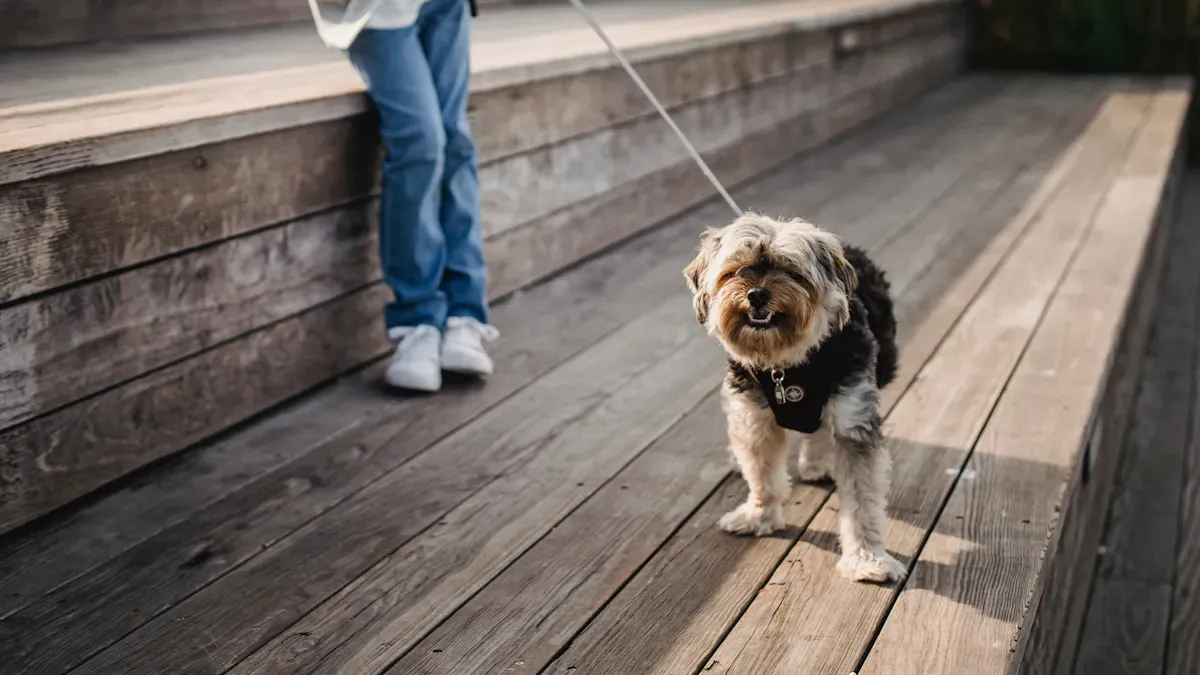
The clip matters because it takes the most sudden movement. Instead of focusing on marketing claims or pull-force numbers, check how the clip behaves in your hands. It should close fully, stay aligned, and not look easy to pry open when twisted. The connection point should also rotate or sit cleanly enough that the leash does not keep winding up on itself during a normal walk.
The belt matters just as much. A waistband that feels soft but drifts around your body usually creates more annoyance than a simpler belt that stays put. If the belt slips whenever your dog speeds up, the problem is not solved by adding more accessories.
Quick home test: clip the leash on, apply steady hand tension, release, and repeat a few times. You want a smooth return, not a clip that shifts sideways or a belt that immediately twists.
Bungee, handles, reflective details, and storage
Bungee sections can soften sudden tension, but they also change timing and distance. Some walkers like that softer feel. Others prefer a more direct response. The better choice depends on whether you value smoother pull absorption or more exact leash feedback. Either way, test it on a short route before using it on crowded streets.
A quick-grab handle is useful when you need closer control near driveways, bikes, or doorways. Reflective trim helps with visibility in lower light, but it does not replace route choice or attentive handling. Pockets and bottle holders can be convenient, yet they should not make the belt bulkier than you are comfortable wearing for the whole walk.
- Prioritize first: stable belt, dependable clip closure, manageable leash path, and a handle you can reach quickly.
- Prioritize second: bungee feel, storage pockets, and other convenience extras.
Common Mistakes and Quick Checks
Mistakes that cause returns or frustration
- Choosing the setup for hands-free convenience only, without checking whether the belt stays stable on your body.
- Using too much leash length for narrow sidewalks, building entrances, or crowded routes.
- Assuming a waistband setup is the best choice for every dog, including dogs that lunge hard, zigzag often, or react suddenly.
- Focusing on storage add-ons before checking clip closure, handle access, and overall balance.
- Skipping a short indoor or driveway test and finding out on the first full walk that the line tangles or the belt rotates.
Pass or fail before daily use
| Check item | Pass signal | Fail signal | What to do next |
|---|---|---|---|
| Belt position | Stays flat during walking and turning | Slides, twists, or rides upward | Re-adjust, change size, or reduce carried extras. |
| Leash path | Moves cleanly on one side without wrapping around you | Tangles around legs or crosses in front too often | Shorten usable slack or change side routine. |
| Clip behavior | Closes fully and stays aligned under repeated checks | Looks loose, shifts sideways, or catches oddly | Stop using it until the hardware feels dependable. |
| Control access | You can reach the handle quickly when needed | You have to search for the handle under the belt or pocket area | Reposition the leash or simplify the setup. |
This article is a fit-and-use guide for everyday walking setups. It is not a medical guide, and it does not replace help for dogs with fear, pain, or major leash-reactivity problems.
FAQ
How do you know the waistband is the right size?
The belt should stay stable when you walk, turn, and stop indoors. If it rotates or climbs upward before you even start a real walk, the size or shape match is probably off.
Is a longer leash always better for a hands-free setup?
No. More length can mean more tangles, slower reactions, and a messier leash path. Start with the amount of slack you can actually manage on your usual route.
Can you use a waistband dog leash for running?
You can, but only after a short test shows the setup stays balanced and your dog keeps a predictable position. A setup that feels fine at walking speed can feel very different once bounce increases.