
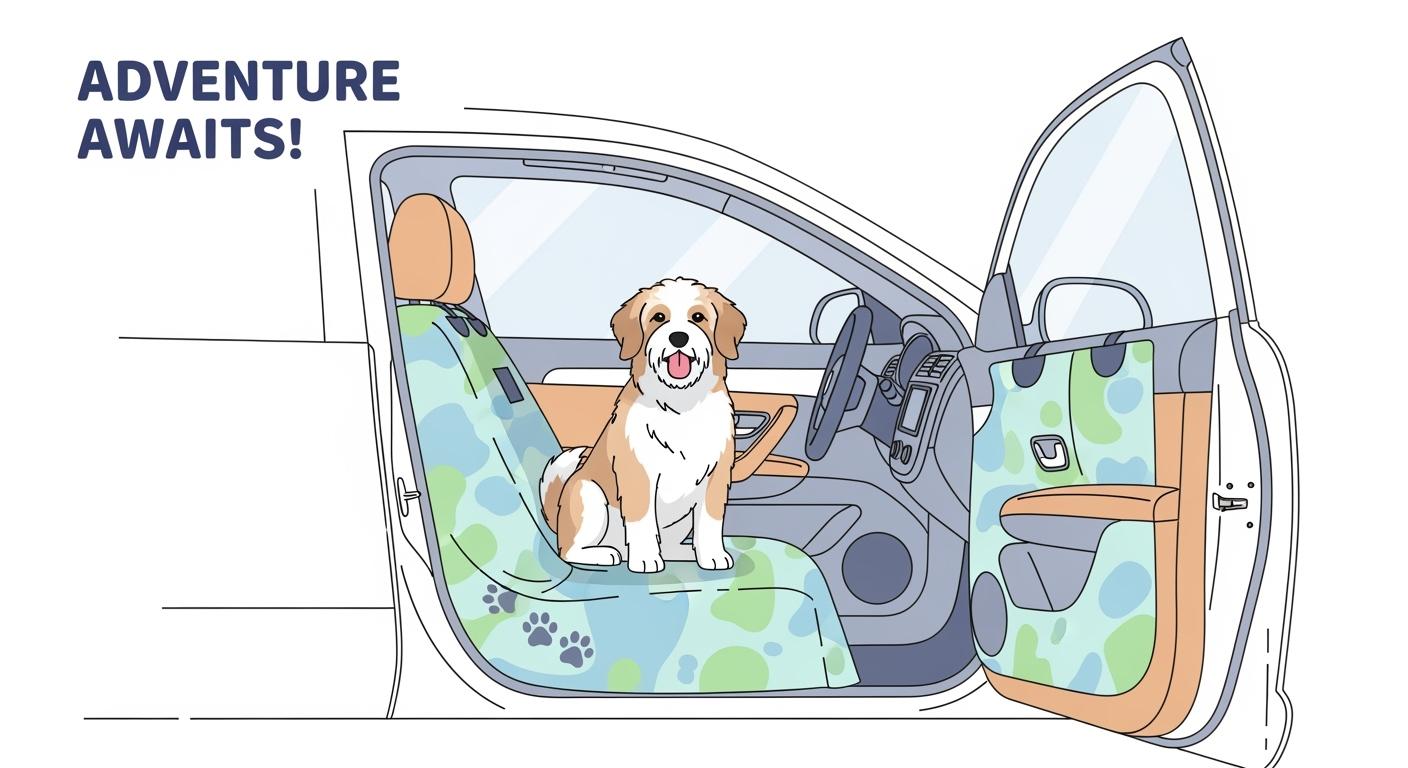
A dog cover seat for car use protects the parts of your vehicle that take the most daily abuse: the rear seat surface, seat edges, door-side trim, and loading area. It can catch hair, dirt, wet paw marks, and light claw contact before they reach the upholstery. But a cover is not a safety restraint by itself. The best setup protects the car while still leaving a clear path for a properly fitted harness, seat belt tether, carrier, or crate.
Key Takeaways
- A dog cover seat keeps your car safer from scratches, fur, mud, drool, and daily messes, but it does not replace a travel restraint.
- Pick a good cover that uses waterproof materials and strong stitching. This stops damage and helps the cover last longer.
- Check the cover after loading and unloading. Exposed seat edges, curled flaps, loose anchors, and blocked seat belt openings mean the protection is not working as intended.
When a Dog Cover Seat for Car Is Enough
Everyday messes: dirt, hair, and wet paws
A dog cover seat for car interiors works well when the main problem is routine mess. Hair, dust, sand, mud, drool, and damp paw marks are exactly what a basic rear-seat cover is designed to catch. A smooth, removable cover is much easier to shake out, vacuum, wipe, or wash than vehicle upholstery.
A dog cover for car seats makes cleaning up less stressful. It is most useful when your dog rides after walks, park trips, rain, beach outings, grooming visits, or muddy backyard play. In those cases, the cover reduces the cleanup load and keeps dirt from settling into seams and lower corners.
Entry scratches: where basic covers fall short
Basic covers often protect the flat seat surface better than the loading edge. The weak points are usually the side bolsters, seat edge, door-side trim, and any exposed gap near the buckle area. If your dog jumps in with speed, pushes off with the back feet, or scrapes claws across the edge, a thin bench cover may slide, bunch, or leave the impact zone uncovered.
For entry scratches, look beyond the middle of the seat. Side flaps, a better anchor system, thicker edge coverage, and a stable non-slip underside matter more than a soft surface alone. If the cover moves when your dog loads in, it cannot protect the same spot twice.
Comparison table: bench, hammock, and side-flap protection
The best dog car seat cover depends on what you need most: simple cleanup, edge protection, or better containment of daily mess.
| Cover Type | Best Use Case | Main Benefit | Main Watchout |
|---|---|---|---|
| Bench Cover | Daily hair, dirt, light paw marks | Simple to install, remove, and clean | May leave side edges and door areas exposed |
| Hammock Cover | Dogs that shift, shed, or drop dirt into the footwell | Better containment across the rear seat and front edge | Can block airflow or access if fitted poorly |
| Side-Flap / Door-Area Cover | Entry scratches, claw marks, door-side dirt | Protects the most vulnerable loading areas | Needs careful flap placement to avoid curling or gaps |
Use a bench cover when the dog rides calmly and the problem is mostly loose mess. Use a hammock when you need better containment across the rear seat. Use side-flap or door-area protection when your dog scratches the entry edge or door trim while getting in and out.
Tip: A cover protects upholstery. It does not restrain your dog. Keep seat belt openings usable and pair the travel setup with a suitable restraint method.
Dog Car Seat Cover Protection During Loading
Loading hazards: claws, grit, and side edges
Helping your dog into the car can create more wear than the ride itself. Claws, sand, grit, and repeated push-off pressure hit the same edge over and over. Even short nails can leave marks when the dog jumps from pavement, mud, gravel, or a wet trailhead.
For better protection, pick a cover that shields the side edges and doors. The cover should lie flat before loading, stay anchored while the dog climbs in, and keep the high-wear areas covered after the dog turns around.
Cover shift and door contact
A cover that slides during loading cannot protect the seat edge. Check the non-slip backing, headrest straps, seat anchors, buckle openings, and side flaps before the first real trip. If the cover bunches, the dog’s paws may land directly on the exposed seat or trim.
Also check door contact. Some dogs step onto the door-side edge before entering the seat. Others brace against the door panel or drag claws across plastic trim. If that is your dog’s pattern, a flat bench cover is usually not enough.
Pass/Fail checklist table
Use this checklist before and after loading. It helps you see whether the cover is protecting the actual contact points, not just looking neat while the car is parked.
| Check Item | Pass Signal | Fail Signal | Fix |
|---|---|---|---|
| Cover stays in place when loading | No shifting, bunching, or sliding | Cover moves as the dog climbs in | Tighten straps, insert anchors, and flatten the base |
| Side edges fully covered | Seat edge and side bolster remain covered | Visible upholstery or exposed trim | Reposition the cover or use longer side flaps |
| Door area protected | Door-side contact zone is shielded | Claw marks or dirt appear on the door panel | Add door protection or adjust flap placement |
| Seat belt openings usable | Harness tether or belt path remains clear | Cover blocks buckle, tether, or restraint access | Reposition cover before driving |
| Cover surface stays flat | Smooth enough for stable footing | Wrinkles, folds, or slippery bunching | Reset anchors and smooth the cover before loading |
Troubleshooting table
If protection fails during loading, use this table to identify the weak point.
| Symptom | Likely Cause | Fast Check | Fix |
|---|---|---|---|
| Cover keeps slipping | Anchors not inserted or straps too loose | Pull the cover forward and sideways by hand | Insert anchors, tighten straps, and check backing grip |
| Seat belt openings misaligned | Cover shifted during setup or loading | Try reaching the buckle or restraint path | Recenter the cover and secure it before travel |
| Side flaps curl or pop out | Flaps are too short, stiff, or poorly tucked | Check flap position after the dog enters | Tuck, smooth, or choose a cover with better side coverage |
| Door trim still scratches | Cover protects the seat but not the door-side contact area | Watch where the dog’s paws land during entry | Add door-area coverage or change loading angle |
| Cover feels damp after cleaning | Material did not dry fully before reuse | Touch seams, lower corners, and padded areas | Air dry fully before reinstalling |
Note: If your dog has trouble jumping in or out, use a ramp or step. This can reduce claw damage and make loading safer for your dog.
Signs Your Protection Isn’t Enough
Exposed edges and curled flaps
You know the dog cover seat for car use is underperforming when the same exposed areas appear after every ride. Curled flaps, loose anchors, uncovered seat edges, and blocked buckle openings are not small details. They show that the cover is no longer staying in the position needed to protect the vehicle or support the restraint path.
Trapped dirt and scratched trim
Trapped dirt is a sign that the cover is catching mess but not containing it. Dirt under the cover can rub against upholstery, especially if the cover shifts while your dog moves. Scratched trim near the door means the cover does not protect the loading path. Persistent odor after cleaning may also mean moisture is staying in seams or padded layers.
Messy reset after each trip
If every ride still requires a long cleanup, the cover may not match your dog’s habits. Dogs that shed heavily, ride after wet walks, or step across the door-side edge often need more complete coverage and easier-clean material. A cover that protects only the center seat panel may work for light use but fail for daily outdoor travel.
Tip: The best cover is the one that reduces your real cleanup routine. If dirt keeps reaching the same exposed spot, the cover shape is wrong for your dog’s entry pattern.
When to upgrade your dog car seat cover
Upgrade when damage repeats in the same place, when cleaning takes too long after normal trips, or when the cover blocks the seat belt or harness restraint path. Also replace the cover if the waterproof layer peels, stitching opens, straps stretch, anchors loosen, or fabric thins in high-contact areas.
| Upgrade Signal | Why It Matters | Better Direction |
|---|---|---|
| Scratches appear at the seat edge | The cover is not protecting the loading contact zone | Choose stronger side flaps or edge coverage |
| Moisture reaches the upholstery | The waterproof layer or seam protection is not enough | Use a better waterproof cover and dry it fully after cleaning |
| Cover blocks restraint access | Protection is interfering with safer travel setup | Choose a cover with cleaner buckle openings |
| Dog slips during loading | The surface or backing is not stable enough | Use a flatter fit, better anchors, or a less slippery surface |
Note: If your dog shows stress, overheating, motion discomfort, or mobility trouble during travel, talk to your vet. This blog does not offer medical advice.
Choosing the right dog cover seat for car use comes down to the mess you actually see. A bench cover may be enough for hair and light dirt. A hammock cover can help contain mess across the rear seat. Side flaps and door protection matter most when your dog scratches the loading edge or door area. Keep the restraint path clear, clean the cover according to its care label, and replace it when wear starts letting mess or claw contact reach the car again.
FAQ
How do you clean a dog car seat cover?
Remove the cover, shake off loose dirt, vacuum hair, and wipe the surface if the mess is light. For deeper cleaning, follow the care label and let the cover dry fully before putting it back in the car.
What if your dog scratches the door or seat edges?
Choose a cover with side flaps, better edge coverage, or door-area protection. Also watch how your dog loads in. If the paws always hit the same exposed spot, the cover needs to protect that exact contact zone.
Can you use a dog car seat cover with a harness or restraint?
Yes. The cover should leave seat belt openings and tether paths usable. A cover protects the vehicle, while a suitable harness, carrier, crate, or restraint setup helps manage your dog during travel.
Note: If your dog shows stress, discomfort, or mobility issues, talk to your vet. This FAQ does not give medical advice.






