“`html
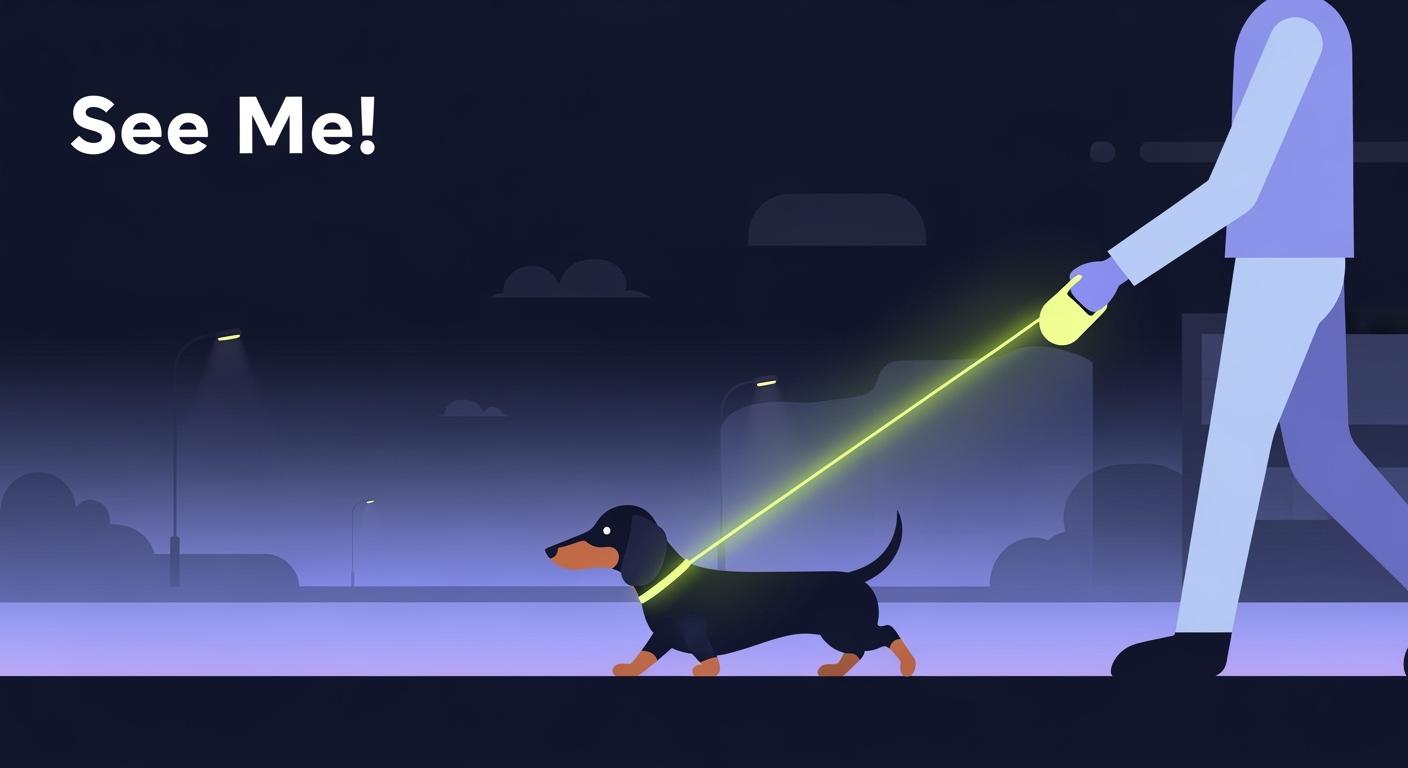
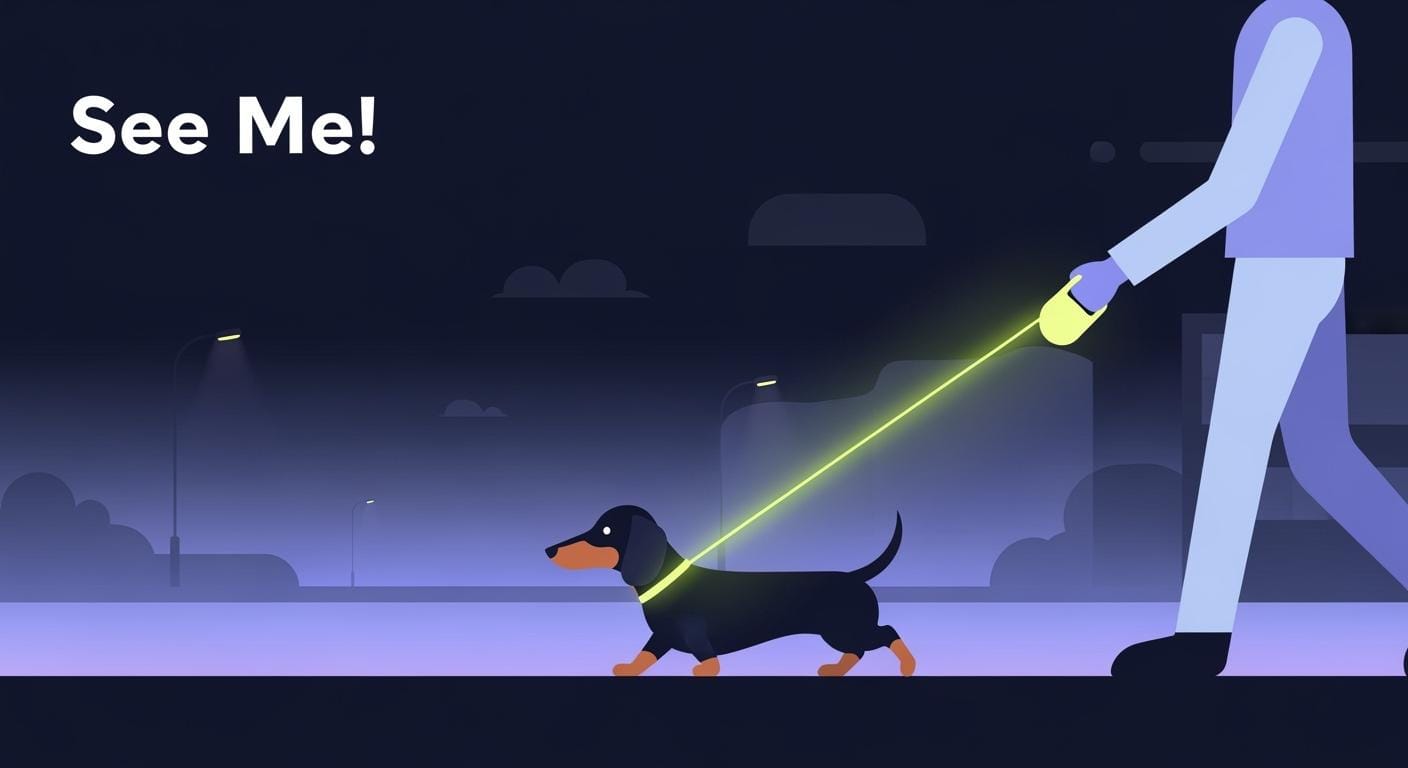
A reflective leash for a small dog at night looks straightforward. But a thin thread of reflective yarn woven into the webbing does not make a leash visible. What makes the difference is strip width, placement along the leash body, and whether the hardware weight overpowers the dog it is attached to. Those three variables are what separate a leash you spot from forty feet away from one you notice only after you have already seen the dog.
Small dogs present a specific challenge. Their body sits closer to the ground. Car headlights project above them. Streetlights cast long shadows that swallow a Chihuahua or a Miniature Dachshund whole. The leash becomes the highest, most reflective thing on the dog — if it is designed to catch light at the angles a driver or a walker actually sees.
Where a Small Dog Fades from Sight After Dark
A six-pound dog walking beside you covers roughly the visual footprint of a shoe box. At night, that footprint shrinks further. Shadows pool around curbs. Wet pavement absorbs light instead of returning it. Grass, mulch, and low shrubs all read as near-black under sodium-vapor streetlights.
The reflective leash for a small dog at night is not just a visibility accessory. It becomes the primary visual anchor. Most reflective materials work on the principle of retroreflection — microscopic glass beads or prismatic elements embedded in the strip bounce incoming light back toward its source. A car headlight hits the strip. The strip sends that light straight back to the driver. The angle of incidence equals the angle of return.
But here is the catch. A retroreflective strip only returns light to the source. If the strip is a 3 mm thread, the return beam is narrow and directional. Stand ten degrees off-axis from the light source — which is where most pedestrians and cyclists are — and you see almost nothing. That 3 mm thread might as well be black webbing. A wider strip, say 10 mm to 15 mm, scatters across a broader return cone. More viewing angles, more of the time. That is the causal chain: strip width → return-cone diameter → angular coverage → actual visibility in mixed traffic. A thin reflective leash for small dog at night can check the “has reflective” box on a product page and still fail in the dark.
In practice: On your next night walk, hold the leash in your left hand and swing a flashlight in your right at waist height. If the strip lights up only as a thin squiggle directly in line with the beam, the return cone is too narrow for anyone approaching from the side.
Why Strip Placement on the Leash Body Matters More Than Strip Presence
A reflective leash for a small dog at night can have reflective material. The question is whether that material is where light actually lands. A strip sewn only along one edge of the webbing disappears when the leash twists — and leashes twist constantly. A small dog changes direction fast. The leash rotates. If the reflective element sits on one narrow edge, half the time it faces the ground.
Leashes with reflective material woven through the full width of the webbing or bonded as a continuous facing strip solve this by making the reflective surface omnidirectional on the leash body. Twist does not kill the return signal. The strip is simply there, regardless of orientation.
There is a second variable that matters specifically for small dogs: hardware weight at the clip end. A heavy metal snap hook on a lightweight leash does two things. It pulls the leash toward the ground, tilting the reflective surface downward. And it dampens the tactile feedback the walker gets through the handle — the leash feels dead, so the walker looks down less often. A small dog harness benefits from similar attention to hardware sizing, since the same weight-to-signal tradeoff applies to how reflective strips interact with a dog’s body movement. When the clip end of a leash for a small dog uses a compact aluminum or lightweight alloy snap instead of a full-size brass hook, the leash hangs more naturally and stays visible.
Tip: After a ten-minute night walk, check whether the reflective strip along the leash body has rotated to face downward. If more than a third of the strip is angled toward the ground at rest, the hardware is too heavy for the webbing width.
How Visibility Design Translates Across Gear Types
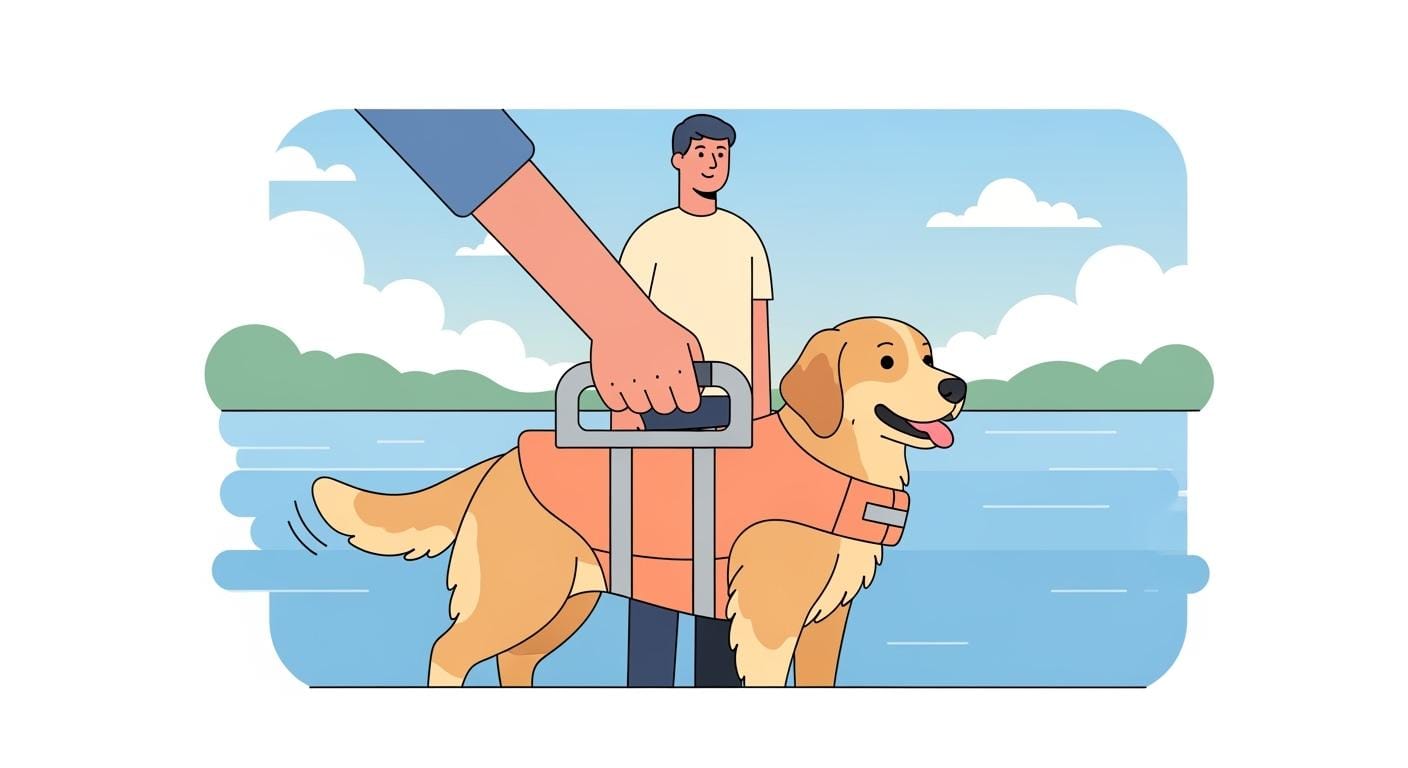
The same design logic that applies to a reflective leash for a small dog at night also applies to other visibility-dependent gear — most directly, a dog life jacket. The principles transfer: wide reflective panels beat narrow strips, top-and-side placement beats top-only, and contrast between the reflective element and the base material determines whether the reflection registers as a signal or as noise.
In water, these principles get amplified. Dark water absorbs ambient light and mutes color. Muted jacket colors — navy, gray, brown — blend into the water surface within twenty feet. Bright colors like neon orange or yellow hold contrast further, but contrast alone fades at distance without reflective add-ons. A life jacket that checks all the right design boxes combines large bright panels, high-contrast side areas, and wide reflective strips on both the top and sides. The same way jacket materials and sizing affect buoyancy performance, reflective trim placement determines whether the dog reads as a shape or a shadow at dusk on the water.
Distance and viewing angle change everything. Stand on a dock looking down at a small dog swimming, and the top of the jacket is the only visible surface. Side panels vanish. If the reflective strips sit only on the sides, the jacket reads as dark from above. The dog disappears. This is the same angular-coverage problem the narrow leash strip creates at night — surface area and placement dictate whether light actually finds reflective material at the angle a human is looking from.
A comparison across common viewing scenarios makes the pattern clear:
| Design Difference | Why It Matters | Main Limitation |
|---|---|---|
| Wide reflective strip (10–15 mm) across leash webbing | Broader return cone catches light from off-axis viewing angles — pedestrians and cyclists see the leash before the dog | Adds stiffness; on ultralight webbing the strip can create a hinge point where the leash folds instead of draping |
| Reflective panels on both top and sides of a life jacket | Visible from above (dock, boat) and from the side (shore, another swimmer) under variable lighting | More material means more seams; each seam is a potential water-ingress point if not sealed |
| Lightweight clip hardware on a small-dog leash | Reduces downward pull that rotates the reflective surface toward the ground; preserves tactile feedback through the handle | Compact snaps have lower gate-clearance — a very thick D-ring on a harness may not fit |
| High-contrast handle color against the jacket body | Handle is locatable in under a second in an emergency grab scenario | Bright dye lots can show UV fade faster than darker colors if the jacket lives in direct sun |
These design choices are not about adding more reflective material. They are about putting the reflective material where light actually hits it when a dog is in motion — swimming, turning, pulling, shaking off water — and where a human is positioned relative to the dog. That is the unifying thread across leashes and life jackets alike.
What Gives a Top Handle Its Real Value
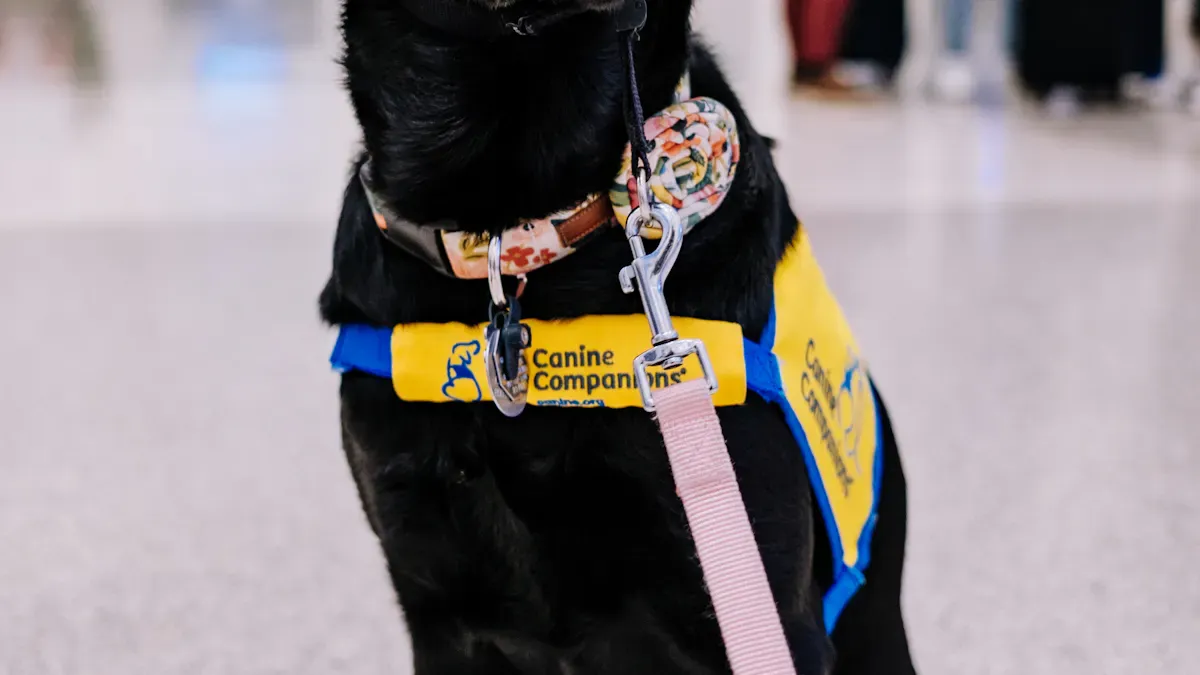
A top handle on a life jacket serves one function: fast retrieval. But a handle that matches the jacket fabric color becomes a find-it puzzle in low light, exactly when seconds count. A handle in a contrasting color — bright against dark, or dark against bright — registers as a distinct shape rather than blending into the jacket body. The same visual-separation principle applies to a reflective leash for a small dog at night: a reflective strip that ends in a dark clip housing creates a break point where the visual signal stops. A clip with its own reflective or bright-colored housing extends the visible line all the way to the dog.
A stable jacket fit also keeps reflective panels oriented correctly. If the jacket rotates as the dog swims — common when straps are too loose or buoyancy distribution is uneven — the reflective panels face the water instead of the sky. Adjustable straps with secure closures that hold their setting when wet prevent this rotation, which is fundamental to maintaining visual control during any outdoor activity where gear position affects visibility.
When Reflective Gear Alone Cannot Carry the Visibility Load
A reflective leash for a small dog at night works by returning light to its source. No light source, no return. In an unlit park path, a reflective leash reads as dark as any other strap. Reflective material is passive — it amplifies light that already exists. It does not create light.
Three conditions push reflective gear past its useful limit:
- Zero ambient light. A reflective strip in a truly dark alley, with no streetlight, headlight, or flashlight pointed at it, is invisible. The retroreflective beads have nothing to return.
- Heavy rain or fog. Water droplets in the air scatter both the incoming beam and the return signal. A wide reflective strip still outperforms a narrow one in these conditions, because the larger surface area catches more of the scattered light. But performance drops across the board.
- Mud and road grime on the strip. A reflective leash dragged through wet grass or dropped on a dirt path accumulates a film that blocks the bead surface. The strip needs to be wiped clean to recover full retroreflectivity — a nylon-webbing leash with reflective facing is easier to wipe clean than one where the reflective thread is woven into a textured weave that traps dirt in the recesses.
Disclaimer: These visibility checks assume a smooth-coated small dog where the reflective strip on the leash sits above the coat line. For double-coated breeds — Pomeranians, long-haired Chihuahuas, Shih Tzus — fur can fan out and partially cover the clip-end reflective strip when the dog is standing still. Hand-check the strip exposure by running a finger along the leash from the handle to the clip after the dog settles into a stand-still position, rather than relying solely on a visual walkaround.
A wider reflective strip and thoughtful placement on the leash body improve the odds across these conditions. But no passive reflective design turns night into daylight. The leash design that performs best across the broadest range of low-light scenarios is one where the reflective material covers enough surface area, sits on a stable webbing that does not twist excessively, and is paired with hardware light enough to let the leash hang in its intended orientation. The relationship between leash weight and clip size for small dogs is not a comfort preference — it is a visibility variable, because a clip that pulls the leash down also pulls the reflective surface out of the light path.
The broader picture matters too: a reflective leash for a small dog at night is one piece of a visibility system. A reflective bungee leash design adds shock absorption for sudden pulls while keeping the reflective surface under tension — which keeps the strip flatter and more consistent in its return angle. And understanding how reflective leashes perform under different handling styles closes the loop: the best reflective strip in the world does nothing if the walker habitually holds the leash in a way that folds the strip against itself.
Frequently Asked Questions
How wide should a reflective strip on a small-dog leash be?
A strip narrower than 6 mm produces a tight return cone — visible only near the light source axis. Strips in the 8 mm to 15 mm range widen the return cone enough for off-axis viewers. If the strip is woven rather than bonded, verify that the reflective thread density is high enough to read as a continuous line of light, not a dotted pattern, from 30 feet away under a standard car headlight.
Does the color of the leash webbing matter if the reflective strip is bright?
Yes. A reflective strip on black webbing creates a floating-line effect — you see the strip but lose the leash body, which can make it harder to judge the dog’s distance and direction. A leash with a lighter base color or a second contrasting stripe gives the eye a reference frame for depth perception.
Can a reflective leash replace a lighted collar at night?
They serve different functions. A reflective leash marks the connection between you and the dog — it tells an approaching person where the dog is relative to you. A lighted collar or clip-on LED marks the dog’s head position. The two work together: the collar gives the dog’s location, and the reflective leash shows the line of control.
Does water degrade reflective strips on leashes?
Glass-bead retroreflective strips lose some return efficiency when the bead surface is covered by a water film — water changes the refractive index at the bead surface. Most strips recover full performance once dry. Bonded reflective facing sheds water faster than woven-in reflective thread, which can hold moisture in the weave structure.