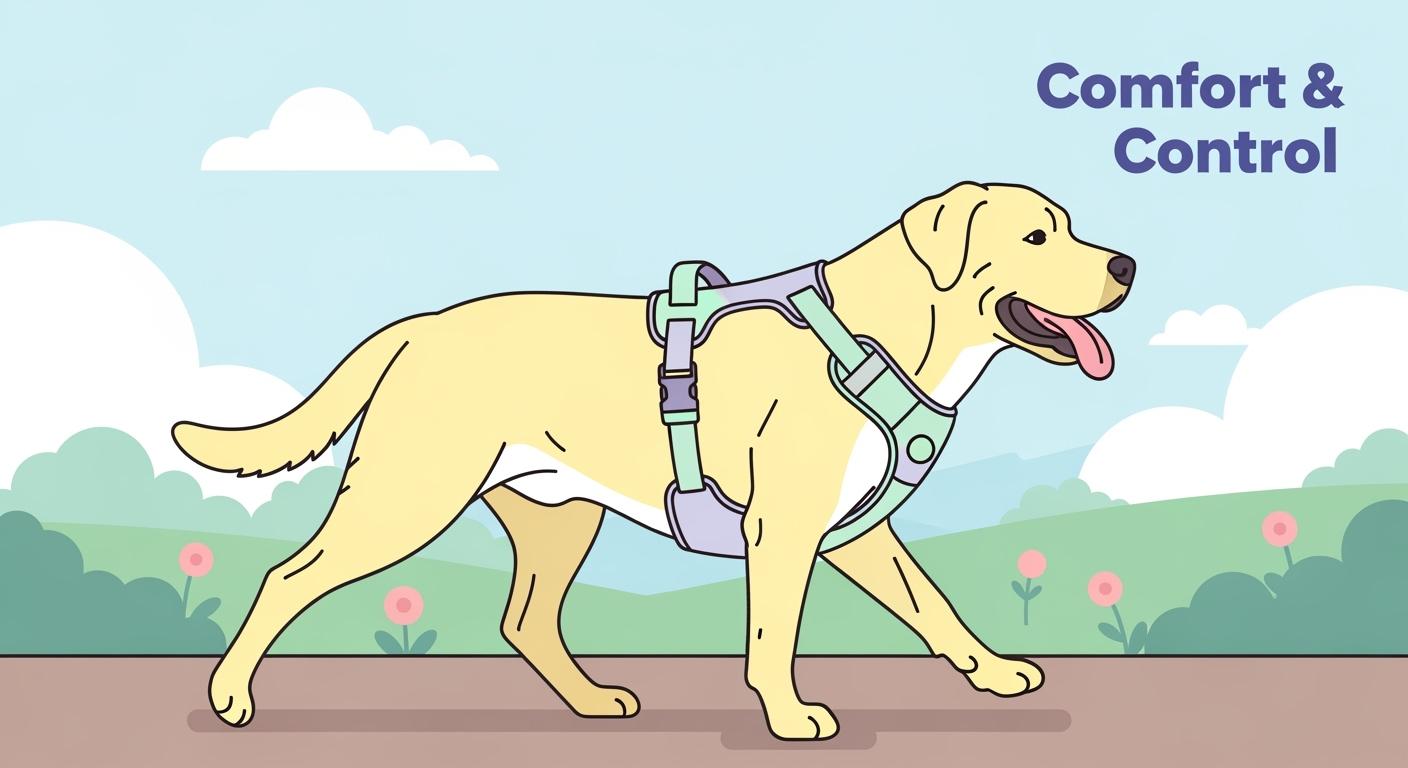
A large dog body harness should stay secure without crowding the shoulders, pinching behind the legs, or making your dog move stiffly. More coverage and thicker padding do not automatically mean better control. What matters most is a close, adjustable fit that stays centered on the body and still lets your dog walk, turn, and stretch naturally.
Key Takeaways
- Measure the neck base and deepest part of the chest before you size a harness. Real measurements matter more than a size label when you want a secure fit on a large dog.
- Use multiple adjustment points to keep the harness centered. Recheck after the first walk because shifting, twisting, and rubbing usually show up once your dog is moving.
- Judge the harness by shoulder clearance, back-out resistance, and rubbing risk. Extra bulk, thick padding, and a body handle do not automatically mean better control.
Large Dog Body Harness Fit and Easy Movement
Core Fit Checks: Neck Base, Chest, and Shoulder Clearance
You want your large dog body harness to stay secure without blocking a normal stride. Start with three checks before you buy or adjust it:
- Measure chest girth at the deepest part of the rib cage, just behind the front legs.
- Measure around the base of the neck, where the harness should sit closer to the sternum than the throat.
- Check where the girth strap lands. It should sit behind the elbows instead of rubbing into the back of the front legs.
A good fit in these areas matters more than extra fabric. If the neck opening is loose or sits too low, the harness can slide and crowd the shoulders. If the girth strap sits too far back or too close to the elbows, you get rubbing and uneven pressure. If the harness is too loose overall, it can twist, sag, or create a back-out risk.
Tip: Thick coats can hide poor fit. Part the fur, use a two-finger check under the straps, and watch your dog walk several steps. If the harness shifts off center, bunches, or pinches, the fit still needs work.
Adjustable Straps and Non-Slip Features
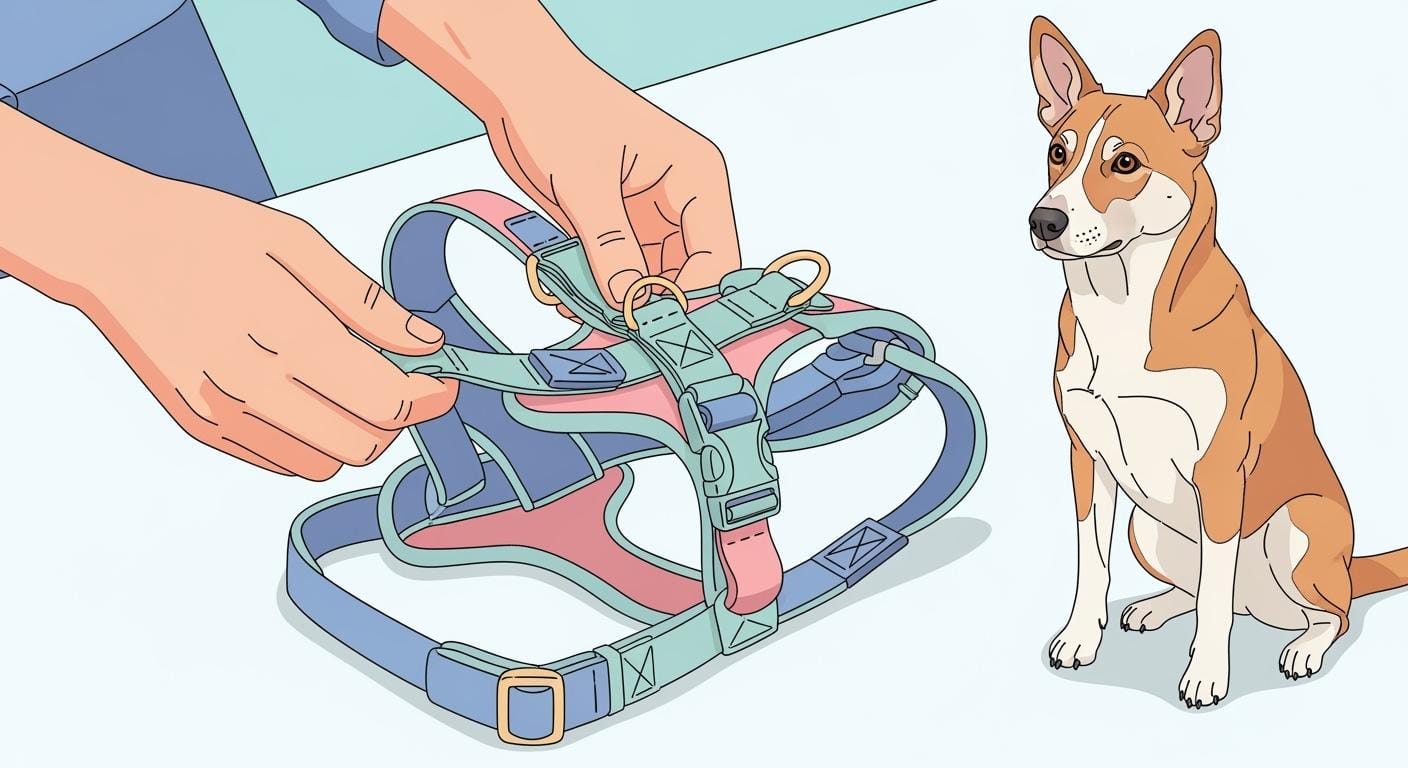
You need enough adjustment to keep the harness centered on the body. Neck and chest adjustments help you fine-tune fit across deep chests, broad shoulders, and seasonal coat changes. The goal is not maximum tightness. The goal is a stable fit that stays in place when your dog walks, turns, and leans into the leash.
Look for a design with several adjustment points, a neck opening you can fine-tune, and hardware that stays flat instead of rotating into the shoulder or ribs. A more open front can help some dogs move more naturally, but the shape name alone does not guarantee a better fit.
Adjustment is especially important for large dogs because small fit errors become more obvious under force. After the first walk, recheck each strap, the leash attachment point, and any contact spot near the elbows or sternum.
Note: After the first walk, inspect the coat and skin at every contact point. If the harness slips, twists, or starts rubbing, do not assume more tightening will fix everything. You may need a different size, cut, or strap layout.
Movement Freedom vs. Bulk
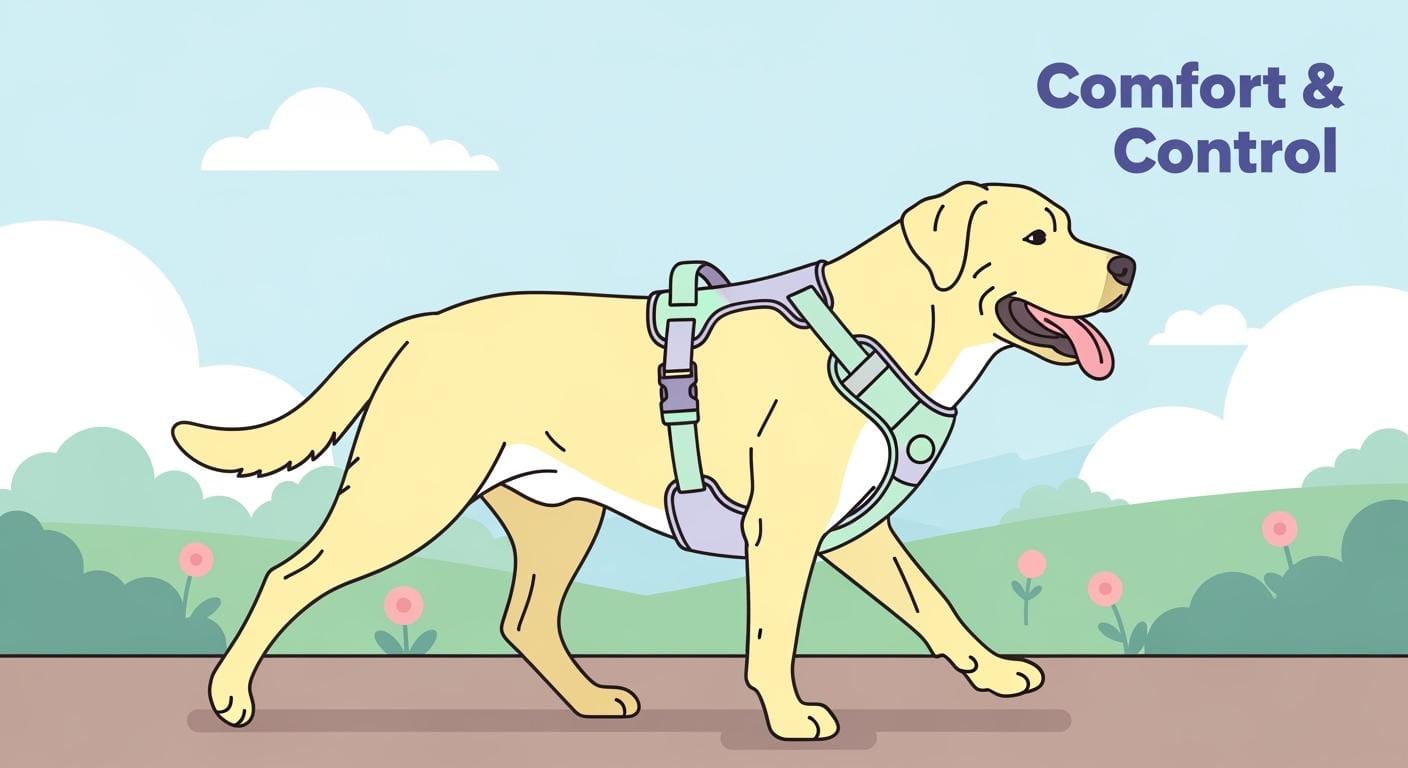
Freedom of movement matters more than a bulky look. A harness that seems secure but presses across the shoulder area, traps heat, or rubs near the elbows is still the wrong choice.
Extra padding and broad panels can help in some cases, but they can also add heat, weight, and bulk. Choose the lightest design that still stays stable on your dog. You want pressure spread across the chest and torso without blocking reach through the front legs.
Alert: Large dogs can back out of a loose harness even when the chest panel looks substantial. Test fit in a safe space by letting your dog walk, turn, lower the head, and back up gently. Watch for slipping, twisting, or shortened stride.
A large dog body harness works best when it balances fit, security, and natural movement. Start with measurements, confirm strap placement, and judge the harness on how your dog actually moves rather than how heavy-duty it looks.
Security Checks Before You Trust the Harness
Security Checks: Back-Out, Strap Stability, Leash Clip
You want your large dog body harness to stay on during normal walking, sudden turns, and brief leash pressure. Before every new harness goes outside, check three things: back-out resistance, strap stability, and hardware confidence.
- Back-Out Resistance: In a safe indoor space, apply a gentle backward pull while your dog stands calmly. If the neck opening lifts, the shoulder area clears too easily, or the harness starts to come off, the fit or shape is wrong.
- Strap Stability: Make sure each strap stays even after a few minutes of walking. You want a secure two-finger fit, not dangling webbing on one side and tight pressure on the other.
- Leash Clip Confidence: Clip on the leash and apply light pressure from the angle you normally walk. The attachment point should stay centered, the hardware should feel solid, and the harness should not roll or twist under load.
A large dog harness should stay calm and predictable when your dog speeds up, braces, or changes direction. If the harness rotates, lifts, or loosens under light testing, fix that before you trust it outdoors.
Tip: Do not confuse a grab handle with escape protection. A handle can help in short control moments, but it does not prevent backing out if the neck and chest fit are wrong.
Pass/Fail Table: Security and Movement Signals
You can use a simple pass/fail table to check your harness before every walk. This helps you find problems quickly and fix them before they get worse. Look for these signs:
| Check Item | Pass Signal | Fail Signal | Fix |
|---|---|---|---|
| Back-Out Test | Harness stays on during gentle reverse pull | Dog slips out or harness shifts off shoulders | Tighten straps or try a more secure design |
| Strap Stability | Straps stay snug and even after movement | Straps loosen, twist, or sag | Re-adjust and check for evenness |
| Leash Clip Confidence | Clip feels solid, no rattling or twisting | Clip wobbles, rattles, or sits off-center | Inspect hardware, adjust placement |
| Shoulder Movement | Dog walks, runs, and turns freely | Harness restricts stride or rubs at elbows | Loosen or reposition, switch harness type |
| Coat Check | No hidden gaps or bunching under fur | Gaps, bunching, or pinching under thick coat | Check under fur, adjust for true fit |
Alert: A heavy-duty look is not the same as a safer fit. Stable strap placement, reliable hardware, and shoulder clearance matter more than thick panels alone.
Common Mistakes with Large Dog Harnesses
Many owners make preventable mistakes when choosing or fitting a large dog body harness. Most problems show up in motion: shifting, rubbing, short stride, or easy back-out.
| Problem | Likely Cause | Quick Check | Practical Fix |
|---|---|---|---|
| Harness shifts during walks | Uneven or loose adjustment | Chest panel stays centered? | Re-even both sides and retest |
| Dog resists putting it on | Entry style feels awkward | Head or paw entry causes struggle? | Try a different entry style |
| Redness after a short walk | Rubbing at elbows, underarms, chest | Inspect contact points after removal | Stop use, adjust, or switch shape |
| Dog can back out | Neck opening or fit too loose | Gentle reverse check before long walk | Refit carefully or choose secure design |
| Chose by size label alone | Ignored actual measurements | Does harness match your dog’s real girth? | Measure chest and neck, not just weight |
| Overvalued thick padding | Assumed more padding means comfort | Padding crowds shoulders or traps heat? | Choose balance of comfort and movement |
| Ignored shoulder movement | Focused on coverage, not freedom | Dog’s stride looks short or stiff? | Pick a harness that allows full movement |
| Relied on loose fit for thick coat | Did not check under fur | Gaps or bunching under coat? | Adjust for true fit, not just appearance |
| Assumed harness solves pulling | Expected instant control | Dog still pulls hard on leash? | Train for leash manners, use right tool |
| Assumed crash safety for car use | Used walking harness in car | Harness claims crash protection? | Use only tested, certified car restraints |
When you test a large dog harness, focus on what happens once your dog starts moving. A harness that looks impressive on the floor can still fail in motion. Real security comes from correct fit, stable hardware, and enough freedom for a normal stride.
Design Choices That Affect Comfort and Control
Y-Shape vs. H-Shape Harnesses
You want a harness shape that matches your dog’s build instead of following a label alone. Open-front designs can leave more room between the front legs and keep straps away from some shoulder points, while other layouts place a horizontal strap across the chest. Neither name guarantees comfort on every dog. The better choice is the one that stays off sensitive contact points and allows an easy, even stride on your dog’s body.
Padded vs. Lightweight Webbing
You need enough padding to prevent sharp pressure points, but not so much bulk that the harness traps heat or shifts under its own weight. Lightweight webbing often dries faster and feels cooler in warm weather. Padded panels can be helpful when they are shaped well and do not crowd the shoulders, sternum, or elbows.
Tip: Check airflow, drying time, and edge finish, not just softness in your hand. Thick padding that holds heat or creates a bulky chest panel can make a large dog less comfortable on longer walks.
Front-Clip, Back-Clip, Dual-Clip Options
Clip placement changes handling more than many buyers expect. Front attachment points can help with redirection, back attachment points often feel simpler for steady walkers, and dual-clip setups give you more flexibility for training or changing environments. Whatever you choose, the hardware should sit cleanly and stay stable under leash pressure.
Comparison Table: Harness Types and Features
| Design Type | Movement Freedom | Comfort Features | Control Options | Durability Features | Best For |
|---|---|---|---|---|---|
| Y-Shape | Often good when the front stays clear of shoulder points | Open front, targeted padding | Front, back, dual-clip | Varies by build and hardware | Dogs needing room through chest and front legs |
| H-Shape | Depends on strap placement and body shape | Low-bulk webbing | Back-clip or dual-clip | Simple construction, lighter weight | Dogs that fit this layout without shoulder rub |
| Padded Shell | Depends on panel shape and bulk | Broader contact areas | Back clip or handle | Can feel sturdy, but check heat and rub points | Dogs needing more surface coverage without shoulder crowding |
| Lightweight Webbing | Often good for airflow and easy movement | Low bulk, quick-dry | Front, back, or dual-clip | Depends on webbing quality and hardware | Warm weather, active walks, lower bulk |
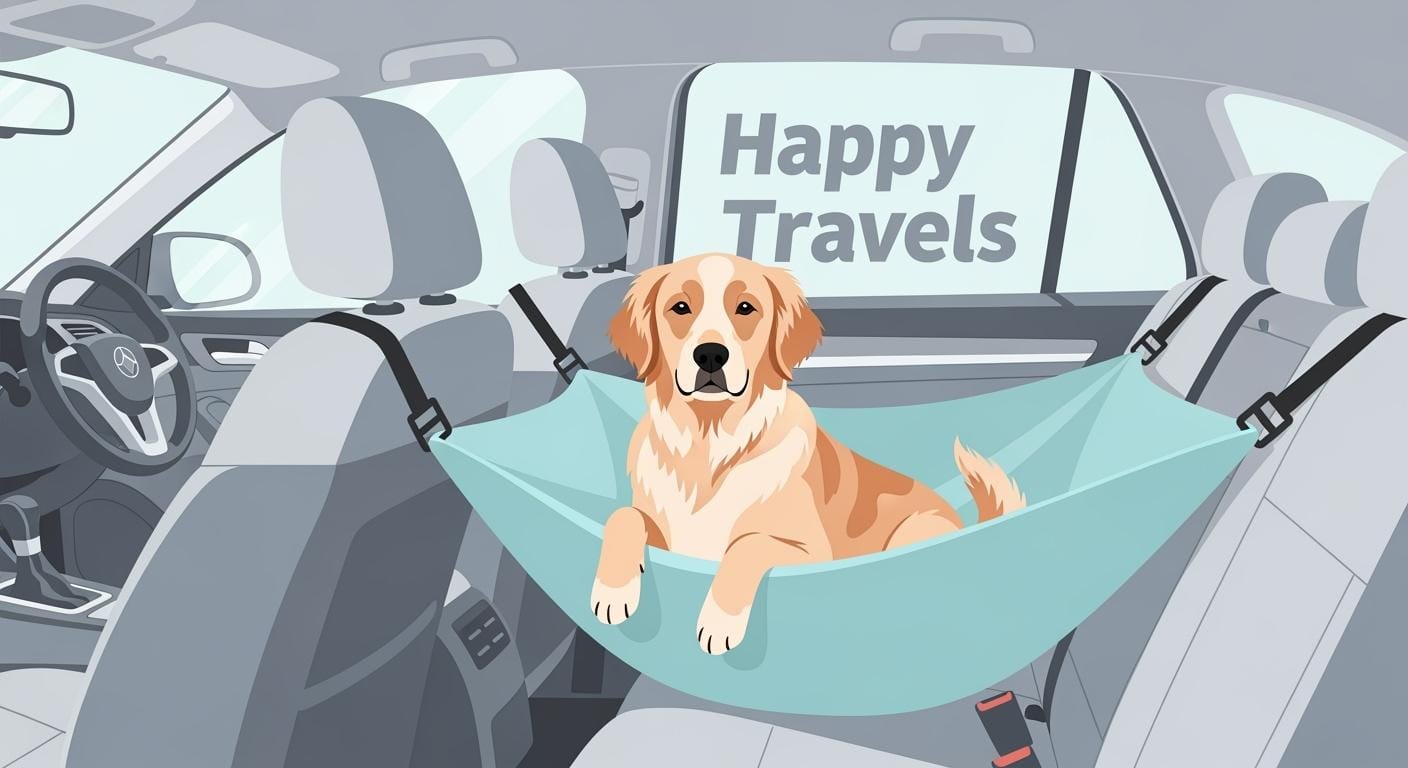
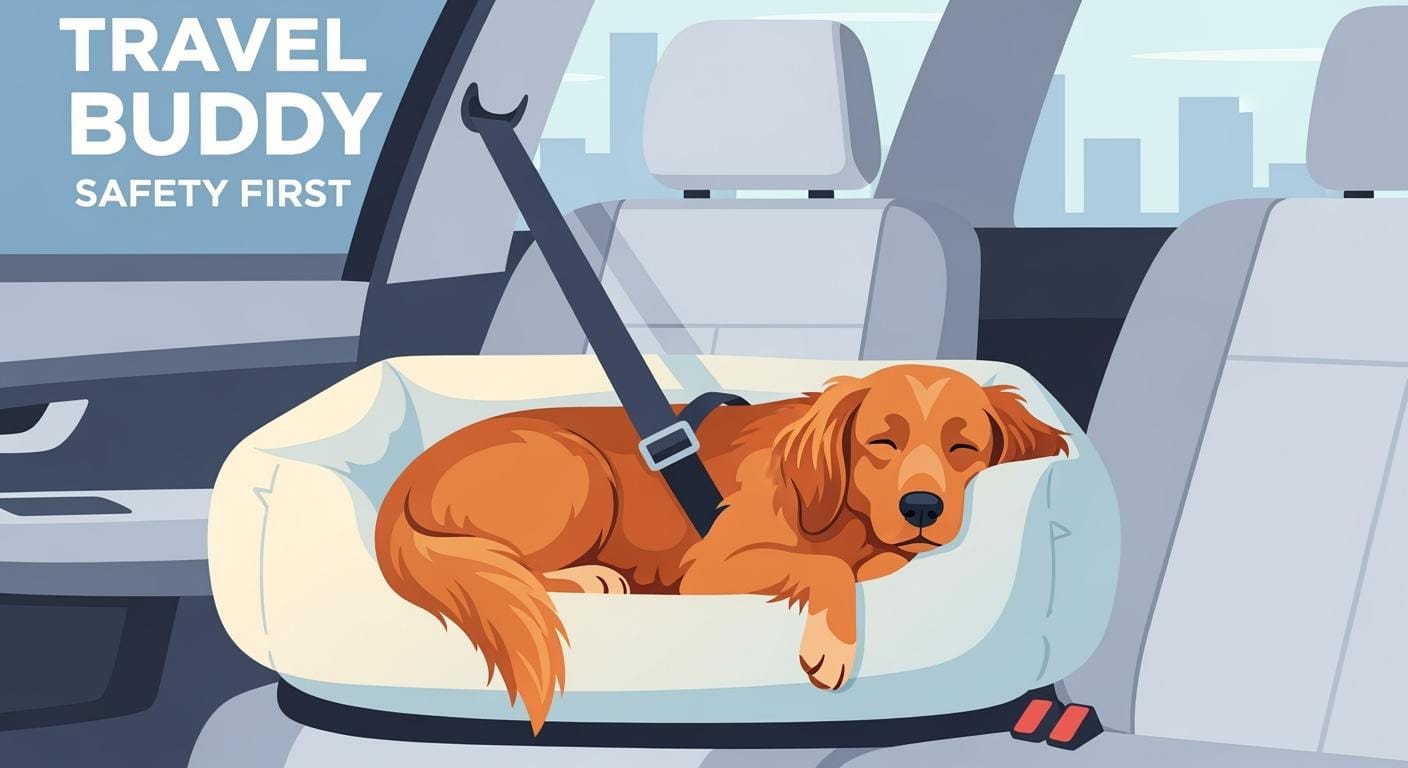
Note: For car travel, do not assume a walking harness is a crash restraint. Use only products with independent crash-testing or certification for vehicle use.
A good large dog harness should match your dog’s build, stay centered under movement, and avoid unnecessary bulk. The best design is the one your dog can wear comfortably while walking, turning, and stopping without rub, twist, or shoulder crowding.
Ongoing Fit Checks, Care, and Troubleshooting
Regular Fit and Wear Checks
Check your large dog harness before each walk and after any change in coat, weight, or activity level. Watch for twisting, rubbing, shifted straps, or a chest panel that no longer stays centered. A harness that fit last month may not fit the same after muscle change, seasonal coat growth, or repeated washing.
Cleaning and Care Tips
Follow the care label. Most harnesses do best with hand washing or a gentle cycle, mild soap, thorough rinsing, and full air drying. Dirt trapped around seams, padding, or hardware can increase rubbing and wear.
Tip: During cleaning, flex each buckle, check every stitch line, and look for bent hardware, frayed edges, or padding that has started to fold.
Troubleshooting Table: Common Issues and Fixes
| Symptom | Likely cause | Fast check | Fix |
|---|---|---|---|
| Harness twists or shifts | Loose fit or bulky panel | Watch chest panel after a few turns | Adjust straps or try a less bulky design |
| Dog overheats or resists harness | Too much coverage or padding | Check comfort after a short walk | Switch to a lighter, more breathable style |
| Dog backs out of harness | Neck opening too loose | Gentle back-out test in safe space | Tighten fit or choose a secure harness |
| Rubbing behind front legs | Strap path or rough edge | Inspect skin and fur after use | Reposition or change harness shape |
| Handle feels awkward to use | Handle sits too far back or high | Try handle during walk | Pick a flatter handle layout |
Safety Boundaries and When to Replace
Replace the harness if you see fraying, cracked buckles, bent rings, or a fit that no longer stays stable after adjustment. Also separate walking gear from car-restraint claims. Most everyday walking harnesses are not designed as crash-protection devices unless they are specifically tested for that use.
Quick reminders:
- Check fit before every walk and again after major weight or coat changes.
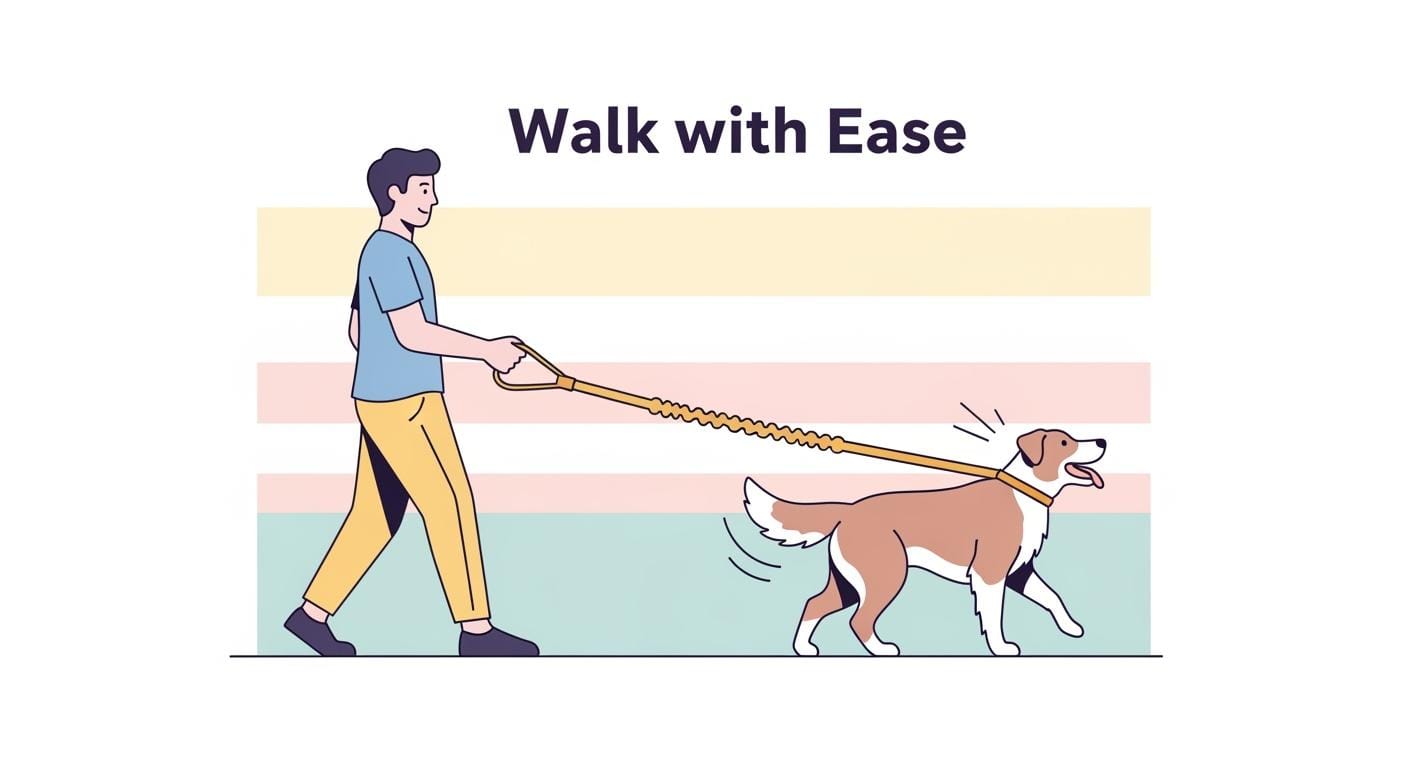
- If pulling continues, review training, leash setup, and clip choice instead of expecting the harness alone to solve it.
- Use the same harness for car rides only when it is specifically crash-tested for vehicle restraint.
You protect your dog best when you judge the harness in motion, not just on appearance. Check fit often, watch for rub points and shortened stride, and replace worn gear early. The right large dog body harness should stay secure while still allowing a normal, comfortable walk.
Common Follow-Up Questions
How do you check harness fit for a dog with a thick coat?
You should part the fur and run your fingers under the harness. Look for hidden gaps or tight spots. Adjust until you feel even contact.
Can you use a harness for dogs with joint issues?
You can use a harness, but dogs with joint pain, rehab needs, or other medical concerns should be fitted with guidance from a veterinarian or canine rehab professional. Choose a design that avoids extra bulk and does not limit stride.
What should you do if your dog escapes the harness during a walk?
Stop moving forward, secure your dog as calmly as possible, and reassess fit in a safe area. A back-out incident usually means the size, shape, or strap placement is wrong rather than just slightly loose.