
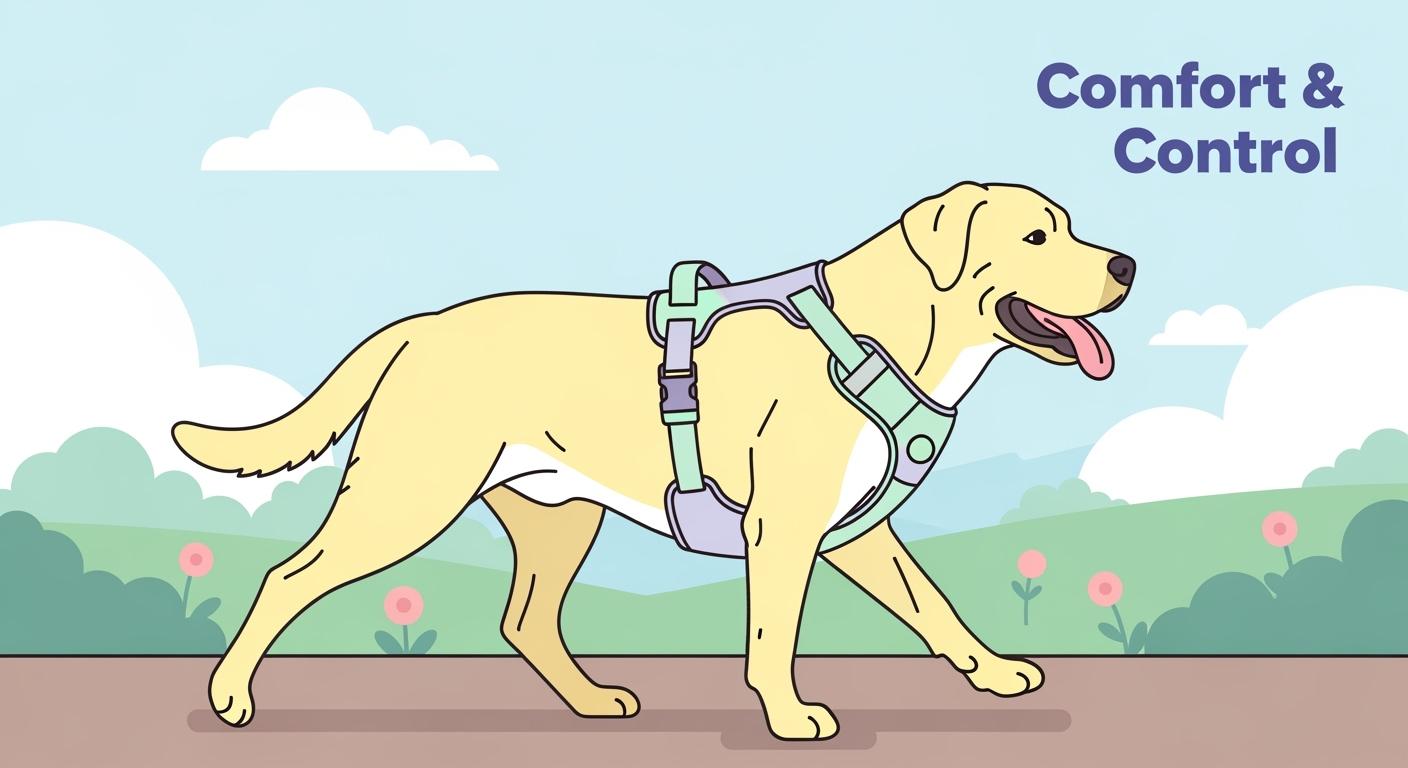
A large dog body harness should use coverage for a clear purpose. More fabric, wider panels, and thicker padding do not automatically make a dog harness better for a large dog. The right coverage should help the harness sit steadily on the body while still letting the shoulders, chest, and front legs move naturally during real walks.
This page is not a measuring tutorial. It focuses on what body coverage should actually do: spread pressure, keep contact points predictable, reduce harsh edges, and avoid turning the harness into stiff or hot gear. If the coverage adds weight, heat, or restricted stride without improving everyday use, it is not helping enough.
Body Coverage Should Have a Job
Body coverage can help when a large dog needs steadier contact across the chest and torso. It can also make the harness easier to read because panels show where the pressure is landing. But coverage becomes a problem when it hides poor strap placement, crowds the elbows, or makes the dog move stiffly.
| Coverage area | What it should do | What to avoid |
|---|---|---|
| Chest panel | Spread pressure across the front of the body | A panel that rides high or crowds the throat |
| Side coverage | Help the harness stay readable and centered | Bulky sides that rub behind the front legs |
| Back panel | Support stable clip placement and easy handling | A stiff block that bounces or traps heat |
| Padding | Soften real contact points | Thick padding that hides pressure or dries slowly |
If you need a broader view of harness types before judging body coverage, start with the best dog harness guide. It helps separate general harness selection from the more specific body-coverage decisions this page focuses on.
Where Coverage Helps Large Dogs
Large dogs often make small design problems easier to notice. A narrow strap can dig under force. A bulky panel can press into the shoulder. A back section can pull off balance if the leash clip sits poorly. Useful coverage should make these contact points more stable, not simply make the harness look stronger.
It can spread pressure more evenly
A wider, shaped chest section can reduce sharp pressure when the dog leans into the leash. The key is shape, not size alone. The panel should sit on the chest area cleanly and leave space for normal shoulder movement.
It can make hardware placement more stable
Body coverage can give leash clips, rings, and handles a more stable base. That matters when the dog turns, stops, or changes pace. If the hardware rocks or pulls the harness out of position, the extra coverage is not doing its job.
It can reduce harsh strap edges
For some large dogs, a little more coverage can soften areas where narrow straps would otherwise press or rub. Smooth edge finish matters here. Padding should protect the contact point without becoming thick enough to trap heat or create a stiff corner.
When Coverage Starts Working Against the Walk
Extra material can make a harness look more secure while making daily use harder. The dog may move with shorter steps, avoid turning naturally, or resist wearing the harness after only a short walk. These signs matter more than the product’s heavy-duty appearance.
| Warning sign | What it may mean | Better direction |
|---|---|---|
| Shortened stride | Coverage is crowding shoulder movement | Choose a layout with a cleaner front opening |
| Heat under panels | Padding or fabric is too heavy for the route | Use lighter, more breathable coverage |
| Rubbing near elbows | Panel edge or strap path sits too close to moving joints | Use a different shape, not just a tighter setting |
| Harness feels hard to inspect | Coverage hides contact points and strap tension | Choose a simpler layout that is easier to check |
A useful large dog body harness should make the walk easier to understand. After a short walk, you should be able to see whether the chest panel stayed cleanly placed, whether the back section remained steady, and whether the dog moved comfortably. If the harness hides problems until after rubbing appears, it is too hard to judge.
Check Body Coverage During Real Movement
Judge a large dog body harness while the dog is moving, not only while standing still. Walk a short route, turn both directions, pause, let the dog lower the head, and watch how the body coverage behaves. You are looking for natural motion and predictable placement.
- The front legs should move freely without the panel pressing into the shoulders.
- The chest panel should stay readable instead of bunching, folding, or floating.
- The back section should not bounce or pull the harness off balance.
- Edges should not leave redness, flattened fur, or repeated pressure marks after brief use.
- The dog should still walk, turn, and stretch without looking guarded or stiff.
If leash setup is affecting how the body harness behaves, use this dog harness and leash set guide to check whether leash length, clip choice, or handling routine is making the harness feel less stable than it should.
How Much Coverage Is Enough?
The best answer is usually the least coverage that still gives stable, comfortable contact. Some large dogs benefit from a shaped chest panel and a steady back section. Others move better in a lower-bulk design with fewer padded areas. The right choice depends on how the harness behaves after movement, not how substantial it looks on a product page.
Choose more body coverage when it clearly improves pressure spread, hardware stability, or handling confidence. Choose less coverage when the dog overheats, moves stiffly, rubs near the elbows, or seems more comfortable in a simpler layout. A large dog body harness should support the walk, not make the dog carry extra structure without a clear reason.
FAQ
Is more body coverage better for large dogs?
Not always. More coverage can help spread pressure, but it can also add heat, stiffness, and rubbing risk. The best coverage supports movement without hiding contact problems.
What should I check first on a large dog body harness?
Check whether the chest panel sits cleanly, whether the shoulders move freely, and whether the dog still walks naturally after a short real-use test.
Can thick padding make a harness less comfortable?
Yes. Thick padding can trap heat, dry slowly, and create stiff contact points. Padding is useful only when it protects real pressure areas without limiting movement.
How do I know if body coverage is too bulky?
Watch for shortened stride, heat buildup, rubbing near the elbows, bouncing panels, or a dog that resists wearing the harness after short use.
Should a body harness be used as a car restraint?
No, not unless it is specifically designed and tested for vehicle restraint. A walking body harness should be judged separately from crash-restraint claims.






