
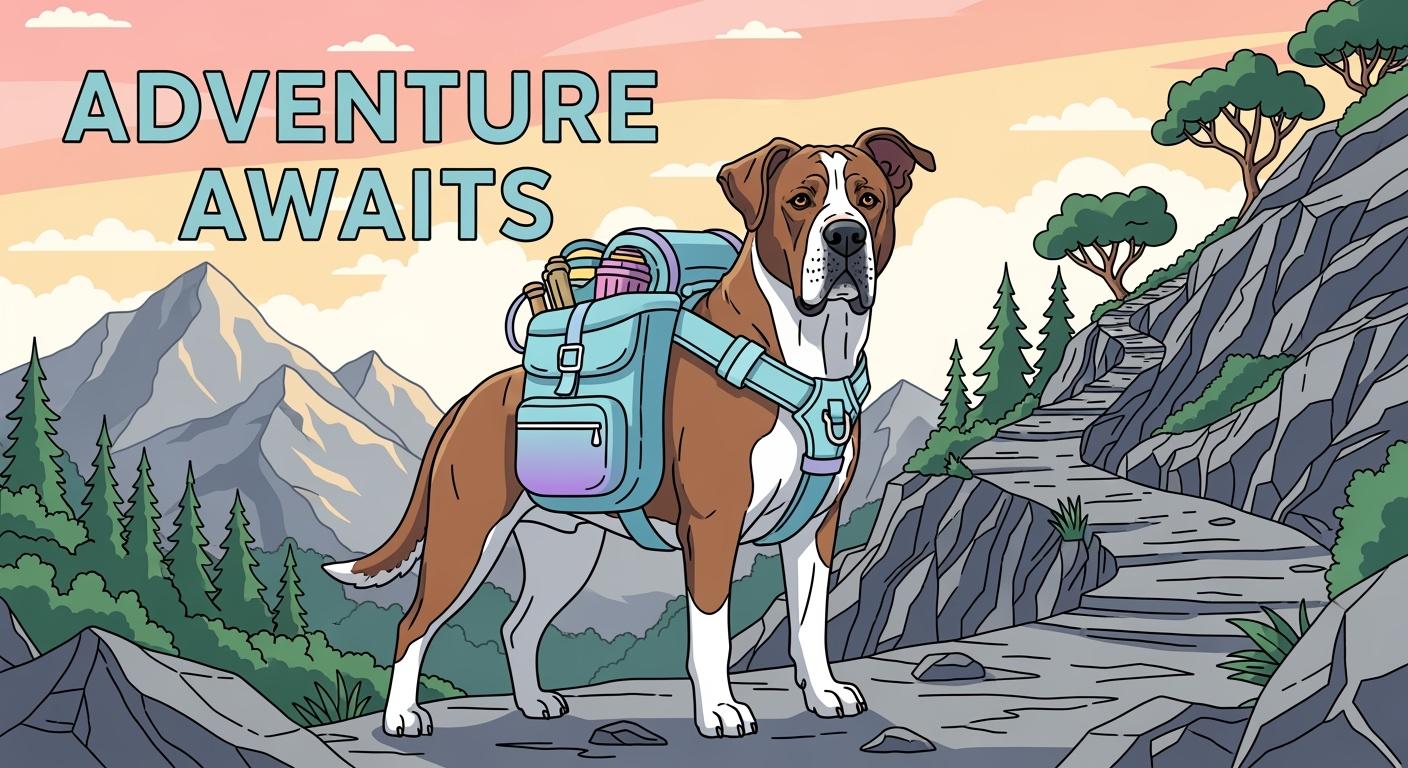
A large dog backpack for hiking can work well on mellow trails when your dog is fit, comfortable in gear, and carrying only light trail items. On steep, rocky, hot, or narrow sections, a handle harness is usually the better choice because it gives you more control without adding bulk or side weight to your dog.
The decision is less about which item looks more rugged and more about the trail in front of you. A pack asks your dog to carry a balanced load. A harness helps you manage movement, footing, and short assists. Many hikes need both: a backpack on easier approaches and a harness when the terrain starts demanding careful handling.
Quick takeaways for choosing trail gear
- Use a backpack only when your dog is healthy, conditioned, and relaxed while wearing it.
- Switch to a harness with a strong handle on steep climbs, descents, scrambles, loose rock, or narrow paths.
- Keep any carried load light, even, and easy to remove if your dog slows down or pants heavily.
- Check shoulder movement, chest fit, strap tension, and rubbing before the hike and at rest stops.
- A pet backpack carrier is different from a dog-worn trail pack, so match the gear to whether your dog is walking or being carried.
Backpack or harness: the practical trail decision
Choose the item that solves the main problem on that section of trail. If the problem is giving a confident dog a light job on a wide, moderate path, a backpack may fit. If the problem is balance, grip, heat, crowding, or your ability to steady the dog, a harness is the safer direction for most teams.
| Trail situation | Better choice | Why it fits | When to avoid it |
|---|---|---|---|
| Wide, moderate trail | Large dog backpack | Lets a conditioned dog carry small, light items while keeping a steady walking rhythm. | Skip it if the dog is young, senior, sore, overheated, or new to pack work. |
| Steep climb or descent | Handle harness | Gives you a secure way to steady the dog without adding load to the back. | Avoid weak walking harnesses that lack structure or a reliable handle. |
| Rocky, narrow, or brushy section | Handle harness | Reduces side bulk and helps the dog move through tight spaces. | Do not use a loose harness that shifts behind the shoulders. |
| Carrying a tired or smaller dog | Carrier-style backpack | Keeps the dog off the ground when walking is no longer a good option. | Do not use a carrier that does not support the dog evenly. |
For backpack-style carriers, fit and material issues can make a short hike feel unstable fast, especially if the dog shifts, the shoulder straps dig in, or ventilation is limited. If your plan involves carrying a dog instead of asking a dog to carry supplies, compare the hiking safety and comfort checks before you choose that setup.
When a large dog backpack for hiking makes sense
A dog-worn backpack works best when the route is predictable and the dog already moves comfortably in gear. The pack should sit evenly, stay clear of the armpits, and allow a normal stride. Start with the pack empty or very light, then watch how your dog walks, turns, sits, and rises.
Good backpack use usually has a few clear signs:
- Your dog walks with the same stride and energy as usual.
- The pack stays centered instead of rolling to one side.
- Straps do not rub behind the front legs or across the chest.
- Your dog can step over roots, pause, turn, and drink without struggling.
- The load is split evenly and can be removed quickly.
Do not use the backpack as a way to tire out a dog on difficult terrain. Extra weight can make footing worse when the trail gets steep, wet, or uneven. It can also build heat, especially on large dogs with thick coats or limited conditioning.
Tip: Treat the first few outings as fit checks, not performance tests. If your dog looks stiff, worried, or unusually slow, remove the pack and reassess.
When a harness is the better trail tool
A harness with a sturdy handle is usually the smarter choice when you need control more than cargo space. Steep trail sections can change quickly: one loose step, slick rock, or crowded switchback may make a side-loaded backpack feel clumsy. A harness lets the dog keep a cleaner body shape while giving you a point of contact when you need to slow, steady, or redirect movement.
Look for a harness that stays secure without pinching. Chest coverage, handle placement, strap adjustability, and shoulder clearance matter more than a bulky look. The same fit logic applies between trail days; best dog harness fit, material, and use-case choices still affect comfort on normal walks.
For larger dogs, the right handle and coverage can change how confident you feel on rough ground. Large-dog harness control features are especially useful when your dog is strong enough to pull you off balance or when the trail gives you little room to recover.
Fit, load, heat, and handling checks
Before you commit to a long route, run a simple pass-or-fail check. The goal is not to prove the gear can stay on for the whole hike. The goal is to catch discomfort early, while you can still remove, adjust, or switch gear.
| Check | Pass signal | Fail signal | What to do |
|---|---|---|---|
| Stride | Normal reach and pace | Short steps, hopping, or stiffness | Remove the pack or adjust the harness away from moving joints. |
| Balance | Gear stays centered | Pack rolls or harness twists | Rebalance the load, tighten evenly, or switch to simpler gear. |
| Heat | Normal breathing after breaks | Heavy panting, slowing, or seeking shade | Stop, offer water, remove extra gear, and shorten the route if needed. |
| Skin contact | No rubbing or pinched hair | Redness, licking, or flinching | Loosen, reposition, or choose a better-fitting design. |
| Handler control | You can slow and steady the dog calmly | The dog pulls you downhill or sideways | Use a stronger harness setup and avoid steep sections until control improves. |
Dog backpack carrier fit and sizing checks matter even more when a dog may be lifted, carried, or held close for part of the route. For travel days that include both the car and the trail, carrier backpack fit, car safety, and cleaning tradeoffs can also affect which setup is practical.
How to switch gear during a hike
Plan the switch before the trail forces it. If the approach is smooth, your dog can wear the backpack with a very light load. Before the first steep or technical section, stop in a flat area, remove the pack, offer water, and clip into the harness. Pack the backpack inside your own bag or leave it empty if it must stay on briefly.
Do not wait until your dog is already tired. Gear changes are easier while the dog is calm and standing squarely. If your dog resists the switch, paws at the straps, or tries to lie down, treat that as useful information. The hike may need to slow down, turn around, or move to easier terrain.
Common mistakes that make trail gear unsafe
Most problems come from asking one item to do the wrong job. A backpack is not a rescue handle. A light walking harness is not always built for steep trail handling. A carrier backpack is not the same as a dog-worn pack. Mixing those roles can create rubbing, heat, poor balance, or false confidence.
- Loading both sides of a dog backpack unevenly.
- Using a backpack on narrow rock where side pockets catch brush or stone.
- Choosing a harness with a weak handle for a strong large dog.
- Ignoring early signs such as lagging, pawing at straps, or repeated sitting.
- Leaving wet, sandy, or dirty gear on long enough to rub the skin.
Disclaimer: If your dog has joint disease, breathing trouble, heat sensitivity, injury, or unexplained lameness, ask your veterinarian before adding load or attempting difficult trail sections.
FAQ
Can a large dog wear a backpack on steep trails?
Sometimes, but a harness is usually better on steep sections because it gives you control without adding load or side bulk.
What should a large dog carry in a hiking backpack?
Keep it to light, low-risk items such as waste bags, a collapsible bowl, or small soft supplies, and remove the pack if movement changes.
How do I know the backpack is too heavy or uncomfortable?
Shortened stride, lagging, heavy panting, rolling gear, pawing at straps, or lying down are signs to stop and remove or adjust it.
Is a handle harness enough for hiking?
For many steep or rocky sections, a well-fitted handle harness is more useful than a backpack because it helps with balance and close control.
Should I train my dog before using trail gear?
Yes. Let your dog wear the empty gear at home, reward calm movement, practice short walks, and build up only if the dog stays relaxed.






