
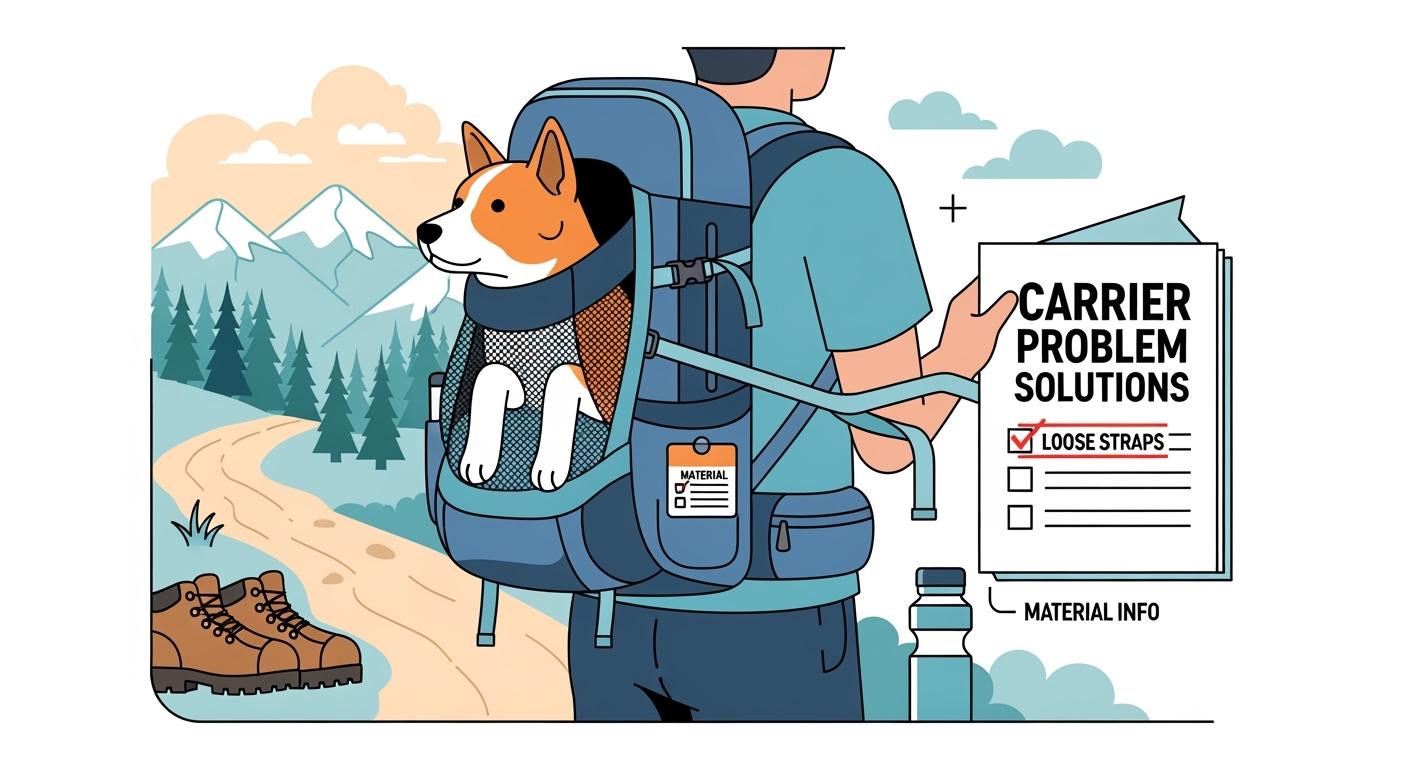
A dog hiking backpack carrier may look fine during a short indoor fit check, but fail once the trail starts moving. When the base sags under the dog’s weight, the body can slide forward, the chest or neck may press into the head-out opening, and the dog may lose a stable sitting posture. That poor posture can make heat buildup, mesh strain, zipper gaps, seam wear and slow-drying liners more noticeable during outdoor use. This article focuses on this specific hiking carrier problem: why a dog slumps or shifts inside the backpack, and which fit and material details usually cause it.
Key Takeaways
- A carrier should be judged by usable interior space, base support, seated posture, ventilation layout, and closure security, not by weight range alone.
- Most customer complaints come from sagging bases, heat buildup, shoulder rubbing, bouncing, weak mesh, zipper gaps, and slow-drying liners.
- For B2B sourcing, product copy should set realistic use limits: short carry, longer trail carry, warm-weather caution, cleaning expectations, and dog-fit boundaries.
Dog Hiking Backpack Carrier: Buyer Fit and Use Checks
Short Carry, Long Carry, and the Wrong Product Match
A short outing carrier and a longer hiking carrier should not be evaluated the same way. A light soft backpack may work for quick access and short walks, but it can create problems when buyers expect it to perform like a structured outdoor carrier. For longer carry, customers notice base support, shoulder strap comfort, hip-load transfer, ventilation, and whether the dog remains stable when the handler climbs or turns.
Before sourcing or relisting a carrier, check the intended use case first. A product built mainly for casual mobility should not be described as if it is suitable for long trail carry. Overstating the use case increases the chance of poor reviews, return pressure, and support questions.
Common Trail Complaints: Heat, Bounce, Sore Spots
The first failure signs are usually easy to recognize. The dog pants heavily because airflow is blocked, the carrier bounces because the base is unstable, or rubbing appears near the chest, armpits, or neck. Some dogs refuse to settle because the interior is too loose, too narrow, or too soft to support posture.
For B2B buyers, these complaints should be treated as product-selection warnings. A carrier with attractive photos can still fail if the structure does not match the advertised use case.
Quick Comparison Table: Styles, Uses, Risks
| Carry style | Best outdoor use | Main risk | Buyer note |
|---|---|---|---|
| Front carry | Short trips and close monitoring | Heat buildup, bounce, limited posture support | Use careful sizing and clear short-carry wording. |
| Back carry | Longer walking and trail use | Shoulder rubbing, dog shifting, poor ventilation | Check base stability, ventilation, and strap balance. |
| Hard frame backpack | More rugged terrain and longer carry | Rigid fit, heavier structure, body-shape mismatch | Confirm full-body support and realistic size guidance. |
| Soft backpack | Urban walks and light outdoor use | Sagging, twisting, and weak support | Verify base firmness before presenting it as trail-ready. |
Safety is not only about preventing falls. A poor carrier can create hidden pressure, bent posture, restricted breathing, and heat stress before the customer realizes the fit is wrong.
Dog Backpack Carrier Fit and Comfort Checks
Dog Fit: Posture, Shoulder Freedom, Base Stability
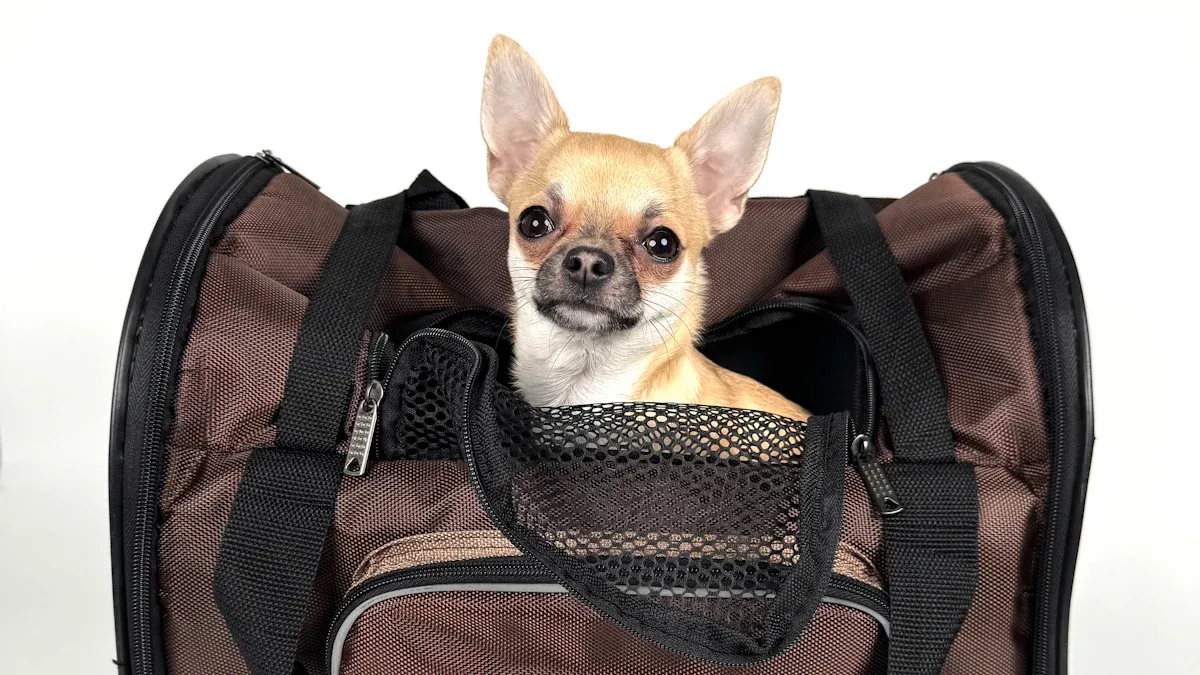
A carrier should let the dog sit in a natural position without slumping, twisting, or being forced into a curled posture. Buyers should compare the dog’s back length, seated height, and chest girth with the carrier’s usable interior space, not only the outer dimensions or a broad weight label.
The base should stay firm under load. If the base folds or sags, the dog may slide into an uneven posture. This can lead to refusal, discomfort, or visible stress during use. Shoulder freedom is also important. The opening and side panels should not press into the armpits or block natural movement. Always check if your dog can stay upright and calm during a short indoor test before outdoor use.
- Do not rely on weight range alone when judging size.
- Check seated height, body length, and chest width together.
- Look for sagging, twisting, underarm rubbing, and dog refusal.
- Confirm that internal tethering connects to a harness, not only a collar.
- Test posture and airflow before describing the product as trail-ready.
Handler Fit: Straps, Load, Bounce Control
The handler side matters because a dog carrier that swings or pulls unevenly feels unsafe even when the dog fit appears acceptable. Padded shoulder straps, adjustable chest straps, stable hip support, and secured strap ends help reduce bounce. Loose webbing, narrow straps, or poor load transfer can make the carrier feel unstable on stairs, uneven trails, or longer walks.
For product development and sourcing checks, ask whether the carrier remains balanced after pockets are loaded. Storage should not deform the carrier body or push the dog into an uneven posture.
Buyer Checklist Table: Fit Areas, What to Verify
| Check area | What to verify | Why it matters | Customer-facing wording |
|---|---|---|---|
| Internal support | Dog sits upright without slumping or twisting. | Reduces refusal and discomfort. | Helps dogs sit naturally and feel secure. |
| Base stability | Firm base, no sagging under the dog’s weight. | Limits shifting and uneven posture. | Stable base support for outdoor carrying. |
| Shoulder freedom | No rubbing near armpits or chest. | Prevents early discomfort complaints. | Designed for better movement and comfort. |
| Ventilation layout | Mesh panels allow airflow without thick inserts blocking vents. | Reduces heat buildup concerns. | Breathable panels support outdoor comfort. |
| Closure security | Zippers close fully, gaps are controlled, internal tether is secure. | Reduces escape concern. | Secure closures for travel confidence. |
| Cleaning and drying | Removable liner, wipeable seams, quick-dry materials. | Reduces odor and after-use complaints. | Easy to clean after muddy outdoor use. |
| Wear areas | Reinforced edge binding, stronger mesh, durable stitching. | Prevents early damage in outdoor use. | Built for repeated outdoor handling. |
Use a quick two-finger check on adjustable straps. Straps should feel secure without cutting into the dog or creating pressure at the opening.
A strong product listing should explain how the carrier should fit, where the dog should sit, what the carrier is not designed for, and what early warning signs mean. Clear fit boundaries reduce mismatch between customer expectation and actual product performance.
Backpack Dog Carrier Materials and Outdoor Features
Ventilation and Heat: Airflow Limits
Ventilation is one of the first details buyers should inspect. Mesh panels can improve airflow, but airflow does not make the inside cooler than the outdoor environment. Thick padding, closed sidewalls, or decorative panels can block vents and make the carrier feel hotter during use.
Warm-weather product copy should be careful. Do not imply that mesh alone makes a carrier safe for heat-sensitive use. Clear guidance on shade, short testing, rest breaks, and stop-use signs helps prevent unrealistic expectations.
Ventilation matters, but airflow is not cooling. Heavy panting, drooling, weakness, vomiting, or collapse should be treated as stop-use warning signs.
Durability: Seams, Mesh, Closures
Outdoor carriers face friction, moisture, dirt, dog movement, and repeated zipper use. Weak mesh, loose stitching, thin edge binding, and zipper gaps can quickly become the reasons customers lose trust in a carrier line. Buyers should inspect the most stressed areas: shoulder openings, base seams, handle attachments, zipper ends, internal tether points, and pocket seams.
| Material or part | What to check | Risk if weak |
|---|---|---|
| Mesh panels | Tear resistance, panel size, seam strength. | Ripping, escape concern, reduced trust. |
| Recycled PET fabric | Denier, coating, abrasion resistance, water handling. | Early wear or poor outdoor durability. |
| Natural fiber fabric | Moisture absorption, drying time, treatment needs. | Odor, mildew risk, heavier wet weight. |
| Zippers and pulls | Smooth closure, gap control, pull strength. | Escape concern and support complaints. |
| Edge binding | Fraying, stitching density, reinforcement. | Premature wear at high-contact zones. |
Pick materials that fit the real use case. A soft carrier used for short outings can prioritize light weight and easy access. A hiking-focused carrier needs stronger structure, breathable layout, secure closures, and cleaning details that can handle mud, sweat, and repeated use.
Cleaning: Mud, Sweat, Fast-Dry Liners
Cleaning is not a minor feature for outdoor backpack carriers. Mud, sweat, drool, and wet ground contact can create odor and staining complaints after only a few trips. Removable liners, wipeable seams, fast-dry panels, and simpler interior corners make the product easier to maintain.
Slow-drying padding can become a hidden problem. If the carrier holds moisture, customers may stop using it even when the size and structure are acceptable. Cleaning instructions should be specific enough to support repeat use without promising more than the material can handle.
Listing Lines: Setting Comfort Expectations
Clear product copy helps buyers reduce mismatch between customer expectations and actual product use. Useful product-page wording can include:
- Built for short outdoor carry or longer trail use depending on the selected structure.
- Sizing depends on body shape and seated posture, not only body weight.
- Multi-side mesh supports airflow, but users should still avoid unsafe heat conditions.
- Firm base support helps reduce sagging and shifting during carry.
- Secure zippers and internal harness tether help reduce escape concern.
- Removable or fast-dry liners simplify cleaning after muddy outings.
- Storage pockets should not deform the carrier shape or reduce dog comfort.
- Stop use and recheck fit if the dog slumps, twists, pants heavily, or refuses to settle.
Trail Mistakes, Troubleshooting, and Buyer FAQs
Common Mistakes: Overheating, Blocked Airflow, Poor Timing
The most common mistake is treating a dog hiking backpack carrier as a universal product. Some dogs are not suitable for carrier use because of heat sensitivity, anxiety, mobility issues, injury, or poor tolerance. Some carriers are not suitable for long carry because they lack structure or airflow.
For B2B buyers, the safer approach is to define the product boundary clearly. A carrier can be well made and still be wrong for certain dogs, weather, or hiking distances. Honest boundaries usually protect the product line better than broad claims.
Troubleshooting Table: Issues, Causes, Fixes
| Issue | Likely cause | Immediate fix | Prevention next time |
|---|---|---|---|
| Dog sagging or twisting | Carrier too large or base too soft. | Stop use and recheck size. | Choose a firmer base and closer fit. |
| Carrier swing or bounce | Loose straps or poor load transfer. | Adjust shoulder, chest, and hip straps. | Test loaded balance before hiking. |
| Rubbing near openings | Tight panels, wrong opening shape, poor shoulder space. | Remove carrier and inspect pressure areas. | Verify shoulder freedom and edge softness. |
| Heavy panting or heat concern | Blocked vents, thick padding, warm conditions. | Stop, remove carrier, cool the dog safely. | Use breathable designs and avoid unsafe heat. |
| Odor after one trip | Slow-dry liner or dirt trapped in seams. | Clean and air dry fully. | Choose removable liners and simpler seams. |
| Zipper or mesh failure | Weak closure quality or high-stress panel design. | Stop use if security is reduced. | Inspect stress points before sourcing. |
FAQ Block: Sizing, Heat, Cleaning, Alternatives
How should buyers size a dog backpack carrier beyond weight?
Use back length, seated height, chest girth, and posture. Compare those measurements with usable interior space. A broad weight range alone does not show whether the dog can sit naturally.
What fit problem causes the most dissatisfaction?
A weak or oversized base often causes slumping and twisting. Once the dog feels unstable, refusal and return risk increase quickly.
Can mesh solve heat buildup?
Mesh improves airflow, but it does not cool the carrier below outside conditions. Warm-weather limits still need to be clear.
What should be checked before sourcing a hiking-style carrier?
Check base firmness, closure security, harness tether position, edge binding, mesh strength, strap balance, ventilation layout, and cleaning structure.
When is a dog hiking backpack carrier not suitable?
It may not be suitable for dogs with heat sensitivity, anxiety, injury, mobility problems, poor tolerance, or body shapes that cannot sit comfortably inside the carrier.






