
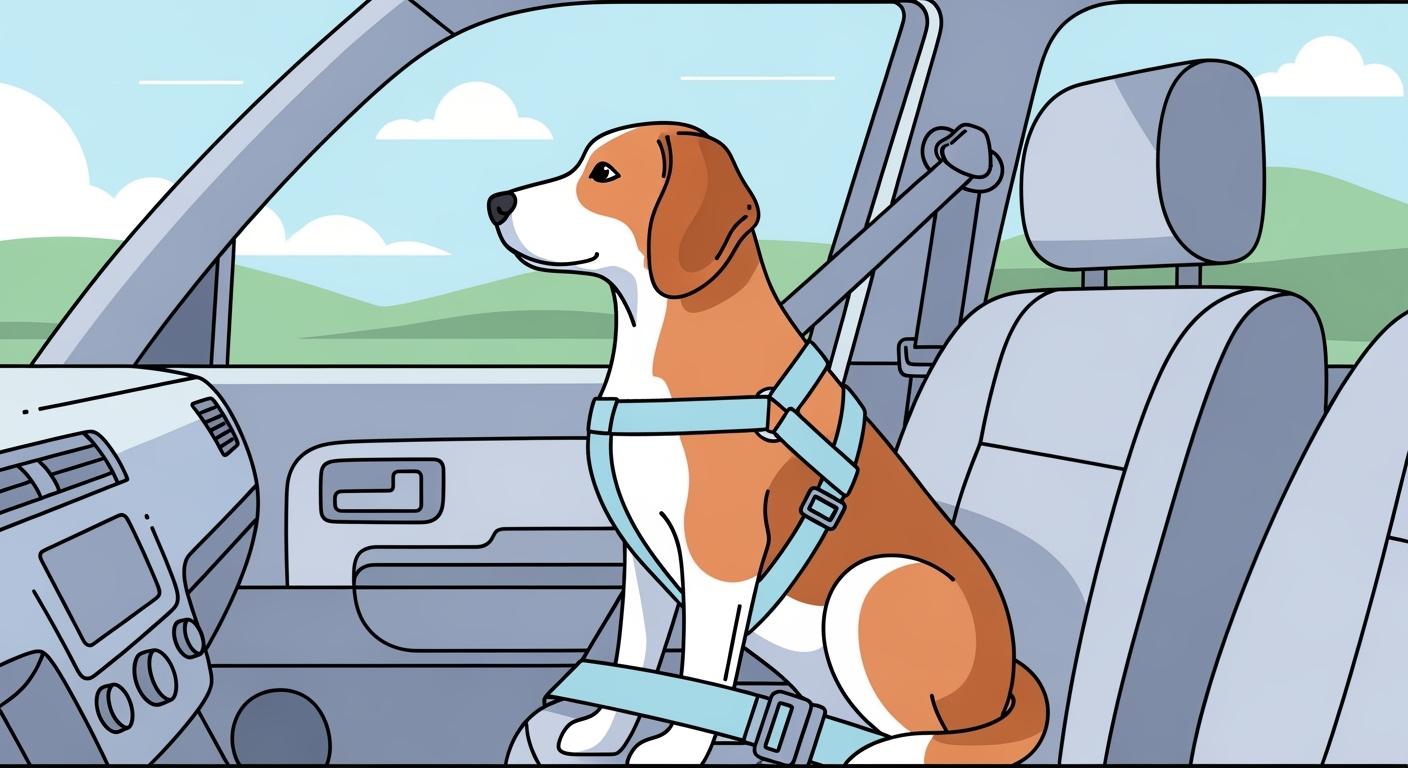
The best dog car seat belt keeps your dog secure without creating extra movement that is hard to control. A short tether is usually the safer choice for dogs that stand up, turn around, or try to climb forward. A calm dog may do well with a little more room, but only when the harness stays centered, the tether stays clear, and your dog still cannot reach the door or front seat.
Tip: Clip a car tether to a body harness, not to a collar.
Key Takeaways
- Choose a shorter tether for dogs that pace, lean into turns, or keep changing position.
- Use extra slack only when your dog stays settled and the line does not twist or drift.
- Check harness fit, tether length, and seat position before every trip.
- Use comfort items for support, but rely on the harness and tether for restraint.
Why Tether Length Changes the Ride
More slack is not automatically more comfortable. In real driving, extra length can let a dog slide toward the seat edge, twist the tether, or brace awkwardly when you brake. A shorter setup often gives a dog a clearer resting zone and gives you a cleaner, more predictable restraint. The same checks used for pull-control basics and harness fit matter in the car because drift and twisting usually start with poor positioning.
| Tether setup | What it does well | Main risk | Best fit |
|---|---|---|---|
| Short tether | Keeps the dog in one riding zone and limits forward climbing | Can feel restrictive if set too short for sitting or lying down | Wiggly, active, or easily distracted dogs |
| Adjustable tether | Lets you fine-tune comfort after the harness is fitted | Easy to leave too long | Calm dogs that settle quickly |
| Long or loose setup | Allows more movement | Higher tangle risk and less control in stops or turns | Rarely the best choice for normal drives |
When a Short Tether Is the Better Choice
Use a shorter tether when your dog keeps shifting position, watches the front seat, or needs a few minutes to settle. The goal is not to pin your dog in place. The goal is to allow sitting and lying down without allowing climbing, twisting, or hanging at the seat edge. If you are also comparing rear-seat comfort and buckle access, remember that seat covers and padded beds help comfort, while the harness and tether handle restraint.
A harness that looks fine in the driveway can still shift once the car starts moving. Use the same logic you would use for harness sizing and material choices: the chest area should stay stable, the straps should not rotate after a normal turn, and your dog should be able to breathe, sit, and rest without rubbing.
| Check item | Pass signal | Fail signal | What to change |
|---|---|---|---|
| Resting position | Dog can sit and lie down in one spot | Dog keeps climbing or sliding | Shorten the tether or improve seat stability |
| Harness balance | Chest panel stays centered | Harness rotates to one side | Refit the harness and recheck hardware weight |
| Line control | Tether stays clear through turns | Tether wraps around legs or seat hardware | Use less slack and adjust the anchor angle |
| Driver distraction | Dog settles without reaching forward | Dog leans toward the console or front seat | Reduce range and reset the riding position |
When a Little Extra Slack Can Work
Some dogs ride best when they can curl up instead of staying upright. A little extra slack can work for those dogs, but only if the dog still stays in one seat area and the line does not drift into unsafe zones. Stable hardware matters here. A reflective no-pull harness with broad chest coverage and secure hardware is easier to manage than a loose clip-on setup that shifts every time the dog changes sides.
Use the first few minutes of the drive as your test window. If the harness slides off center, the tether rattles, or your dog keeps re-positioning, the setup is too loose. The same balance problems that show up in harness and leash pairing for everyday walks often show up in the car because uneven hardware tends to pull the harness off line.
| Symptom | Likely cause | Fast check | Fix |
|---|---|---|---|
| Dog gets tangled after turning around | Tether is longer than the dog needs | Watch one stop and one slow turn | Shorten the tether |
| Harness shifts toward one shoulder | Loose straps or off-balance hardware | Look at chest alignment after five minutes | Refit the harness and center the attachment point |
| Dog reaches the seat edge | Too much forward range | Check reach while parked | Reduce slack before driving |
| Dog resists the setup after buckling | Pressure point or rubbing | Check under the chest and behind the front legs | Adjust fit or switch to a better-padded harness |
Common Mistakes That Make Car Travel Less Safe
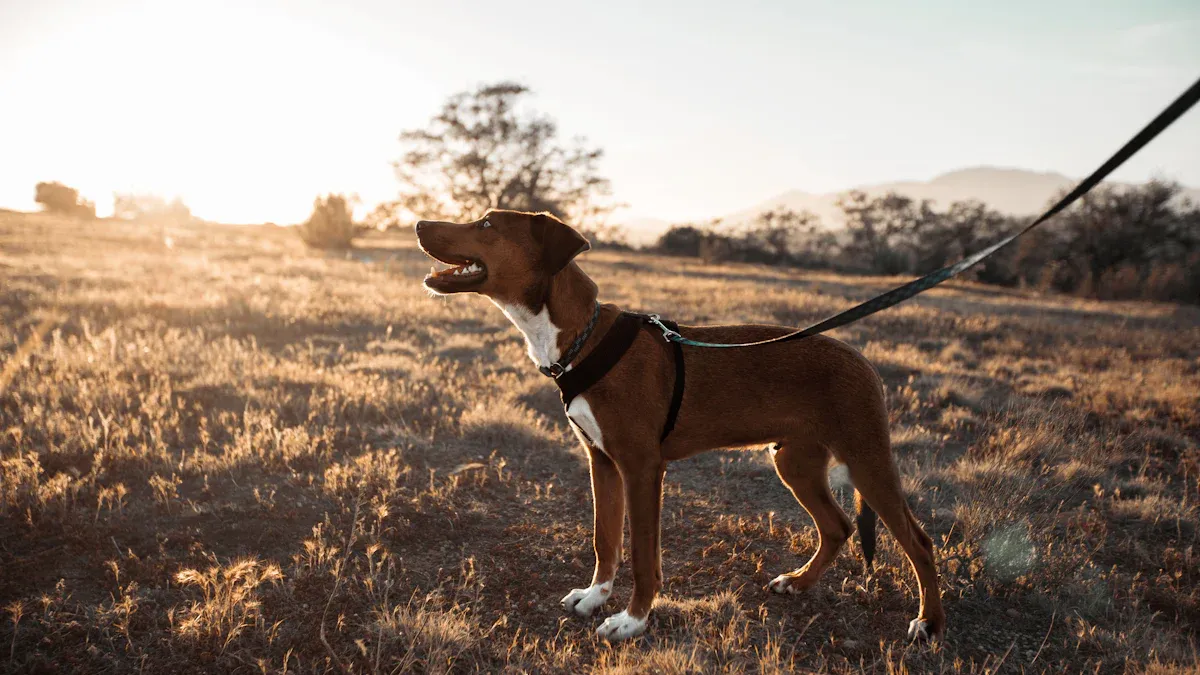
Most problems come from setup choices, not from a dog being stubborn. If the tether keeps tangling or the dog keeps leaning forward, the restraint is usually giving too much range or the harness is no longer sitting where it should.
- Clipping the tether to a collar instead of a body harness.
- Giving extra slack before checking whether the dog can already settle with less movement.
- Using comfort accessories as if they replace restraint.
- Skipping the fit check after washing the harness, changing vehicles, or adjusting seat position.
- Ignoring repeated twisting, rubbing, or restless shifting during short drives.
If your dog is active outside the car, it helps to think about range the same way you would when comparing shorter and longer leash lengths for active dogs. More reach only helps when you can still control balance, direction, and quick changes without slack becoming the problem.
How to Dial In a Safer Fit Before Each Trip
- Buckle the harness while parked and confirm the chest panel is centered.
- Set the tether so your dog can sit and lie down but cannot reach the door or front seat.
- Watch one normal turn and one normal stop for twisting or drift.
- Check for rubbing behind the front legs and under the chest.
- Re-test after changing blankets, seat covers, or anchor points.
Note: Stop and adjust the setup if your dog shows repeated panting unrelated to heat, rubbing, or trouble settling after a few minutes.
FAQ
Is a short dog car seat belt safer than a longer one?
For most active dogs, yes. A shorter tether usually reduces climbing, twisting, and driver distraction while keeping the dog in one stable riding zone.
Can a calm dog use a little extra slack?
Yes, if the dog stays settled, the harness stays centered, and the tether does not let the dog reach unsafe areas.
Should you use a collar with a car seat belt clip?
No. Use a body harness so force is spread across the torso instead of the neck.
How often should you check fit?
Check before every trip, and check again after any strap adjustment, vehicle change, or sign that the harness has started to shift.






