
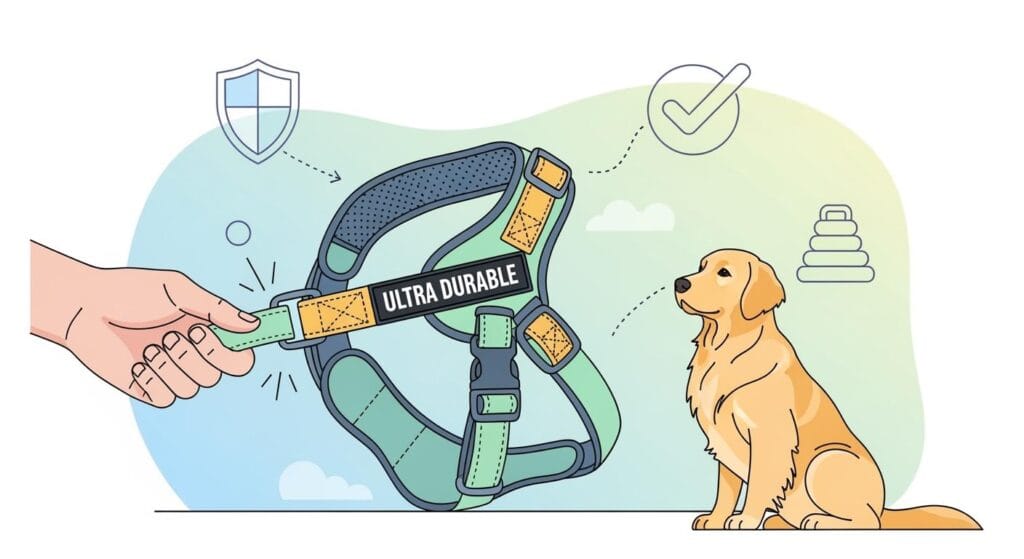
An indestructible dog harness sounds like a simple fix, but the real question is what your dog is trying to do to it. A dog that chews straps needs different construction from a dog that pulls hard at the end of the leash. A harness can be well made and still fail early if the design does not match the behavior putting stress on it.
Key Takeaways
- Choose for the failure you are actually dealing with: chewing, pulling, overheating, or backing out.
- Check straps, stitch lines, rings, and buckles after walks so small wear does not turn into a mid-walk break.
- Metal hardware, secure stitching, and a stable fit usually matter more than an “indestructible” label.
When You Need an Indestructible Dog Harness for Chew Resistance vs. Heavy Duty Use
Most harness problems start with a mismatch. Some dogs destroy soft edges when left alone in gear. Others strain the leash ring, adjusters, and seam lines with repeated lunging. Those two patterns call for different priorities, so picking by marketing language alone often leads to wasted money and faster wear.
Chew-Resistant vs. Heavy-Duty vs. Tactical-Style: Comparison Table
These three styles overlap, but they are not interchangeable. The best one depends on what usually happens on your walks.
| Harness Type | Best For | Key Features | Tradeoffs | What to Watch |
|---|---|---|---|---|
| Chew-resistant | Dogs that grab, mouth, or shred straps | Tight webbing, fewer exposed edges, less soft trim | Usually less plush and less forgiving on long wear | Buckles and strap ends still stay vulnerable if left exposed |
| Heavy-duty | Strong pullers and dogs that hit the leash hard | Wide straps, reinforced seams, stronger rings and buckles | Can feel heavier and warmer in hot weather | Extra bulk does not help if the fit shifts under load |
| Tactical-style | Dogs that need a handle or more control points | Top handle, more coverage, accessory loops on some designs | Bulkier build can limit comfort for casual daily walks | Handle anchors and seam lines take repeated stress |
A chew-resistant harness tries to remove easy targets. A heavy-duty harness is built to manage force. A tactical-style harness can add control, but more material is only useful when it still clears the shoulders and stays cool enough for the walk length.
How to Match Harness Type to Your Dog’s Behavior
Watch what happens before the harness fails. If your dog chews straps indoors, the weak point is usually soft trim, padding, or loose ends. If your dog surges forward outdoors, the weak point is more often the leash ring, buckle, or stitch line. If your dog backs out when startled, the problem may be fit rather than durability.
- Choose a chew-resistant design when strap damage is the first issue you notice.
- Choose a heavy-duty layout when leash force and repeated pulling are the main problem.
- Choose extra coverage or a handle only when control is worth the added bulk.
Front-clip harnesses often give handlers better steering control with pullers, but they still need training and correct fit to work well. Dogs that surge forward usually improve more when harness choice is paired with consistent front-clip harness training steps instead of relying on hardware alone. If the harness keeps rotating, riding into the throat, or sliding back, the sizing sequence in dog training harness fit and sizing checks for everyday walks is usually more useful than moving straight to a thicker model.
Pass/Fail Checklist Table: Spotting Early Failure
A quick check after each walk usually tells you whether the harness is still safe for the next one.
| Check Item | Pass Signal | Fail Signal | What It Usually Means |
|---|---|---|---|
| Strap edges | Flat and smooth with no fuzzing | Frayed fibers, tooth marks, or curling ends | The webbing is being chewed or rubbing against hard hardware |
| Buckles and rings | Close cleanly and stay aligned | Cracks, bending, sticking, or partial closure | The hardware is wearing out or carrying more force than it should |
| Stitching | Tight lines with no gaps | Loose loops, popped threads, or stretched seams | The load path is pulling against a weak section |
| Padding and lining | Even surface with no exposed foam | Tears, bunching, or thinning spots | Comfort materials are breaking down before the frame does |
| Fit after movement | Harness stays centered with full shoulder motion | Twisting, shifting, redness, or rising toward the throat | The design or size is wrong for your dog’s shape |
Common Mistakes: Real Consequences of Choosing Wrong
The wrong harness usually fails in a predictable way. A back-clip setup can give some dogs more leverage, which makes pulling feel worse rather than better. A bulky harness can trap heat on longer walks. A narrow or badly placed strap can rub behind the front legs or limit stride. Problems like these are easy to miss when the purchase is based on appearance or the word “indestructible” instead of how the dog actually moves.
- Buying for toughness when the real problem is poor fit.
- Choosing thick padding for a dog that runs hot or walks in warm weather.
- Trusting a tough-looking buckle without checking whether the stitch lines and adjusters are equally strong.
- Assuming a stronger harness will stop pulling without changing handling or training.
- Ignoring early rubbing because the hardware still looks solid.
Some owners expect instant results from a stronger harness, but the pattern is usually slower than that. Control can improve quickly while loose-leash behavior still takes time, which is why the expectations in pulling harness quick results vs. training timelines are often closer to real life than product claims. If chest size or body shape is still uncertain, it helps to measure a dog for a harness before you tighten the last strap another notch or move up a size.
Troubleshooting Table: What to Do When You See Damage
| Symptom | Likely Cause | Fast Check | Safer Response |
|---|---|---|---|
| Chewed strap | Exposed edge, boredom, or soft trim | Look for tooth marks near strap ends and buckle corners | Switch to a simpler chew-resistant design and avoid leaving the harness on when unsupervised |
| Broken buckle | Repeated overload or chewing damage | Open and close it several times under light tension | Replace the harness or the hardware if the rest of the frame is still sound |
| Loose stitching | Force spikes at one load point | Check the leash ring anchor and chest seams first | Retire the harness if the seam is opening under load |
| Harness slips off | Poor sizing or rear strap placement | Watch what happens when your dog backs up or twists | Refit or change to a layout that secures the ribcage more effectively |
| Dog overheats | Too much material for the weather or activity level | Feel under the chest panel after a walk | Use a lighter layout for warm-weather outings |
Tip: Test a new harness on a short walk before trusting it for a long outing, a busy trail, or a dog that already has a history of pulling or backing out.
If you notice coughing, rubbing, shortened steps, or unusual heat buildup, stop using the harness until you can confirm the fit and activity level are not causing the problem.
What Fails First on an Indestructible Dog Harness in Real Use
Most harnesses do not fail all at once. They usually start showing trouble at the points where force concentrates or where the dog can reach and chew. Looking for those failure points is more useful than squeezing the webbing and assuming the whole build is strong.
Pass/Fail Checklist Table: Spotting Early Failure
These are the parts that usually deserve the closest inspection on a harness sold as indestructible.
| Component | What Stresses It | Early Warning Sign | Best Next Move |
|---|---|---|---|
| Buckles | Sudden leash force, repeated opening, chewing | Hairline cracks, partial locking, rough edges | Replace before the buckle starts opening unevenly |
| Adjusters | Constant tightening and loosening under load | Webbing slips after a walk | Retighten, mark the strap position, and replace if it keeps drifting |
| Leash ring | Lunging and hard directional changes | Bending, rotation, or rough metal surface | Retire the harness if the ring no longer holds shape |
| Stitch lines | Force concentrated at the chest and back anchors | Pulled threads or visible gaps at seam ends | Replace if the seam is part of a main load path |
| Edge binding and trim | Chewing, dragging, friction at the leg opening | Fuzzing, tears, or exposed inner layers | Switch to a simpler layout with fewer soft edges |
Tip: Plastic hardware can hold up fine for some dogs, but repeated force spikes and chewing usually expose its limits sooner than a well-made metal setup.
Troubleshooting Table: What to Do When You See Damage
| Symptom | What Probably Failed | Can You Keep Using It? | Better Choice |
|---|---|---|---|
| Chewed-through webbing | The strap itself is no longer structurally sound | No, not for normal leash use | Move to a chew-resistant harness and limit unsupervised wear |
| Buckle opens with pressure | Locking tabs are worn or cracked | No, especially on strong pullers | Replace with a stronger buckle or a new harness |
| Loose ring anchor seam | Main load-bearing seam is weakening | Usually no | Replace the harness before the seam opens fully |
| Harness loosens during the walk | Adjuster grip is slipping | Only for a brief test, not regular use | Replace or switch to a design with more stable adjustment points |
Why Some ‘Indestructible’ Harnesses Still Fail
“Indestructible” is usually shorthand for stronger materials, not a guarantee against chewing, force, heat, or poor fit. A harness can look rugged and still break down because the hardware is weak, the stitch pattern is light, or the dog’s movement puts stress in a place the design was never meant to handle. That is also why a heavier harness is not automatically safer for every dog.
Replacement is often the better choice once a load-bearing part starts failing. A repaired trim edge may be fine for comfort, but a failing buckle, ring, or anchor seam is a different category of risk. Once you know which construction details matter most for your dog, the dog harness category makes comparison easier than relying on the word “indestructible” alone.
Note: If a harness starts riding into the throat, leaves repeated rub marks, or makes your dog move differently, fit and comfort matter as much as material strength.
Failure Signs That Matter on an Indestructible Dog Harness
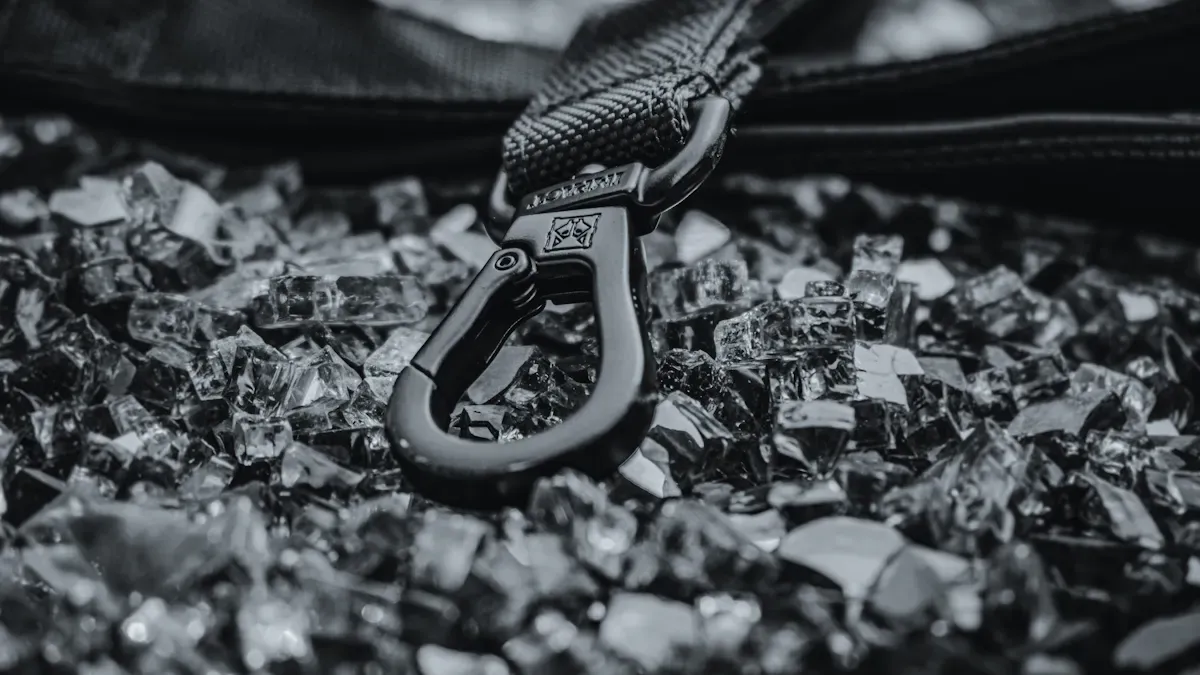
How to Inspect Your Harness After Each Walk
The fastest inspection is hands-on. Run your fingers along the strap edges, press the padding, work the buckles open and shut, and look at the seams where the leash attaches. Small problems show up there before the whole harness looks worn out.
A simple after-walk routine usually catches the important issues:
- Check the leash ring, buckle, and chest seam before you hang the harness up.
- Look for fresh chewing, fuzzing, or stretching along exposed webbing.
- Notice whether the harness stayed centered through the full walk.
- Watch for redness behind the front legs or at the chest after removal.
- Clean dirt and salt off hardware so wear is easier to see next time.
A deeper monthly check is still worth doing, especially on dogs that pull or wear the harness often. Persistent rubbing in the armpit area usually means the strap path needs to change, which is the same practical issue covered in prevent chafing on active outings.
| Area to Check | Healthy Sign | Problem Sign | Action |
|---|---|---|---|
| Stitching | Even tension with no thread lift | Loose ends, gaps, or bunching | Replace if the seam is load-bearing |
| Buckles | Locks fully and opens smoothly | Cracking, sticking, or partial closure | Clean first, then replace if the issue remains |
| Straps | Flat shape with stable width | Stretching, chewing, or soft weak spots | Stop using if the webbing strength looks compromised |
| Padding | Even surface with no hot spots | Compression, tears, or exposed inner layer | Replace if comfort or fit is changing |
When to Repair vs. Replace
Minor surface wear does not always mean the harness is finished. A little loose thread at the edge is different from a stressed buckle or a seam opening near the leash ring. If the part that is failing carries force, replacement is usually the safer call. If the issue is only light trim wear, you may be able to keep using the harness while you monitor it closely.
| Issue | Usually Safe to Monitor? | Replace Soon? | Reason |
|---|---|---|---|
| Minor edge fuzzing | Sometimes | Only if it keeps spreading | Cosmetic wear matters less than structural wear |
| Loose decorative trim | Sometimes | If it exposes the inner layer | It can turn into a chewing target |
| Broken buckle | No | Yes | Main closure failure can lead to escape or sudden release |
| Opening seam at leash point | No | Yes | That seam is carrying real leash force |
| Repeated strap slip at adjuster | Briefly, for testing only | Usually yes | Fit instability can quickly become a safety problem |
Safety Risks of Ignoring Early Warning Signs
Small warning signs become bigger ones quickly when the dog pulls, twists, or lunges without warning. A slipping harness can turn into an escape. A weak buckle can fail on the busiest part of the walk. A strap that rubs lightly on day one can create visible irritation after a few longer outings. That is why the first red flags matter more than the age of the harness.
No harness stays safe forever under regular use. What usually works best is the lightest design that still controls the real problem, stays centered, and lets your dog move naturally.
| Harness Layout | Usually Works Best When | What to Watch |
|---|---|---|
| Front-clip | You need more steering control with a puller | Can shift if the fit is loose or the chest shape is hard to match |
| Dual-clip | You want training flexibility and better balance | Needs careful adjustment to stay centered |
| Full-coverage or specialized | You need more containment or a top handle | Can add heat and bulk faster than expected |
Clean the harness, inspect it often, and replace it when a force-bearing part starts to fail. A durable build saves money only when it also fits well enough to stay comfortable and stable on real walks.
FAQ
How often should you inspect your dog harness?
Check it briefly after every walk and do a deeper inspection at least once a month if your dog wears it often or pulls hard.
Can you wash an indestructible dog harness in a machine?
Some can, but many do better with hand washing or a gentle cycle, so the care label should decide the routine rather than the marketing label.
What is the safest harness for a strong puller?
For most strong pullers, the safest option is usually a well-fitted heavy-duty or front-clip harness with stable stitching, secure hardware, and enough clearance for normal shoulder movement.






