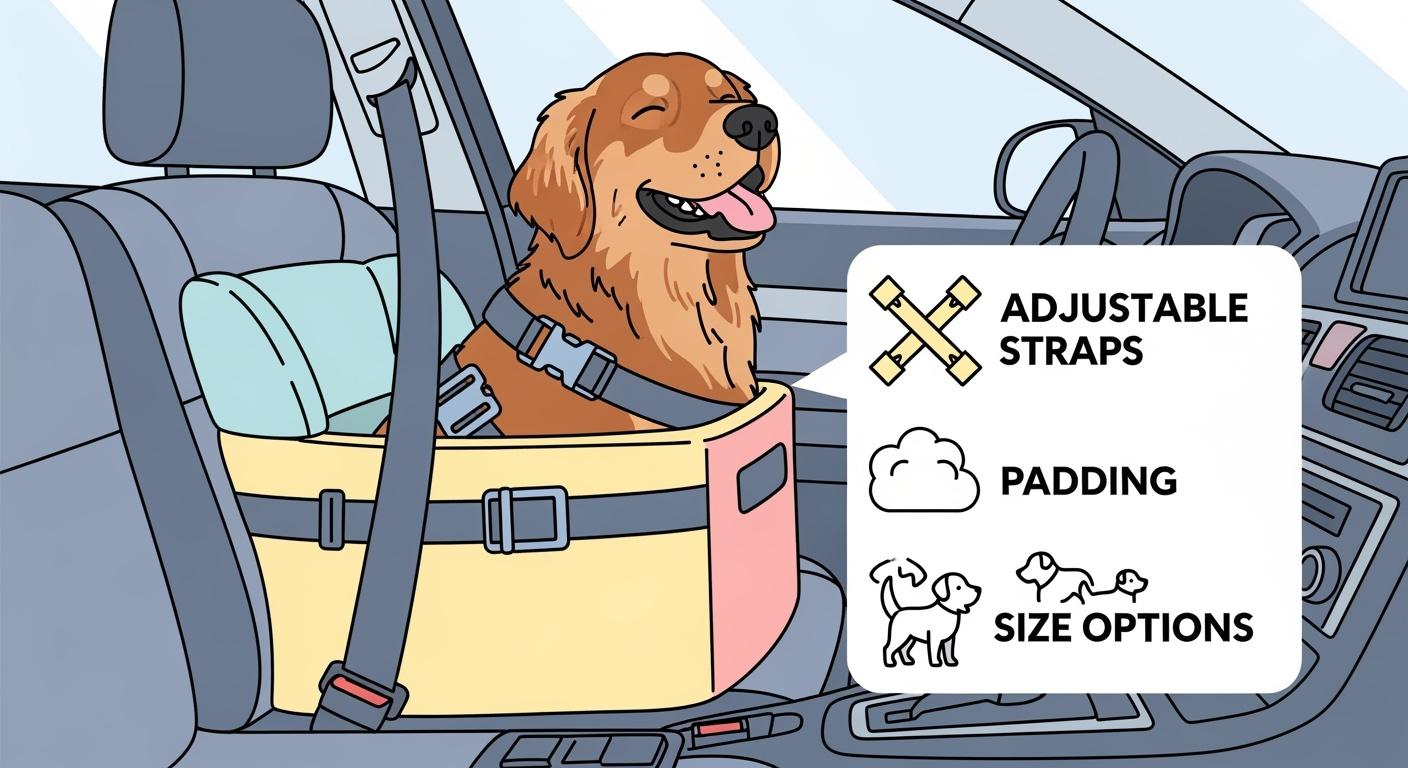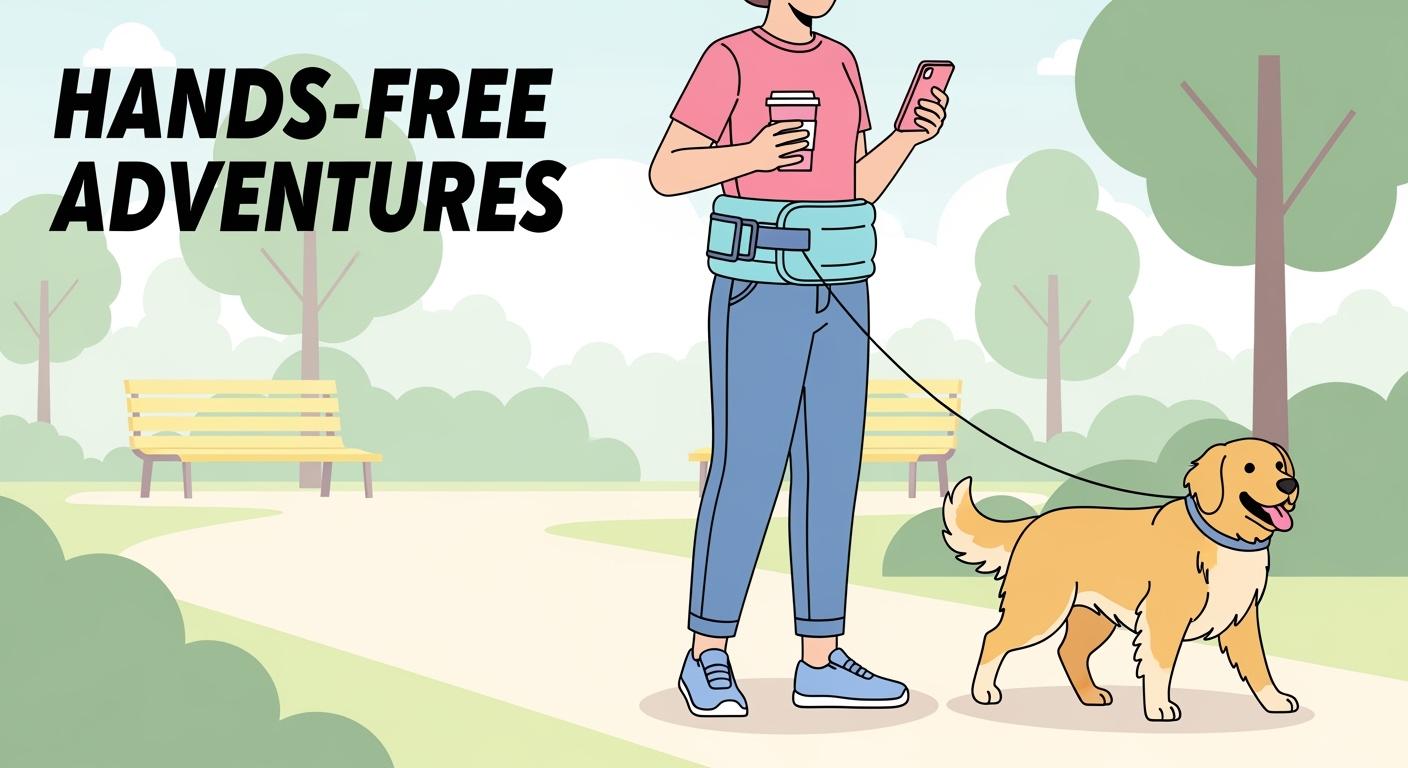
Leash training works best when the setup is simple, the fit is checked before each walk, and your dog learns that a loose leash keeps the walk moving. This guide focuses on practical steps you can repeat at home and outside, without turning the walk into a tug of war.
This is a general walking and gear-fit guide. It is not a medical diagnosis or a substitute for hands-on behavior work. If your dog coughs, shows pain, panics, or reacts aggressively, stop and ask a veterinarian or a reward-based trainer for help.
Before You Start
Choose gear that is easy to manage
Pick the best gear for your dog. For most training sessions, a regular 4 to 6 foot leash is easier to manage than a retractable leash. It gives you clearer timing, steadier handling, and fewer mixed signals.
Think about how your dog likes to walk. A dog that forges ahead may do better in a harness that stays stable under light redirection, while a calm walker may be comfortable on a standard collar if neck pressure is not a concern. The main goal is not a perfect product category. The main goal is a setup that stays centered, does not rub, and lets you reward the right walking position.
Run a quick fit check before the walk
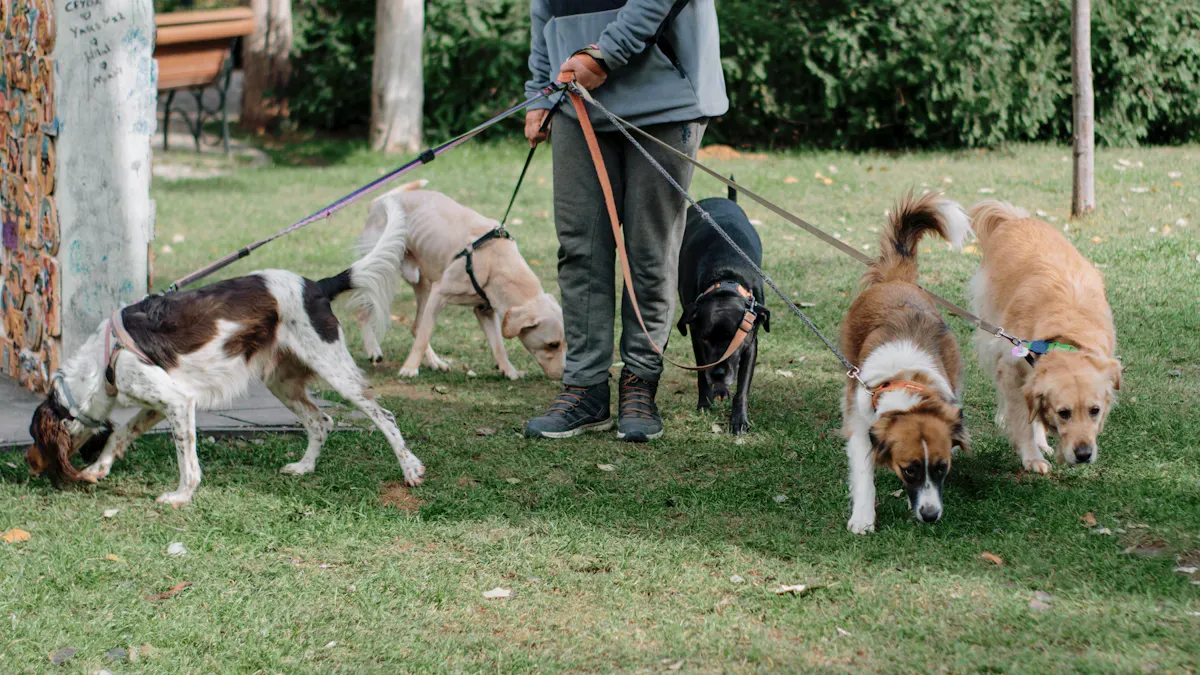
Good training is harder if the gear shifts, twists, pinches, or slides out of place. Check the fit before you ask your dog to learn anything new.
| Check | Pass signal | Fail signal |
|---|---|---|
| Strap or collar fit | Snug enough for one or two fingers, without twisting | Large gaps, slipping, or rotation around the body or neck |
| Shoulder and leg movement | Dog can walk, turn, and sit naturally | Short steps, hopping, or obvious restriction |
| Underarm and chest contact | No bunching and no rubbing after a short test walk | Hair flattening, red marks, or repeated scratching |
| Leash hardware | Clip closes cleanly and the D-ring stays aligned | Sticky clip, partial closure, or hardware that flips sideways |
A quick doorway test is useful before you head out. Walk a few steps, stop, turn, and let your dog follow you through a narrow space. If the gear shifts badly or the leash tangles right away, fix that before you add outdoor distractions.
Step-by-Step Leash Training
1) Build calm indoor associations
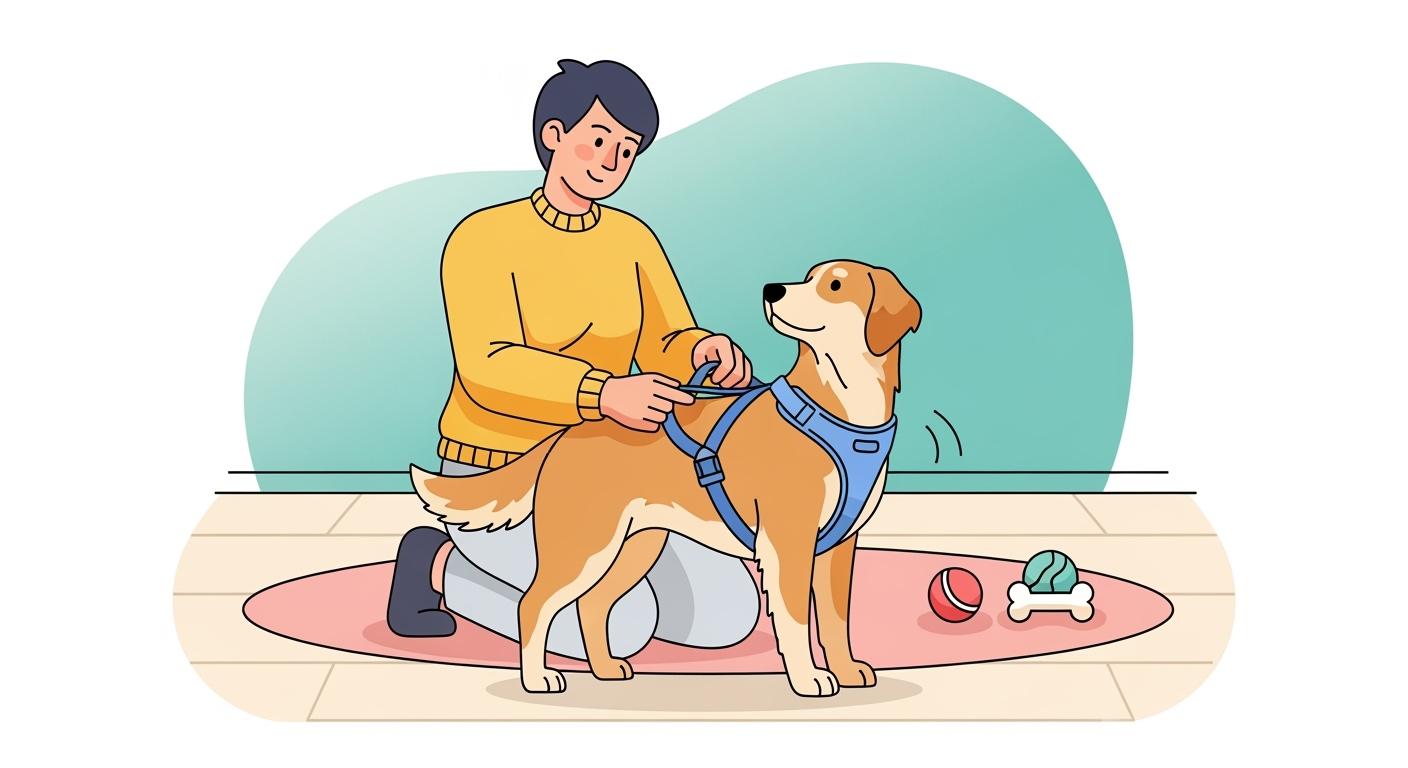
Start in a quiet room where your dog can pay attention. Let your dog sniff the leash, collar, or harness. Put the gear on for short periods and reward calm behavior. The goal at this stage is simple: your dog should feel neutral or positive about wearing the gear before you ask for walking skills.
- Put the collar or harness on in a calm space.
- Attach the leash and let your dog move around for a moment under supervision.
- Reward calm standing, turning toward you, and walking with a loose leash.
- End the session while your dog is still engaged, not frustrated.
2) Teach that slack keeps the walk moving
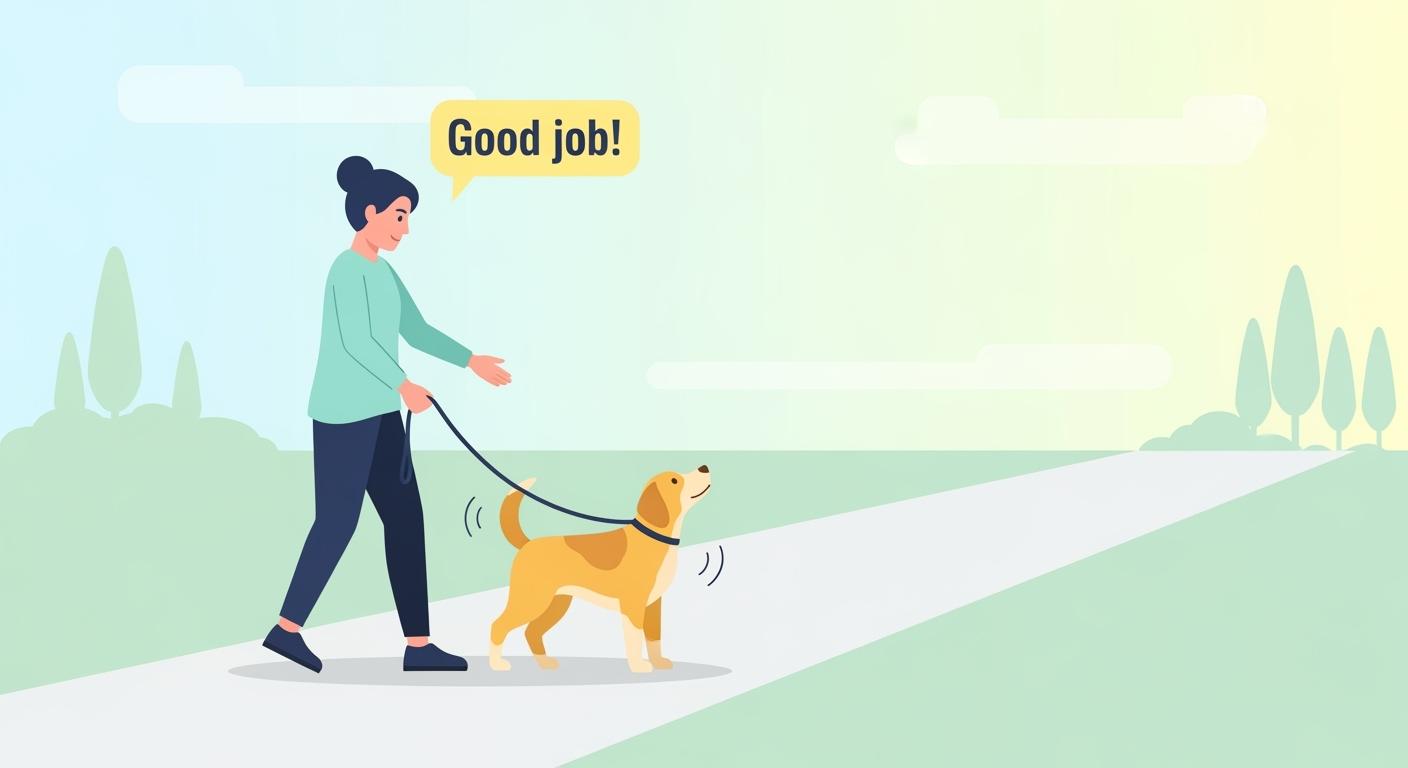
Walk a few steps indoors. When the leash stays loose, reward your dog near your side. If the leash goes tight, stop moving. Wait for your dog to soften, look back, or step toward you. Then move again. This teaches a clear pattern: a loose leash makes the walk continue.
Avoid leash jerks, dragging, or arguing through pressure. That may stop the movement for a moment, but it does not teach your dog what position actually earns progress.
3) Move outside in small jumps
Once your dog can follow you indoors, move to a driveway, hallway, quiet yard, or low-traffic sidewalk. Keep the first walks short and simple. Add one layer of difficulty at a time, such as a new sound, a slightly longer route, or a busier corner.
- Start with the least distracting route you have.
- Reward check-ins, turns with you, and moments when the leash stays soft.
- If your dog gets stuck, pulls hard, or loses focus, reduce the challenge instead of pushing through it.
4) Recheck fit after movement
After the first few minutes, stop and do a fast recheck. Fur can settle, straps can shift, and a setup that looked fine at the door may rub once your dog starts moving. Feel for twisting, sagging, shoulder restriction, or marks near the chest and underarm area.
Common Problems and Quick Fixes
What to do when the walk starts going wrong
Most leash training problems come from one of four things: the environment is too hard, the rewards are too late, the gear fit is off, or the dog does not yet understand that slack is part of the job. Fix the simplest variable first instead of changing everything at once.
| Problem | Likely cause | Quick check | Next step |
|---|---|---|---|
| Pulling forward | Excitement, habit, or pace mismatch | Leash stays tight for long stretches | Stop, wait for slack, reward position, then restart |
| Freezing or refusing to move | Worry, poor fit, or too much pressure | Dog braces, leans back, or avoids the route | Move to an easier area and check comfort before trying again |
| Circling or chewing the leash | Overarousal or unclear task | Dog grabs the leash when the walk starts or stops | Pause, lower excitement, and reward calm orientation to you |
| Rubbing or shifting gear | Poor fit or wrong adjustment | Red marks, flattened fur, or gear sliding off center | Refit the setup before the next session |
Use a simple pass/fail walk test
- Pass: the leash stays loose most of the time, your dog can turn with you, and the gear stays centered without rubbing.
- Fail: the leash is tight almost the whole walk, your dog coughs or braces, or you see twisting, red marks, or repeated backing out.
If you get repeated fail signals, simplify the environment, shorten the session, and refit the gear before you add more difficulty. That usually solves more than changing to a more complicated tool too early.
General safety reminder: do not treat everyday walking gear as crash protection, medical support, or a substitute for behavior work. Use the setup for the job it is actually meant to do.
FAQ
Should I use a harness or a collar for leash training?
Use the option your dog can wear comfortably and safely. Harnesses are often easier for dogs that pull, have delicate necks, or need pressure kept off the throat. A collar can work for dogs that already walk calmly and do not show neck discomfort. In either case, fit matters more than labels.
How long should a training session be?
Keep it short enough that your dog can stay engaged and successful. End the session before your dog becomes overexcited, frustrated, or mentally tired.
What if my dog is scared outside?
Go back to an easier environment, reduce the length of the walk, and reward calm orientation to you. If fear keeps showing up, stop escalating the difficulty and get hands-on help.
When should I ask for professional help?
Ask for help if your dog shows pain, coughing, panic, strong reactivity, repeated escape attempts, or if progress stops even after you simplify the setup and recheck fit.
Good leash training is usually less about force and more about setup, timing, repetition, and clear expectations. Start where your dog can succeed, reward the behavior you want, and keep checking fit as the walk changes.