
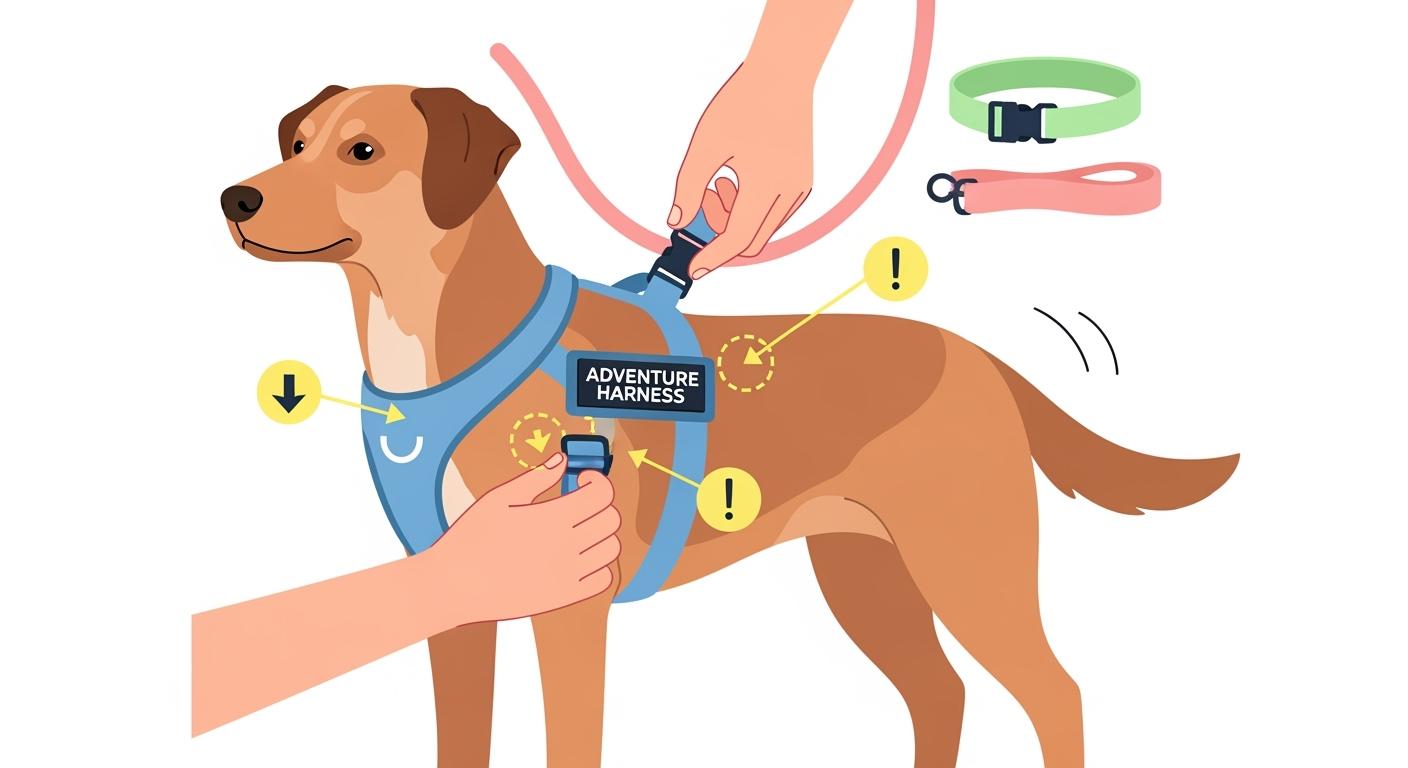
How should a harness fit a dog? It should sit close enough to stay stable, but not so tight that it pinches, rubs, limits movement, or changes how your dog walks. A quick finger check can help, but it is not the whole answer. You also need to watch the harness during real movement: does it rotate, ride up, crowd the armpits, pull toward the throat, or leave marks after the walk? Those signs tell you whether the fit is actually working.
| Risk Type | Description |
|---|---|
| Discomfort | A tight or poorly placed harness can pinch, rub, or make your dog avoid walking. |
| Movement Restriction | Some harness shapes can crowd the shoulder or shorten the stride if the front section sits in the wrong place. |
| Escape Risk | A loose or unstable harness may let a dog back out, especially at doors, busy streets, or unfamiliar places. |
| Entanglement | Loose straps, damaged hardware, or a leash path that twists can create avoidable handling problems. |
| Chafing | Repeated rubbing near the chest, armpits, or strap edges can leave redness, hair wear, or sore spots. |
Key Takeaways
- Always check your dog’s harness fit before every walk. Use the finger check as a starting point, then confirm that the harness stays centered and does not restrict movement.
- Look for signs of poor fit during and after the walk: shifting, rubbing, short stride, red marks, backing out, or reluctance to move.
- Fix one area at a time. Adjusting every strap at once can hide the real problem and create new pressure points.
How Should a Harness Fit a Dog Before the Walk?
Before you head out, check both the harness position and the way your dog stands in it. A good fit should look balanced from the front, side, and top. The chest section should sit flat. The girth strap should stay behind the front legs without rubbing the armpits. The leash attachment should not pull the whole harness off center before the walk even begins.
Quick Fit Test for Dog Harness
You can use a quick fit test to see if your dog harness fits well. Start with your dog standing calmly. Check the neck area, chest area, and girth area separately instead of assuming one strap adjustment fixes everything. The harness should be snug enough that it does not gap or slide, but loose enough that it does not dig into the body.
The two-finger check is useful, but it is only a first screen. Different harness styles, coat thickness, body shape, and strap width can change how that rule feels in real use. After the finger check, apply light leash tension and watch whether the harness lifts, rotates, or rides toward the throat.
| Test Method | What It Tells You |
|---|---|
| Two-finger rule | Gives a quick starting check for tightness, but does not prove the harness works in motion. |
| Cannot fit two fingers | The harness is likely too tight or sitting on a pressure point. |
| Too much space | The harness may shift, rotate, or allow backing out when the leash tightens. |
You should also look for skin marks, harness rotation, or signs of restriction after a short walk. If you see irritation or limping, remove the harness and inspect the contact points before adjusting it again.
Balanced Fit vs Too Tight vs Too Loose
A balanced harness fit holds position without forcing your dog to move differently. Too tight usually shows up as rubbing, stiff movement, or avoidance. Too loose often shows up as rotation, leash drag, or escape attempts. Use the table below to compare the difference.
| Feature | Balanced Fit | Too Tight Harness | Too Loose Harness |
|---|---|---|---|
| Walking Style | Natural, easy movement | Stiff, awkward, or hesitant | Unsteady movement or repeated shifting |
| Behavior | Dog moves normally and accepts the harness | Dog resists, freezes, scratches, or refuses to walk | Dog backs out, twists, or gets distracted by the loose harness |
| Physical Signs | No repeated marks or hair wear | Redness, chafing, hair loss, or pressure lines | Harness rotates, gaps, or slips toward one side |
| Harness Stability | Stays centered under light leash tension | Digs into skin or crowds the chest | Slides around and creates uneven pressure |
| Safety | Secure without restricting movement | May limit movement or create discomfort | May increase escape risk |
| Comfort Test | Finger check passes and movement looks normal | Finger check fails or the dog shows pressure signs | Too much space and unstable movement |
If you notice coughing, repeated throat pressure, stiff movement, or refusal to walk, stop and recheck the harness. If the harness rotates, rides up, or lets your dog back out, it is not secure enough for that walk.
Harness Fit Checklist
Use this checklist before every walk to make sure the harness fit is correct. Check each item and fix any problems before you go outside.
| Check Item | Pass Signal | Fail Signal | Fix |
|---|---|---|---|
| Snugness check | Close fit without pinching | Too tight, too loose, or uneven from side to side | Adjust one strap area at a time |
| Harness stays centered | No rotation or shifting under light tension | Harness moves, twists, or rides up | Reposition and rebalance both sides |
| No skin marks or redness | Skin and coat look normal | Redness, chafing, or hair loss | Loosen, change contact point, or replace the style |
| Dog walks naturally | Normal stride and relaxed posture | Stiff, hesitant, limping, or shortened stride | Check shoulder, chest, and armpit clearance |
| Buckles and straps secure | All parts fastened, flat, and undamaged | Loose, cracked, twisted, or broken parts | Repair only if safe, otherwise replace |
| Contact zones stay smooth | Padding or edges sit flat without bunching | Padding bunches or edges rub | Reset padding or use a smoother harness cut |
| D-ring and leash point stable | Leash attaches firmly without pulling the harness off center | Loose, damaged, or drifting attachment | Recheck balance or replace worn hardware |
You should also check for frayed stitching, worn buckles, and stretched adjustment points. Replace the harness if the hardware no longer holds position or the straps no longer stay secure.
Tip: Always check the harness fit before every walk. Dogs can change size, coat thickness, posture, or behavior over time, so regular checks help catch small problems early.
Common Mistakes and Risks
Many owners make the same harness fit mistakes. These are the ones that most often create discomfort, escape risk, or confusing leash feedback.
- Choosing by size label only instead of checking your dog’s body shape and movement.
- Trusting the two-finger rule without watching whether the harness shifts during walking.
- Letting straps sit too close to the armpit, where repeated stride movement can create rubbing.
- Leaving the harness on longer than needed when it is rubbing, damp, dirty, or unsupervised.
- Ignoring worn stitching, weak buckles, stretched straps, or damaged D-rings.
- Using a harness cut that blocks shoulder movement or rides up toward the throat.
- Forgetting that puppies, senior dogs, injured dogs, and weight-changing dogs may need more frequent fit checks.
The real consequences are usually visible: red marks, escape attempts, short stride, refusal to walk, harness rotation, or a dog that pulls harder because the leash signal feels unclear. If you see the same problem more than once, treat it as a fit issue rather than waiting for the dog to “get used to it.”
Note: Focus on how your dog moves and behaves in the harness. A size chart can help you start, but the final fit comes from real-use checks.
How to Check Dog Harness Fit During Movement
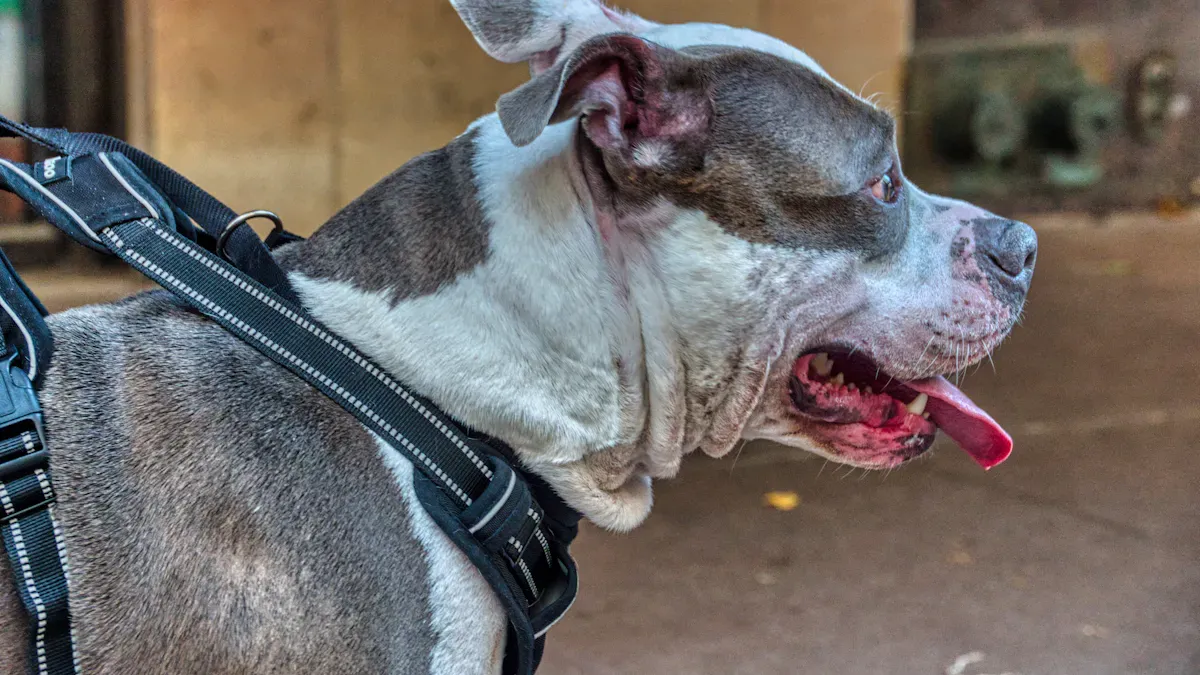
Signs of Poor Harness Fit
You need to watch your dog closely during movement, because a harness can look fine while the dog is standing still and fail once the walk starts. If you see hesitation, stiffness, or your dog stops often, these can be signs your dog’s harness isn’t fitting right. A poor fit can shorten stride, shift pressure to one side, or make the dog try to escape the harness instead of walking normally.
Look for these visible signs:
- The harness rotates or shifts out of place.
- Your dog bites, scratches, or licks at the harness area.
- You see red marks, hair loss, or sore spots near the armpits, chest, or strap edges.
- The harness rides up toward the neck or slides back during leash tension.
- Your dog tries to back out or escape.
A well-fitted harness should support normal movement. It should not block the shoulder, press into the throat, or change how your dog carries weight through the front legs.
Troubleshooting Harness Fit Issues
You can solve many harness problems by matching the symptom to the likely cause. Use the table below to decide what to check first.
| Symptom | Likely Cause | Fast Check | Fix |
|---|---|---|---|
| Harness rotates or shifts | Too loose, uneven adjustment, or wrong harness shape | Apply light side tension and see whether it slips | Rebalance both sides or try a better-fitting shape |
| Shortened stride | Shoulder or chest restriction | Watch from the side and compare movement with the harness off | Open shoulder clearance or change harness cut |
| Red marks or chafing | Straps too tight, rough edges, or repeated rubbing | Check skin and coat after the walk | Loosen, reposition, or switch to smoother contact points |
| Dog tries to escape | Loose neckline, riding harness, or too much back-out room | Watch what happens when the dog reverses | Recheck size, neckline, chest strap, and back-out resistance |
| Limping or refusal | Pain, pressure, pinching, or unrelated discomfort | Remove the harness and inspect the dog and contact zones | Stop using that setup and seek help if signs continue |
| D-ring shifts position | Poor balance, loose fit, or leash load pulling off center | Watch the leash clip during turns and stops | Recenter the harness and check for worn hardware |
After you adjust the harness, walk your dog again for a short test. Do not assume the issue is fixed until the harness stays in place during normal turns, sniffing, stopping, and light leash tension.
Tip: Always check for signs your dog’s harness isn’t fitting right during walks, not just before you leave home.
Escape, Chafing, and Red Flags
Some warning signs need your attention right away. If you see any of these, stop and check the harness fit:
| Warning Sign | Description |
|---|---|
| Skin irritation | Red marks, hair wear, or sore spots at armpits, behind elbows, or along chest edges |
| Harness rotation | Harness shifts out of place or no longer sits centered after movement |
| Shortened stride | Dog walks stiffly, turns awkwardly, or seems reluctant to move |
| Escape risk | Neckline rides up, back strap moves forward, or dog tries to reverse out |
| Clear discomfort | Limping, panic, biting at the harness, or repeated refusal to walk |
You may also notice scratching, whining, frequent stops, or sudden avoidance when you pick up the harness. Heavy breathing, coughing, or throat pressure can mean the harness is sitting too high or too tight for that dog. If you see red patches or sore spots, remove the harness and let the skin recover before using it again.
A poorly fitting harness can create stress, discomfort, and escape risk. Adjust the fit or replace the harness when the same red flag repeats.
Note: Proper harness fit comes from watching your dog move, not just from size charts or packaging. Real-use checks help you spot problems early.
How to Fix a Dog Harness Fit
Adjusting Neck, Chest, and Girth Straps
You can adjust a dog harness for a better fit by working through the strap zones in order. Do not tighten everything at once. Start with the chest panel or front section, then adjust the neckline and girth area until the harness sits flat and balanced.
| Step | Action | Description |
|---|---|---|
| 1 | Set the chest section | Make sure it sits flat and does not pull toward the throat. |
| 2 | Adjust the neck area | It should stay secure without gapping or pinching. |
| 3 | Position the chest panel | Center it before fastening or tightening the girth strap. |
| 4 | Adjust the girth strap | Keep it snug, even, and clear of the front-leg movement zone. |
| 5 | Final movement check | Watch walking, turning, stopping, and light leash tension. |
Balance your adjustments on both sides. Always check for chafing or red marks after a walk. If you see rubbing or restricted movement, loosen the problem area or try a different harness cut. How to fit a dog harness depends on your dog’s shape and movement, not just the label size.
Note: If your dog shows signs of throat pressure, rubbing, limping, pain, or limited movement, stop and check the harness. For ongoing issues, consult a veterinarian or a qualified trainer. This is not medical advice.
When to Replace the Harness
Sometimes, adjustment is not enough. Replace the harness when the current design no longer fits safely or cannot hold its adjustment.
- The harness no longer fits after your dog grows, loses weight, gains weight, or changes coat thickness.
- You see frayed stitching, cracked buckles, bent D-rings, or stretched straps.
- The harness sits at the limit of its adjustability and still does not balance correctly.
- The same rubbing, shifting, or escape risk returns after careful adjustment.
Do not replace a harness only by calendar age. Replace it when fit, hardware, stitching, or your dog’s movement tells you it no longer works.
Safety Reminders for Harness Fit
Keep your dog’s harness in good shape with these safety habits:
- Inspect the harness before walks for frayed stitching, broken buckles, worn padding, or loose adjustment points.
- Clean the harness according to the care label and let it dry fully before reuse.
- Discard or stop using harnesses that stay dirty, smell bad, or have rough contact points that cannot be fixed.
- Recheck fit whenever your dog grows, changes weight, changes coat thickness, or starts moving differently.
- Avoid over-tightening to solve shifting. If the harness only works when it is uncomfortably tight, the style may be wrong.
- Watch your dog’s behavior for signs of discomfort, rubbing, or escape attempts.
If you have trouble with harness fit, ask a veterinarian, trainer, or experienced fit professional for help. The best harness is the one that stays secure while still allowing your dog to move normally.
A balanced harness fit keeps your dog secure, comfortable, and easier to guide. Start with snugness, then watch movement. If the harness shifts, rubs, rides up, restricts stride, or leaves repeated marks, fix the fit before the next walk.
- Watch your dog move naturally.
- Adjust straps if you see shifting or chafing.
- Clean and inspect the harness often enough to catch wear before it fails.
FAQ
How often should you check your dog’s harness fit?
You should check the harness fit before every walk. Dogs can change shape, coat thickness, and walking behavior over time. Regular checks help you spot shifting, rubbing, and escape risk early.
What signs show a harness is too tight?
Look for red marks, chafing, short stride, stiff movement, coughing, throat pressure, or your dog refusing to walk. If you cannot slide your fingers under the straps without pressure, the harness is likely too tight.
Can a harness be too loose even if it stays on?
Yes. A loose harness may still stay on during a calm moment, but it can rotate, shift, or create escape risk when your dog pulls, turns, backs up, or gets startled.






