
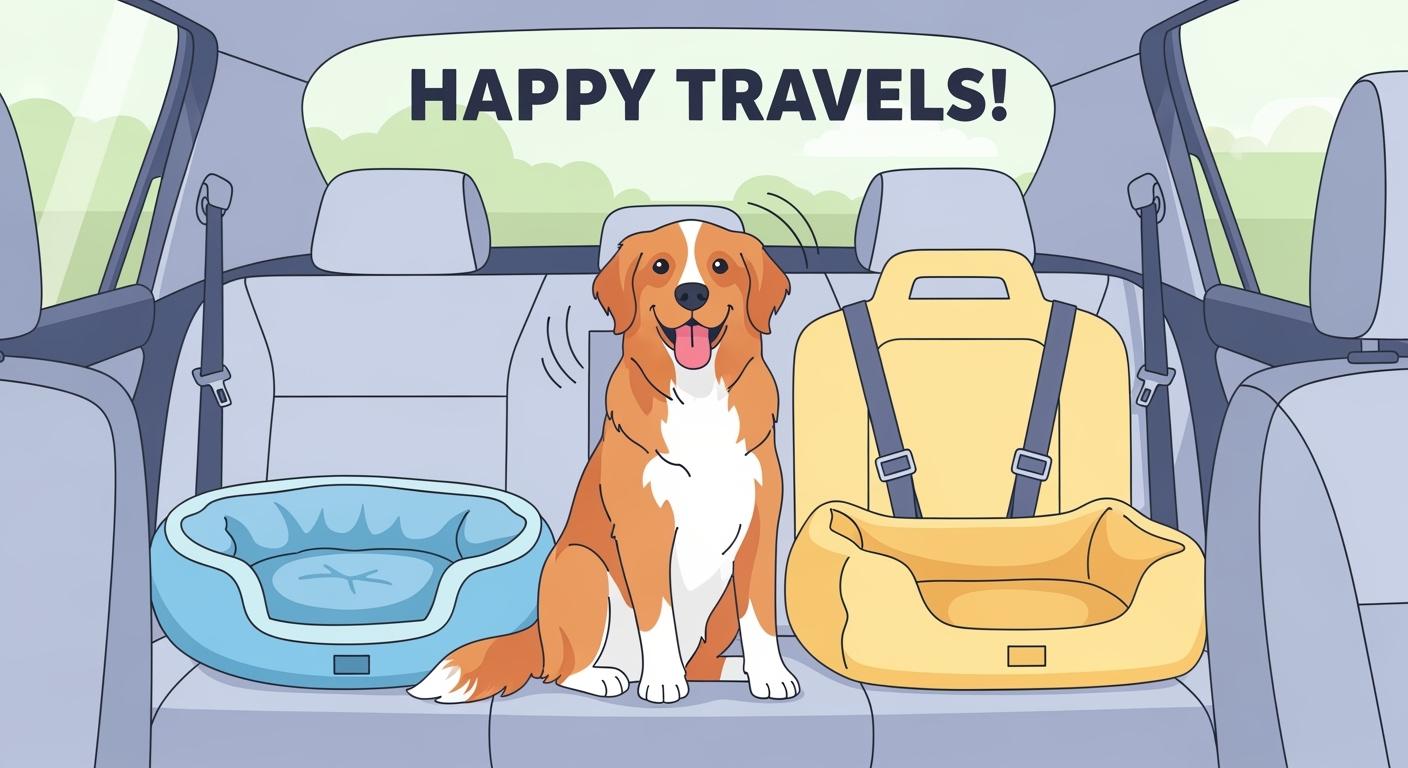
Finding the right dog bed for car travel is less about softness and more about what happens once the car starts moving. A bed that feels comfortable at home can slide across the seat, bunch over the buckle housing, or make your dog brace through every turn. The setup that works best usually stays flat, keeps the restraint path clear, and is easy to reset after each ride.
That balance depends on the dog and the trip. Calm dogs on short drives may do well on a regular bed that fits the seat cleanly, while frequent travel usually exposes the limits of anything that shifts or blocks the buckle. If you are already checking the rest of the restraint system, dog car seat restraint setup helps show how harness attachment and seat access affect the bed choice too.
Note: This article focuses on fit, stability, and cleanup decisions for dog travel beds. It does not replace veterinary advice when a dog shows ongoing anxiety, motion sickness, or other health concerns during car rides.
When a regular bed is enough
A regular bed can work in the car when the trip is short, the dog settles quickly, and the bed stays in place without repeated adjustment. What matters is not whether the bed looks plush but whether it keeps a stable surface once your dog turns, lies down, and rides through normal braking.
Short drives with calm dogs
Start by placing the bed on the rear seat and checking for overhang, rocking, and buckle blockage. If it lies flat, does not drift with moderate hand pressure, and still leaves the harness path open, it may be enough for that trip type. Recheck it before each ride, because fur, moisture, and seat angle can change how the base behaves.
A regular bed stops making sense when your dog has to keep correcting position to stay comfortable. Repeated standing, circling, slipping, or bunching usually means the surface is too soft, too wide, or too unstable for the seat.
Small dogs often do better in a secured carrier
For smaller dogs, a secured carrier with a thin bed inside can be easier to manage than a loose cushion on the seat. The carrier adds containment, and the bed simply provides a softer surface inside that structure. The setup still needs to fit the carrier floor cleanly and stay clear of the door and harness clip point.
Some owners also compare flat beds with more elevated pet car seat options when they need more containment or a better view for a small dog. The better choice depends on whether the bigger problem is seat movement, limited containment, or awkward buckle access.
How the common setups compare
The right setup depends on how often you drive, how much your dog moves, and how easy the arrangement is to maintain over time.
| Setup | What It Does Well | Where It Falls Short | Best Fit |
|---|---|---|---|
| Regular dog bed | Simple, familiar, and often comfortable for short rides | Slides easily and can cover the buckle path | Calm dogs on short, low-movement trips |
| Car-specific dog bed | Usually stays in place better and keeps seat hardware easier to reach | Costs more and still needs careful fit on the seat | Frequent travel and daily driving |
| Secured carrier with bed | Adds containment and keeps the resting surface inside a fixed structure | Less floor space and more bulk in the rear seat | Small dogs and dogs that settle better in a contained space |
If you are also weighing a flatter bed against a raised setup, booster seat sizing and material differences can help clarify when extra height and containment matter more than a larger resting surface.
What a car-specific bed changes
A car-specific bed is usually easier to live with because it is built around the seat instead of borrowed from another room. The real difference is not luxury. It is the combination of base shape, anchoring, buckle access, and cleanup that makes repeated travel less frustrating.
Seat fit and base stability
Car-specific beds usually use a shaped base, a non-slip underside, and anchoring straps that help the bed stay aligned with the seat. That does not make every model stable on every vehicle seat, but it often reduces the drifting and bunching that show up with ordinary beds.
Before your dog gets in, push the bed side to side and front to back with moderate hand pressure. If it shifts noticeably before any weight is on it, that setup may still feel unstable once the car is moving.
| Design Feature | Why It Helps | What to Check |
|---|---|---|
| Anchoring straps | Limit forward and sideways drift during turns and stops | Make sure the straps match the seat layout and stay tight after use |
| Non-slip base | Reduces movement on smooth fabric or leather seats | Watch for wear if the underside starts feeling slick over time |
| Shaped base | Helps the bed sit flatter across the seat contour | Check for rocking at the seat edges before every longer trip |
Buckle access matters as much as cushion depth
One of the biggest advantages of a car-specific bed is that it can leave the buckle housing reachable without moving the whole setup. If you have to lift the bed or shift the dog every time you clip the harness, that routine often breaks down after a few rides.
The tradeoff is that more padding can also make the restraint path harder to reach if the design is too bulky. Looking at easier buckle access versus extra cushion depth makes that tension clear: extra comfort only helps if the restraint path still works in practice.
Note: A car dog bed can improve position and comfort, but it does not replace a properly fitted safety harness. The bed and the restraint work together, not as substitutes for one another.
Cleanup becomes part of the decision
Car beds usually face more fur, mud, moisture, and repeated compression than home beds. That makes washable covers, water-resistant materials, and easier wipe-down surfaces more useful than they might seem on the first day.
Many owners end up choosing between softer cushioning and easier maintenance. Those same materials, support, and cleaning tradeoffs affect how the bed feels during the ride and how much effort it takes to reset afterward.
| Feature | Why It Matters In The Car | What To Watch |
|---|---|---|
| Removable cover | Makes regular cleanup much easier after wet or dirty rides | Partial zippers can make the cover harder to remove than expected |
| Water-resistant surface | Buys time before moisture reaches the fill | A resistant cover is not the same as a fully protected interior |
| Firmer base | Can reduce sagging and shifting under a moving dog | Too much firmness may reduce comfort for dogs that need more cushioning |
Signs the current setup is falling short
Bed problems usually show up as behavior before they show up as visible wear. If your dog never seems able to settle, keeps bracing during turns, or ends each ride on a shifted pile of fabric, the setup is probably not doing enough.
What to watch during the ride
- Your dog stands, circles, or repositions repeatedly instead of settling within a few minutes.
- The bed slides, tilts, or bunches once your dog puts weight on it.
- The buckle housing or harness clip point becomes hard to reach after setup.
- Your dog braces with the legs during braking or turns.
- Cleanup takes too long because the cover traps fur, moisture, or dirt.
Panting, whining, drooling, or refusing the car can also appear during a poor setup, but those signs do not always come from the bed alone. If they continue after you improve stability and fit, a veterinarian is the better next step.
Common failures and quick fixes
| Problem | Likely Cause | Fast Check | Next Step |
|---|---|---|---|
| Bed slides on the seat | Loose anchoring or a slick base | Push the bed side to side before the ride | Reposition it, add grip, or switch to a more stable design |
| Buckle path is blocked | Bed sits over the buckle housing | Try clipping the harness without moving the bed | Reset the placement or use a bed with a clearer access notch |
| Dog keeps fidgeting | Bed is too soft, too small, or unstable | Watch how the dog turns and lies down | Try a firmer surface or a contained setup |
| Bed is hard to clean | Cover does not remove well or moisture reaches the fill | Time how long a normal cleanup takes | Use a cover that removes fully and dries faster |
Tip: One of the most common mistakes is judging the setup before the harness is clipped. A bed can look fine from above and still make the restraint path awkward once the dog is already in place.
How to test the setup before longer trips
A short test process gives better information than guessing from the way a bed looks in the driveway. What matters is whether the bed stays usable once your dog is on it and the car is moving normally.
- Seat check: Place the bed on the rear seat, press it side to side, and confirm that the buckle path stays open before your dog gets in.
- Short ride: Take one brief loop and watch for sliding, bunching, or repeated repositioning.
- Three-ride pattern: Use the same setup across at least three normal rides and note bed position, buckle access, settling time, and cleanup effort after each one.
That kind of pattern matters more than one good or bad ride. Dogs often need a little time to adjust to a new surface, but repeated instability usually stays obvious.
Bottom line
The best dog bed for car travel is the one that keeps your dog steady, leaves the restraint path usable, and does not turn every trip into a reset. A regular bed can be enough for calm dogs on short drives. A car-specific bed usually makes more sense when you drive often, need cleaner buckle access, or are tired of dealing with sliding and bunching after every stop.
FAQ
Can a regular dog bed work for long car trips?
It can, but longer trips usually expose movement, buckle access, and cleanup problems faster. If the bed shifts or your dog never settles, a car-specific option often works better.
How do you know the buckle path is clear enough?
You should be able to clip and unclip the harness without lifting the bed or moving your dog out of position.
When is a secured carrier better than a flat bed?
It is often the better choice for small dogs that need more containment or do not stay in place well on an open seat surface.
What matters more, softer padding or more stability?
For car use, stability usually comes first. Extra softness does not help much if the bed slides, bunches, or blocks the restraint path.






