
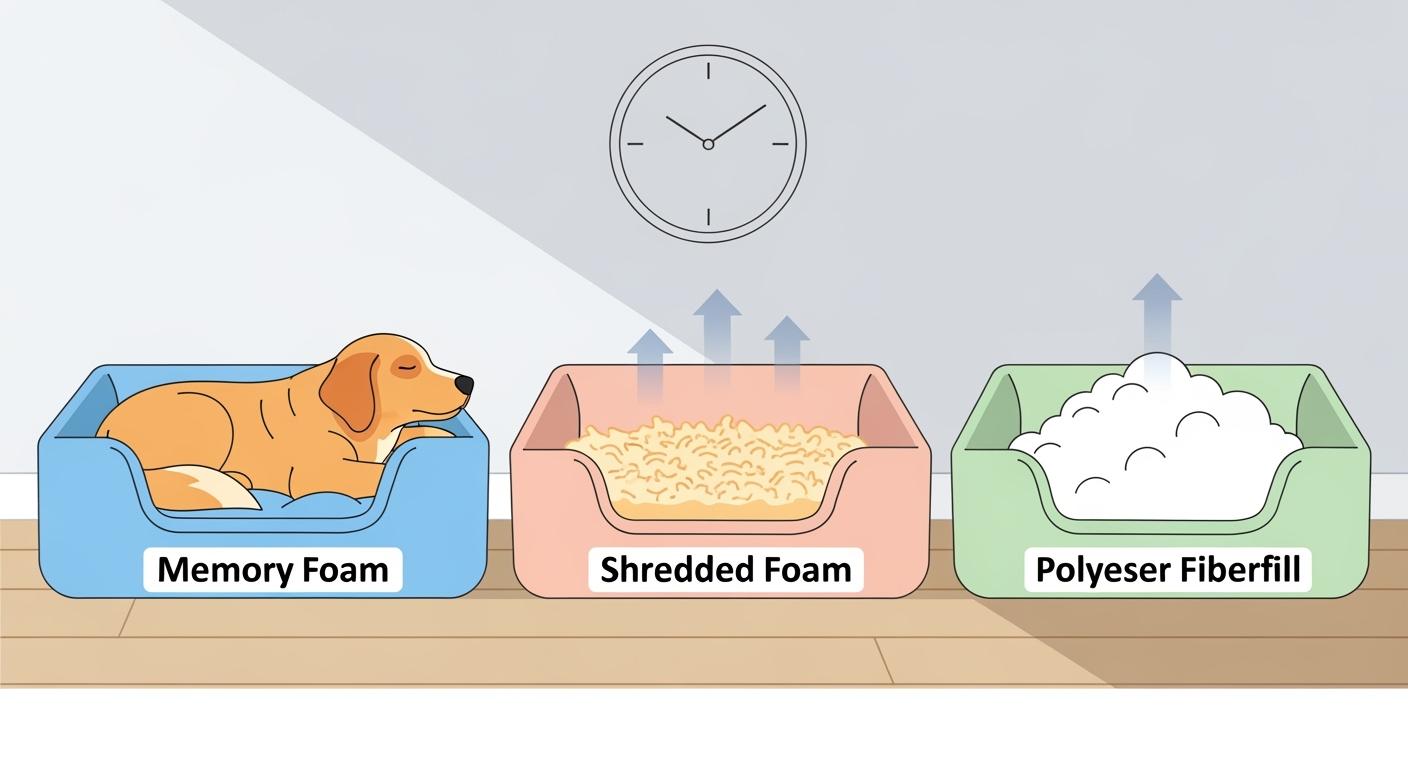
Material for Dog Bed-Which Option Resets Faster Each Day?

Dog bed material options including microfiber suede, canvas, and plush polyester covers

Scope: cover fabrics and fill materials for standard home dog beds, evaluated across cleanability, comfort, and durability.

Picking the right material for a dog bed comes down to one real question: what does your dog actually do on it? A heavy shedder coming in from the yard needs a different surface than an older dog sleeping through the afternoon, and a chewer will defeat a plush cover that looks fine in the store. The material shapes how fast the bed resets after every mess and how long it stays usable – and getting that match right saves considerably more effort than any wash routine can.

Note: This guide covers cover fabrics and fill categories for standard home dog beds. It does not address medical-grade orthopedic prescriptions, specific brands, or dogs with active skin conditions – those cases call for a vet conversation first.

Who This Guide Is For

This guide is for dog owners choosing a new bed or replacing a worn-out one who want to match the material to their dog’s actual habits – shedding, drooling, chewing, or joint support needs. It works best if your dog is generally healthy and you are managing everyday wear and cleanliness. It is not the right resource if your dog has been prescribed a specific support material by a veterinarian or has an ongoing skin condition requiring specialist input.

This guide is less useful for dogs with active allergies or pain conditions – for those cases, a veterinarian or board-certified veterinary dermatologist (DACVD) is the right starting point, not a general material guide.

A Short Glossary

These terms are used consistently throughout the guide:

  • Pill resistance – how well a fabric resists forming small fiber balls on the surface after repeated use and washing. Low pill resistance means the cover gets rough and matted faster.
  • Moisture-wicking – a fabric’s ability to move liquid away from the top surface toward the outer layer, speeding up drying and reducing odor buildup between washes.
  • Denier – a measure of fabric thread weight. Higher-denier fabrics (such as ballistic nylon) are denser, more resistant to tearing, and usually easier to wipe clean.

Key Takeaways

For most dogs, the right material is the one that matches their messiest habit – not the softest or most durable option available. Smooth, tightly woven fabrics like microfiber suede or cotton canvas reset fastest after shedding or muddy paws. High-loft polyester and memory foam offer the most comfort but require more frequent washing to stay fresh. If your dog digs or chews, prioritizing high-denier cover fabric usually matters more than fill type. For guidance on when to wash and when to wash sooner, see how often to wash your dog’s bed.

Quick Comparison of Dog Bed Materials

Use this table as a starting point to narrow down by your dog’s main habit – not as a definitive ranking:

MaterialReset SpeedSurface FeelDurabilityBest ForWhat to Watch
Microfiber suedeFast – wipe or spot cleanSoft, smoothMedium-highHeavy shedders, muddy pawsCan pill over time with abrasive washing cycles
Cotton canvasFast – machine wash weeklyFirm, breathableHighActive dogs, frequent washingTakes longer to air-dry than synthetic alternatives
High-loft polyesterMedium – shake, spot cleanPlush, softMediumComfort-focused, calmer dogsTraps hair in the fiber; needs more frequent washing
Memory foam (fill)Depends on cover materialSupportive, denseMediumOlder dogs, joint stiffnessSlow to dry; the cover choice matters as much as the fill
Ballistic nylonFast – wipe or vacuumSmooth, firmVery highDiggers, chewers, heavy dogsFirm feel can discourage reluctant dogs initially
Ripstop canvasFast – wipe, air dryTextured, firmVery highOutdoor use, rough sleepersLess forgiving for dogs with pressure-point sensitivity
BoucléMedium – shake, spot cleanSoft, loopedLow-mediumLight shedders, calm dogsLooped texture traps debris; avoid for muddy dogs
Organic cottonMedium – machine washGentle, naturalMediumSensitive skin, warm climatesMay shrink; check washing temperature instructions carefully

How This Guide Was Written

The recommendations here come from hands-on observation – handling materials in daily use, running wash cycles, and watching how different fabrics hold up after repeated resets over time. No lab testing or clinical data was used to generate these recommendations. Where a recommendation touches on joint health or skin sensitivity, this guide points to a veterinarian as the right authority rather than drawing clinical conclusions. The ASPCA and AAHA both recommend consulting a vet before making environment changes for dogs with ongoing skin or joint conditions.

Reset Speed and Clean Routine

Reset speed matters most if your dog generates daily mess – shedding, drool, or muddy paws after outdoor activity. The cover material determines how fast you can clear the surface without a full wash cycle.

Identifying your dog’s main mess type before choosing a material is usually the most practical first step. Hair that releases with one swipe means the bed resets in under a minute. Hair that packs into seams adds significant time every day.

Tip: Swipe the back of your hand firmly across any fabric sample. If hair or debris comes off in one pass, that cover resets fast. If it requires multiple passes or leaves residue caught in the weave, expect daily maintenance to take meaningfully longer over time.

Comfort and Surface Feel

Surface feel affects whether your dog will actually use the bed – a material that feels rough or slippery underfoot is often avoided, no matter how supportive the fill underneath.

Press the cover firmly and rub it in a circle. Rough texture or slippage under your hand usually signals the same experience under your dog’s paws. Soft, high-loft polyester and organic cotton tend to score highest for initial willingness to lie down. Memory foam fill, when paired with a soft cover, usually suits dogs with joint stiffness well – it compresses gradually under body weight rather than pushing back against pressure. For dogs that need washable orthopedic support alongside comfort, this orthopedic dog bed guide covers washable and waterproof options that balance both priorities.

Surface feel and fill support are separate decisions. A plush cover can sit on a flat, unsupportive fill, while a firm-feeling canvas cover can wrap a well-cushioned orthopedic base. Evaluating the cover and fill independently usually leads to a better match.

Maintenance and Durability

Durability means the material holds its structure and cleanability over time – not just on first use. Cotton canvas and high-denier synthetics generally last longest under frequent machine washing. Plush covers often degrade faster, especially when washed with high heat or abrasive detergent cycles.

Use this checklist after the first week of use and again after the first wash cycle to confirm the material is working for your dog’s habits:

Check ItemPass SignalFail SignalImprovement Plan
Hair releaseComes off with one swipePacks into seams or weaveSwitch to a tighter-weave or smoother cover
Odor after washingLow or neutral within 24 hoursSmell lingers past one dayWash more frequently; try a thinner or moisture-wicking fill
Drying timeFully dry overnightStill damp after 12 hoursAir-dry flat outdoors; consider a lower-loft fill alternative
Cover integrityNo pilling, fraying, or seam separationPilling or loose threads visibleLower washing temperature; high heat accelerates cover breakdown

Common Mistakes

  • Choosing a material for its label or appearance, not for your dog’s actual habits.
  • Ignoring how hard it is to remove hair from textured or looped surfaces.
  • Overlooking deep seams and recessed corners that collect debris over time.
  • Choosing high-loft plush covers for dogs that drool heavily or come in with damp coats.

Tip: The most common mistake is picking the softest-looking material without checking whether hair releases from it. A bed that traps fur will require significantly more daily reset effort than one that looks less impressive on the shelf.

Troubleshooting: When the Material Is Not Working

Most material problems show up within the first two weeks of real use. If you notice any of the following patterns, the cover or fill is likely a mismatch for your dog’s habits:

SymptomLikely CauseFast CheckFix
Bed smells within a day or twoOdor-trapping fill or coverSniff cover and fill separately after washingTry a thinner fill or a moisture-wicking cover material
Hair sticks and resists removalTextured or looped surfaceSwipe hand firmly across the coverSwitch to a smoother, tighter-weave cover fabric
Bed stays damp after washingThick padding or dense fillPress the pad for moisture 12 hours after washingAir-dry flat outdoors; consider a lower-loft fill option
Dog avoids the bedSurface feel or firmness mismatchWatch whether dog approaches then redirects awayTry a different cover texture before replacing the full bed

Matching Material to Dog Type

Matching material to your dog’s habits – rather than aesthetic preference – is the most reliable way to get consistent use from a bed over time. Below are the three main categories and what each works best for.

Soft Materials

Soft fill and plush covers give comfort-focused dogs a cozy, inviting surface. High-loft polyester and memory foam fill are the most common options here. Memory foam compresses gradually and returns to shape, which usually suits older dogs or dogs with joint stiffness better than flat foam alternatives. The main limitation is that soft materials tend to trap hair and hold odor longer, so they typically need washing more often than smooth-surface covers.

If your dog shows signs of joint discomfort, the ASPCA recommends discussing orthopedic support options with a vet before relying on bed material alone to manage those symptoms.

Disclaimer: A soft or orthopedic dog bed is a comfort tool, not a medical treatment. If your dog shows signs of pain, stiffness, or reluctance to move, consult a veterinarian before making bed material changes.

Tough Materials

High-denier fabrics like ballistic nylon and ripstop canvas hold up best for dogs that dig, scratch at the surface, or chew the perimeter of their bed. These covers resist puncture and surface abrasion far longer than standard polyester – but the tradeoff is feel. Firm surfaces may feel less inviting initially, and some dogs take a few days to settle on them. If your dog consistently avoids a tough-fabric bed, check whether the fill underneath provides enough cushion to offset the firmer surface. For beds designed specifically for chewers and diggers, this guide on indestructible dog beds covers what actually holds up under sustained use.

Tough covers also reset quickly – most can be wiped with a damp cloth or vacuumed without removing the cover entirely. Sprinkling baking soda on the surface and vacuuming it off after 10-15 minutes usually handles odor between full wash cycles.

Easy-to-Clean Materials

Microfiber suede, smooth polyester, and water-resistant coated fabrics prioritize fast daily resets. These materials work best for dogs that shed heavily, drool, or come in from outdoor activity with damp or muddy coats. Hair usually releases with a single swipe rather than requiring a lint roller, and machine-washable covers in these fabrics tend to dry faster than plush alternatives. For outdoor or yard-use beds, outdoor dog bed options often combine easy-clean covers with weather-resistant fills that hold up across seasons.

Quick-drying covers also work well in humid climates where slow-drying beds develop odor more quickly between washes.

Real-Life Reset Scenarios

Dog resting on a clean dog bed after daily reset routine

How a bed resets in practice depends on the cover material, fill depth, and your dog’s daily habits. Use the table below as a reference for matching those variables to a realistic routine:

Dog TypeMaterial MatchDaily ResetWeekly ResetWhat to Watch
Heavy shedderMicrofiber suede or smooth polyesterOne swipe with hand or damp clothMachine wash coverHair packing into seams near zippers over time
Drooler or damp-coat dogWater-resistant cover with moisture-wicking liningWipe surface; allow to air dry fullyMachine wash or wipe-down depending on cover typeOdor building in fill if cover is removed infrequently
Chewer or diggerBallistic nylon or ripstop canvasVacuum or wipe – no cover removal neededSpot-treat stains; baking soda plus vacuum for odorFill shifting toward one side from repeated digging
Older or joint-sensitive dogMemory foam fill with soft removable coverSpot clean or brush cover surfaceMachine wash cover; check foam for compression spotsFoam flattening at entry and exit edges over time

Observation Log Template

Record for 3 days before switching materials: [cover material type], [hair release: easy / moderate / hard], [odor level after 24 hours: low / noticeable / strong], [drying time after spot clean or full wash], [dog willingness to return to bed: immediate / delayed / avoided].

Choosing the Right Material for Your Lifestyle

Comfort-First

If joint support or sleep quality is the primary concern, memory foam or high-density foam fill under a soft, breathable cover usually offers the best starting point. Organic cotton and high-quality microfiber suede both pair well with foam fill and hold up through repeated washing cycles. Choosing a bed with a replaceable cover extends the useful life of the foam base significantly – you can refresh the cover without replacing the whole bed when it wears down.

Cleanability-First

If daily reset speed matters most, prioritize covers with tight weaves and few recessed seams. Microfiber suede and tightly woven cotton make single-swipe hair removal realistic in everyday use. Avoid fleece and velvet in this priority – both trap hair and slow down the reset routine significantly. Machine-washable covers in thinner fabrics also dry faster, which helps limit odor buildup between weekly washes.

Durability-First

For dogs that actively damage beds, cover material is usually more important than fill type. Reinforced seams and high-denier weaves extend cover life significantly for this use case. Waterproof liners between the cover and the fill protect the foam from moisture and odor over time and are worth including if your dog has accidents or regularly carries water from the bowl to the bed. For a closer look at what makes a bed last through heavy use and washing, this guide on washable and waterproof dog beds covers the details worth checking before buying.

What This Guide Will Not Tell You

  • Brand or price comparisons. Product-specific recommendations belong in buying guides. This guide covers material categories only.
  • Medical or orthopedic prescriptions. If a vet has recommended a specific support type for your dog’s condition, follow that recommendation – this guide covers general categories, not clinical prescription.
  • Certification standards for specific products. No universally applicable certification standard currently covers all dog bed material categories. If a product carries third-party testing claims, verify those directly with the manufacturer.
  • Advice for dogs with active skin conditions or allergies. For dogs with skin sensitivities, consult a veterinarian or DACVD – material choice in those cases depends on the specific condition, not general fabric categories.

FAQ

What is the fastest way to clean a dog bed each day?

For most cover materials, a single swipe with a damp cloth or a quick vacuum is enough for a daily reset.

How often should you wash your dog’s bed?

Once a week is a reasonable baseline for most dogs, with more frequent washing when shedding is heavy or odor develops sooner.

Which material is best for dogs that shed a lot?

Smooth covers with a tight weave – like microfiber suede or flat polyester – usually release hair fastest with the least daily effort.

Is memory foam worth it for a younger, healthy dog?

For a younger dog without joint concerns, high-loft polyester fill often offers similar comfort with easier maintenance and faster drying.

Can tough materials still feel comfortable for sensitive dogs?

Often yes, when the fill underneath provides enough cushion – the cover affects feel on entry, but fill depth and density determine comfort during rest.

Note: This FAQ covers cover and fill material choices for everyday home dog beds. It does not replace veterinary or specialist advice when material choice is linked to an ongoing health or skin condition.

Get A Free Quote Now !

Table of Contents

Blog

Best No Pull Large Dog Harness for Safer Walks

Find the best no pull large dog harness by checking fit, clip position, and shoulder freedom, then build calmer, safer walks with less strain on busy routes.

Military Style Dog Harness: Control, Fit, and Comfort

Learn when a military style dog harness improves control, when a lighter harness works better, and how to check fit, heat, and comfort on real walks.

Best Dog Harness for Small Dogs That Pull

Find the best dog harness for small dogs that pull with fit checks, harness type comparisons, and real walk tests for comfort, control, and safer walks.

Metal Dog Bed: When to Add a Mat for Real Comfort

Learn when a metal dog bed works on its own, when a mat improves comfort, and how to test support, airflow, noise, and cleanup in real use at home first.

Front Backpack Dog Carrier for Dachshunds: Fit Guide

Learn when a front backpack dog carrier works for a dachshund, how to check fit, airflow, and posture, and when another carrier style fits better.

Best Dog Sling Carrier for Small Dogs: What Matters Most

Find the best dog sling carrier for small dogs with fit checks, comfort cues, and clear rules for when a sling, tote, or structured carrier fits better.
Scroll to Top

If you have any questions, please do not hesitate to contact us.

Get A Free Quote Now !

Welsh corgi wearing a dog harness on a walk outdoors





