
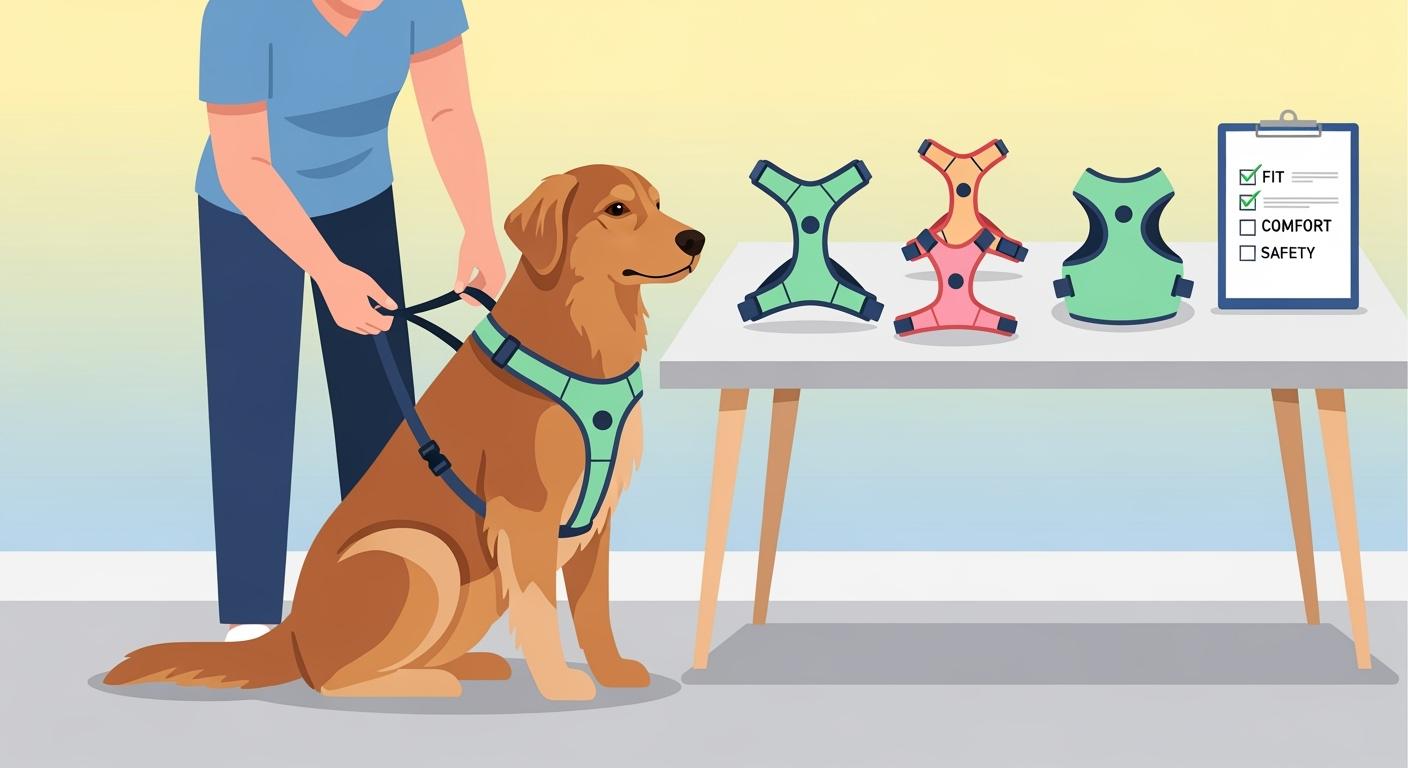
Many people search for how does a dog harness go on because the first mistake often happens before the walk starts. A harness may look correct when it is clipped, but still press the throat, rub behind the front legs, or shift sideways once the dog moves. The better check is not only how the harness goes on, but whether its entry style, strap position, and chest fit stay comfortable after real movement.
This guide focuses on pre-buy fit checks, entry style, shoulder freedom, clip access, and everyday comfort. It does not replace veterinary advice. If your dog coughs, gags, limps, or shows skin irritation, stop using the harness and ask your veterinarian.
Key Takeaways
- Pick the best harness style for your dog. Choose the entry style your dog will actually tolerate and that you can fasten without twisting straps.
- Measure the base of the neck and the widest part of the chest before you buy. A snug one-to-two-finger check is a better starting point than buying by size label alone.
- Do a short fit test after the first walk. Watch for throat pressure, elbow rubbing, shifting, or back-out risk, then adjust or change style if needed.
How the Harness Goes On Matters Before You Buy
Before you compare padding, color, or add-on features, check the entry style. A harness that looks fine on a product page can still be frustrating if your dog dislikes overhead entry or if the buckle placement is awkward for daily use.
Step-In vs. Over-the-Head
Step-in harnesses work by placing the front paws into the openings and fastening the harness on the back. They can be helpful for dogs that dislike gear going over the head. Over-the-head harnesses slide over the head first, then close around the chest or belly. They usually give you more places to fine-tune the fit.
Neither style is automatically better. The better choice is the one that sits low enough on the chest, stays centered when your dog turns, and does not crowd the throat or elbows once adjusted.
| Harness Style | What to Check First | Main Watchout |
|---|---|---|
| Step-In | Paw entry size, back buckle access, centered chest panel | Can shift if the chest or belly area is too loose |
| Over-the-Head | Head opening, throat room, chest strap position | Can feel fussy for dogs that dislike overhead handling |
Check Clip Access Before You Care About Features
Easy daily use matters. Look at where the buckles close, where the leash ring sits, and whether you can adjust the straps evenly without flipping the harness around. A simple design with clear access points is usually easier to fit well than a bulky design with extra pieces you never use.
If you want a harness that feels easier to manage during daily walks, check these points before you buy:
- Can you identify the front and back at a glance?
- Are the buckles easy to reach once the harness is on the dog?
- Does the neck opening sit closer to the top of the chest instead of riding up on the throat?
- Can the girth or belly strap sit behind the front legs without crowding the elbows?
Measure First, Then Fit-Check After the First Walk

Neck Base and Chest Girth Come First
You need to know how to measure your dog before you buy a harness. Measure the base of the neck where the harness opening will sit, not higher up on the throat. Then measure the widest part of the chest just behind the front legs. Use those numbers to compare with the product’s sizing chart.
Do not buy by label alone. A “medium” in one harness shape can fit very differently from a “medium” in another shape. If your dog has a thick coat, recheck again after the coat settles under the straps.
Use a Snug Finger Check and a Short Walk Test
After the harness is on, do a light finger check under each main strap. The harness should feel snug, not loose enough to gap and not tight enough to pinch. Then let your dog stand, sit, turn, and walk a short distance indoors or on a calm sidewalk.
During that first test, watch for these signals:
- The neck opening stays on the chest instead of climbing into the throat
- The belly strap sits behind the front legs without rubbing the elbows
- The harness stays centered and does not rotate to one side
- Your dog can take normal steps without shortened stride or hesitation
Tip: Recheck the fit after the first short walk. Movement, coat compression, and uneven strap tightening can make a harness feel different than it did indoors.
What to Check Before You Buy for Daily Use
A dog harness checklist helps you pick the right harness. It also helps you use it safely every day. Before buying, focus on the parts that affect real use: fit, shoulder freedom, clip access, adjustability, edge finish, and how easy it is to clean and re-fit.
8-Point Pre-Buy Checklist
- Measure the neck base and chest first, then compare with the size chart.
- Check whether the entry style suits your dog: step-in or over-the-head.
- Confirm the neck opening sits on the upper chest, not tight on the throat.
- Make sure the belly strap can sit behind the front legs without elbow crowding.
- Look for enough adjustment points to fine-tune the fit evenly on both sides.
- Check the inside edges and seams for rough spots that may rub during walks.
- Do a gentle back-out check before your first longer walk to see whether the dog can slip free.
- Choose a design you can clean and reassemble without guessing which strap goes where.
| Check Item | Pass Signal | Fail Signal | What to Do |
|---|---|---|---|
| Neck opening | Sits on the chest and clears the throat | Rides high or presses when the dog moves | Adjust lower or try a different shape |
| Belly strap position | Sits behind the front legs with clear elbow room | Touches or rubs near the elbow | Refit or change size |
| Centered fit | Stays balanced during turns and short walks | Rotates, twists, or slides to one side | Re-even the straps or change style |
| Back-out risk | No obvious gap when the dog gently backs up | Shoulders or head begin to slip free | Tighten correctly or choose a more secure shape |
Materials and Adjustment Matter More Than Extra Bulk
A more complicated harness is not always a better harness. Focus on smooth inside surfaces, easy-to-reach buckles, stable hardware, and enough adjustment to get an even fit. For hot climates or longer walks, many owners also prefer a build that allows airflow and dries reasonably well after cleaning.
Look closely at the edges around the chest, underarms, and belly. Those are the contact points most likely to cause rubbing if the harness is stiff, unevenly adjusted, or simply the wrong shape for your dog.
Common Mistakes and Quick Fixes
Many harness problems are buying problems rather than training problems. The harness may be the wrong shape, the wrong size, or simply harder to put on correctly than it first appeared.
| Problem | Likely Cause | Quick Check | Practical Fix |
|---|---|---|---|
| Harness shifts during walks | Uneven or loose adjustment | Look at whether the chest panel stays centered | Re-even both sides and retest |
| Dog resists putting it on | Entry style feels awkward or stressful | Notice whether head entry or paw entry causes the struggle | Try a different entry style |
| Redness after a short walk | Rubbing at the elbows, underarms, or chest | Inspect contact points after removal | Stop use, adjust, or switch shape |
| Dog can back out | Neck opening or overall fit is too loose | Do a gentle reverse check before a longer walk | Refit carefully or choose a more secure design |
Recheck fit after washing, after a coat trim, or after weight changes. Puppies and growing dogs usually need more frequent rechecks than adult dogs with stable size.
A good harness should be easy to put on, easy to adjust, and easy to recheck after real use. If you have to guess where the straps belong every time, or if the harness only seems to fit when the dog stands perfectly still, it is probably not the right choice for daily walks.
FAQ
Is a step-in harness always easier to use?
No. A step-in style can be easier for dogs that dislike overhead handling, but it still has to stay centered and secure once the dog starts moving.
How tight should a dog harness feel?
It should feel snug enough to stay in place without visible gaps, but not tight enough to pinch, crowd the elbows, or press into the throat.
When should you stop using a harness right away?
Stop if you see redness, hair wear, limping, coughing, repeated escape attempts caused by poor fit, or any sign that the harness is interfering with normal movement.






