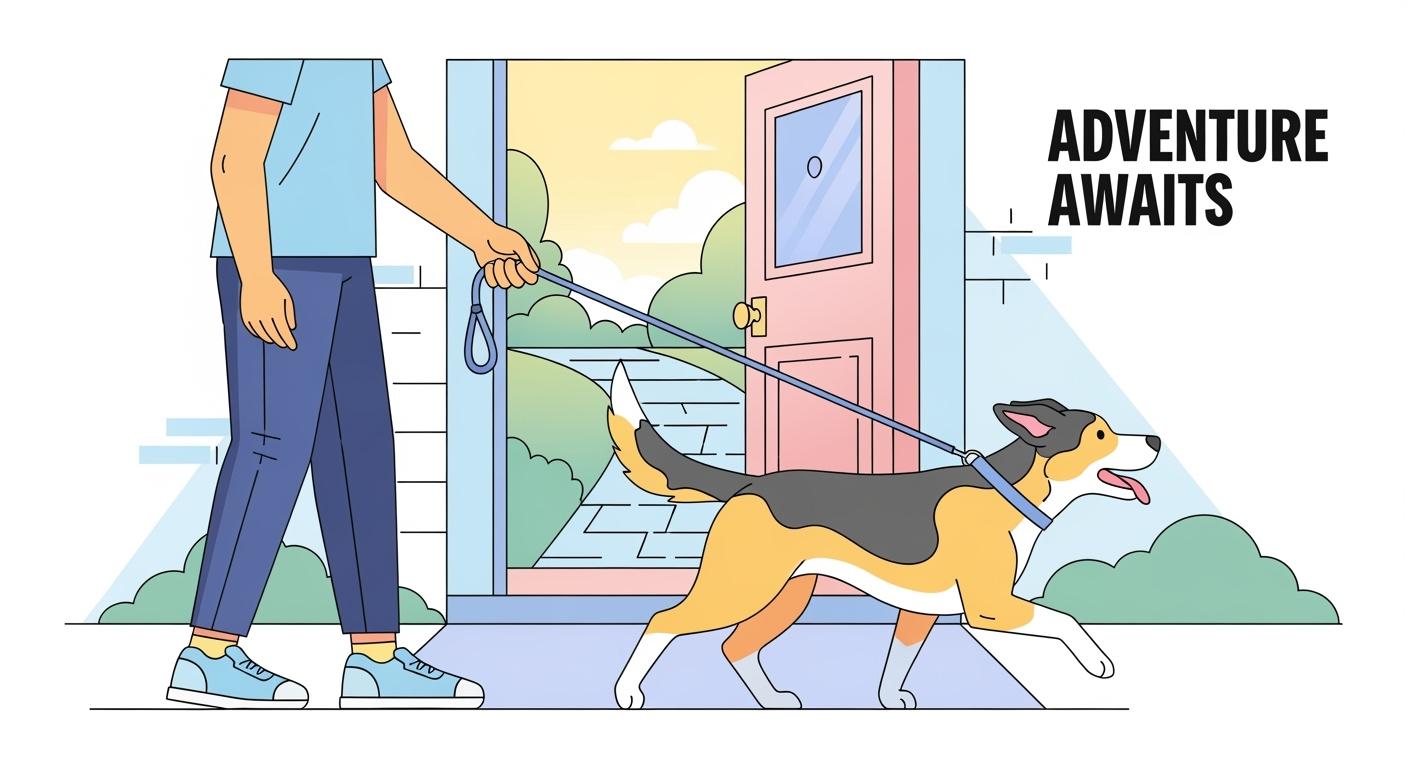
If your dog walks fairly well indoors but starts pulling the moment you step outside, the problem is usually not stubbornness. The environment just became harder much faster. The doorway, the first smells, the open space, the movement down the street, and your dog’s expectation of getting somewhere all stack up at once. The fix is usually to slow down the first stage of the walk, reduce how much your dog rehearses pulling, and stop treating the whole outside route as the training starting point.
Key Takeaways
- Do not wait until you are halfway down the block to start training. Most leash problems begin at the door, gate, hallway, or first stretch of sidewalk.
- If the leash goes tight, stop the forward progress, reset, and make the next repetition easier instead of trying to push through the same level of difficulty.
- Practice leash training in calm places first, then build outward in short steps instead of jumping straight into the full walk.
Why Pulling Starts the Moment You Leave Home
What changes after you cross the threshold
Inside, your dog is working in a familiar space with fewer surprises. Outside, the walk suddenly includes scent trails, moving cars, other dogs, people, wind, noise, and distance. Many dogs also learn that the door opening predicts action. That anticipation alone can create tension before the walk even starts.
- Excitement builds before you reach the sidewalk.
- Smells and motion pull attention away from you.
- Your dog may speed up simply because outside is more rewarding than standing still.
- If pulling keeps moving the walk forward, the behavior rehearses fast.
- Some dogs are not overexcited at all. They are worried, overstimulated, or unsure, and the tight leash is part of that reaction.
Indoor vs. outside is not one single jump
| Environment | Use Case | Main Training Goal | Main Watchout | When Not to Move Up Yet |
|---|---|---|---|---|
| Indoor Room | Starting point | Check-ins and loose-leash basics | Handler moves too fast to the next level | Dog still forges ahead or cannot reorient indoors |
| Doorway / Hallway / Driveway | Threshold practice | Calm starts before real movement | Door rushing and instant leash tension | Dog explodes forward as soon as the door opens |
| Quiet Sidewalk | Real-world practice | Short stretches of controlled walking | Trigger stacking and over-arousal | Dog cannot recover after one scent, sound, or passing trigger |
Think of outside training as a ladder, not a switch. Many dogs do not fail because they are “bad on leash.” They fail because the jump from indoors to outdoors was too big.
Why distractions break the plan so fast
Distractions outside can make leash walking harder. That is not just because they are interesting. It is because they compete with your timing, your rewards, and your dog’s ability to stay under threshold. If your dog stops taking food, cannot turn back with you, or stays tight on the leash after a trigger has passed, the session is already too hard. Start farther away, shorten the route, or go back to an easier zone instead of staying in the same struggle.
How to Rebuild Calm Walking Outside
Start with the first few steps, not the whole walk
You do not need a longer route first. You need a cleaner start. A lot of outdoor pulling can be improved by treating the exit and first stretch of the walk as the real training rep.
- Get the leash and gear on before your dog is already bouncing with anticipation.
- Pause at the door. If your dog surges forward, do not let that surge become the start cue.
- Open the door only as far as your dog can stay reasonably calm.
- Walk out a few steps, then stop before the leash goes fully tight.
- Reward slack, reorientation, or calm movement back toward you.
- If pulling starts immediately, turn back a few steps or reset to the doorway instead of continuing down the street.
- Repeat short, clean starts until the first part of the walk stops falling apart.
Tip: Many dogs improve faster when you shrink the route and repeat better starts, rather than trying to finish a full walk with bad leash tension the whole time.
Pass/Fail checklist before you increase difficulty
Use this table to decide whether to move forward or stay where you are.
| Check Item | Pass Signal | Fail Signal | Fix |
|---|---|---|---|
| Doorway calm | Dog can pause before exiting | Dog rushes or drags you through the opening | Practice calmer exits before adding distance |
| First 10 to 20 steps | Leash stays mostly slack | Tension appears right away and stays there | Shrink the route and reward earlier |
| Check-ins | Dog can reorient to you without a fight | Dog is fully locked onto the environment | Lower the difficulty and increase distance from triggers |
| Recovery after a distraction | Dog settles within a few seconds | Dog stays wound up and keeps pulling | Go back to an easier setting |
| Body language | Dog can move with loose, normal posture | Dog is frantic, stiff, freezing, or constantly scanning | Shorten the session and reduce pressure |
Do not move up just because you want the walk to be longer. Move up when your dog can stay functional at the current level.
Use techniques that change the outcome, not just the direction
You can use several techniques to improve loose leash walking, but they work best when your timing is good and the environment is not already overwhelming your dog.
- Stop early, not late: If you wait until your dog is fully leaning into the leash, you are always a step behind. Pause when the pull is just beginning.
- Turn and reset when needed: A direction change can help when forward motion is feeding the pulling, but it should be used as a reset, not as a constant pattern that makes the walk chaotic.
- Reward the moments you actually want: Slack, check-ins, softer body movement, and choosing to stay with you are the moments that should pay.
- Use sniff breaks on purpose: Sniffing can be a useful release and reward, but not when your dog is dragging you into it. Give access after calmer movement, not through a tight leash.
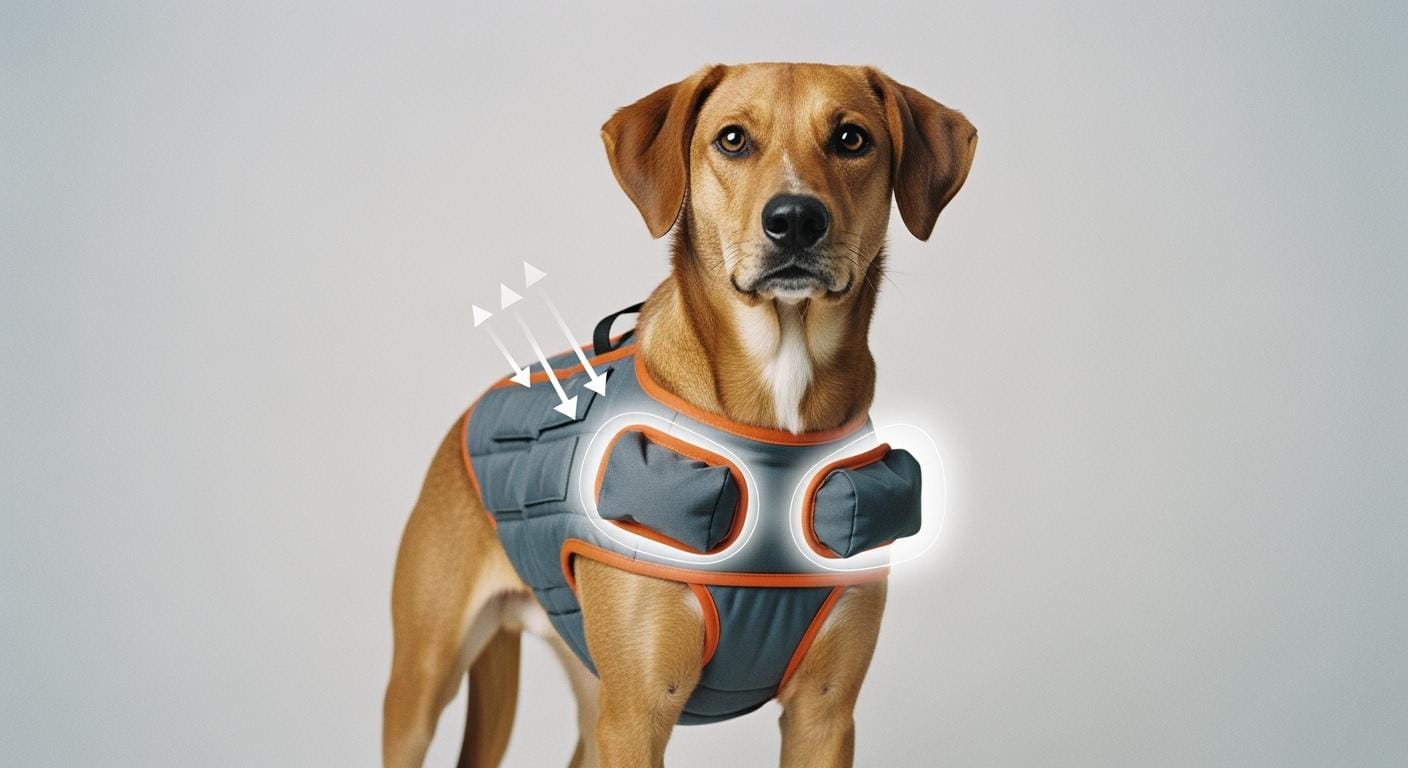
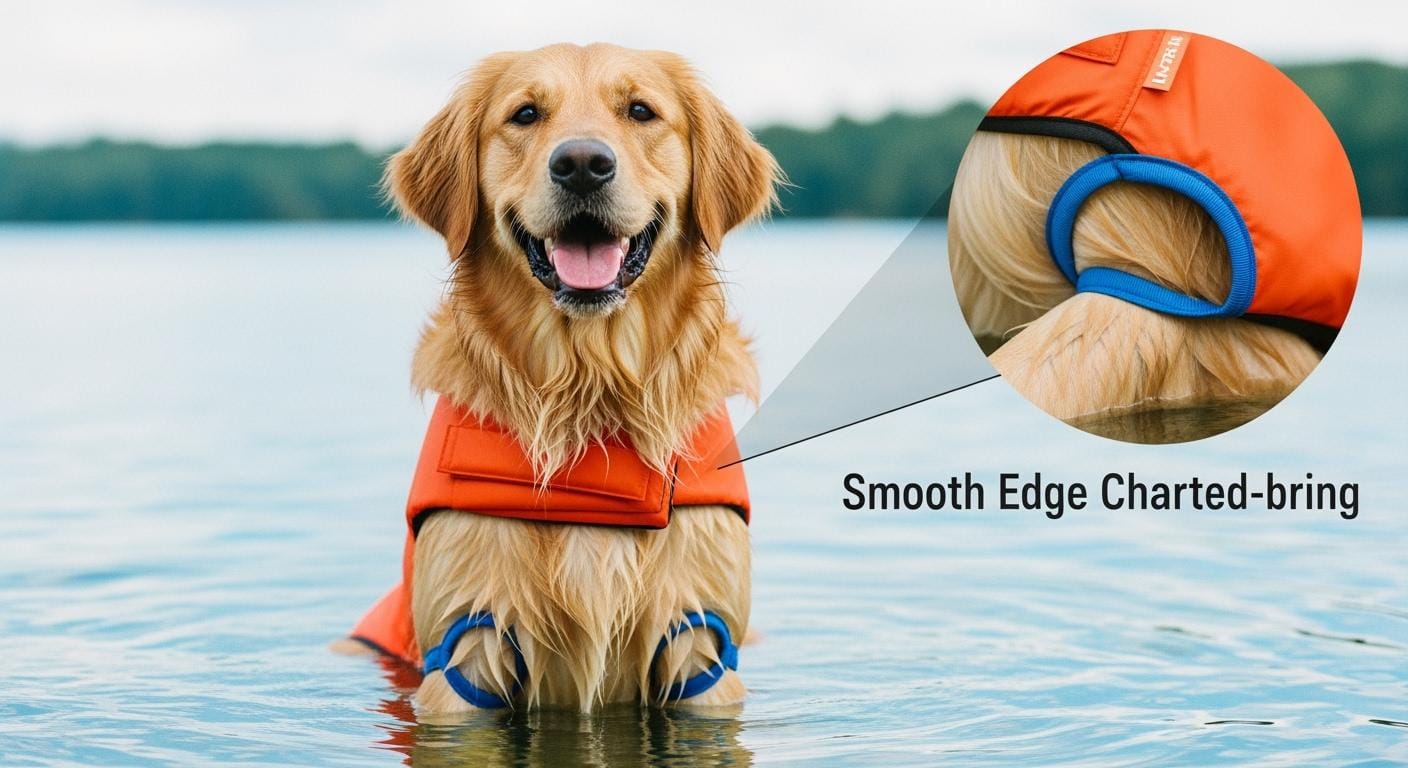
- Check your gear honestly: A front-clip harness can help some dogs by reducing straight-ahead leverage, but if the fit twists, crowds the shoulders, or creates side drag, it will not solve the training problem by itself.
Note: Keep sessions short enough that your dog can still think. A five-minute clean practice rep is usually more useful than a longer walk full of repeated pulling.
Troubleshooting table for common outdoor setbacks
| Symptom | Likely Cause | Fast Check | Fix |
|---|---|---|---|
| Dog pulls as soon as the door opens | Exit routine is too arousing | Watch whether the leash tightens before you even step out | Practice doorway calm before full walks |
| Dog pulls only during the first minute | Anticipation is too high at the start | Notice whether the walk improves after the initial burst | Repeat shorter start loops instead of one long route |
| Dog ignores food outside | Environment is too hard or dog is too aroused | See whether your dog can even glance back at you | Go quieter, increase distance, or lower session length |
| Dog pulls toward other dogs or people | Excitement or concern around triggers | Watch whether your dog can recover after passing | Work at greater distance and reward recovery |
| Dog freezes or refuses to move | Fear, uncertainty, or overload | Look for tension, scanning, or crouched posture | Return to a familiar area and reduce pressure |
| Progress changes depending on who is walking the dog | Handler timing and rules are inconsistent | Compare what each person does when pulling starts | Agree on one simple response plan |
If you feel stuck, do not only repeat the same walk more times. Change the setup, the starting zone, or the difficulty level so your dog can succeed again.
Signs the Session Is Too Hard and Mistakes That Slow Progress
Warning signs to catch early
You can spot trouble early if you look at the beginning of the walk, not just the middle of it.
- Your dog rushes the doorway or gate every time.
- The leash stays tight through most of the walk.
- Your dog stops checking in and stays locked on the environment.
- Your dog hits the end of the leash over and over instead of recovering.
- Body language shifts into frantic excitement, stiffness, scanning, barking, or repeated freezing.
If these signs show up early, the session is probably too hard at that distance, in that location, or with that much movement happening at once.
Common mistakes and what they cause
Leash training often stalls for predictable reasons.
- Going too far too soon: The dog can walk in one calm space, but the handler jumps straight into a full outdoor route.
- Walking through pulling: The dog learns that tension still gets them where they want to go.
- Asking for too much focus too early: If the environment is already overwhelming, the dog cannot perform cleanly.
- Using gear that adds its own problems: Poor harness fit, throat pressure, shifting, or side drag can make outdoor work harder than it needs to be.
- Making sessions too long: Mental fatigue often looks like “bad behavior” when it is really loss of control and processing ability.
Do not drag your dog through fear, keep marching into a tight leash, or assume that more correction will fix an overloaded session. Better leash training usually comes from better setup and better timing, not from more force.
When to get professional help
You should get help sooner rather than later if your dog is not just pulling, but escalating beyond normal excitement. That includes lunging, spinning, panicking, backing out of gear, redirecting onto the leash or handler, or showing persistent fear around outdoor triggers. A qualified trainer who uses reward-based methods can help you separate excitement, fear, and reactivity, and build a plan that fits your dog instead of forcing a generic routine.
Note: If your dog shows coughing, gagging, pain, limping, or breathing difficulty during walks, stop and reassess the equipment and speak with your veterinarian. This article is not a substitute for medical evaluation.
You build better outdoor leash walking by shrinking the problem to a size your dog can actually handle. Start calmer, reward earlier, move up more slowly, and stop treating every walk like a test. Once the first few steps outside stop falling apart, the rest of the walk usually gets easier too.
FAQ
How do you start leash training a puppy that pulls outside?
Start in the easiest outdoor layer, not the busiest one. That may be a hallway, driveway, porch, or the first few feet outside the door. Keep sessions short, reward slack and check-ins early, and reset before the pulling becomes a long stretch of tension.
What should you do if your puppy pulls toward another dog?
Do not try to power through at the same distance. Increase space, get your puppy reoriented to you, and reward recovery before trying another pass. If your puppy cannot recover, the setup is still too hard for that level.
How can you help your puppy stay focused during outdoor walks?
Use a calmer start, shorter practice sections, and rewards that matter enough for the environment. Focus usually improves when the walk begins below your puppy’s arousal limit, not when you ask for more attention in a setting that is already too exciting.