
A lightweight harness can feel like the easy answer for daily walks. It usually adds less bulk, gives a dog more air flow, and can feel less restrictive in warm weather. But lighter is not automatically better. For some dogs, less material means easier movement. For others, it means more side drift, more neck rise, and less stable control once the leash tightens. The better choice depends on what happens after the first few steps, not just how light the harness feels in your hand.
Key Takeaways
- Pick a lightweight harness for cool and comfy walks, especially when it is hot outside. It helps most on calm walks where your dog does not hit the leash hard or twist through every turn.
- Watch for shifting, chest rotation, neck rise, and rubbing. Those are the usual signs that a lighter design is giving up too much stability.
- Do not judge fit only while your dog is standing still. The real test is what the harness does once your dog starts moving, sniffing, and changing direction.
When a Lightweight Harness Actually Makes Sense
Picking the right dog harness for walks is less about choosing the lightest option and more about knowing what your dog can get away with comfortably. A lighter harness usually works best when the walk itself is fairly controlled. If your dog moves smoothly, does not surge hard into the leash, and tends to stay aligned through turns, a lighter setup can be a very practical everyday option.
Why lightweight can feel better on some dogs
The appeal is easy to understand. A lightweight harness usually covers less body area, traps less heat, and feels less bulky on smaller or slimmer dogs. It can also be a better match for short city walks, warm-weather use, and dogs that clearly dislike thick padded gear. Some dogs simply move more naturally when there is less material around the shoulders and chest.
- Less bulk can feel cooler in warm weather.
- A lighter layout can be easier for dogs that resent heavy vest-style coverage.
- For calm walkers, less structure does not automatically mean less control.
A simple harness is also easier to pick up, clip on, and use quickly. That matters for everyday routines. If the dog walks with light leash tension and your main goal is comfort rather than strong control, lightweight can be the right tradeoff.
Where lightweight designs start to lose ground
The weakness shows up when the dog adds more force than the harness can manage cleanly. If your dog pulls hard, turns sharply, backs up, or throws body weight sideways, a lighter design may shift more than you want. That is when a harness that felt “easy” at first starts climbing toward the neck, drifting off center, or rubbing near the elbow.
- Less structure usually means less resistance to rotation.
- Narrower straps can create smaller pressure zones when the dog leans into the leash.
- A lighter harness can stay comfortable on a calm dog and still be the wrong choice for a strong or erratic walker.
If the harness keeps sliding to one side, rising into the lower neck, or twisting after turns, the problem is no longer “just fit.” It may be that the design is asking too much from too little structure.
Who usually needs more structure
Not every dog benefits from going lighter. Some dogs need more stability than a minimal or mesh-heavy design can reliably provide. The table below keeps that tradeoff practical.
| Harness Type | Usually Works Best For | Main Benefit | Main Watchout | Usually a Weak Match For |
|---|---|---|---|---|
| Light Mesh or Minimal Style | Warm days, calm walks, dogs that dislike bulk | Airflow and lighter feel | Can shift more under leash load | Hard pullers, dogs that spin or back out |
| Padded Everyday Harness | Longer walks and mixed daily use | Better pressure spread and comfort balance | Can feel warmer or bulkier | Dogs that overheat easily in covered gear |
| Structured Control Harness | Strong pullers or dogs needing steadier handling | More stability and less drift | Heavier feel and less airflow | Dogs that only need a very light, low-force setup |
Step-by-Step Evaluation Tip:
- Start with a short calm walk instead of a long outing.
- Watch the chest panel and D-ring during the first few turns.
- Check whether the harness stays centered when the leash tightens.
- Look behind the elbows right after the walk for rubbing or hair flattening.
- If you keep seeing side drift or neck rise, move to a more stable style instead of over-tightening the light one.
A lightweight harness can be a good everyday option when the dog moves evenly and the walk stays low drama. It becomes a weaker choice when you need the harness to do more than a light, cool setup can realistically handle.
Disclaimer:
This article is for product fit and use judgment. If your dog already has breathing, pain, or movement concerns, get guidance from your veterinarian before changing gear.
What Causes Shift, Twist, and Rub
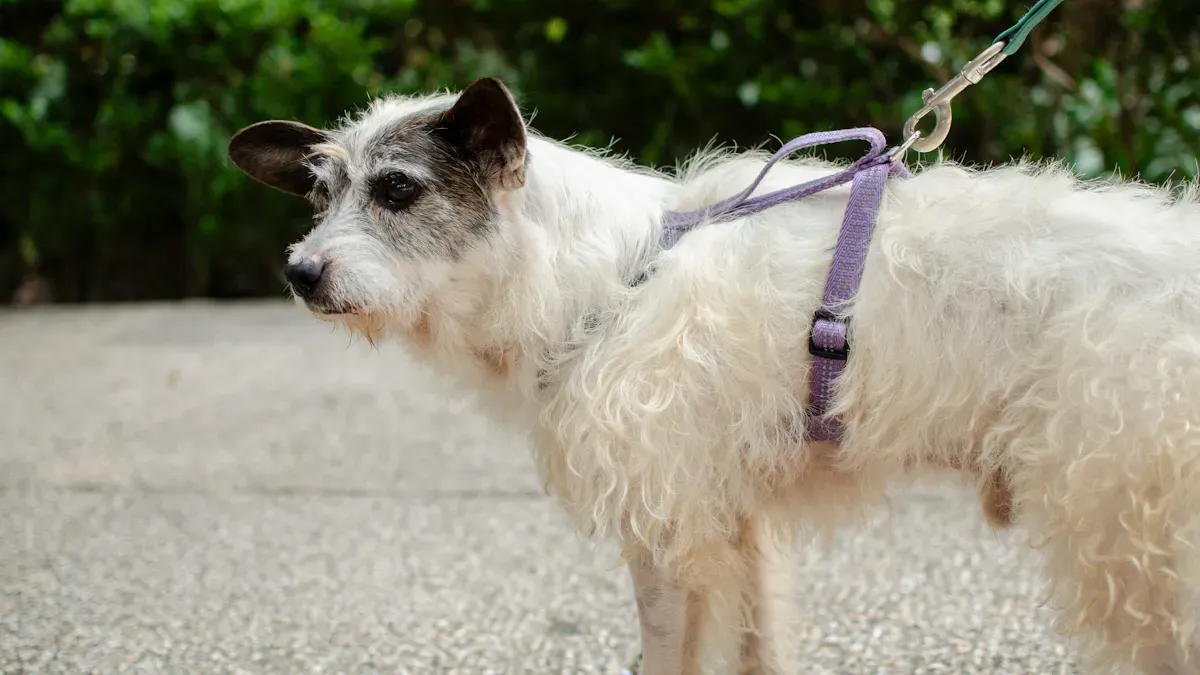
A dog harness should help you enjoy a safe, comfortable walk with your dog. Sometimes, you notice the harness shifts, twists, or rubs. These problems can make your dog unhappy and may even cause injury. You can prevent most issues by learning about common mistakes, checking the fit, and knowing how to fix problems fast.
Common fit mistakes
Most shifting problems do not start with the leash. They start with a fit or layout error that gets exposed once the dog begins moving.
- The harness is too loose through the chest, so it rotates during turns.
- The front section sits too high and creeps toward the throat under tension.
- The belly strap sits too close to the elbow and starts rubbing once the stride opens up.
- The left and right straps are not adjusted evenly, so the harness drifts to one side.
- The dog’s body shape and the harness shape do not match, even if the size looks correct on paper.
- The harness feels fine on a standing dog but fails once the dog pulls, twists, or sniffs low to the ground.
A lightweight design makes these errors show up faster because there is usually less material holding the layout steady. That does not make lightweight bad. It just makes fit mistakes more visible.
Pass/Fail fit checklist
You want the harness to stay stable without becoming tight and restrictive. Use this check before and after a walk, not just before.
| Check Item | Pass Signal | Fail Signal | What to Change First |
|---|---|---|---|
| Neck base position | Harness stays low and clear of the throat | Front section rides upward under tension | Reassess size or move to a more stable design |
| Chest centering | Panel stays centered through turns | Harness drifts left or right | Even the straps and check shape match |
| Shoulder freedom | Dog reaches forward naturally | Stride shortens or looks choppy | Open shoulder space or change style |
| Elbow clearance | No rubbing behind the front legs | Redness, hair flattening, or repeated scratching | Move the contact zone or stop using that layout |
| Leash load handling | Harness stays quiet when leash tension comes on | Twist, drag, or sudden rotation | Recheck clip point and overall structure |
| Post-walk skin check | Skin and coat look unchanged | Marks, hot spots, or concentrated pressure lines | Do not keep testing the same bad fit |
Tip:
Do not rely on a two-finger rule by itself. A harness can pass the finger test and still fail once the dog moves.
Troubleshooting table: symptoms and first fixes
If a lightweight harness keeps feeling wrong, look for the pattern instead of making random strap changes.
| Symptom | Likely Cause | Fast Check | What to Change First |
|---|---|---|---|
| Harness twists after a few minutes | Too little structure for the dog’s movement pattern | Watch the chest panel during turns and stops | Re-even the fit or switch to a steadier design |
| One side keeps drifting back | Off-center pull or uneven strap balance | See which side starts moving first | Reset the fit and check overall symmetry |
| Dog shortens stride | Front section crowds the shoulder area | Watch reach from the side | Choose a layout with cleaner shoulder clearance |
| Redness behind elbow | Drift or poor belly strap placement | Check skin right after the walk | Stop using that fit until the contact point changes |
A lightweight harness can still work very well, but only when its lighter feel is not being asked to cover up a weak fit or a mismatched design.
Note:
If your dog shows pain, limping, breathing trouble, or obvious distress during walks, stop and reassess the setup and speak with your veterinarian.
Signs a Lightweight Harness Is the Wrong One
Spot neck rise, side drift, and rubbing early
You can usually tell quickly when a lightweight harness is not staying where it should. Look for visible clues during normal movement, not just during a posed fit check.
- The front section creeps upward when the leash tightens.
- The D-ring starts centered but finishes off to one side.
- The dog scratches the harness area more after walks.
- The coat looks flattened or rubbed in one repeated contact zone.
- The dog shortens stride, braces, or seems less willing to move forward naturally.
If these signs keep showing up, the answer is usually not to keep tweaking the same light setup forever. It is often a sign that the harness is too minimal for that dog’s shape, force, or walk pattern.
What poor fit actually changes
Bad fit is not only a comfort issue. It can also change how the dog moves and how useful the harness feels in real life.
| What You Notice | What It Usually Means |
|---|---|
| Repeated neck rise | The harness is losing stable position under leash tension |
| Side drift through turns | The fit or layout is not staying balanced on the body |
| Rubbing behind the elbow | The contact zone is landing in the wrong place for that stride pattern |
| Shorter or awkward front reach | The shoulder area may be too crowded or restrictive |
| Dog resists the harness after a few uses | The dog may be connecting the harness with discomfort, friction, or unstable pressure |
Note:
A lightweight harness should feel simpler, not more fiddly. If every walk requires major strap correction, the setup is probably wrong for that dog.
How to reduce shifting without over-tightening
You can improve stability, but there is a point where “more adjustment” stops being the answer.
- Start with a short test walk instead of a full outing.
- Even both sides before tightening anything further.
- Check movement from the front and side, not only from above.
- Look at where the harness ends up after sniffing, turning, and a few leash-load moments.
- If the harness still rises, rotates, or rubs, move to a different cut or a more structured style.
- Do not keep solving drift by tightening until the harness becomes restrictive.
A good lightweight setup should stay light and usable. If the only way to keep it stable is to make it tight, then the dog probably needs a different harness rather than a tighter version of the same one.
Tip:
The best lightweight harness is not the one with the least material. It is the one that stays quiet on the body while your dog actually walks.
A lightweight harness can be an excellent choice for warm-weather walks, calmer dogs, and dogs that clearly dislike bulky gear. But light only works when the fit stays centered and the harness does not start solving comfort by giving up control. If you keep seeing shift, twist, neck rise, or rubbing, the safer answer is usually more stable structure, not more hope that the harness will settle in.
FAQ
What makes a dog harness easy to put on for daily walks?
An easy daily harness usually has a simple entry path, clear buckle placement, and a layout that is easy to read at a glance. The key is not just fast on-and-off use. It should also be easy to fit correctly without twisting or guessing which strap goes where.
How does a no-pull dog harness help during a walk?
A no-pull style can help when your dog loads hard into the leash and you need cleaner body control. It is most useful when it improves alignment without creating extra drag, twisting, or frustration from a poor fit.
Can an adjustable no-pull vest stay secure on active dogs?
Yes, if the shape suits the dog and the adjustment points actually keep the harness centered in motion. Active dogs need more than adjustability on paper. They need a harness that stays stable through turns, starts, and leash tension.
Note:
This FAQ is for general gear-use guidance, not medical advice. If your dog has specific health or movement concerns, ask your veterinarian before changing harness types.






