
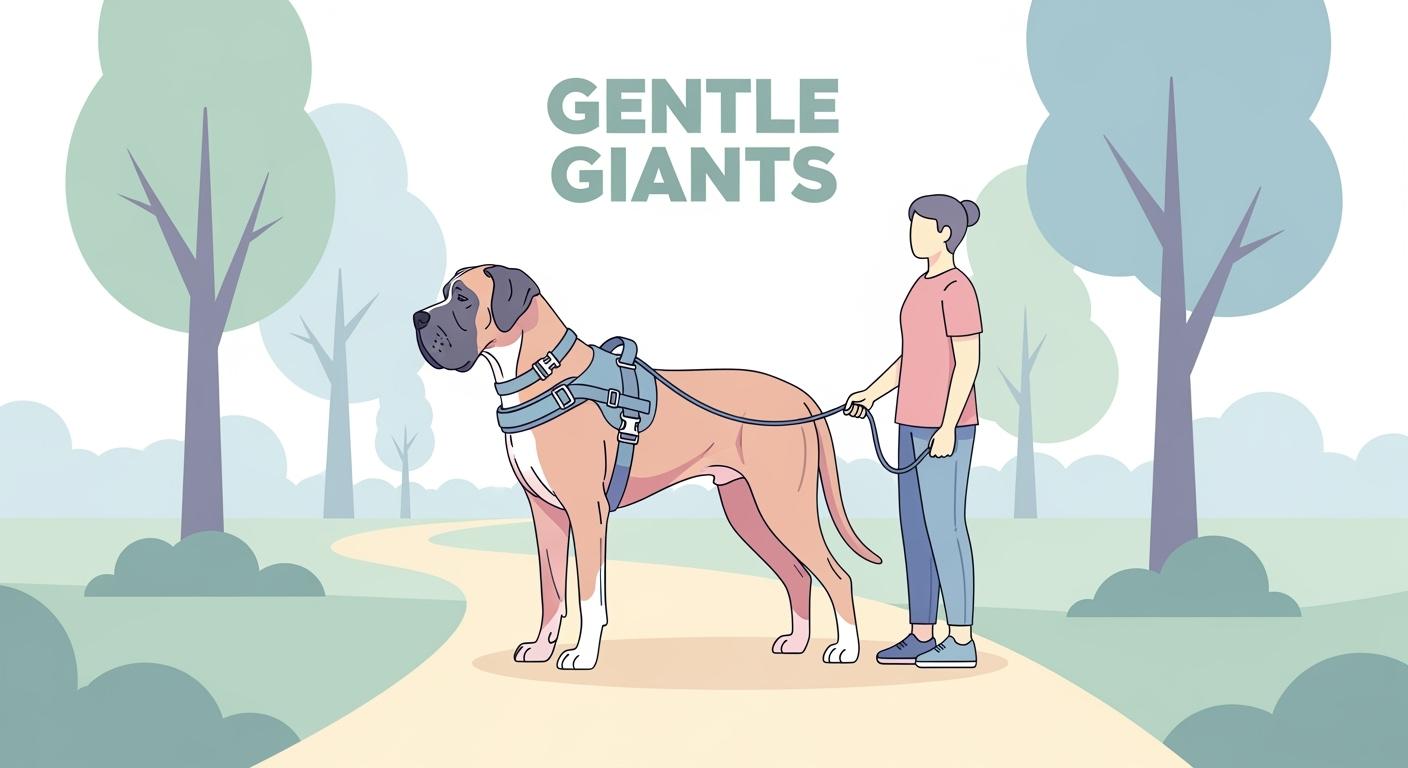
A giant breed dog harness needs to do two jobs at the same time. It must give you enough control for a large, powerful dog, but it also has to let that dog move naturally. Heavy dogs make small fit problems feel bigger. A harness that looks fine indoors can start twisting, rubbing, riding up, or opening gaps once the walk begins. The best choice is usually not the bulkiest harness. It is the one that stays centered, spreads pressure well, and keeps the shoulders free enough for a smoother walk.
Key Takeaways
- Choose a harness that fits snugly but does not pinch. Giant dogs need chest stability without throat pressure or shoulder crowding.
- Do not judge by “heavy-duty” language alone. Strong materials help, but too much bulk can increase heat, rubbing, and movement restriction.
- Select the harness by your dog’s real walk pattern. Calm walkers often do better in lower-bulk designs, while dogs that lunge or surge may need more structure and more precise adjustment.
Support vs Bulk in Giant Breed Dog Harness
Safety and comfort tradeoffs
When you choose a giant breed dog harness, you are balancing support against freedom of movement. Giant dogs put more force into the harness during starts, turns, stops, and pulling. That makes a stable build important. But extra structure only helps when it stays in the right place. If a thick harness crowds the shoulder, traps heat, or drifts into the elbow area, it can make the walk worse instead of better.
You want a harness that feels steady without becoming heavy in the wrong way. A wide strap can help spread pressure. A padded edge can reduce rubbing. More adjustment points can help control drift. None of those features matter if the harness blocks front-leg reach or rides up toward the neck once the dog moves.
Tip: Giant-breed fit should be judged in motion. A harness that only looks good while standing still has not passed the real test yet.
Comparison table: harness types and use cases
You can use this table to compare the main harness directions for giant breeds.
| Harness Type | Best Use Case | Main Benefit | Main Watchout | Who Should Skip It |
|---|---|---|---|---|
| Low-bulk Y-front harness | Everyday walking and smoother movement | Cleaner shoulder room and easier movement checks | Needs good chest fit or it may still drift | Dogs that lunge hard and need more structure |
| Reinforced multi-point harness | Training, stronger pullers, more control-oriented walks | More adjustment and better body stability | Can feel hot or restrictive if overbuilt | Dogs sensitive to bulk or overheating |
| Handle harness | Short support tasks and close control | Useful for guidance in specific situations | Often bulkier and easier to over-tighten | Dogs that do not need lifting or added top hardware |
Who should avoid extra bulk
Some giant dogs do not need a heavy harness at all. If your dog walks calmly, does not hit the end of the leash often, and already moves well in a lighter design, adding extra layers and hardware may create more heat and more friction than benefit. Dogs with thick coats, warmer climates, or a history of rubbing may do better in a simpler harness that still keeps the chest stable.
Bulk becomes a problem when you see any of these signs:
- The dog shortens stride after the harness goes on.
- The harness feels hotter after the walk than the rest of the coat.
- The chest panel drifts because the harness is heavy rather than stable.
- The dog slows down, scratches, or resists being fitted.
Fit Issues in Giant Breed Dog Harness
Movement and pressure points
You want your giant dog’s harness to support movement, not interrupt it. The three places to watch most closely are the lower neck, the chest line, and the elbow area. The front of the harness should sit low enough to avoid throat pressure. The chest should stay centered without collapsing sideways. The belly strap should not creep forward into the elbow path.
With giant breeds, poor fit often shows up as a movement problem before it becomes a visible skin problem. The dog may start taking shorter steps, leaning into one side, or turning less smoothly. Those are useful early warning signs.
Tip: After each walk, check behind the elbows and across the chest for heat, flattened hair, redness, or damp contact zones.
Troubleshooting table: common fit problems
You can spot most giant-breed harness problems with a simple symptom check.
| Symptom | Likely Cause | Fast Check | Fix |
|---|---|---|---|
| Chafing or red marks | Wrong strap path, rough edge, or repeated drift | Check skin and coat after the walk | Reposition the harness or switch to softer edge contact |
| Dog escapes backward | Loose chest area or unstable front opening | Try a gentle backward pressure check | Refit chest and neckline before the next walk |
| Dog slips out forward | Neck opening too large or front rides up | Watch the front under leash tension | Lower the front fit or choose a better shape |
| Harness shifts sideways | Uneven strap tension or chest mismatch | Observe the chest panel during turns | Even out both sides and reassess the chest cut |
| Restricted movement | Shoulder crowding or bulky front coverage | Watch for short steps or stiff turning | Use a harness with cleaner shoulder clearance |
You should always do more than one fit check. Start with a still check. Then watch a short walk. Then observe what happens when the dog turns, sniffs, or leans lightly into the leash. Giant-breed fit errors often appear only once real force enters the system.
Common mistakes and real consequences
The most common mistake is assuming that thicker equals safer. That is not always true. A giant breed dog harness can be overbuilt in a way that adds hardware weight, traps heat, and increases rubbing without actually improving chest stability. Another common mistake is tightening the harness just to stop movement, even when the real problem is the wrong strap path.
Watch for these patterns:
- The dog slows down only when the harness is on.
- The harness looks secure at first, then shifts after a few minutes.
- One shoulder seems less free than the other.
- The dog resists turning or hesitates on leash.
- The handler keeps adjusting the harness during every walk.
Note: If you notice pain, limping, breathing trouble, or repeated movement changes, consult your veterinarian. This blog does not provide medical advice.
Failure Signs in Best Dog Harness
Pass/Fail checklist table
You can use this quick pass/fail check before and after walks.
| Check Item | Pass | Fail | Fix |
|---|---|---|---|
| Supported, stable posture | Dog stands and walks evenly | Dog leans, stumbles, or braces | Recheck fit and chest balance |
| No chest or neck ride-up | Harness stays below throat | Front climbs upward under tension | Lower the front fit or change design |
| Clear shoulder movement | Dog turns and strides normally | Dog short-steps or moves stiffly | Use a more open-shoulder harness shape |
| Secure fasteners and closures | Clips stay closed and straps hold position | Hardware loosens, drags, or slips | Inspect and replace worn parts |
| Balanced, minimal sway | Harness stays centered through the walk | Harness twists or drifts sideways | Rebalance adjustment and reassess structure |
| Comfort after walk | No hot spots, rub marks, or avoidance | Heat, rubbing, scratching, or reluctance | Reduce bulk or change contact path |
Early warning signs and prevention
You should watch for rubbing, twisting, leaning, side drift, or hardware drag early, before they become bigger fit problems. Giant breeds generate more force with every step, so a small alignment issue can become a repeated friction issue very quickly. Prevention usually comes from better fit and better design selection, not from simply tightening everything more.
Tip: Check the harness after the first few minutes of the walk, not just before leaving the house. That is when giant-breed fit problems often start to show.
Tips for choosing and fitting
You should match the harness to your dog’s real body shape, coat type, heat tolerance, and walk behavior. Choose breathable materials when your dog overheats easily. Choose stronger structure when your dog lunges or surges, but only if the harness still allows free front-leg motion. Adjust both sides evenly. Keep the chest centered. Make sure the front stays low enough to avoid throat pressure.
For daily use, the best giant breed dog harness is the one that gives you enough control without making the dog move worse. If the same rubbing, twisting, or short-stepping problem returns after careful adjustment, stop trying to force that harness to work. Change the harness style instead.
You should choose a stronger harness when your giant dog truly needs more control, not just because the dog is large. Choose a smoother, lighter harness when your dog already walks calmly and your main goal is cleaner movement with less rub. The best result comes from shoulder freedom, chest stability, even pressure, and a harness that stays centered after the walk begins.
| Mistake | Better Direction |
|---|---|
| Harness too loose or too tight | Adjust for stable chest contact without pinching |
| Blocks shoulder movement | Use a cleaner open-shoulder design |
| Misses rub spots | Check elbows, chest, and neckline after each walk |
Note: If your dog shows pain, skin problems, or breathing issues, contact your veterinarian.
FAQ
How do you check if your giant breed’s harness fits right?
You should start with a still fit check, then watch your dog walk and turn. A good fit stays centered, leaves the shoulders free, and does not create red marks after the walk.
What should you do if your dog resists wearing the harness?
Let your dog investigate the harness calmly first. Keep sessions short, reward calm behavior, and check whether the harness feels too heavy, too hot, or too restrictive once it is on.
Can a harness help with pulling on walks?
A well-fitted harness can improve control and reduce poor pressure on the neck, but it should still allow natural movement. If the harness helps you but makes your dog move worse, it is not the right long-term answer.
Note: If your dog shows pain or breathing issues, contact your veterinarian. This blog does not provide medical advice.






