
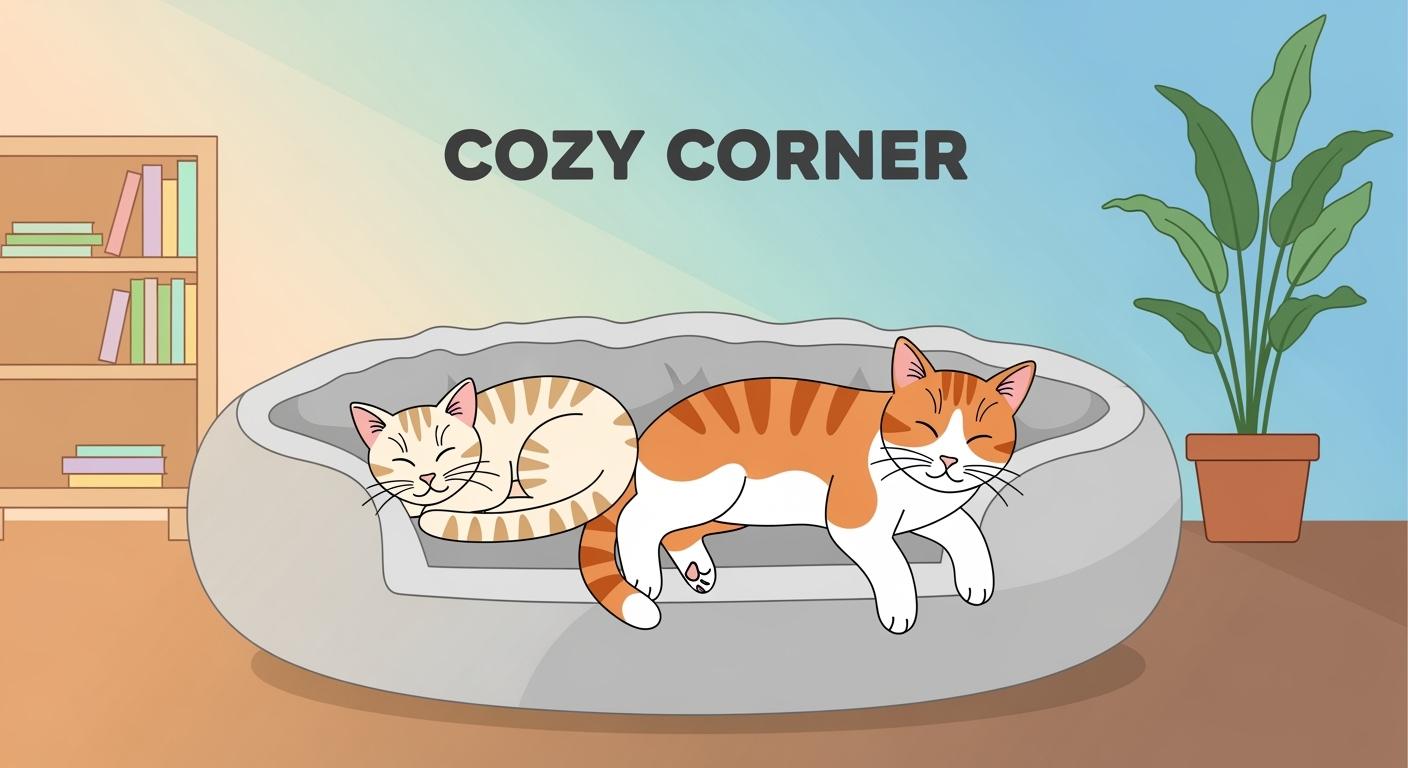
An extra large cat bed can work well for one very large cat or for two cats that genuinely like to sleep together, but the label alone does not tell you enough. What matters is the real sleeping surface inside the bed, how your cat actually sleeps, and whether both cats can enter, turn, stretch, and leave without crowding. A bed that looks big from the outside can still feel cramped if the sides are thick, the center is narrow, or the shape wastes usable space.
Key Takeaways
- Measure your cat in the sleeping position you actually see at home, then compare that to the bed’s usable inside area, not just the outside size.
- Choose an easy-clean bed that fits your routine. Look for beds made with strong materials.
- Do not assume two cats will share just because the bed is large. Shared sleeping depends on both size and cat preference.
When an Extra Large Cat Bed Is Needed
Cat beds for large cats: what to look for
You want your cat to stretch, curl, and change position without hanging off the edge. That is when an extra large cat bed starts making sense. Large cats, long-bodied cats, and cats that sprawl need more real sleeping surface than the average round nest-style bed can offer.
When checking cat beds for large cats, focus on these points:
- The inside sleeping area should match how your cat rests, not just how your cat sits.
- The base should feel stable and not collapse too deeply under weight.
- The sides should not eat up too much of the usable middle space.
- The fabric should be easy to clean after shedding, dirt, or accidents.
- The shape should match your cat’s habits: sprawling, curling, leaning, or hiding.
A large bed only helps when your cat actually uses the extra space. If the bed has thick walls and a small inner sleeping zone, the XL label does not mean much.
Fits a big cat comfortably: key features
You need a bed that gives more than extra fabric. The best extra large cat bed usually combines usable width, stable filling, easy cleaning, and a shape that does not trap the cat in one corner.
| Feature | Why It Matters |
|---|---|
| Usable inner area | Helps a large cat stretch without hanging off the edge. |
| Washability | Makes it easier to keep the bed clean after hair, dirt, or minor accidents. |
| Durable materials | Help the bed keep shape under daily use. |
| Stable support | Prevents the center from collapsing too much for larger cats. |
| Right edge height | Gives support without blocking exits or reducing too much middle space. |
Comparison table: flat, raised-edge, and enclosed beds
You have several extra large cat bed styles to choose from. Each one works better for different sleep habits.
| Bed Type | Use Case | Main Benefit | Main Watchout | Who Should Skip It |
|---|---|---|---|---|
| Flat XL Bed | One large cat or two cats that sprawl | Maximum usable sleeping area | Less built-in edge support | Cats that prefer enclosed sides |
| Raised-Edge XL | Cats that like head support or leaning | More support around the body | High sides can reduce center space | Cats that dislike crowded edges |
| Enclosed XL Bed | Shy cats that want more cover | More privacy and den-like feel | Usually less usable space than the outer size suggests | Two cats that need easy exits or more airflow |
You should check the inside measurements, not just the outside size. An extra large cat bed only helps if the real sleeping surface matches your cat’s habits.
Common mistakes: choosing the wrong size
Many owners buy by label instead of by usable space. That leads to the same problems over and over:
- The bed looks large outside but feels small inside.
- One cat fits, but a second cat blocks the exit path.
- The sides are so thick that the center no longer feels extra large.
- The bed is soft but not supportive enough for a heavier cat.
Tip: Always compare your cat’s real sleeping posture with the bed’s usable inner space. If the bed looks big but your cat still hangs off the edge, the fit is still wrong.
Sharing Cat Beds: Two Cats, One Bed
Cat behavior and shared space
Two cats can share one extra large cat bed, but only when both cats are comfortable with shared rest. Some cats sleep closely, groom each other, and settle side by side. Others may like each other generally but still prefer separate sleeping space. Bed sharing is not just a size question. It is also a behavior question.
Watch what your cats already do at home. If they regularly nap together on sofas, mats, or windowsills, a shared XL bed may work well. If they usually choose different spots, a larger single bed may still end up becoming a one-cat bed.
Signs of success and conflict
You can usually tell quickly whether a shared bed is working.
| Positive Sign | What It Usually Means |
|---|---|
| Both cats settle quickly | The bed feels roomy enough and socially comfortable. |
| Gentle contact or side-by-side sleeping | The cats accept shared resting space. |
| Easy exits | No cat feels trapped or blocked in the bed. |
| Shared grooming or relaxed nuzzling | The bed is not creating tension. |
| Tension Sign | What It Usually Means |
|---|---|
| One cat leaves immediately | The bed is too crowded or not socially comfortable. |
| Blocking exits | The bed shape or shared size is not working well. |
| Staring, swatting, or guarding | The cats do not want to share that sleep zone. |
| One cat uses only the edge | There is not enough comfortable room in the center. |
Pass/Fail checklist table: is the bed big enough?
You can use this simple check during naps or evening rest time.
| Check Item | Pass Signal | Fail Signal | Fix |
|---|---|---|---|
| Both cats fit without crowding | Both can rest without hanging off the edge | One cat is pushed to the edge or leaves | Try a larger or flatter bed, or add a second bed |
| Easy exits | Both cats can leave without climbing over each other | One cat blocks the other | Use a more open shape or separate sleeping spots |
| Relaxed posture | Cats curl, sprawl, or touch gently | Cats stay tense or avoid the center | Reassess shape, location, and sharing preference |
| Repeated use | Both cats return to the bed regularly | Only one cat uses it or both ignore it | Try a different size, shape, or placement |
Common mistakes: ignoring cat preferences
Many owners assume that if a bed is physically large enough, it is socially large enough too. That is not always true. Some cats want shared warmth. Others want personal space. If one cat consistently avoids the bed, it does not always mean the bed is bad. It may simply mean that your cats do not want a shared sleeping setup.
That is why one extra large bed should not be the only bed in the house. It is better to keep other resting options available, even if your cats sometimes choose to sleep together.
Signs the Bed Is Too Small for Your Cat(s)
Crowding and edge hanging
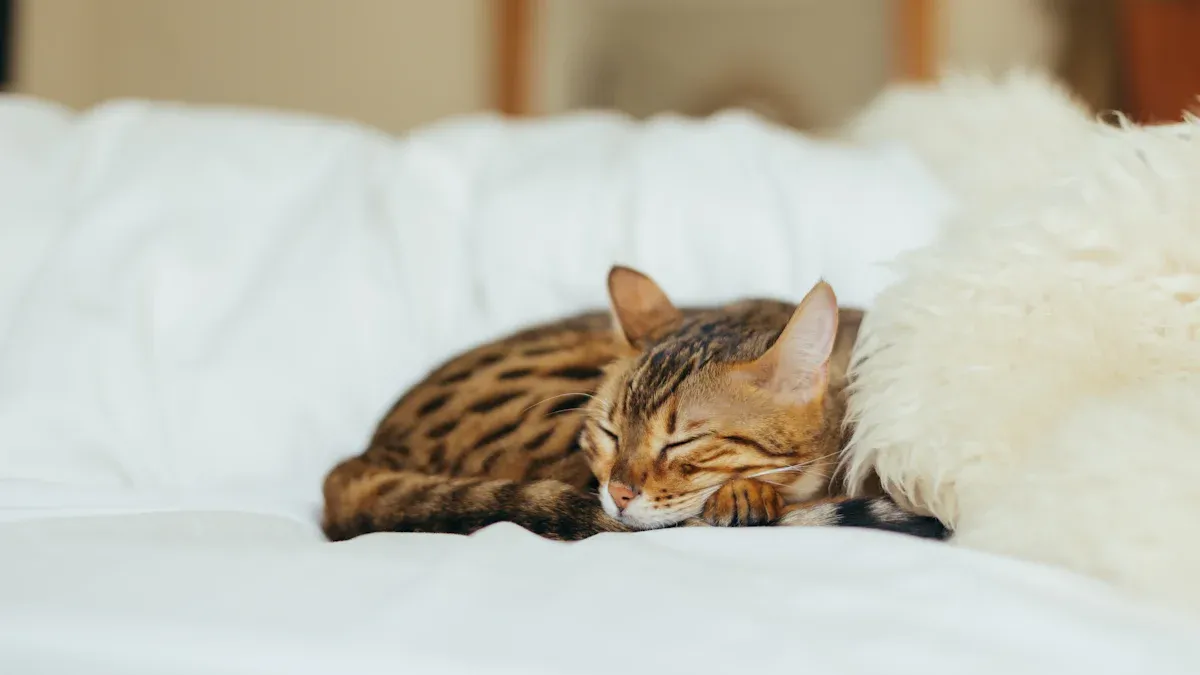
You may see the clearest failure sign right away: the cat hangs off the edge, curls tighter than usual, or keeps changing position without settling. For two cats, crowding often shows up as one cat claiming the center while the other gets pushed into the side wall.
A bed that is too small can still get used, but the posture will often look compromised. That is different from true comfort.
Blocked exits and unused corners
A poor fit does not always mean the whole bed is too small. Sometimes the issue is shape. A bed with deep walls, a narrow center, or bulky corners can leave empty areas that the cats do not actually use. In shared use, blocked exits matter too. If one cat has to step over the other to leave, the bed may be too crowded for two-cat sleeping even if the outside size sounds generous.
Troubleshooting table: symptom, cause, fix
| Symptom | Likely Cause | Fast Check | Fix |
|---|---|---|---|
| Cat hangs off edge | Usable sleep area is too small | Compare stretched body length to inner bed space | Choose a larger or flatter bed |
| Cats avoid the bed | Wrong size, shape, or social setup | Watch where they choose to sleep instead | Try a different shape or add another bed |
| Blocked exits | Too much crowding or walls that are too enclosing | See whether one cat must climb over the other | Use a more open-sided style |
| Unused corners | Shape reduces real comfort | Check which parts of the bed remain empty every day | Select a bed with more usable center area |
| Bed gets dirty fast | Fabric traps hair or is hard to wash | Check how easily fur, odor, and dirt come out | Choose easier-clean material or a removable cover |
Common mistakes: overlooking discomfort
Owners often wait for obvious refusal before deciding the bed is wrong. Cats are subtler than that. They may still use a bed that is not ideal, but only for short naps, only on the edge, or only when another cat is not present. That still counts as a fit problem.
Also watch for cleaning issues. A bed that holds fur, odor, or dampness too easily becomes less practical over time, even if the size looked good on day one. Clean based on visible dirt, odor, shed hair, and real use frequency, and always let the bed dry fully before offering it again.
Note: If your cat shows ongoing discomfort, pain, or sudden changes in sleeping behavior, consult your veterinarian.
You can use an extra large cat bed for one large cat or for two cats, but only when the real sleeping area, bed shape, and cat behavior all line up. Check the inside space, not just the XL label. Watch whether your cats settle naturally, leave easily, and keep returning to the bed. If you see edge hanging, blocked exits, or one cat avoiding the bed, the setup is not as roomy as it looks.
- Choose by usable sleep area, not by label alone.
- Pick easy-clean materials that fit your real routine.
- Do not force two-cat sharing if your cats prefer separate sleep spaces.
- Change the bed size or shape if your cats show crowding or discomfort.
Tip: Comfort comes first. The best bed is the one your cat actually uses well, not the one with the biggest label.
FAQ
How often should you clean an extra large cat bed?
Clean it whenever visible fur, dirt, odor, or dampness starts to build up. Beds used by two cats or long-haired cats usually need more frequent cleaning than lightly used beds.
Can you use a blanket with an extra large cat bed?
Yes. A soft blanket can add comfort or help a cat accept a new bed faster. Just make sure the blanket does not bunch up so much that it reduces usable space.
What if your cats stop using the bed?
Check the size, shape, and location first. Then look at whether one cat is guarding the space, whether the bed is hard to exit, or whether the surface has become dirty, flattened, or uncomfortable.






