
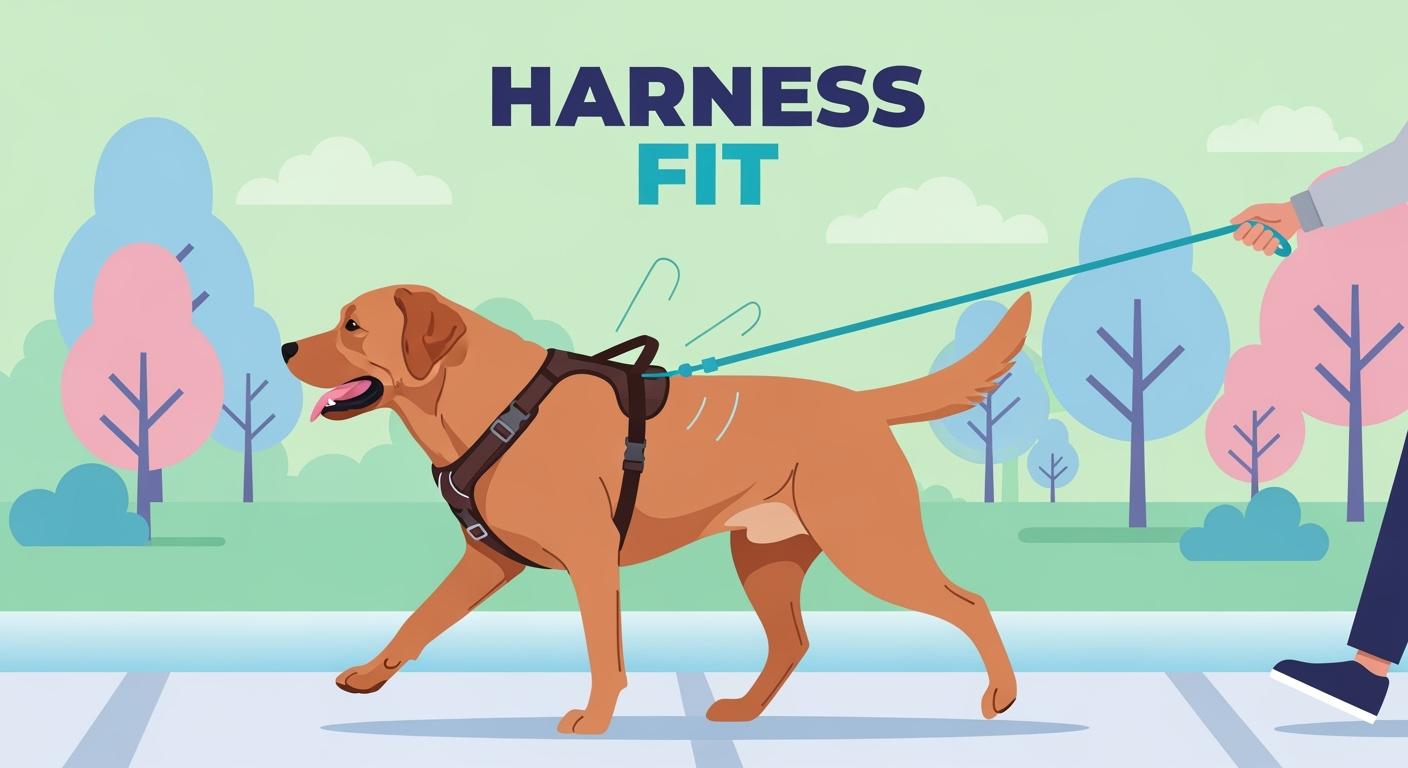
A large-dog harness can look correct when your dog is standing still and still become a problem once the walk starts. Movement changes everything: the dog leans into the leash, turns through the shoulder, lowers the head to sniff, braces backward, or surges forward. That is when chest panels drift, side straps creep back, the neckline rises, or the whole harness starts to roll off center. If you only judge fit while the dog is standing still, you miss the moment when the harness actually has to work.
Key Takeaways
- Always check harness fit during the walk, not only before it. A large dog can make a harness shift under leash load even when it looks fine at rest.
- Use more than one fit check. A still check, a short walk, and a light under-tension check tell you more than any single method.
- Pick a harness with a balanced design and straps you can adjust. Even strap balance and a stable chest layout usually matter more than extra bulk.
Why Dog Harnesses Shift on Large Dogs
Static fit vs moving fit
You may notice your dog harness large dogs looks perfect when your dog stands still. The straps sit flat, the buckles look even, and nothing seems out of place. Once your dog starts walking, sniffing, turning, or pulling, the fit picture changes. A harness that looked centered at rest may start drifting left or right, lifting toward the neck, or rubbing behind the elbow.
This happens because a real walk creates changing force. Large dogs put more load through the harness during starts, turns, stops, and leash tension. A static fit check is still useful, but it only gives you the first layer. The more important question is what the harness does after twenty steps, one turn, and one moment of leash pressure.
Common causes: body shape and harness design
Large dogs often have deeper chests, heavier front-end drive, broader necks, and bigger stride length. Small fit errors get amplified on that body shape. A strap that sits slightly too high may start crowding the shoulder once the dog reaches forward. A chest panel that seems centered at rest may drift once the dog pulls across your line. A soft harness with uneven strap tension may keep rolling instead of staying flat.
Design matters too. Some harnesses pull off center because the chest layout is too soft, the side straps are unbalanced, or the front section rides high when force comes on. Others create movement restriction because the chest coverage is wider than the dog’s natural stride can tolerate. The best large-dog harness is usually the one that stays quiet in motion, not the one that looks most substantial off the dog.
Tip: A balanced large-dog harness should stay centered, keep the front low enough to avoid neck crowding, and allow normal shoulder reach once the dog starts moving.
Comparison table: fit checks for large dogs
| Fit Check Type | Use Case | Main Benefit | Main Watchout | Who Should Not Rely on It Alone |
|---|---|---|---|---|
| Static Fit Check | Dog standing still | Quick first look at strap position and obvious gaps | Misses drift, ride-up, and movement restriction | Owners of strong, active, or highly mobile large dogs |
| Short Walk Test | Dog walking on leash | Shows shoulder motion, drift, and elbow contact | Needs space and a calm route | Anyone trying to judge fit indoors only |
| Under-Tension Check | Dog leans, turns, or briefly pulls | Reveals ride-up, chest shift, and escape gaps | Should be brief and controlled, not a stress test | Dogs with pain, injury, or severe fear around handling |
You should use all three checks to make sure your dog harness large dogs stays secure during every walk.
What Movement Changes First
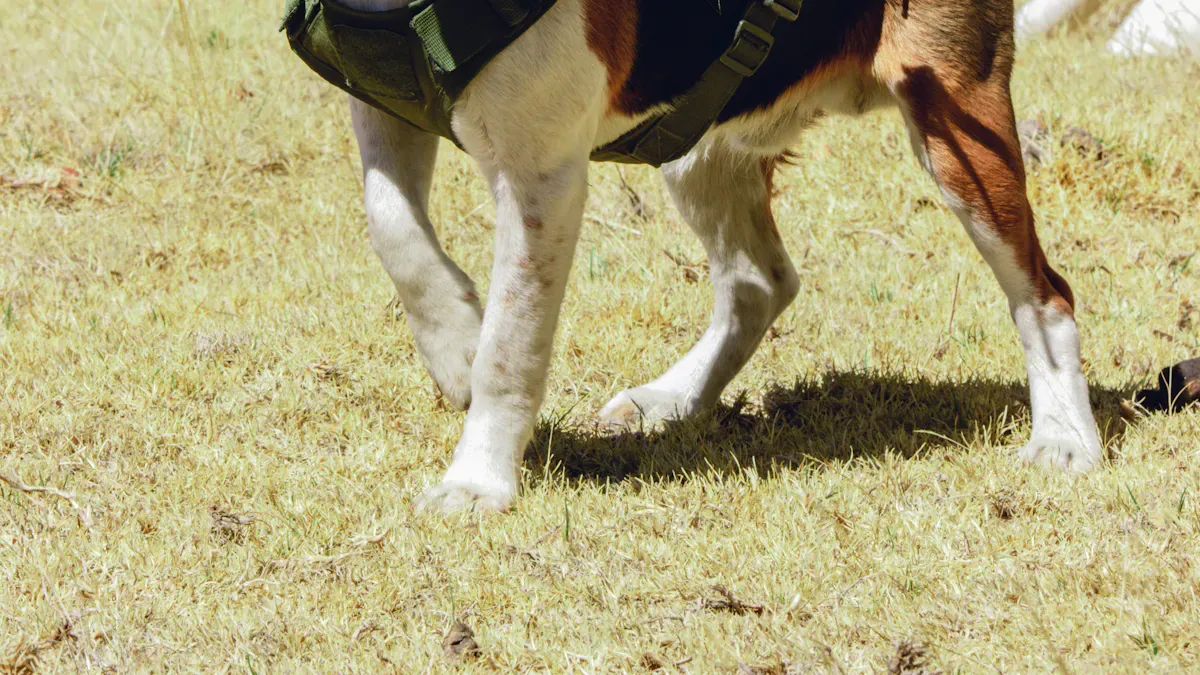
Chest panel, neckline, elbow clearance
When a harness starts failing in motion, the first warning signs usually show up in three areas. The chest section drifts off center. The front begins to ride upward toward the lower neck. The side strap starts moving back toward the elbow and creates rubbing. You may also notice shorter steps, a slightly stiffer turn, or a dog that looks less willing to move forward cleanly.
These are not small cosmetic issues. On a large dog, they often mean the load path is wrong. Instead of spreading force cleanly across the body, the harness is starting to twist or crowd one area.
Pass/Fail checklist table: fit signals and fixes
Use this checklist during a real walk. Watch the harness after your dog has taken enough steps for the fit to change.
| Fit Signal | Pass (What to Look For) | Fail (What to Watch Out For) | Quick Fix |
|---|---|---|---|
| Chest panel stays centered | Panel stays on the chest line through turns | Panel drifts off center or pulls to one side | Rebalance both sides and check whether the chest section is too soft or too high |
| Straps allow shoulder movement | Dog walks with a full, natural stride | Short steps, choppy turns, or stiffness in front | Open shoulder room or change the front layout |
| No rubbing behind front legs | No red marks, hair wear, or repeated scratching | Chafing, heat spots, or strap creep near the elbow | Move the strap path forward or change the harness cut |
| Harness does not ride up | Front stays below the neck and clear of the throat | Moves up toward the neck when the dog pulls | Recheck front height, chest stability, and overall size |
| Secure fit during pulling on leash | Harness stays quiet and does not twist under load | Harness rolls, slips, or opens a gap during tension | Recheck even tension and whether the design matches your dog’s build |
Troubleshooting table: symptom, cause, fast check, fix
If you notice problems during walks, use this table to find the most likely cause and fix it quickly.
| Symptom | Cause | Fast Check | Fix |
|---|---|---|---|
| Chafing/Red marks | Wrong strap path, rough edges, or repeated drift into one contact zone | Look for skin irritation or flattened hair right after the walk | Reposition the harness, reduce drift, or switch to a softer edge layout |
| Dog escapes backward | Loose chest area or unstable overall fit under reverse pressure | Try a controlled backward check | Reassess chest fit and whether the harness is secure enough for that dog’s shape |
| Dog slips out forward | Neck opening too large or front rides up | Watch the neckline under tension | Adjust the front fit or move to a better-sized harness |
| Restricted movement | Front layout crowds the shoulder or chest | Watch stride and front-leg reach | Use a cut that leaves cleaner shoulder room |
| Frequent side drift | Uneven strap tension or poor chest stability | Observe where the harness sits after turns and leash load | Adjust both sides evenly and reassess the chest section |
| Anxiety or stress | Harness creates discomfort, pressure, or movement restriction | Watch for pawing, slowing, refusal, or repeated body shakes | Check fit, reduce pressure, and stop using the setup if the dog looks uncomfortable |
Common mistakes and real consequences
Many owners make the same mistakes when checking fit. They only inspect the harness indoors. They tighten one side more than the other. They keep using a bulky harness that looks secure but quietly shortens stride. Or they blame pulling on the dog without checking whether the harness itself is changing how the dog moves.
- Not checking fit during movement can lead to rubbing, drift, escape gaps, or reduced mobility.
- Ignoring discomfort may make the dog pull harder, brace, or avoid the harness altogether.
- Using a setup that rides up under tension can create more throat pressure instead of cleaner control.
- Over-correcting during walks without fixing the harness problem can make the whole walk look worse than it is.
Note: This section does not provide medical advice. If you notice signs of injury, airway pressure, heat stress, limping, or mobility limits, consult your veterinarian.
Proper harness fit prevents future health issues and supports safe, enjoyable walks.
Adjust, Replace, or Change Harness Type?
When a simple adjustment is enough
You do not always need a new harness. If the chest panel is only drifting slightly, the dog still moves well, and the problem improves after you rebalance the straps, an adjustment may be enough. Small tension errors can matter a lot on large dogs. Re-centering the harness and adjusting both sides evenly often solves mild drift.
When to switch harness styles
If the same problem keeps coming back, the issue may be the harness design, not your adjustment. A harness that repeatedly rides up, crowds the shoulder, or twists under load may simply be the wrong cut for your dog’s chest and movement pattern. Some large dogs do better in a more stable torso-style harness. Others do better with a cleaner front that leaves more shoulder room. No-pull styles can help when forward drive is the main problem, but they still have to stay centered and comfortable in motion.
Comparing no-pull dog harnesses for large dogs
No-pull dog harnesses can help reduce straight-ahead pulling, but they are not automatically the best answer for every large dog. The better option is the one that keeps the harness stable while preserving normal movement.
| Feature | Description |
|---|---|
| Shoulder Freedom | Allows normal stride and reduces the chance that the dog shortens steps to avoid the harness. |
| Centered Fit | Stays centered instead of drifting under leash tension. |
| Chest Panel Stability | Remains stable without rubbing or dragging toward the armpit area. |
| Control and Comfort Balance | Balances guidance, comfort, and movement rather than solving one problem by creating another. |
An around-the-torso harness can reduce twisting when it matches the dog’s shape. A front-clip style can help some strong pullers, but only if it does not drag the harness off center or crowd the shoulders. Check fit during the actual walk every time you test a new type.
You can keep your large dog safer and more comfortable by judging harness fit in motion, not only at the start of the walk. Look at chest position, shoulder room, elbow clearance, and what happens when leash tension comes on. If a harness keeps drifting, rubbing, or changing your dog’s stride, adjust it once with clear checks. If the same fail pattern returns, change the harness type instead of forcing the wrong design to work.
FAQ
How often should I check my large dog’s harness fit during walks?
Check the fit every time you walk. Watch the harness after the dog has started moving, turning, and pulling lightly, not only when you first clip it on.
What signs show my dog’s harness does not fit well while walking?
Look for chest panel drift, shoulder restriction, rubbing behind the elbows, ride-up toward the neck, twisting under tension, or a sudden change in stride.
Can I fix harness shifting by just tightening straps?
Not always. Uneven tightening can make drift worse. Rebalance both sides, watch the dog move, and change harness style if the same problem keeps returning.






