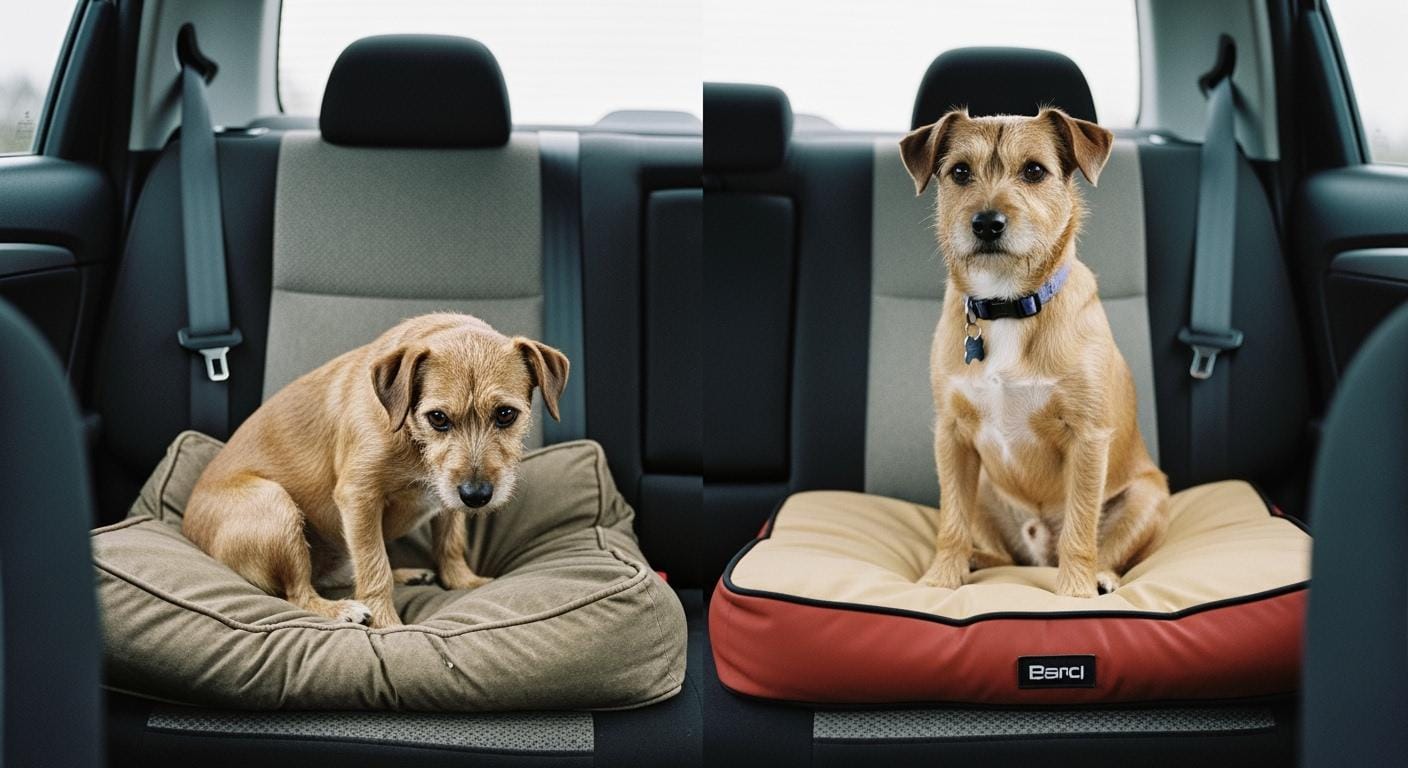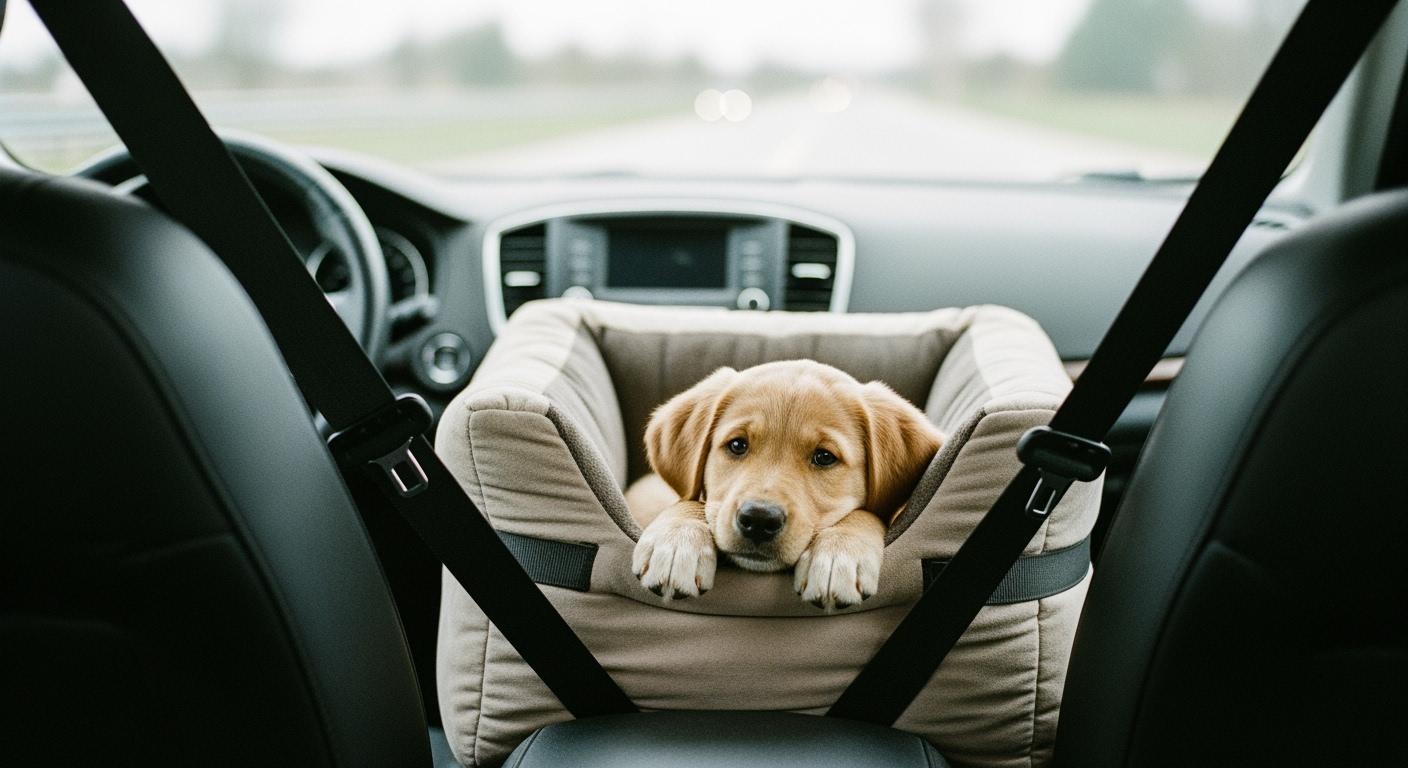
Put a puppy on a flat car seat and you will see the same thing every time: climbing, shifting, bracing against every turn. Swap that flat surface for a seat with raised walls, a non-slip base, and secure anchoring, and the behavior changes. The puppy stops fighting the surface underneath and starts using it. That shift — from instability to predictability — is what makes a dog car seat for puppy training rides work. Not more padding. Not a tighter tether. A design that gives the dog a stable, bounded space to settle into before the car moves.
Why Puppies Struggle With Unstable Car Surfaces
Motion Sensitivity in a Developing System
A puppy’s vestibular system — the inner-ear mechanism that tracks head position and motion — is not fully calibrated yet. That means every turn, stop, and acceleration registers as a stronger disturbance than it does for an adult dog. On a flat, unbounded surface, the puppy’s body absorbs all of that motion directly. The paws feel the seat shift. The shoulders brace. The neck tenses as the head tries to stabilize. Within minutes, the dog is climbing, panting, or whining — not because the car ride is too long, but because the surface underneath never stopped moving.
Here is the causal chain that matters: when a car turns left, the dog’s body wants to continue straight. On a flat mat, inertia carries the dog sideways until friction — or a tether — arrests it. That arrest is sudden. The dog’s nervous system registers it as a loss of footing, which triggers the bracing reflex. Bracing leads to muscle tension, which leads to restlessness, which leads to climbing. A raised-wall seat interrupts this chain at the first link: the wall catches the dog’s lateral movement early, converting sideways momentum into a gradual lean rather than a hard stop. The nervous system never gets the “I am sliding” signal, so the bracing reflex never fires.
In practice: After a 10-minute ride, slide your hand between the seat base and the car upholstery. If the seat has crept more than half an inch, the anchoring or non-slip surface is not doing its job — and the dog felt every millimeter of that creep.
Where Loose Mats and Soft Cushions Fail
Softness Does Not Create Security
A thick foam cushion feels good to a human hand pressing down on it in a parked car. That test means nothing once the vehicle moves. Under lateral load — the force that hits when the car corners — foam compresses unevenly. One side of the dog’s body sinks deeper than the other, creating a tilted platform. The dog compensates by shifting weight to the uphill side. Then the car straightens, the foam rebounds, and the dog is now leaning the wrong way. This cycle repeats through every curve. The dog never finds a neutral position because the surface keeps changing shape underneath it.
Loose mats amplify the problem. With no anchoring, the entire mat slides a few inches on every hard stop. The dog braces for a predictable surface; instead, the surface moves with the dog, then snaps back when the straps catch. That snap-back is what makes a puppy startle mid-ride. Startled dogs climb. Climbing dogs distract the driver. The design failure is not that the mat is too thin — it is that the mat has no structural relationship to the vehicle it sits in.
What Failure Looks Like, by Design Cause
| Failure signal | Likely seat design cause | Better design direction |
|---|---|---|
| Climbing or shifting | Flat, open, or loose surface | Raised sides and secure anchoring |
| Sliding on turns | No non-slip base | Non-slip base and stable structure |
| Restlessness | Unstable or shifting seat | Defined area with soft, structured walls |
A hammock-style cover can improve on a loose mat by creating a defined perimeter, but without a rigid base and anchoring, it still swings with the car’s momentum. The dog feels the hammock sway and tightens up in response. The core difference between designs that work and designs that fail during training rides is whether the seat resists lateral force or merely absorbs it temporarily before giving way.
Design Features That Make a Training Car Seat More Predictable
Raised Walls Create Physical and Visual Boundaries
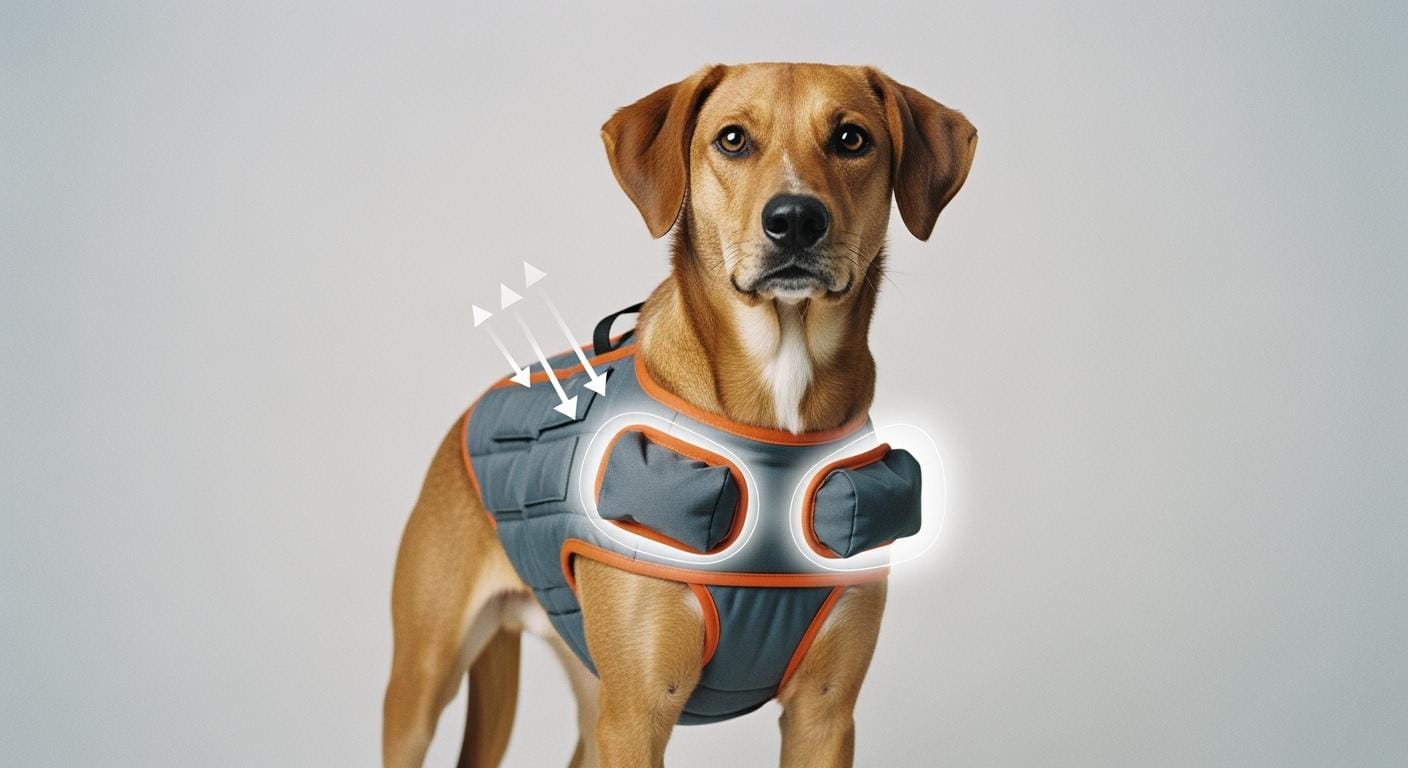
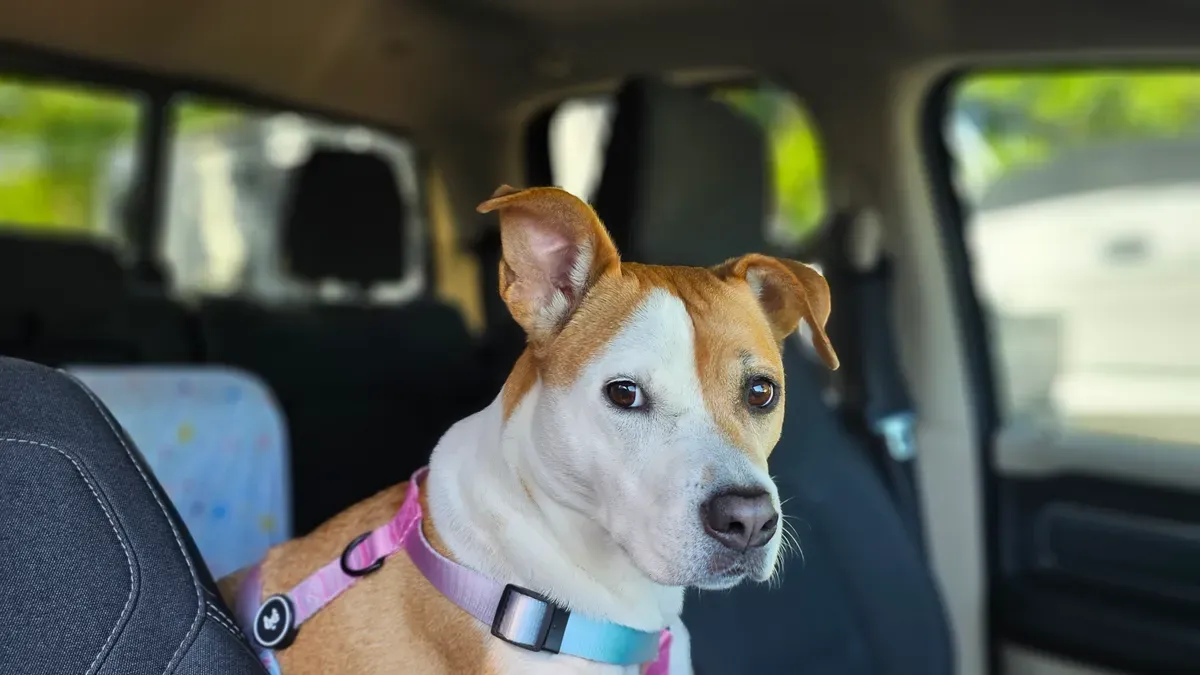
Raised walls do two things at once. Physically, they give the dog something to lean into when the car turns — a vertical plane that catches lateral movement before it becomes a slide. Visually, they shrink the dog’s field of view to the interior of the seat, reducing the sensory overload of scenery rushing past the window. A puppy that cannot see every passing car, pedestrian, and tree is a puppy with fewer triggers to react to.
The wall height matters. Too low and the dog steps over it. Too high and the dog feels trapped, which can trigger its own anxiety response. A wall that reaches roughly to the dog’s shoulder when sitting tends to strike the right balance — high enough to define the space, low enough to let the dog see out when it chooses to. The padding density on those walls matters too: firmer foam holds its shape under sustained lean, while softer foam collapses over the course of a ride and leaves the dog leaning against a deflated panel.
You can verify wall effectiveness on the first ride: after a series of turns, check whether the dog is still centered in the seat or has drifted to one corner. A centered dog means the walls caught the lateral shifts. A dog wedged into one corner means the walls are too low, too soft, or the anchoring let the whole seat rotate.
Secure Anchoring Turns the Seat Into Part of the Vehicle
An unanchored seat is a sled. When the car brakes, the seat keeps moving. The dog experiences two motions: the car’s deceleration plus the seat’s independent slide. Anchoring eliminates the second motion. The seat becomes part of the vehicle’s mass, and the dog only has to manage the car’s movement — not the seat’s movement on top of it.
Hard-bottom seats distribute anchoring force better than soft-bottom ones. A rigid base plate spreads the load from the anchor straps across the full footprint of the seat, so no single point takes all the stress. Soft-bottom seats concentrate anchor force at the strap attachment points, which can cause the base to fold or buckle under heavy braking. That fold is the moment the dog loses confidence in the surface — and once lost, that confidence is hard to rebuild on subsequent rides.
Stable in-car seating depends on this anchor-to-base relationship as much as it depends on the straps themselves. A seat with excellent straps attached to a flimsy base still shifts. A seat with a rigid base and average straps tends to stay put because the base resists deformation.
Non-Slip Base and Structured Padding: The Sensory Feedback Loop
The base of the seat is the dog’s primary sensory surface. Every vibration, every shift in weight distribution, every subtle slide transmits through that surface into the dog’s paws and body. A non-slip base grips the car’s upholstery, preventing micro-movements that the dog feels but a human observer might not notice. These micro-movements matter because they accumulate: ten tiny shifts in a two-minute span tell the dog’s nervous system that the surface is not trustworthy, even if the seat never slides more than an inch.
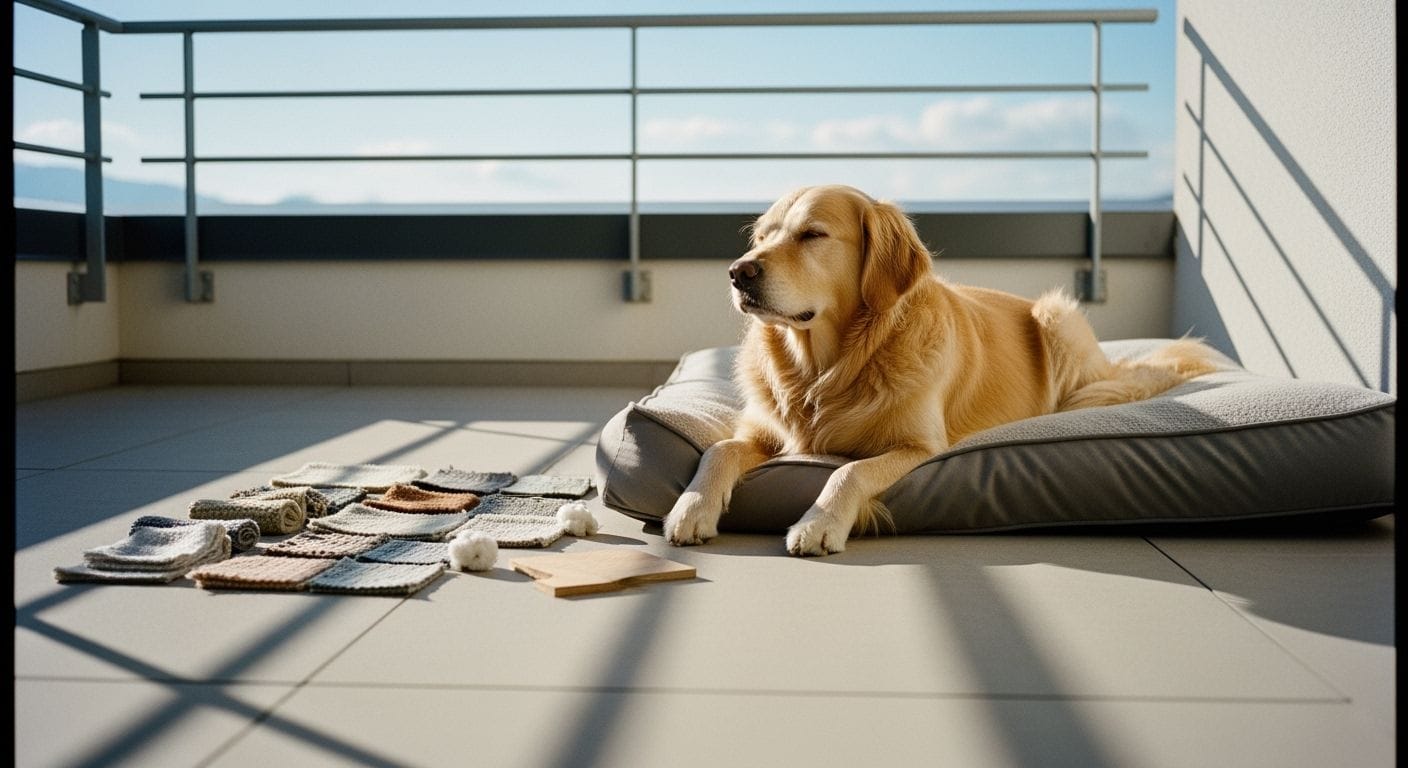
Structured padding — foam that resists full compression under load — maintains a consistent support plane. When a dog settles onto structured foam, the material compresses partway and then stops, creating a stable depression that cradles the body. Unstructured padding keeps compressing, so the dog sinks continuously and has to reposition to find a new equilibrium. That repositioning looks like restlessness but is actually a physical response to a degrading support surface. This is why a folding car seat built with a firm structured base tends to produce calmer settling behavior than a thick pillow-style cushion — the dog finds its position once and stays there.
Disclaimer: This surface-stability analysis assumes a smooth-coated dog whose body makes consistent contact with the seat base. Double-coated or very fluffy breeds may not feel micro-movements through their coat the same way, and the fit checks described here may need to be supplemented with hand-checking rather than visual observation of settling behavior.
The Defined Resting Area Signals “Here Is Your Spot”
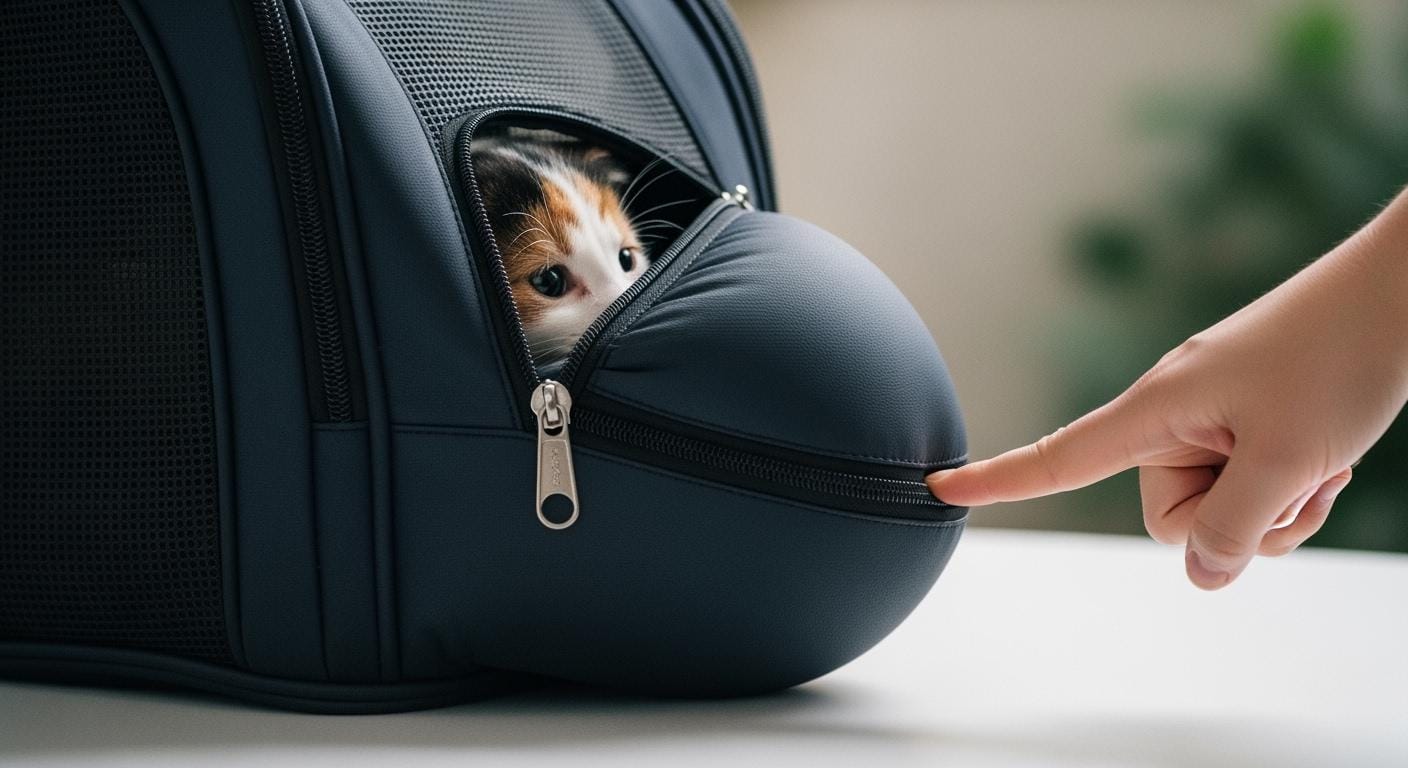
Dogs are den-oriented animals. They settle faster in spaces with clear boundaries than in open platforms. A car seat with raised walls on all sides creates a den-like enclosure — not a cage, but a defined territory. The dog learns that this specific rectangle is its space during car rides, and that outside the walls is not. This spatial predictability is what makes a small booster seat work better than an unbounded bench for training calmness: the boundaries do half the training by removing the option to wander.
The seat should give the dog enough room to stand, turn around, and curl up. A seat that is too snug forces the dog into one position, which becomes uncomfortable on longer drives. A seat that is too spacious loses the den effect — the walls are too far away to serve as boundaries, and the dog treats the space like an open platform instead of a defined resting area.
When a Raised-Wall Car Seat Is Not the Right Choice
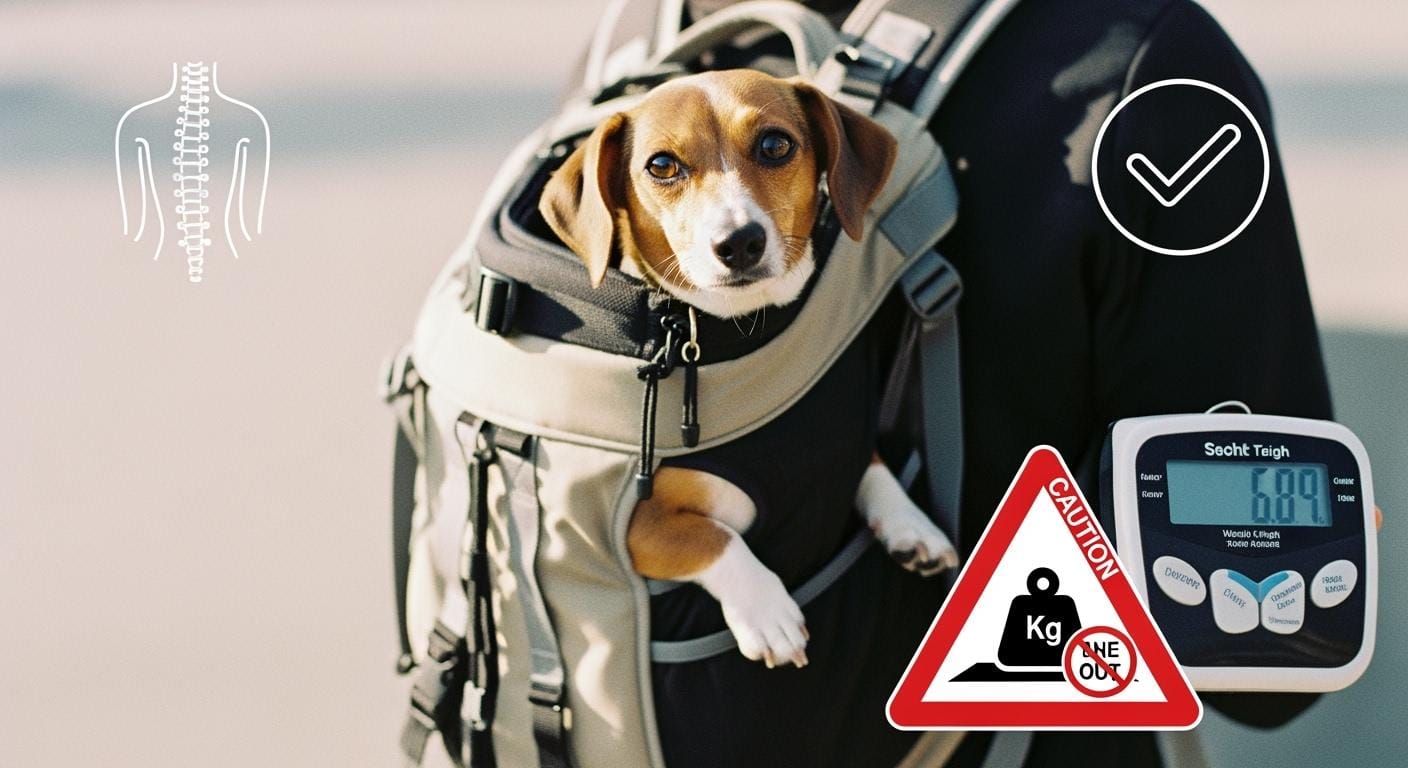
A raised-wall seat works best for small to medium puppies — dogs under roughly 30 pounds whose body fits within the walled enclosure without being pressed against all four sides. For larger puppies or breeds with a deep, broad chest, the same design can backfire. The walls that create boundaries for a small dog become constraints for a larger one, forcing the dog into a cramped posture that makes settling harder, not easier.
Dogs with a history of confinement anxiety may also react poorly to raised walls. The enclosure that signals “safe den” to one dog can signal “trap” to another. Watch for these signs on the first few rides: excessive panting when the car is not warm, repeated attempts to stand and face outward, or pawing at the walls. These are not training failures — they are signals that the design does not match this specific dog’s spatial needs. In these cases, a booster-style seat with lower side bolsters but still-anchored base may be a better match, trading some boundary height for more perceived freedom while keeping the stability benefits of anchoring and a non-slip base.
Another scenario where the design loses effectiveness: short-nosed breeds on warm days. Raised walls reduce airflow across the seat, and breeds like French Bulldogs or Pugs that already struggle with thermoregulation can overheat faster inside a deep-walled enclosure than on a flatter, more open seat. If the ride is longer than 15 minutes in temperatures above 75°F, a walled seat may need supplemental airflow or a cooling mat insert to stay comfortable.
Disclaimer: If the dog’s chest shape or shoulder width falls outside the breed norms that standard car seat dimensions are patterned for — particularly barrel-chested breeds or dogs with a very deep keel — the fit checks described here may not catch every pressure point. Hand-check the contact zones between the dog’s body and the walls after the first ride: any spot that feels warmer than surrounding tissue or shows flattened fur indicates sustained pressure that needs a different seat geometry.
What matters most before choosing a small dog car seat is confirming that the dimensions work for your specific dog’s body, not just its weight class. A 12-pound Italian Greyhound and a 12-pound Pug have radically different shapes, and the same seat will fit them differently.
FAQ
How do raised walls actually help a puppy stay calm during car rides?
Raised walls intercept lateral movement before it becomes a slide. When the car turns, the puppy’s body leans into the wall instead of drifting across an open surface. That early catch prevents the bracing reflex from firing, so the puppy stays relaxed. The walls also block peripheral visual motion, which reduces one of the main overstimulation triggers for young dogs in cars.
Can a regular cushion or dog bed work instead of a purpose-built car seat?
A cushion provides padding but no structure. It slides on turns, compresses unevenly under lateral load, and gives the puppy no boundary to orient against. The puppy spends the ride managing the surface instead of settling on it. A car seat with anchoring and a non-slip base eliminates the surface-management problem so the puppy can focus on the ride itself.
What is the difference between anchoring straps and a seat belt loop?
Anchoring straps wrap around the vehicle seat back or headrest and cinch tight, making the car seat and the vehicle seat move as one unit. A seat belt loop runs the belt through a sleeve on the car seat, which limits forward movement but allows more side-to-side play. For puppy training rides where predictability matters most, direct anchoring tends to produce less seat movement during cornering than a belt-loop-only setup.
What signs during a ride tell me the seat is not stable enough for training?
Check three things mid-ride: whether the seat base has shifted from its starting position by more than half an inch, whether the puppy repositions itself after every turn instead of settling within the first few minutes, and whether the puppy braces its legs against the walls continuously rather than leaning into them passively. Any one of these signals suggests the anchoring, base grip, or wall height needs attention.
At what age can a puppy start using a car seat for training rides?
A puppy can start short acclimation sessions in a car seat as soon as it has had its initial vaccinations and is cleared for outings — typically around 8 to 12 weeks. Start with the engine off, then idling in park, then very short drives. The seat design itself does not impose an age limit; what matters is that the seat’s wall height and base dimensions are appropriate for the puppy’s current size, not a projected adult size that will not match for months.