
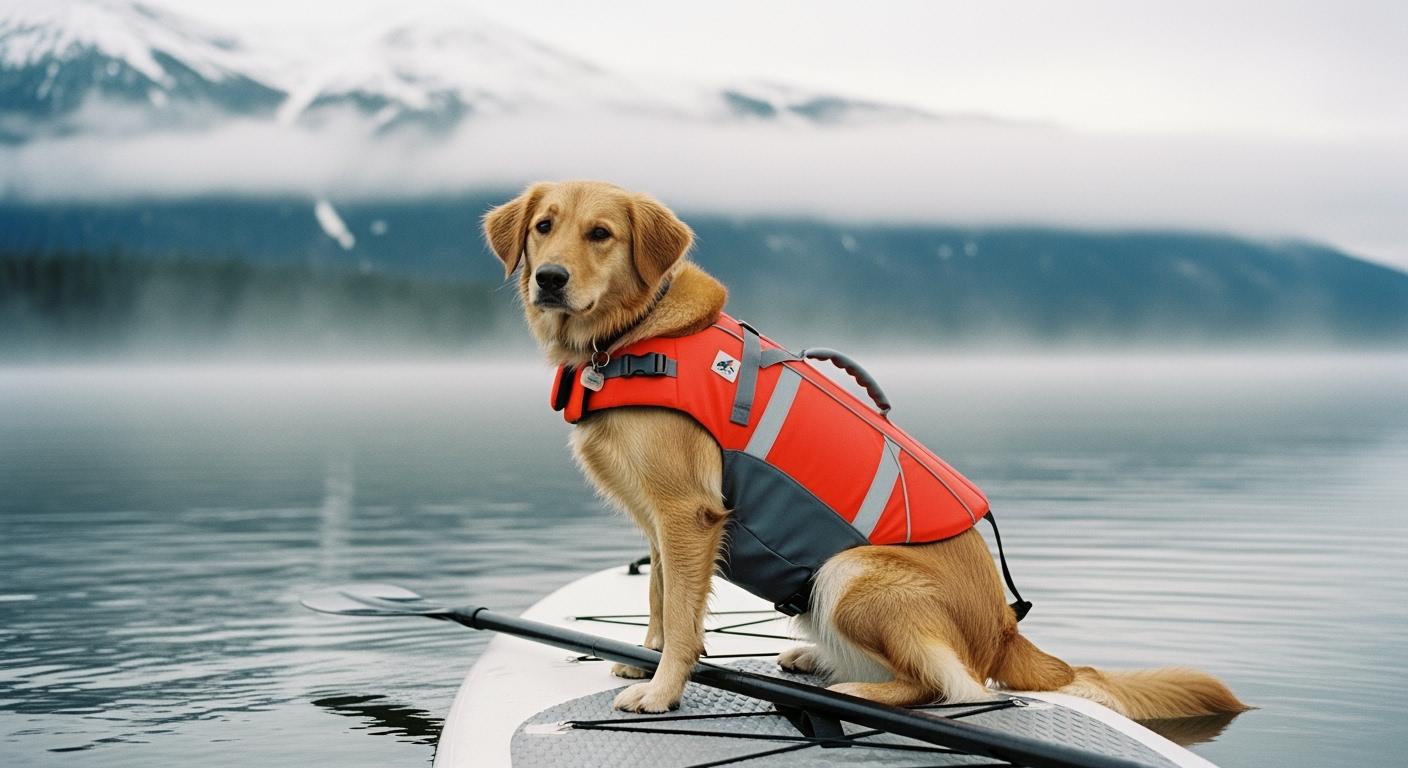
Cold water changes what a dog life jacket must do. A dog that can swim ten minutes in a warm lake may struggle after three in water below 50 degrees. The design problem is not just keeping the dog afloat. It is keeping the dog’s body position stable as fatigue sets in, and making sure you can lift a wet, tired dog back onto a board or kayak without the vest twisting or the handle giving way.
Most basic swim vests solve only the flotation half of the equation, and they do it with a single foam panel across the back. That leaves the chest and sides unsupported. In calm warm water, a dog with decent swimming form compensates. In cold water, where energy bleeds out fast and coordination fades, that missing support becomes the difference between a dog that swims back and one that drifts.
In practice: A vest that floats a dog in a pool test has not been tested for the conditions that matter. Cold water paddling adds three variables warm-water swimming does not: rapid energy loss, shifting body position under fatigue, and the need to lift a wet dog from water onto an unstable surface.
Why Cold Water Changes What a Life Jacket Must Do
Energy Loss, Body Position, and the Limits of a Single Panel
Cold water pulls heat from a dog’s body roughly four times faster than air at the same temperature. A dog’s core temperature drops, muscles stiffen, and the swimming stroke shortens. What was a horizontal, efficient body position becomes more vertical. The dog’s head lifts, the rear drops, and forward progress slows to a crawl.
A life jacket with flotation concentrated across the back does little to correct this. The back panel keeps the dog from sinking, but it cannot stop the chest from tipping forward as the dog tires. The physical chain is straightforward: fatigue shortens the swimming stroke → the front half of the body drops → the dog fights to lift its head → energy burns faster → the stroke shortens further. Balanced flotation across the chest and sides interrupts that loop. The chest panel supports the forward half of the body, and the side panels resist lateral roll. The dog does not have to spend energy fighting its own position.
You can verify this in shallow water before a trip. Have the dog swim 50 feet with the jacket on, then watch what happens when the dog stops paddling for a moment. If the chest dips and the head tilts upward to compensate, the flotation distribution is not doing its job. A well-balanced vest lets the dog float at rest with the head in a natural position and the body near-horizontal.
Why Retrieval Is Harder Than It Looks
Lifting a wet dog from cold water onto a paddleboard or kayak is not like lifting a dry dog onto a dock. The dog is heavier, the surface is unstable, and both of you are losing dexterity to the cold. The vest becomes your primary grip point. If the top handle is stitched into a single layer of fabric without reinforcement, it can tear under the weight of a waterlogged medium-to-large dog. If the belly straps are loose or mounted too far forward, the vest slides backward as you lift, changing the angle and making the lift harder.
This is why the difference between a life jacket designed for secure retrieval and a basic swim vest becomes obvious the first time you actually use the handle. A reinforced handle anchored through multiple layers distributes the lifting force across the jacket structure rather than concentrating it at two stitch points. Wide, adjustable belly and chest straps keep the vest from sliding backward under load, so the dog’s weight stays centered and the lift stays controlled.
Balanced Flotation and a Fit That Stays Put
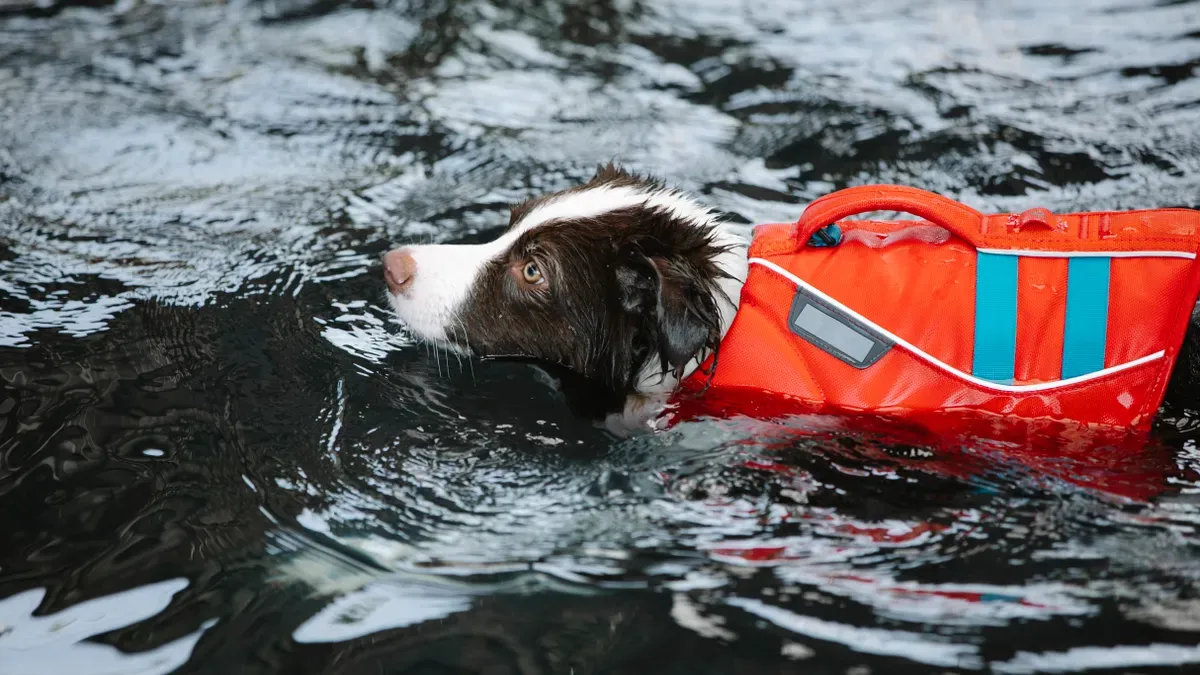
How Flotation Panel Placement Changes Performance
Flotation panel placement is the design decision that most directly determines cold-water performance. A single back panel creates a pivot point: the dog’s rear sinks, the chest dips, and the dog must work against both. Three-panel designs — chest, left side, right side — distribute buoyancy around the dog’s center of mass. The result is that the dog floats in roughly the same position it swims in, without constantly adjusting.
Closed-cell foam is the standard material for these panels because it does not absorb water. A saturated foam panel loses buoyancy — sometimes by 20 percent or more over a long session — and adds weight the dog must carry. Neoprene outer layers add a secondary benefit in cold water: they provide modest thermal insulation that slows heat loss through the chest and ribcage, where a dog’s core is most exposed.
An easy field check: after a 20-minute paddling session, take the jacket off and squeeze the foam panels. If water seeps out, the foam is not fully closed-cell or the outer shell is not sealed. That jacket will lose flotation as the outing continues. A properly sealed closed-cell foam jacket comes out of the water no heavier than it went in.
Strap Design and the Problem of Shift Under Load
Straps matter more in cold water than in warm because cold hands fumble with buckles and cold nylon stiffens. A three-point adjustment system — neck, chest, belly — lets you dial the fit tighter than a single belly strap can. Wide straps spread pressure so the dog does not feel pinched during a lift. Narrow straps concentrate force along a thin line; in a retrieval, that line can dig in and cause the dog to panic at the worst possible moment.
The belly strap position also determines whether the vest stays put during a lift. A strap set too far forward acts as a fulcrum, tipping the dog forward as you lift. A strap placed closer to the natural girth line keeps the load balanced. You can test this on land: put the jacket on, lift the dog an inch off the ground by the handle, and watch whether the vest shifts backward or the dog tilts. A stable jacket keeps the dog near-horizontal and the straps in their original position.
| Design Difference | Why It Matters | Main Limitation |
|---|---|---|
| Three-panel flotation (chest + two sides) | Keeps body position stable as the dog tires; interrupts the fatigue-tipping loop | Adds modest bulk; less suited to very short-coated dogs that overheat easily |
| Reinforced top handle with multi-layer anchoring | Distributes lifting force; reduces risk of handle tear during retrieval | Adds a stiff ridge along the spine that some dogs need time to get used to |
| Wide three-point strap system | Prevents vest shift during lift; spreads pressure to avoid pinch points | More buckles mean more pre-launch adjustment time |
| Bright color + reflective trim | Speeds visual acquisition in low light or choppy water | Reflective tape degrades with saltwater exposure if not rinsed |
Rescue-Ready Features: The Handle, Visibility, and Movement
The Handle Is Not an Accessory
On a life jacket built for actual water rescue, the handle is a primary structural element, not a nylon loop sewn on as an afterthought. A handle anchored through the outer shell, flotation foam, and inner lining with double-stitched seams can support the full weight of a wet dog without the stitching pulling through the fabric. A handle attached only to the outer shell can fail on the first real lift.
The handle’s position along the spine also affects the lift. Too far forward and the dog tilts head-down, which is dangerous if the dog is already struggling. Too far back and the lift pulls the rear up first, making it harder to guide the dog onto a board. The sweet spot is centered over the dog’s center of mass — typically just behind the shoulder blades — where the lift keeps the dog roughly horizontal.
Why Low-Bulk Shoulders and Bright Colors Matter
Shoulder bulk is a trade-off. More foam around the shoulders adds flotation but restricts the paddling stroke. In cold water, where every movement costs more energy, a restricted stroke wastes energy the dog cannot spare. Low-bulk shoulder panels let the dog extend its front legs fully, which matters both for swimming back to the board and for climbing onto it.
Bright colors and reflective trim are not cosmetic. Dark water at dusk or under overcast skies swallows dark fabric. A jacket that is visible at 50 yards gives you time to paddle toward the dog. A jacket that blends into the water at 20 yards gives you seconds. This is the simplest design variable to verify: have someone hold the jacket at the waterline in the conditions you paddle in, then paddle 30 yards away and look back. If you cannot spot it in under two seconds, it is not bright enough.
When a Life Jacket Is Not Enough
A dog life jacket reduces risk. It does not remove it. No flotation device prevents hypothermia — it only buys time. A dog showing signs of cold stress (shivering that does not stop, reluctance to move, glassy eyes) needs to come out of the water regardless of how well the jacket is performing. The jacket keeps the dog afloat while you get to shore; it does not rewarm the dog.
Fit checks also have blind spots. The strap tests described here catch gross shifting and pinching, but they may miss subtle pressure points on dogs with very short coats, loose skin folds, or atypical chest shapes. A harness that passes the land-based lift test can still chafe after 30 minutes of wet movement.
Disclaimer: The fit checks in this article assume a smooth-coated dog with a standard chest profile. Double-coated breeds and dogs with barrel chests or very deep keels may show subtler rub marks that require hand-checking under the jacket rather than visual inspection. If the dog’s chest shape falls well outside the breed norms this jacket pattern was designed for, the strap tests described here may not catch every pressure point.
Finally, some conditions push past what any flotation device can handle. Whitewater, surf zones, water below 40 degrees, and situations where the distance to shore exceeds what the handler can paddle in under five minutes all multiply risk beyond what a jacket design can offset. In those conditions, the right call is not a better jacket — it is leaving the dog on shore.
The right life jacket for cold-water paddling balances flotation across the chest and sides, secures with a multi-point strap system, and includes a handle that can take the full weight of a wet dog. Those three design priorities make the difference between a controlled retrieval and a situation that escalates. The rest — color, shoulder cut, material choice — shapes comfort and convenience. But flotation balance, strap security, and handle strength determine outcomes.
FAQ
How does cold water affect how a life jacket should fit?
Cold water makes nylon straps stiffer and reduces finger dexterity, so buckles that are easy to adjust on land become harder to manage with cold hands. A jacket with large, textured buckle tabs and a three-point adjustment system (neck, chest, belly) lets you get a secure fit even when your hands are cold. Test this: dunk your hands in ice water for 30 seconds, then try adjusting the straps.
Does a dog life jacket provide meaningful insulation in cold water?
The insulation from a neoprene jacket layer helps slow heat loss, but it does not prevent hypothermia. Neoprene traps a thin layer of water against the body, which the dog’s body heat warms slightly. In water below 50 degrees, this effect buys minutes, not hours. Watch for shivering, slowed movement, or glassy eyes regardless of the jacket material.
Can a dog wear a life jacket for an entire paddling session?
A well-fitted jacket can stay on for the duration of a paddle, but check for chafing behind the front legs during breaks. Wet fabric rubbing against wet skin creates friction burns faster than dry fabric does. Remove the jacket during shore breaks to let the coat dry and the skin breathe.
What makes a grab handle strong enough for a real rescue?
The handle needs to be anchored through multiple layers — outer shell, foam, and inner lining — with double-stitched or bar-tacked seams. A handle sewn only to the outer shell can tear under a wet dog’s weight. Test it at home: lift the dog an inch off the ground by the handle. If you feel the stitching strain or the fabric distort, the handle is not structurally integrated.
How do I know if the flotation is balanced correctly for my dog?
Have the dog swim 50 feet in shallow water, then stop paddling. Watch the body position at rest. If the chest dips, the head tilts up, or the dog rolls to one side, the flotation panels are not distributing buoyancy evenly. A balanced jacket keeps the dog near-horizontal with the head in a natural position, even when the dog is not actively paddling.






