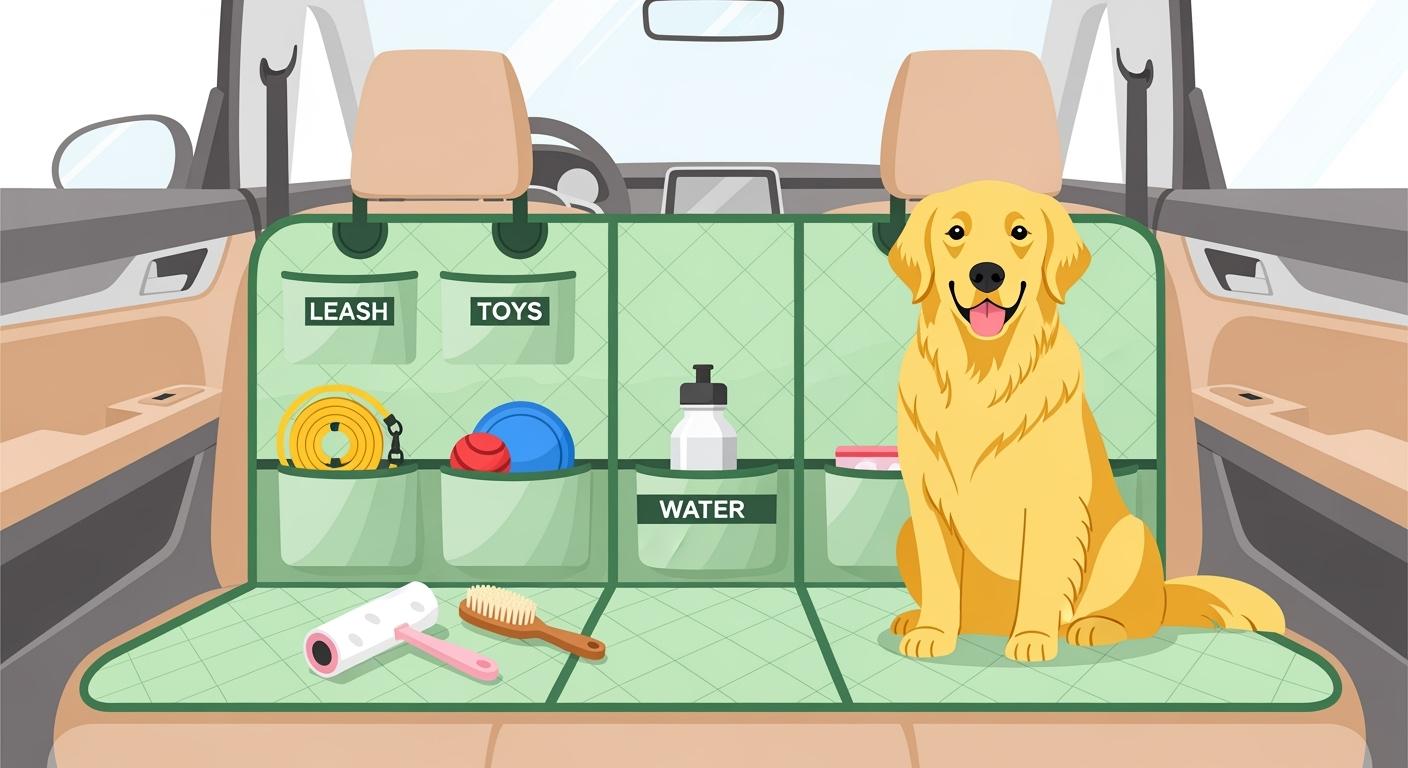
A storage pocket on a dog car seat cover looks useful in the product photo. Flat, open, ready to hold a leash or waste bags. Then the cover goes into the car. The seat back curves. The bench tilts. The cover stretches across anchor points. And the pocket that looked so convenient on a screen folds into a sliver, sags under tension, or disappears behind a seat edge.
That gap between catalog promise and installed reality is not bad luck. It is geometry, material behavior, and load placement interacting in ways most pocket designs never account for. A pocket sewn onto a flat panel becomes a different shape once that panel is tensioned across a contoured car seat. Whether it remains usable depends on three things: where it sits, how its opening is structured, and what its interior surface does to hair and debris.
Why Storage Pockets Fail After the Cover Is Installed
Seat Contour and Cover Tension Reshape Every Pocket
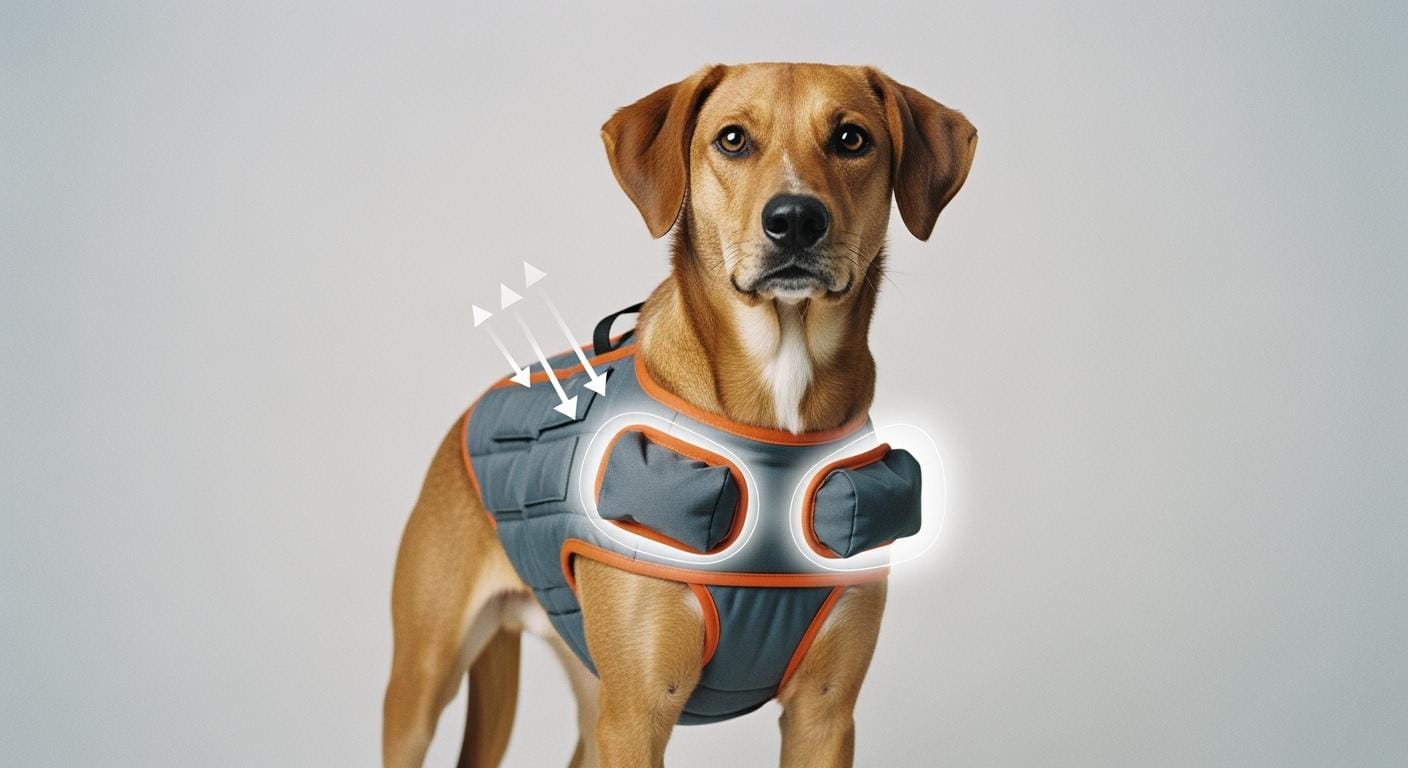
A car seat is not a flat board. The backrest curves rearward at the shoulders, the bench slopes toward the knee bolster, and the junction between them forms a deep crease. When a seat cover is strapped across this surface, the fabric enters a state of non-uniform tension. The anchor points — headrest loops, seat anchors, side straps — pull the panel in opposing directions. The fabric stretches more along the shortest path between anchors and less in the corners.
This is where pocket geometry unravels. A pocket sewn flat onto the cover panel is pulled along with the fabric. If the tension runs across the pocket opening, the opening stretches wide in one axis and narrows in the other. If the pocket sits across a curvature change — say, where the backrest meets the bench — the panel folds, and the pocket opening kinks shut. The material itself matters too: a loose-weave fabric stretches more than a tight Oxford weave, amplifying the distortion.
What looked like a 6-inch opening on a tabletop becomes a half-inch slit in the car. That is not a manufacturing defect. It is the predictable result of sewing a flat pocket onto a panel that will be tensioned across compound curves. The fix is not a bigger pocket. It is placement that keeps the pocket away from high-tension axes and curvature break lines.
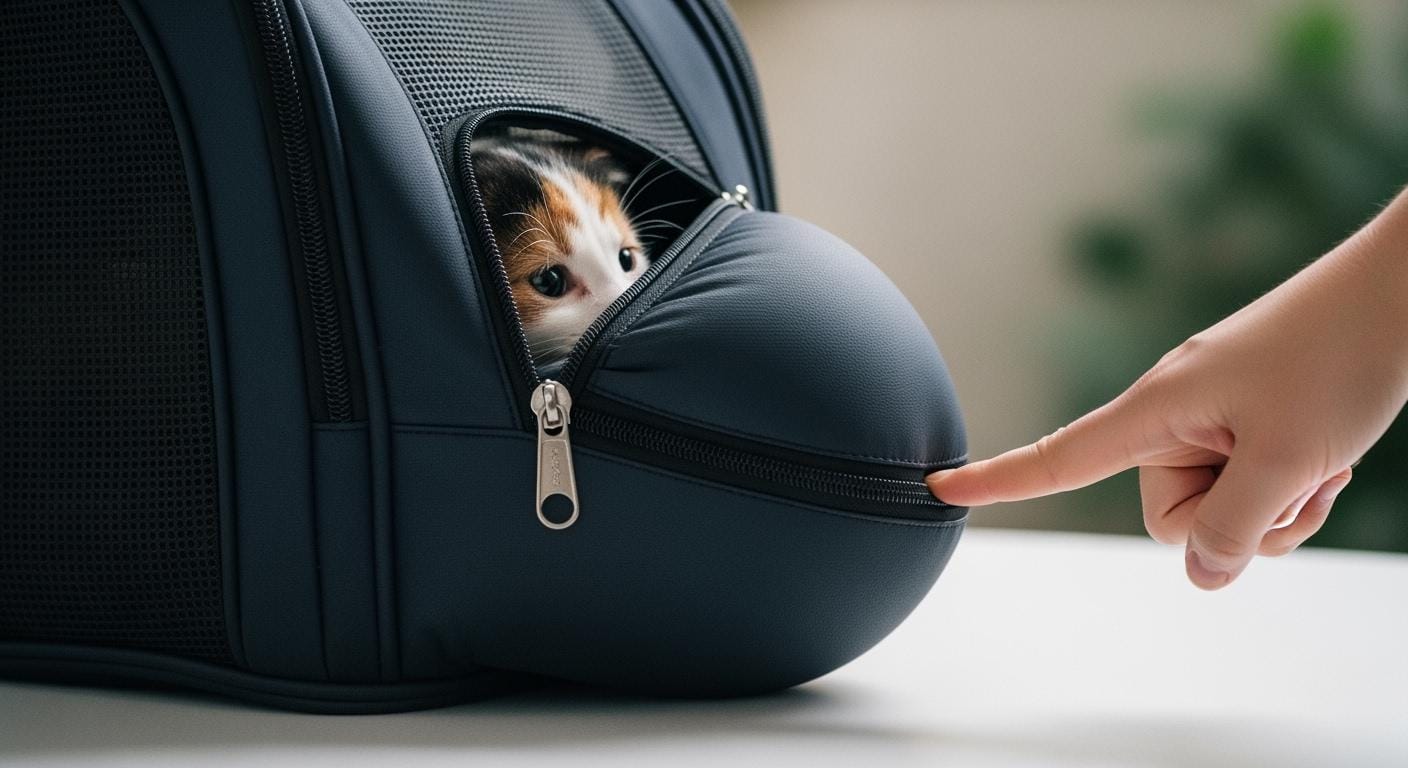
In practice: after installing a cover, run two fingers along the pocket opening. If it collapses below a two-finger width or twists so the opening faces the seat instead of the cabin, the pocket will be a frustration, not a convenience, on every drive.
Dog Weight Turns Pocket Volume into Zero
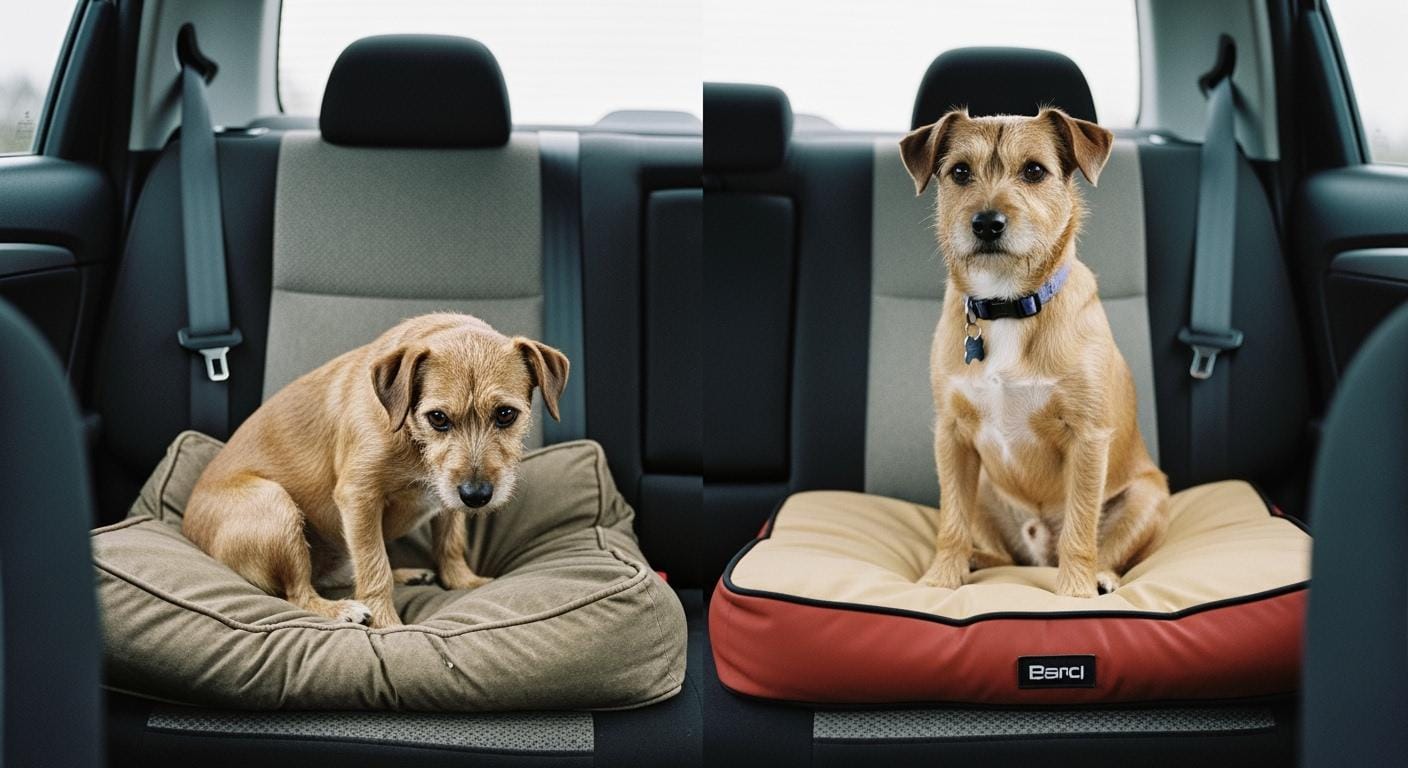
A 50-pound dog sitting in a back seat exerts roughly 25 to 30 pounds of pressure through the contact patch of its chest and hindquarters. If a pocket sits within that contact zone, the panel compresses against the seat. The pocket volume collapses to near zero. The opening seals shut. Anything inside becomes inaccessible without shifting the dog.
Worse, compression drives debris into the pocket. Mud on paws, loose undercoat fur, crumbs from treats — all of it gets pressed through the opening as the dog settles in. A pocket in the sitting zone does not store items. It stores mess.
Side-positioned pockets escape this. They sit outside the load path, which means the pocket panel stays uncompressed regardless of where the dog lies down. For the same reason, a seat cover designed with offset storage tends to keep contents cleaner — the pocket avoids both the compression zone and the main shedding path across the dog’s back and flanks.
Open Tops Fill with Hair on Every Drive
A car cabin is a closed volume with recirculating air. Loose fur does not settle — it floats. The HVAC fan, the dog’s movement, and road vibration keep particulate airborne. An open pocket top acts as a passive collector. Hair drifts in. Dirt follows. After a week of daily drives, the pocket interior accumulates a layer of debris that coats every item inside.
This is why flap closures matter. A flap creates a physical barrier that interrupts the settlement path. It does not need to be airtight — fur is not gas. A simple overlap panel that gravity holds shut is enough to divert most airborne debris. Pockets without any closure, especially those positioned below the dog’s shoulder line where shedding density is highest, become fur traps within days.
How a cover handles daily mess cycles is often the difference between a seat cover that stays clean with routine wiping and one that needs weekly deep cleaning. Pocket design is part of that equation — an open pocket that fills with hair negates the benefit of an otherwise easy-clean cover surface.
Where Poor Pocket Placement Causes the Most Problems
Under the Sitting Zone
Pockets positioned directly under where a dog sits or lies down fail in a specific way: the weight load closes the opening and compacts debris into the interior at the same time. The panel fabric, pressed between the dog and the seat foam, loses all structure. Stitching along the pocket edges bears lateral stress it was not designed for — the seam that holds the pocket to the cover panel becomes a tear initiation point if the dog shifts against it repeatedly.
Small items stored inside — waste bag rolls, a travel bowl — become pressure points against the dog’s body, which can make the dog restless and increase movement that further stresses the pocket. A pocket in the sitting zone creates a feedback loop: compression makes the dog uncomfortable, movement increases, more debris gets worked into the pocket.
This same load-path logic applies to covers that stay installed between drives. A permanently mounted cover with pockets under the sitting zone accumulates compression damage faster than one removed and reinstalled, because the fabric never gets a chance to relax and return to its original shape.
Where Paws Scrape During Entry and Exit
A dog entering the back seat follows a repeatable path: front paws land on the seat edge, then the dog pulls itself forward. If a pocket sits on that entry path, every single entry drags claws and whatever is on them across the pocket panel. Mud, gravel grit, road salt in winter, wet grass in summer — all of it scrapes into and across the pocket opening.
Over weeks, this abrasion cycle does two things. It wears the pocket fabric — the opening edge frays, stitch lines loosen. And it deposits a layer of fine grit inside the pocket that is difficult to remove because it embeds into seams and corners. A pocket in the paw path does not fail instantly. It degrades gradually, and by the time the owner notices, the fabric and stitching are already compromised.
Behind Seat Edges and Under Folds
Some pockets end up hidden not because they were poorly designed but because the cover’s fit on a specific car model creates fold lines that did not exist in the design template. A pocket that sits near the side bolster of the seat may get trapped between the cover and the door panel. One positioned low on the bench may slide under the seatbelt receiver. In both cases the pocket opening is physically blocked — it exists, but reaching into it requires unbuckling, lifting, or repositioning the cover, which nobody does on a moving drive.
Disclaimer: this assessment assumes a standard bench-style back seat with a hammock or bench cover installation. Bucket seats, split-folding benches, and vehicles with integrated child seats create different fold geometries that may shift pocket positions in ways not covered here. If your rear seat configuration is non-standard, check pocket access from the door with the cover fully strapped in before relying on any pocket for drive-time access.
What Pocket Design Works Through Hair, Mud, and Long Drives
Side Placement Away from the Load and Shed Zone
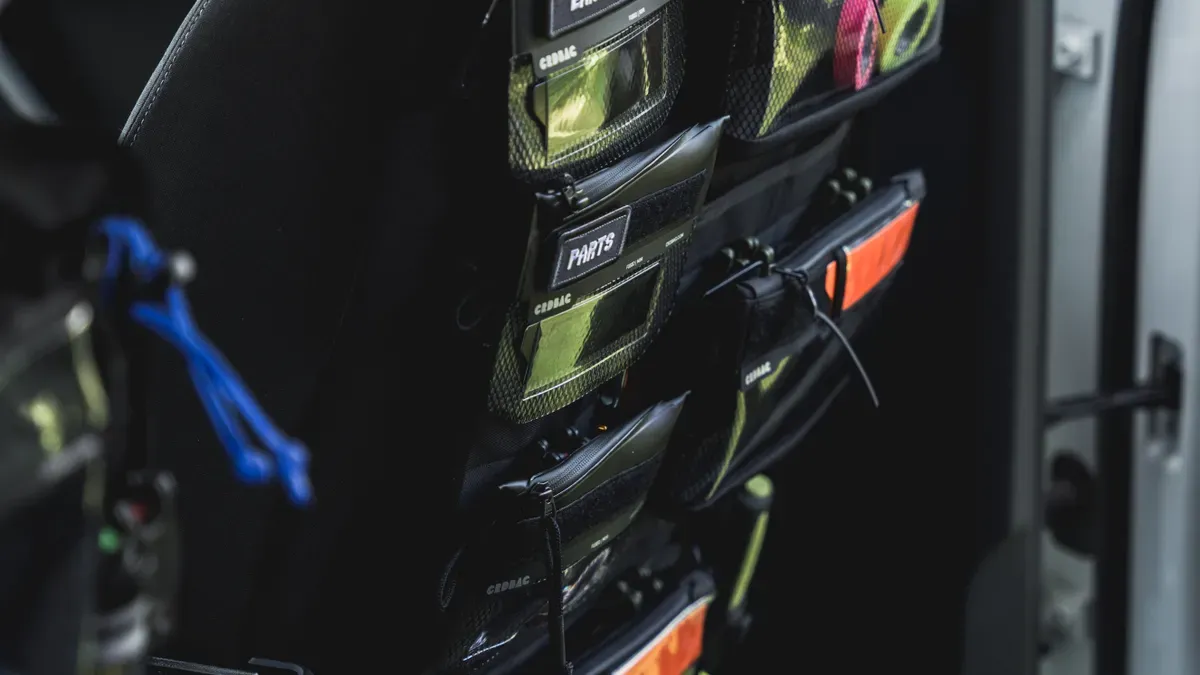
Moving the pocket to the side of the cover — near the door, outside the main sitting area — solves two problems at once. First, the pocket escapes compression. No matter where the dog lies, the side panel stays uncompressed because the load path runs through the bench, not the side wings. Second, the pocket moves outside the primary shedding cone. Most loose fur releases from the dog’s back and flanks, spreading outward in a roughly circular pattern centered on the torso. A side-mounted pocket sits at the edge of or outside that pattern.
The practical test is simple. After a 20-minute drive with a shedding dog, run a damp white cloth along the interior of the pocket. If the cloth comes back clean or nearly clean, the pocket placement is outside the active shedding zone. If it comes back coated in fur, the pocket is sitting in the fallout path and needs a flap or needs to be relocated.
Side placement also tends to keep pockets accessible from outside the car. Opening the rear door puts the pocket within arm’s reach without leaning across the dog — useful when grabbing a leash or waste bags before clipping in for a walk. The broader question of what separates a basic seat protector from a well-designed cover often comes down to details like this: whether the storage works from the position you actually use it from.
Flap Closures and Firm Panels
A flap over the pocket opening does two things. It blocks airborne fur and dirt from settling inside. And it retains small items — a waste bag roll cannot bounce out on a pothole, a treat pouch cannot slide out when the dog shifts position. A flap that uses a simple gravity closure (no Velcro, no zipper) is faster to use one-handed and quieter in a moving car.
The panel behind the flap matters equally. A loose, unstructured pocket panel sags under the weight of even a few items. The sag pulls the flap out of alignment, creating a gap that defeats the closure. A firm panel — one with a stiffer lining layer or tighter stitch density around the perimeter — holds its shape. Items stay organized vertically instead of pooling at the bottom.
After a week of use, empty the pocket and check whether the flap still aligns with the opening. If the panel has stretched and the flap now hangs crooked, the pocket’s structure is breaking down. If the flap still seats cleanly against the opening, the panel construction is holding up.
Smooth Linings That Release Hair Instead of Grabbing It
Rough fabric interiors act like micro-Velcro. Each textile fiber has surface irregularities at the micron scale. Dog fur, with its scaled keratin structure, catches on those irregularities. The result is a pocket lining that traps hair on contact and resists wiping, brushing, or shaking it out.
A smooth lining — typically a coated polyester or a tightly calendered nylon — presents fewer catch points. Hair slides across the surface instead of embedding. Dirt and crumbs brush out with a single pass. The difference in cleaning time between a rough-lined and smooth-lined pocket is not marginal. One takes a damp cloth and five seconds. The other takes picking, brushing, and still leaves residue.
This is not about expensive materials. It is about surface finish. A seat cover designed for fast post-drive cleanup benefits from pockets that clean as quickly as the main cover surface. A rough-lined pocket on a wipe-clean cover creates a cleaning bottleneck — the cover surface wipes down in seconds, but the pockets need detailed hand-cleaning that owners tend to skip.
| Design Difference | Why It Matters | Main Limitation |
|---|---|---|
| Side-positioned pocket | Escapes compression and main shedding zone | Less accessible from opposite-side door |
| Flap closure | Blocks airborne fur, retains small items | Adds a step to one-handed access |
| Smooth lining | Releases hair instead of trapping it | Slick surface may let very light items shift |
| Firm panel construction | Holds shape under load, keeps flap aligned | Slightly more material cost in production |
When Storage Pockets Are Not the Priority
Pockets add utility, but they are not the right focus for every use case. If the primary reason for the cover is protection against mud, water, and claw damage from an active dog that rides daily, pocket design is secondary to surface durability and coverage fit. A cover that does not fully protect the seat but has great pockets is solving the wrong problem.
Similarly, if the dog rides in a crash-tested harness secured to a seatbelt, pocket placement near the tether path matters. A pocket opening that interferes with the tether clip or the harness strap routing creates a safety tradeoff that storage convenience does not justify. The fit and security of any car restraint system should take precedence over storage access.
Disclaimer: this analysis applies to smooth-coated and short-haired breeds whose shedding pattern is primarily loose fur released into cabin air. Double-coated breeds like Huskies, Malamutes, and German Shepherds shed in clumps that behave differently — fur may mat inside pockets rather than settling as loose debris, requiring hand-pulling rather than wiping. For these breeds, even the best flap closure may not prevent pocket interior buildup, and owners should expect to clean pockets more frequently regardless of design quality.
For most owners, the right approach is to evaluate pockets as one part of a cover design that balances protection, fit, and daily usability. A pocket that works after install, stays clean through shedding, and opens one-handed from the door is worth more than four pockets that fail on all three counts.
FAQ
Why do side-positioned pockets stay cleaner than center pockets?
Side pockets sit outside the primary load path (the dog’s weight compresses the bench, not the side wings) and outside the main shedding cone (fur releases from the back and flanks, spreading outward from the torso centerline). Less compression means less debris forced into the pocket. Less airborne fur in the side zone means less passive accumulation.
Do flap closures make pockets harder to use while driving?
A gravity flap — one without Velcro or snaps — adds roughly one second to access time compared to an open pocket. The tradeoff is that items stay in the pocket on bumpy roads and hair stays out. For a passenger reaching back, or for the driver accessing the pocket at a stop, that extra second is negligible. Velcro flaps are louder and can snag on leash fabric or grooming wipe fibers.
What is the fastest way to test if a pocket will stay usable after install?
Install the cover fully. Sit in the adjacent seat or stand at the open door. Reach for the pocket with one hand without looking. If you can open it and retrieve an item in under three seconds, the placement works. If you need to lean, lift the cover, or use two hands, the pocket will not get used regularly.
Can I add storage to a cover that has no pockets?
Clip-on organizers that attach to the headrest or hang from the seatback can add storage without the geometry problems of sewn-in pockets. These sit outside the tension field of the cover panel entirely, which eliminates the distortion, compression, and shedding-zone problems described above. The tradeoff is that clip-on storage occupies separate space and may swing during turns.