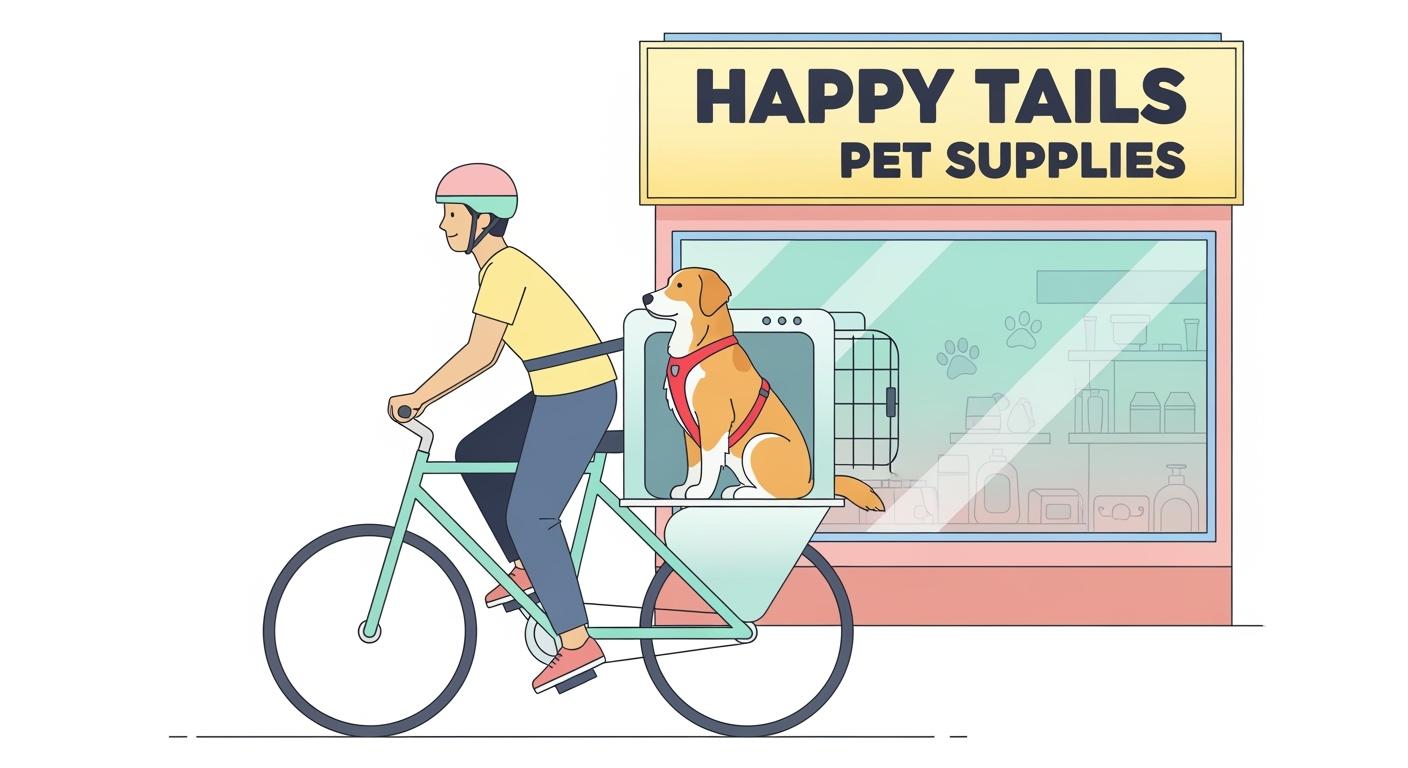
Carrying a dog on a bicycle can be enjoyable, but only when the dog, the carrier, and the route all match. The safest setup is not the one that looks neat in a photo. It is the one that keeps your bike steady, gives your dog stable body support, and lets you stop early if your dog is stressed, too hot, or shifting around.
This guide stays focused on the real question readers usually have: is carrying a dog on a bicycle safe for my dog, and what should I check before I ride? The answer depends on your dog’s size, confidence, posture, and tolerance for movement, plus whether you are using a basket, trailer, or wearable carrier.
When carrying a dog on a bicycle is a fit
Not every dog enjoys bike travel, and that is the first safety filter. A calm dog that can settle in a stationary carrier, breathe normally, and stay relaxed during short practice sessions is usually a better candidate than a dog that pants hard, tries to climb out, or freezes the moment the carrier closes.
Start by asking four simple questions:
- Can your dog sit, turn, or settle without being cramped?
- Can your dog stay calm when the carrier is on the floor and not moving?
- Does your dog recover quickly after short movement practice?
- Can your bike still feel predictable once the added weight is mounted?
If the answer to any of those is no, carrying a dog on a bicycle may not be the right next step yet. Some dogs do better in a low, enclosed trailer. Some do better with very short practice rides. Some do better not riding at all. That is not failure. It is simply a better fit decision.
There are also clear red flags. Skip riding if your dog has untreated joint pain, balance problems, recent surgery, strong motion sickness, panic in enclosed spaces, or repeated attempts to escape the carrier. Riding also stops being a good idea when the route is rough, crowded, very hot, or full of sudden braking points.
How to choose the safest carrier style for your dog and route
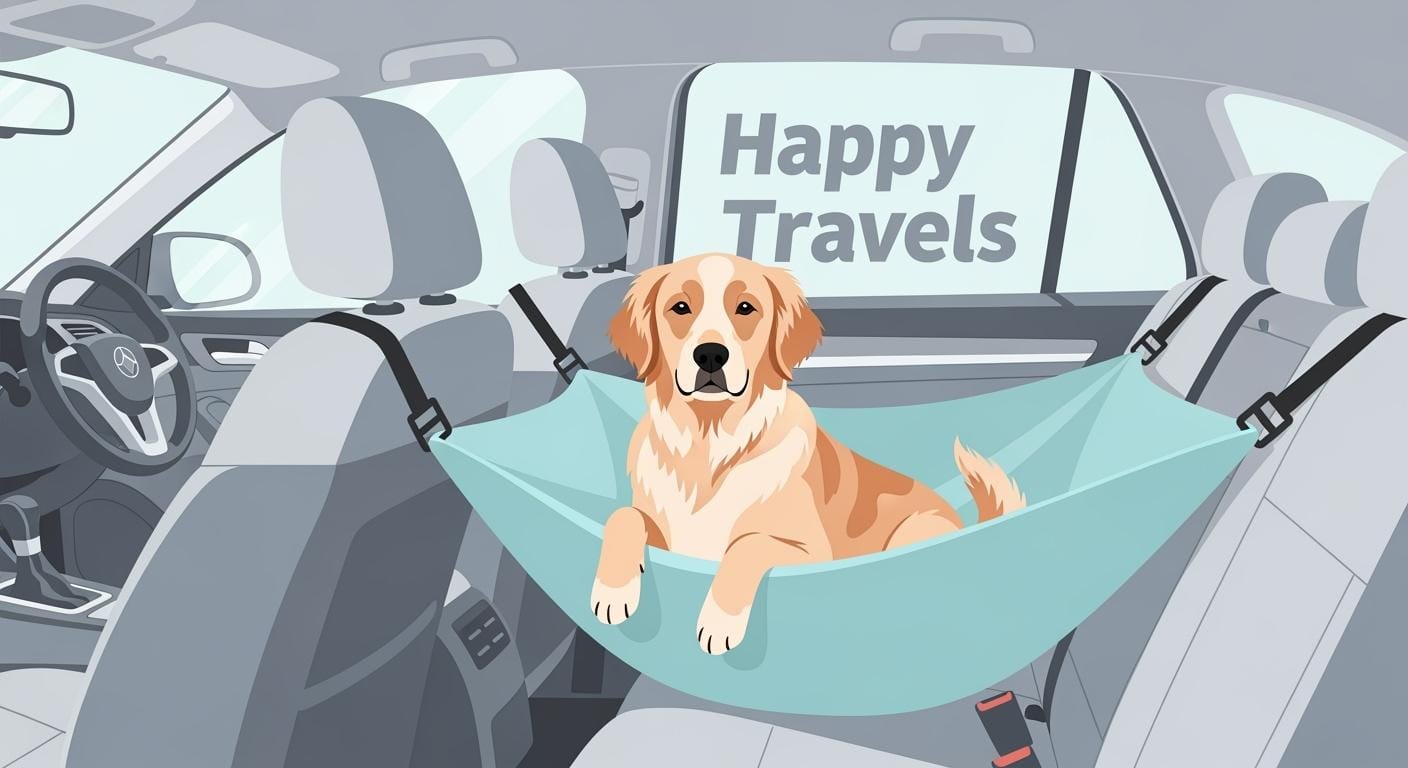
The best carrier style depends on body size, temperament, and how the weight changes your handling. In general, small calm dogs can work in a well-mounted basket, nervous dogs often do better in a trailer, and wearable carriers are only appropriate for very small dogs on short, smooth rides where the dog can stay supported without bouncing.
| Carrier style | Best for | Main strength | Main caution |
|---|---|---|---|
| Front basket | Small, calm dogs on short smoother routes | You can see your dog easily | Steering can feel twitchy if the load shifts |
| Rear basket | Small to medium dogs within the rack limit | Usually steadier steering than front carry | You must stop to check your dog more often |
| Trailer | Medium or larger dogs, anxious dogs, rougher surfaces | Lower center of gravity and more enclosed support | Needs more storage space and wider turning awareness |
| Wearable carrier | Very small dogs for very short, smooth use | Keeps the dog close and can feel reassuring | Can get hot, tiring, and unstable if the fit is poor |
Fit matters more than the label. Your dog should be able to rest in a natural posture without the chest being compressed or the head being forced into an awkward angle. If you are comparing structure, mounting, and sizing rules in more detail, this dog carrier for bike guide is the best supporting page to review alongside this article.
Be especially cautious with wearable carriers on a bicycle. They can work for very small dogs, but they should not pull your shoulders backward, bounce against your spine, or put your dog in a position where airflow is limited. If the carrier only feels stable when you grip it with one hand, it is not stable enough for riding.
Pre-ride setup checks that prevent wobble and panic
Most problems happen before the ride really begins. Wobble, leaning, panic, overheating, and jump-out attempts usually trace back to one of five issues: the wrong carrier size, weak mounting, no harness tether, poor route choice, or starting too fast.
1) Check body support and internal space
Your dog does not need extra empty space. Your dog needs usable space. That means enough room to settle without sliding side to side. The base should feel supportive, not saggy. The walls should help your dog feel contained without crushing the chest or blocking the head position.
2) Use a harness tether, not a collar clip
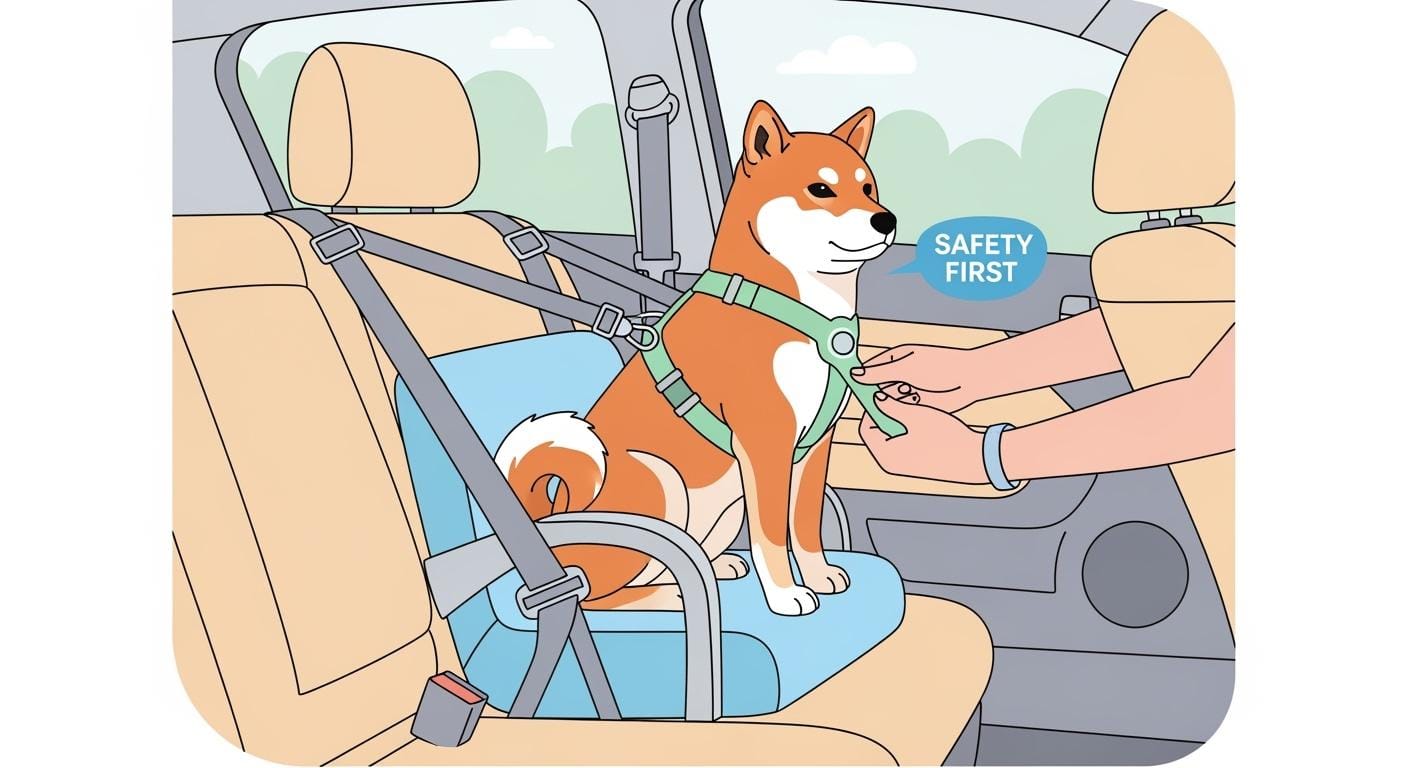
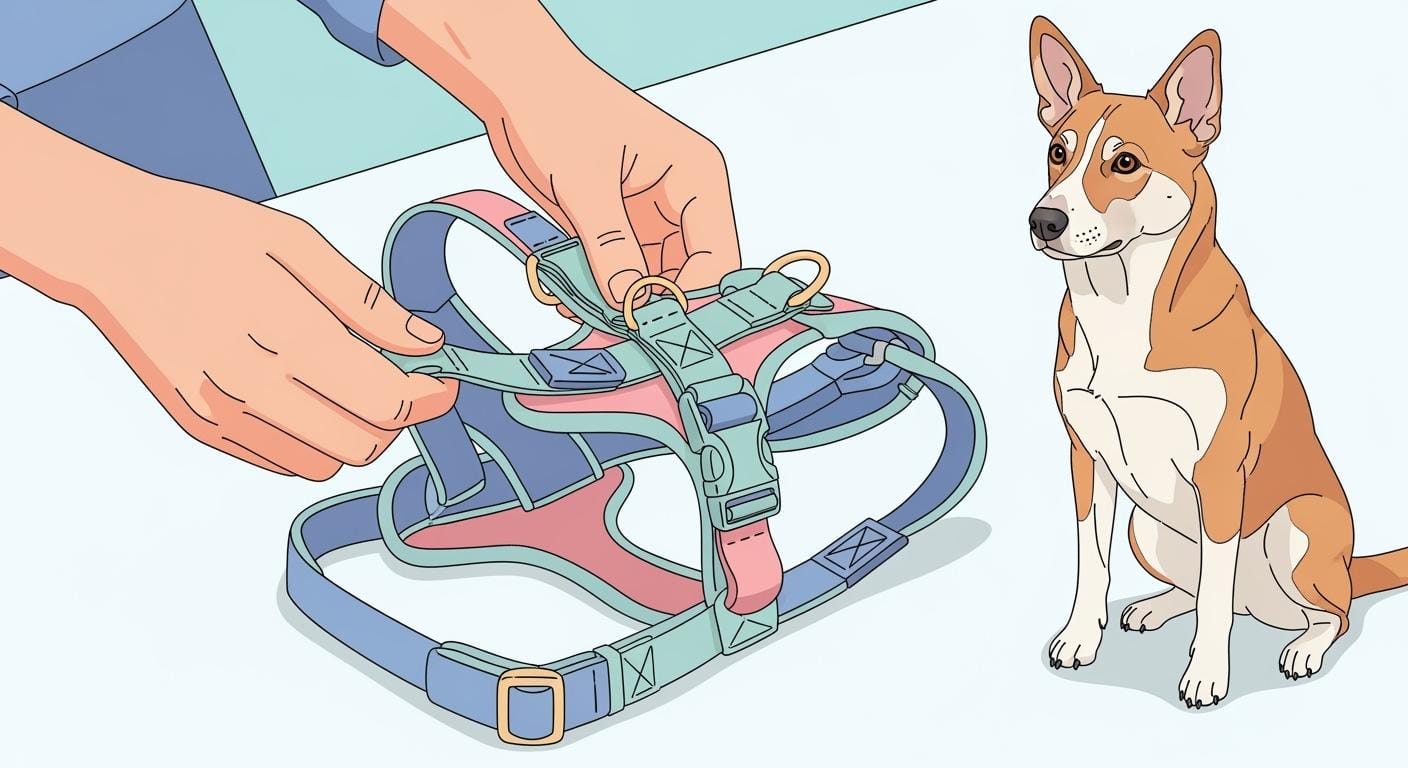
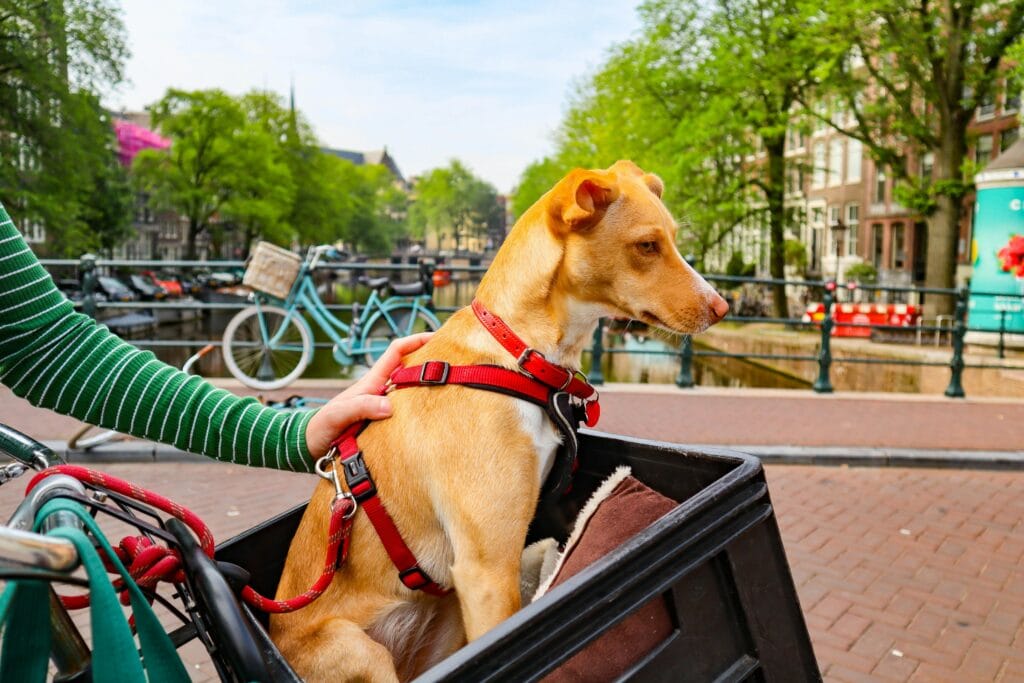
The internal safety tether should attach to a well-fitted dog harness, never to a collar. A collar connection can create dangerous neck force if your dog slips, jumps, or braces suddenly. The tether should be short enough to prevent a launch out of the carrier, but not so short that it pulls the dog off balance while sitting.
3) Test the mount before the dog gets in
Mount the empty carrier first and do a shake test. If the carrier twists, rattles, leans, or shifts under hand pressure, fix that before you add your dog’s weight. After that, load the dog and walk the bike slowly. Watch for sway at turns, braking, and curb transitions. A setup that feels “almost okay” while stationary usually feels worse once you start moving.
4) Match the route to the dog, not just the rider
The safest first rides are short, smooth, and boring. Flat pavement, cooler weather, and predictable stops make it easier to notice how your dog is coping. Avoid traffic, steep descents, potholes, loose gravel, and midday heat until you know your dog can settle well.
5) Pack only what helps
A small water bottle, collapsible bowl, cleanup bags, and a towel are usually enough for short outings. Keeping that gear together in a simple dog travel essentials kit makes it easier to stop, cool down, and reset without digging through pockets at the roadside.
For the first few sessions, think in minutes, not miles. Let your dog practice sitting in the carrier indoors, then on the stationary bike, then during a very short roll. Building confidence in stages is safer than trying to prove the setup on a long ride right away.
What to watch during and after the ride
Once you start moving, your main job is observation. A comfortable dog usually shows a soft face, steady breathing, and quiet body position. A stressed dog often tells you early, but the signals are easy to miss if you only look at the road.
Stop the ride if you notice repeated panting that does not settle, drooling, whining, wide eyes, repeated shifting, pawing at the opening, refusal to re-enter after a stop, or any sign that your dog is losing posture and bracing against the sides. Those are not “get used to it” moments. They are information telling you the setup, temperature, pace, or carrier type is wrong for that session.
Heat is another fast-changing risk. Enclosed or partly enclosed carriers can warm up quickly, especially in sun, humid weather, or slow traffic. If your dog feels hot, unfocused, or restless, stop in shade, offer water, and end the session if your dog does not recover quickly.
After the ride, inspect both the carrier and your dog. Check the skin around the chest, belly, and armpits for rubbing. Look at the base, seams, straps, clips, and anchor points for new wear. If dirt, road spray, or sweat collects inside the carrier, wipe it down and let it dry fully before the next ride. A damp, gritty interior can create both odor and friction on the next outing.
Replace or repair the setup if you notice frayed straps, cracked hardware, loosening mounts, torn mesh, base sagging, or a tether that no longer holds length reliably. Carrying a dog on a bicycle only stays safe when the equipment still performs the way it did on the first solid test ride.
FAQ
Is carrying a dog on a bicycle safe?
It can be safe when the dog is a good fit for riding, the carrier is correctly sized and firmly mounted, and you stop at the first clear stress or heat warning. It is not safe just because the carrier technically closes.
Which is safer: a front basket, rear basket, or trailer?
There is no single safest option for every dog. Front baskets keep the dog visible but can change steering. Rear baskets often feel steadier to the rider. Trailers are often the safest choice for larger dogs, anxious dogs, or rougher surfaces because the load sits lower and the enclosure is more stable.
Can I use a backpack carrier on a bike?
Sometimes, but only for very small dogs, very short rides, and very stable carriers. If the carrier makes you lean, bounce, overheat, or support the load with one hand, it is not a good cycling setup.
How long should a first ride be?
Start with a few quiet minutes after indoor and stationary practice. The goal of the first ride is not distance. It is to confirm calm behavior, stable mounting, and clean recovery after stopping.
What should I do if my dog seems unsure halfway through?
Stop early. Offer water, let your dog settle, and reassess. Sometimes the answer is a shorter route. Sometimes it is a cooler time of day. Sometimes it is a different carrier style. Stopping early is part of safe training, not a setback.